The Office 
Procedures and Technology 
Chapter 7 (a) 
Communication, reading and 
writing at work (Part 1) 
Copyright© 2007 Thomson/South-Western
Objectives 
1. Why do we need to read? 
2. How do we improve our reading skill? 
a. Comprehension 
b. Vocabulary 
c. Speed 
Slide 2
Slide 3 
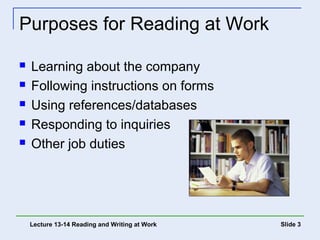
Purposes for Reading at Work 
 Learning about the company 
 Following instructions on forms 
 Using references/databases 
 Responding to inquiries 
 Other job duties 
Lecture 13-14 Reading and Writing at Work
Slide 4 
Purposes for Reading at Work 
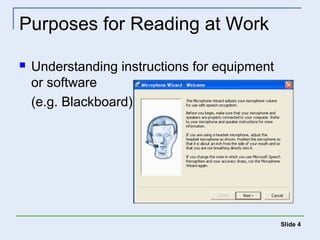
 Understanding instructions for equipment 
or software 
(e.g. Blackboard)
How do you improve reading skill 
 Critical reading skills require three areas: 
1. Comprehension 
2. Vocabulary 
3. Speed 
Slide 5
Slide 6 
1.Comprehension 
 Understanding what you have read 
 Practice techniques can improve skill 
 Focus  Sequence 
 Identify purpose  Draw a mental picture 
 Scan  Checkup 
 Summarize  Reread
Improve reading comprehension 
 Focus 
Put aside anything else on your mind when 
you begin to read. 
 Identify purpose 
 Before you begin, ask “what do I want to know 
when I have completed this reading?” 
 Scan 
 Get an overview of the page, the chapter, article, 
or book before you read carefully. 
Slide 7
Improving reading comprehension 
 Summarize 
 Mentally summarize as you move from one 
paragraph to another, particularly if you are 
reading to gain information for handing a task. 
 Sequence 
 After reading several paragraphs, try to think of 
the ideas in an appropriate order. 
 Draw a mental picture 
 Attempt to imagine what it is that is being 
discussed. 
Slide 8
Improving reading comprehension 
 Checkup 
 Determine, through a fast review of key points, 
whether you have learned what you expected to 
learn. 
 Reread 
 Begin a new to read what you have just read if 
you are not satisfied with you checkup process. 
Slide 9
Slide 10 
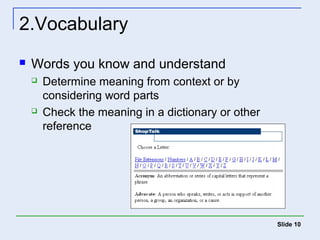
2.Vocabulary 
 Words you know and understand 
 Determine meaning from context or by 
considering word parts 
 Check the meaning in a dictionary or other 
reference
Slide 11 
3.Speed 
 Rate at which you read 
 Improve reading rate with practice 
 Focus on an entire paragraph 
 Time your reading and set goals 
 Force yourself ahead as you read

How to improve your reading skills

  • 1.
    The Office Proceduresand Technology Chapter 7 (a) Communication, reading and writing at work (Part 1) Copyright© 2007 Thomson/South-Western
  • 2.
    Objectives 1. Whydo we need to read? 2. How do we improve our reading skill? a. Comprehension b. Vocabulary c. Speed Slide 2
  • 3.
    Slide 3 Purposesfor Reading at Work  Learning about the company  Following instructions on forms  Using references/databases  Responding to inquiries  Other job duties Lecture 13-14 Reading and Writing at Work
  • 4.
    Slide 4 Purposesfor Reading at Work  Understanding instructions for equipment or software (e.g. Blackboard)
  • 5.
    How do youimprove reading skill  Critical reading skills require three areas: 1. Comprehension 2. Vocabulary 3. Speed Slide 5
  • 6.
    Slide 6 1.Comprehension  Understanding what you have read  Practice techniques can improve skill  Focus  Sequence  Identify purpose  Draw a mental picture  Scan  Checkup  Summarize  Reread
  • 7.
    Improve reading comprehension  Focus Put aside anything else on your mind when you begin to read.  Identify purpose  Before you begin, ask “what do I want to know when I have completed this reading?”  Scan  Get an overview of the page, the chapter, article, or book before you read carefully. Slide 7
  • 8.
    Improving reading comprehension  Summarize  Mentally summarize as you move from one paragraph to another, particularly if you are reading to gain information for handing a task.  Sequence  After reading several paragraphs, try to think of the ideas in an appropriate order.  Draw a mental picture  Attempt to imagine what it is that is being discussed. Slide 8
  • 9.
    Improving reading comprehension  Checkup  Determine, through a fast review of key points, whether you have learned what you expected to learn.  Reread  Begin a new to read what you have just read if you are not satisfied with you checkup process. Slide 9
  • 10.
    Slide 10 2.Vocabulary  Words you know and understand  Determine meaning from context or by considering word parts  Check the meaning in a dictionary or other reference
  • 11.
    Slide 11 3.Speed  Rate at which you read  Improve reading rate with practice  Focus on an entire paragraph  Time your reading and set goals  Force yourself ahead as you read