Critical Reading and
Writing
-Intro-
Assoc. Prof. Dr. İsmail YAMAN
What is Critical Reading?
- Reading critically does not, necessarily, mean being
critical of what you read.
-Both reading and thinking critically don’t mean being
‘critical’ about some idea, argument, or piece of writing -
claiming that it is some how faulty or flawed.
-Critical reading means engaging in what you read by
asking yourself questions such as, ‘what is the author
trying to say?’ or ‘what is the main argument being
presented?’
- Critical reading involves presenting a reasoned argument that evaluates
and analyses what you have read. Being critical, therefore - in an
academic sense - means advancing your understanding, not dismissing
and therefore closing off learning.
-To read critically is to exercise your judgement about what you are
reading – that is, not taking anything you read at face value.
-When reading academic material you will be faced with the author’s
interpretation and opinion. Different authors will, naturally, have different
slants. You should always examine what you are reading critically and
look for limitations, omissions, inconsistencies, oversights and arguments
against what you are reading.
-In academic circles, whilst you are a student, you will be expected to
understand different viewpoints and make your own judgements based
on what you have read.
- Critical reading goes further than just being satisfied with what a text says, it also
involves reflecting on what the text describes, and analysing what the text actually
means, in the context of your studies.
As a critical reader you should reflect on:
What the text says: after critically reading a piece you should be able to take
notes, paraphrasing - in your own words - the key points.
What the text describes: you should be confident that you have understood the
text sufficiently to be able to use your own examples and compare and contrast
with other writing on the subject in hand.
Interpretation of the text: this means that you should be able to fully analyse
the text and state a meaning for the text as a whole.
- Critical reading means being able to reflect on what a text says, what it
describes and what it means by scrutinising the style and structure of
the writing, the language used as well as the content.
- Thinking critically, in the academic sense, involves being open-minded
- using judgement and discipline to process what you are learning
about without letting your personal bias or opinion detract from the
arguments.
- Critical thinking involves being rational and aware of your own feelings
on the subject – being able to reorganise your thoughts, prior
knowledge and understanding to accommodate new ideas or
viewpoints.
- Critical reading and critical thinking are therefore the very foundations
of true learning and personal development.
Developing a Reading Strategy
You will, in formal learning situations, be required to read and critically think
about a lot of information from different sources.
It is important therefore, that you not only learn to read critically but also
efficiently.
- The first step to efficient reading is to become selective.
- If you cannot read all of the books on a recommended reading list, you need to
find a way of selecting the best texts for you. To start with, you need to know
what you are looking for. You can then examine the contents page and/or index
of a book or journal to ascertain whether a chapter or article is worth pursuing
further.
- Once you have selected a suitable piece the next step is to speed-read.
Speed reading is also often referred to as skim-reading or scanning. Once
you have identified a relevant piece of text, like a chapter in a book, you
should scan the first few sentences of each paragraph to gain an overall
impression of subject areas it covers. Scan-reading essentially means that
you know what you are looking for, you identify the chapters or sections most
relevant to you and ignore the rest.
When you speed-read you are not aiming to gain a full understanding of the
arguments or topics raised in the text. It is simply a way of determining what
the text is about.
When you find a relevant or interesting section you will need to slow your
reading speed dramatically, allowing you to gain a more in-depth
understanding of the arguments raised. Even when you slow your reading
down it may well be necessary to read passages several times to gain a full
understanding.
Following SQ3R
SQ3R is a well-known strategy for reading. SQ3R can be applied to a whole
range of reading purposes as it is flexible and takes into account the need to
change reading speeds.
SQ3R is an acronym and stands for:
Survey
Question
Read
Recall
Review
Survey
This relates to speed-reading, scanning and skimming the text. At this initial stage you
will be attempting to gain the general gist of the material in question.
Question
It is important that, before you begin to read, you have a question or set of questions
that will guide you - why am I reading this? When you have a purpose to your reading
you want to learn and retain certain information. Having questions changes reading
from a passive to an active pursuit. Examples of possible questions include:
What do I already know about this subject?
How does this chapter relate to the assignment question?
How can I relate what I read to my own experiences?
Read
Now you will be ready for the main activity of reading. This involves careful
consideration of the meaning of what the author is trying to convey and
involves being critical as well as active.
Recall
Regardless of how interesting an article or chapter is, unless you make a
concerted effort to recall what you have just read, you will forget a lot of the
important points. Recalling from time to time allows you to focus upon the
main points – which in turn aids concentration. Recalling gives you the
chance to think about and assimilate what you have just read, keeping you
active. A significant element in being active is to write down, in your own
words, the key points.
Review
The final step is to review the material that you have recalled in your
notes. Did you understand the main principles of the argument? Did you
identify all the main points? Are there any gaps? Do not take for granted
that you have recalled everything you need correctly – review the text again
to make sure and clarify.
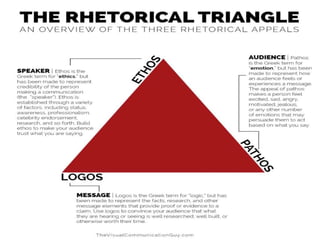
How does the writer make his/her appeal to the
audience?
Concluding Remarks
???
Thank you for your attention…

Critical Reading and Writing-Intro.ppt

  • 1.
  • 2.
    What is CriticalReading? - Reading critically does not, necessarily, mean being critical of what you read. -Both reading and thinking critically don’t mean being ‘critical’ about some idea, argument, or piece of writing - claiming that it is some how faulty or flawed. -Critical reading means engaging in what you read by asking yourself questions such as, ‘what is the author trying to say?’ or ‘what is the main argument being presented?’
  • 3.
    - Critical readinginvolves presenting a reasoned argument that evaluates and analyses what you have read. Being critical, therefore - in an academic sense - means advancing your understanding, not dismissing and therefore closing off learning. -To read critically is to exercise your judgement about what you are reading – that is, not taking anything you read at face value. -When reading academic material you will be faced with the author’s interpretation and opinion. Different authors will, naturally, have different slants. You should always examine what you are reading critically and look for limitations, omissions, inconsistencies, oversights and arguments against what you are reading. -In academic circles, whilst you are a student, you will be expected to understand different viewpoints and make your own judgements based on what you have read.
  • 4.
    - Critical readinggoes further than just being satisfied with what a text says, it also involves reflecting on what the text describes, and analysing what the text actually means, in the context of your studies. As a critical reader you should reflect on: What the text says: after critically reading a piece you should be able to take notes, paraphrasing - in your own words - the key points. What the text describes: you should be confident that you have understood the text sufficiently to be able to use your own examples and compare and contrast with other writing on the subject in hand. Interpretation of the text: this means that you should be able to fully analyse the text and state a meaning for the text as a whole.
  • 5.
    - Critical readingmeans being able to reflect on what a text says, what it describes and what it means by scrutinising the style and structure of the writing, the language used as well as the content. - Thinking critically, in the academic sense, involves being open-minded - using judgement and discipline to process what you are learning about without letting your personal bias or opinion detract from the arguments. - Critical thinking involves being rational and aware of your own feelings on the subject – being able to reorganise your thoughts, prior knowledge and understanding to accommodate new ideas or viewpoints. - Critical reading and critical thinking are therefore the very foundations of true learning and personal development.
  • 6.
    Developing a ReadingStrategy You will, in formal learning situations, be required to read and critically think about a lot of information from different sources. It is important therefore, that you not only learn to read critically but also efficiently.
  • 7.
    - The firststep to efficient reading is to become selective. - If you cannot read all of the books on a recommended reading list, you need to find a way of selecting the best texts for you. To start with, you need to know what you are looking for. You can then examine the contents page and/or index of a book or journal to ascertain whether a chapter or article is worth pursuing further.
  • 8.
    - Once youhave selected a suitable piece the next step is to speed-read. Speed reading is also often referred to as skim-reading or scanning. Once you have identified a relevant piece of text, like a chapter in a book, you should scan the first few sentences of each paragraph to gain an overall impression of subject areas it covers. Scan-reading essentially means that you know what you are looking for, you identify the chapters or sections most relevant to you and ignore the rest. When you speed-read you are not aiming to gain a full understanding of the arguments or topics raised in the text. It is simply a way of determining what the text is about. When you find a relevant or interesting section you will need to slow your reading speed dramatically, allowing you to gain a more in-depth understanding of the arguments raised. Even when you slow your reading down it may well be necessary to read passages several times to gain a full understanding.
  • 9.
    Following SQ3R SQ3R isa well-known strategy for reading. SQ3R can be applied to a whole range of reading purposes as it is flexible and takes into account the need to change reading speeds. SQ3R is an acronym and stands for: Survey Question Read Recall Review
  • 10.
    Survey This relates tospeed-reading, scanning and skimming the text. At this initial stage you will be attempting to gain the general gist of the material in question. Question It is important that, before you begin to read, you have a question or set of questions that will guide you - why am I reading this? When you have a purpose to your reading you want to learn and retain certain information. Having questions changes reading from a passive to an active pursuit. Examples of possible questions include: What do I already know about this subject? How does this chapter relate to the assignment question? How can I relate what I read to my own experiences?
  • 11.
    Read Now you willbe ready for the main activity of reading. This involves careful consideration of the meaning of what the author is trying to convey and involves being critical as well as active. Recall Regardless of how interesting an article or chapter is, unless you make a concerted effort to recall what you have just read, you will forget a lot of the important points. Recalling from time to time allows you to focus upon the main points – which in turn aids concentration. Recalling gives you the chance to think about and assimilate what you have just read, keeping you active. A significant element in being active is to write down, in your own words, the key points. Review The final step is to review the material that you have recalled in your notes. Did you understand the main principles of the argument? Did you identify all the main points? Are there any gaps? Do not take for granted that you have recalled everything you need correctly – review the text again to make sure and clarify.
  • 12.
    How does thewriter make his/her appeal to the audience?
  • 14.
  • 15.
    Thank you foryour attention…