Presented by
Dr. Neelam
Department of chemistry
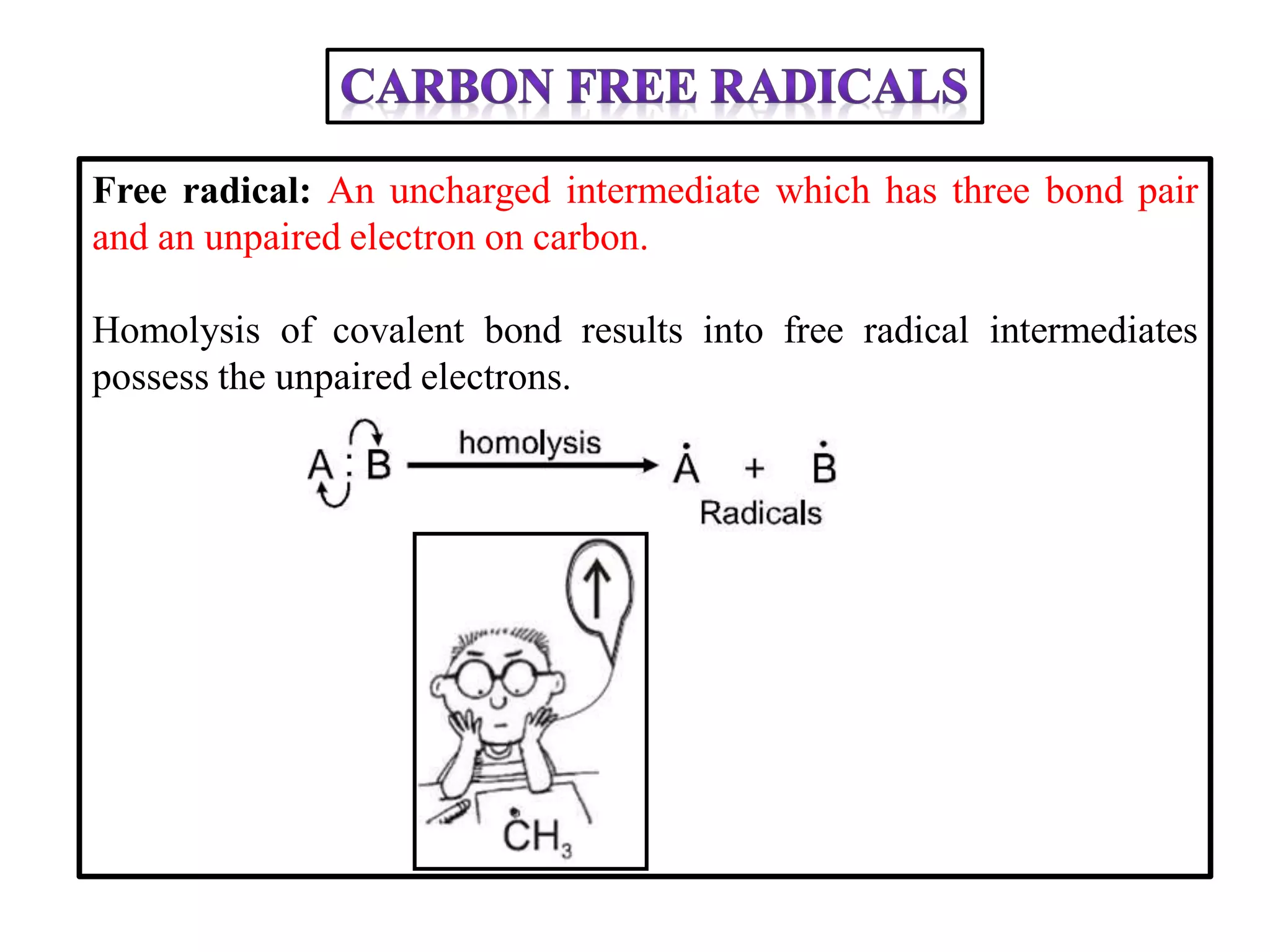
Homolytic fission of covalent bonds Heterolytic fission of covalent bonds
Bond cleavage
Free radical: An uncharged intermediate which has three bond pair
and an unpaired electron on carbon.
Homolysis of covalent bond results into free radical intermediates
possess the unpaired electrons.
It is generated in presence of sun light, peroxides or high
temperature
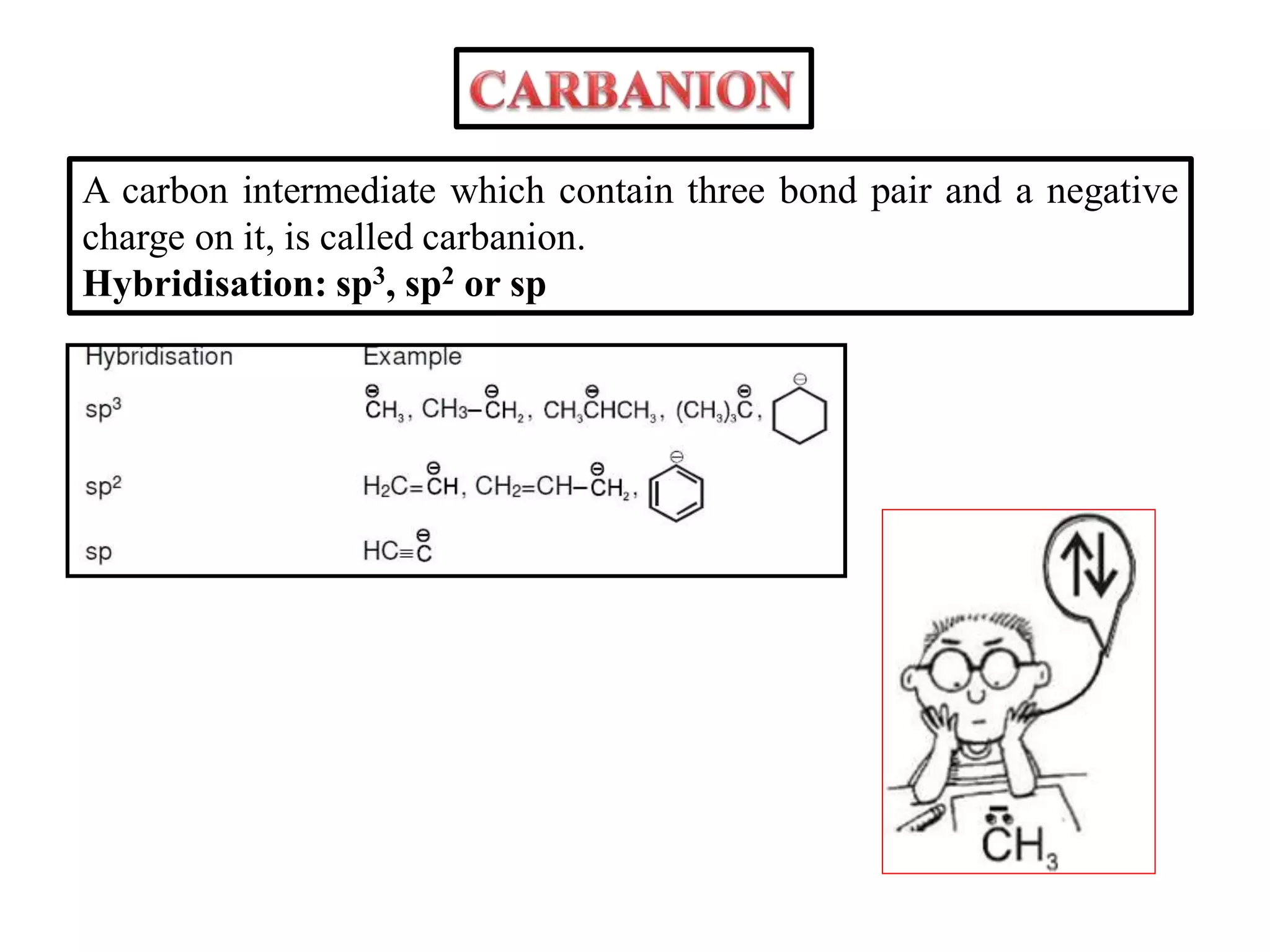
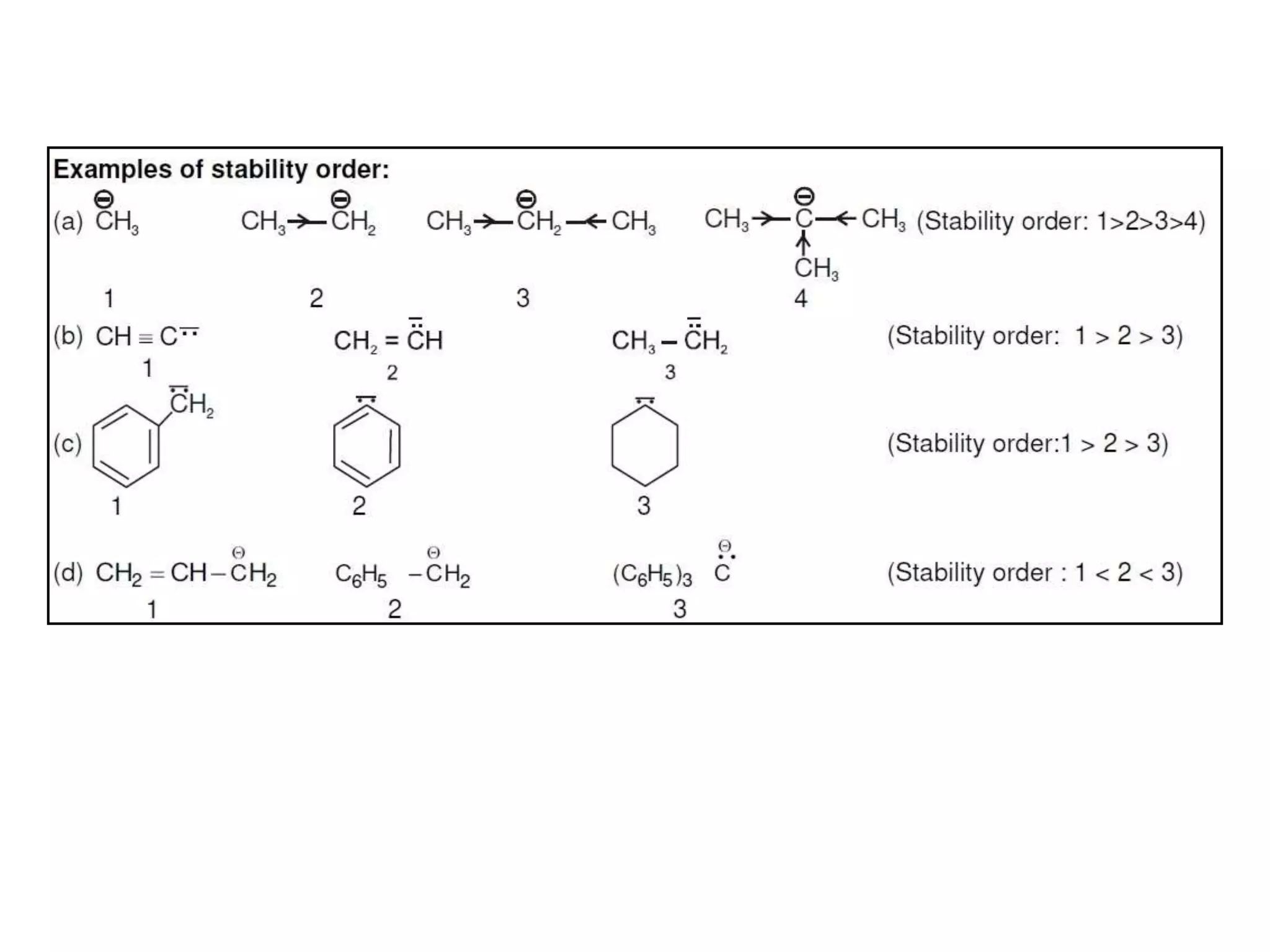
A carbon intermediate which contain three bond pair and a negative
charge on it, is called carbanion.
Hybridisation: sp3, sp2 or sp
CARBOCATION
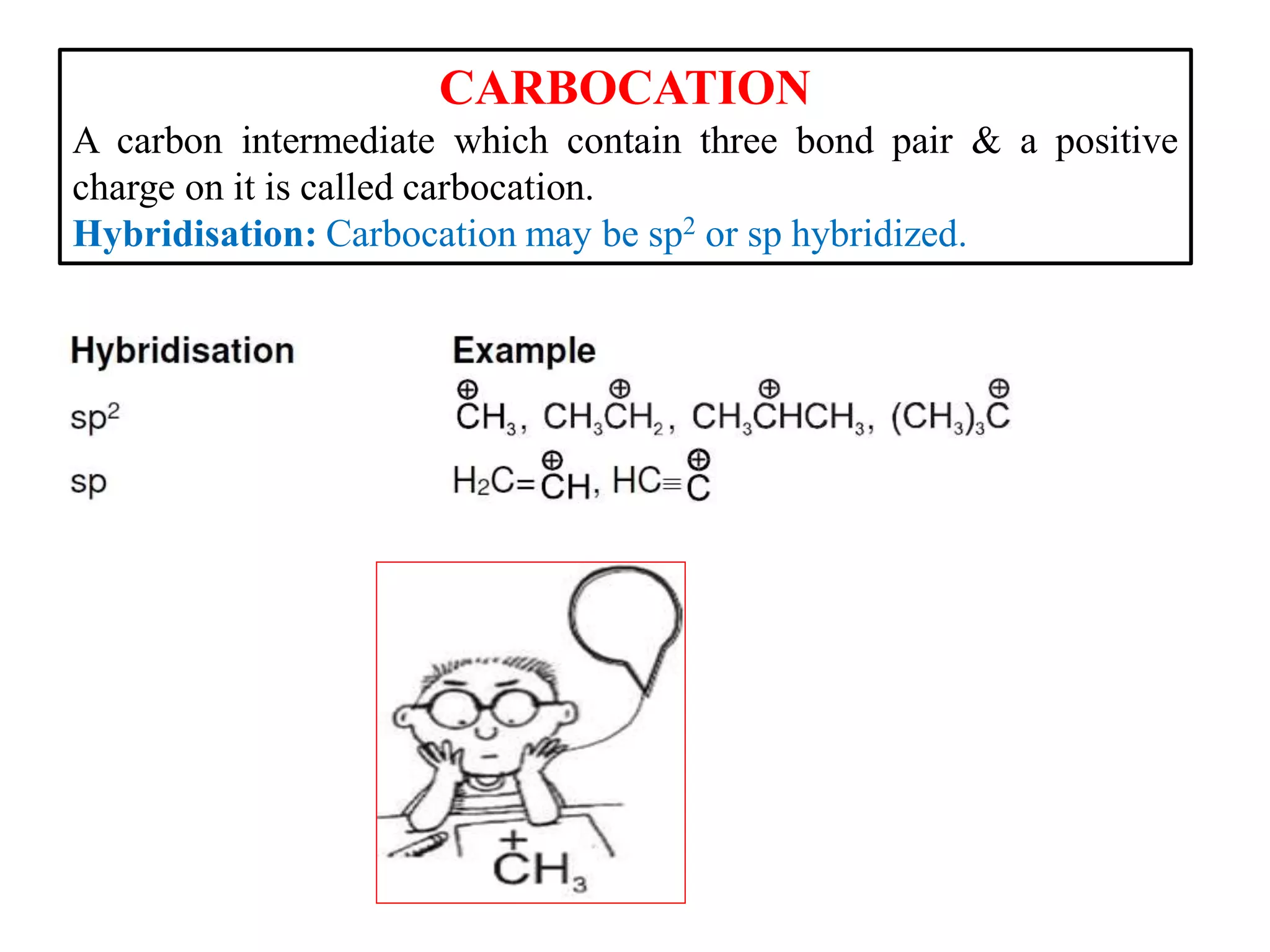
A carbon intermediate which contain three bond pair & a positive
charge on it is called carbocation.
Hybridisation: Carbocation may be sp2 or sp hybridized.
They have only six electrons in their valence shell, and because of
this, carbocations act as Lewis acids.
 Carbocations are electron deficient.
Most of the carbocations are short-lived and highly reactive, they
occur as intermediates in some organic reactions.
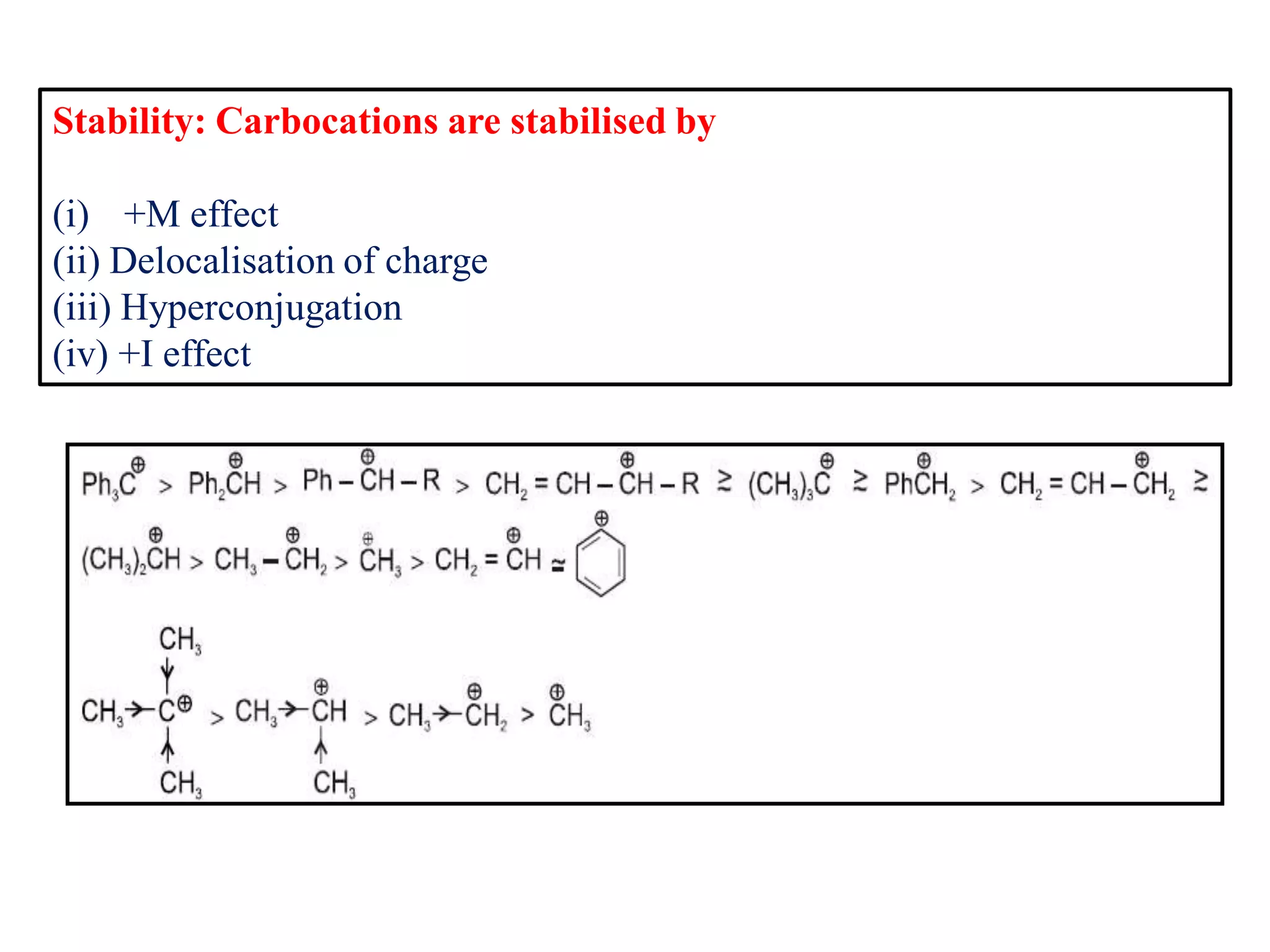
Stability: Carbocations are stabilised by
(i) +M effect
(ii) Delocalisation of charge
(iii) Hyperconjugation
(iv) +I effect
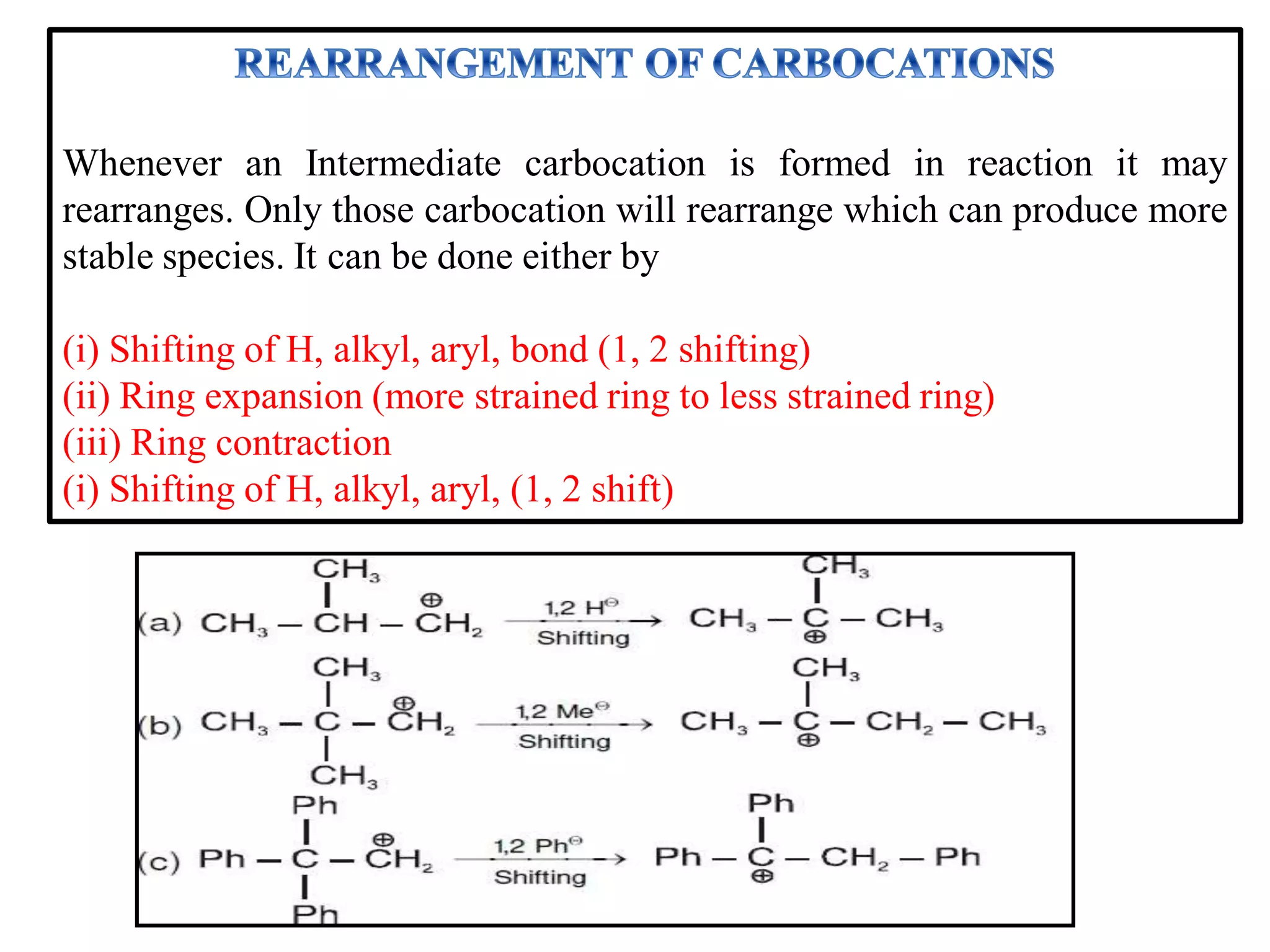
Whenever an Intermediate carbocation is formed in reaction it may
rearranges. Only those carbocation will rearrange which can produce more
stable species. It can be done either by
(i) Shifting of H, alkyl, aryl, bond (1, 2 shifting)
(ii) Ring expansion (more strained ring to less strained ring)
(iii) Ring contraction
(i) Shifting of H, alkyl, aryl, (1, 2 shift)
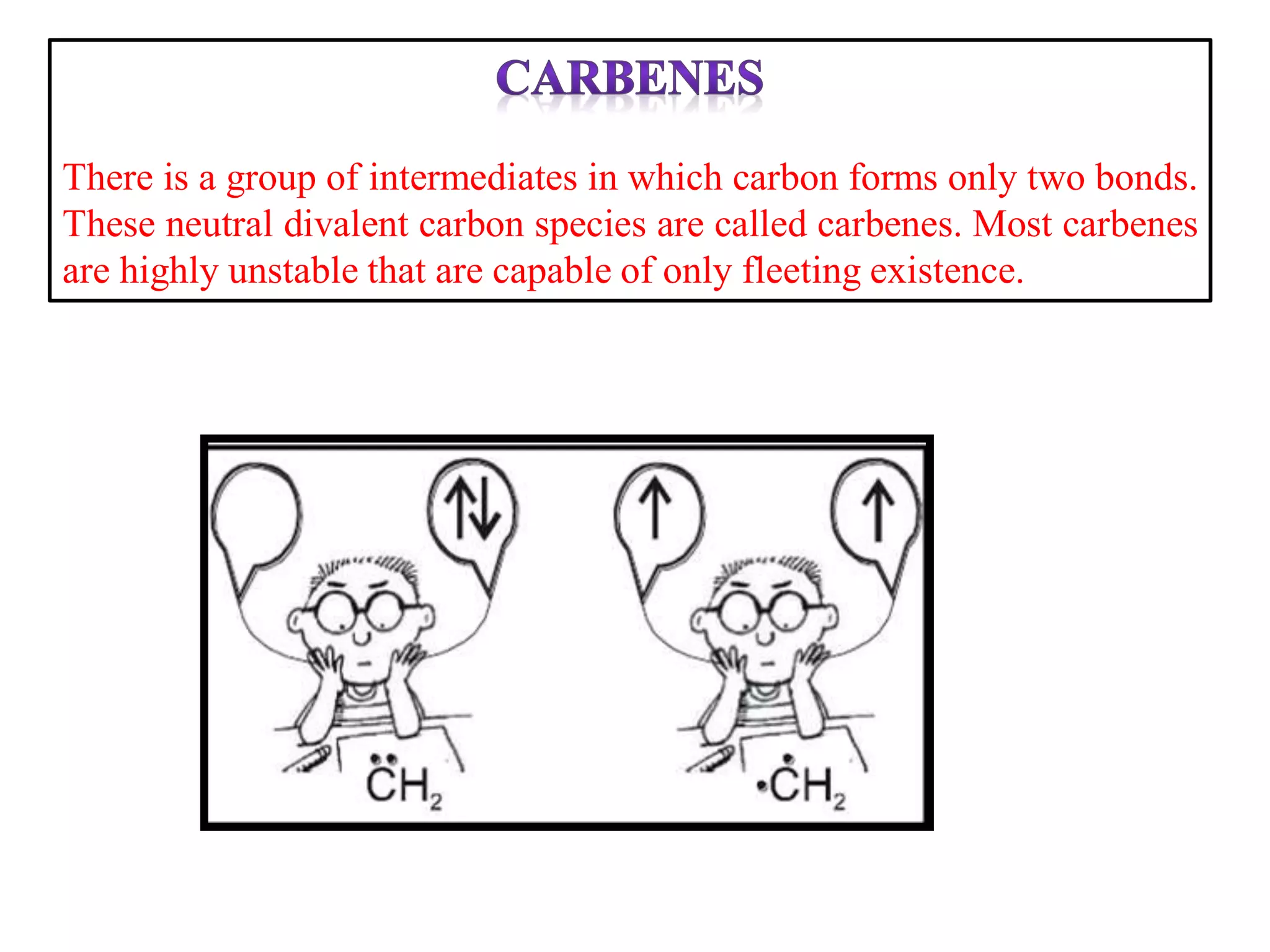
There is a group of intermediates in which carbon forms only two bonds.
These neutral divalent carbon species are called carbenes. Most carbenes
are highly unstable that are capable of only fleeting existence.
NITRENES
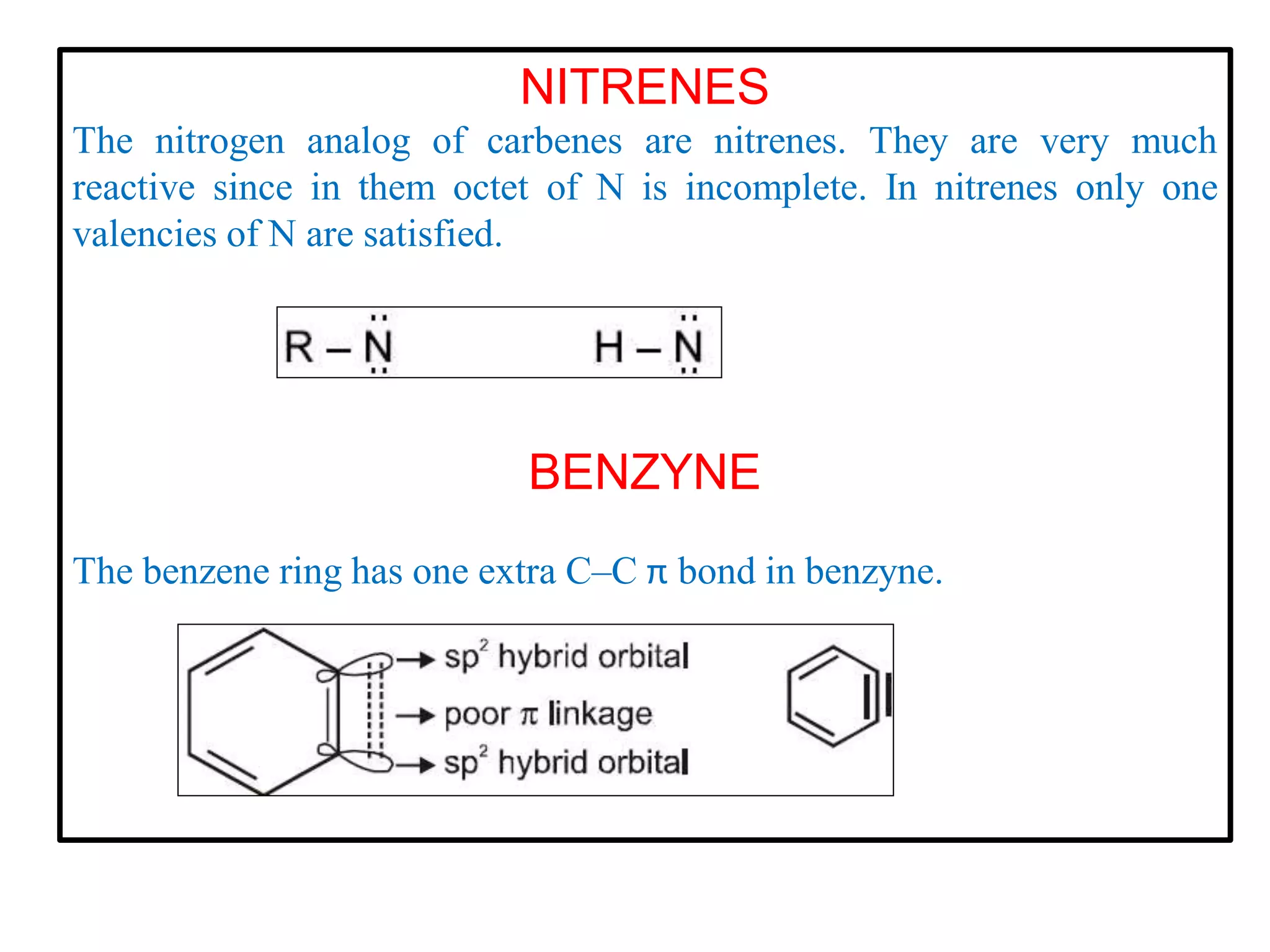
The nitrogen analog of carbenes are nitrenes. They are very much
reactive since in them octet of N is incomplete. In nitrenes only one
valencies of N are satisfied.
BENZYNE
The benzene ring has one extra C–C π bond in benzyne.
15

Reaction intermediate (general organic chemistry)

  • 1.
  • 2.
    Homolytic fission ofcovalent bonds Heterolytic fission of covalent bonds Bond cleavage
  • 3.
    Free radical: Anuncharged intermediate which has three bond pair and an unpaired electron on carbon. Homolysis of covalent bond results into free radical intermediates possess the unpaired electrons.
  • 4.
    It is generatedin presence of sun light, peroxides or high temperature
  • 5.
    A carbon intermediatewhich contain three bond pair and a negative charge on it, is called carbanion. Hybridisation: sp3, sp2 or sp
  • 7.
    CARBOCATION A carbon intermediatewhich contain three bond pair & a positive charge on it is called carbocation. Hybridisation: Carbocation may be sp2 or sp hybridized.
  • 8.
    They have onlysix electrons in their valence shell, and because of this, carbocations act as Lewis acids.  Carbocations are electron deficient. Most of the carbocations are short-lived and highly reactive, they occur as intermediates in some organic reactions.
  • 9.
    Stability: Carbocations arestabilised by (i) +M effect (ii) Delocalisation of charge (iii) Hyperconjugation (iv) +I effect
  • 10.
    Whenever an Intermediatecarbocation is formed in reaction it may rearranges. Only those carbocation will rearrange which can produce more stable species. It can be done either by (i) Shifting of H, alkyl, aryl, bond (1, 2 shifting) (ii) Ring expansion (more strained ring to less strained ring) (iii) Ring contraction (i) Shifting of H, alkyl, aryl, (1, 2 shift)
  • 12.
    There is agroup of intermediates in which carbon forms only two bonds. These neutral divalent carbon species are called carbenes. Most carbenes are highly unstable that are capable of only fleeting existence.
  • 14.
    NITRENES The nitrogen analogof carbenes are nitrenes. They are very much reactive since in them octet of N is incomplete. In nitrenes only one valencies of N are satisfied. BENZYNE The benzene ring has one extra C–C π bond in benzyne.
  • 15.