Downloaded 17 times

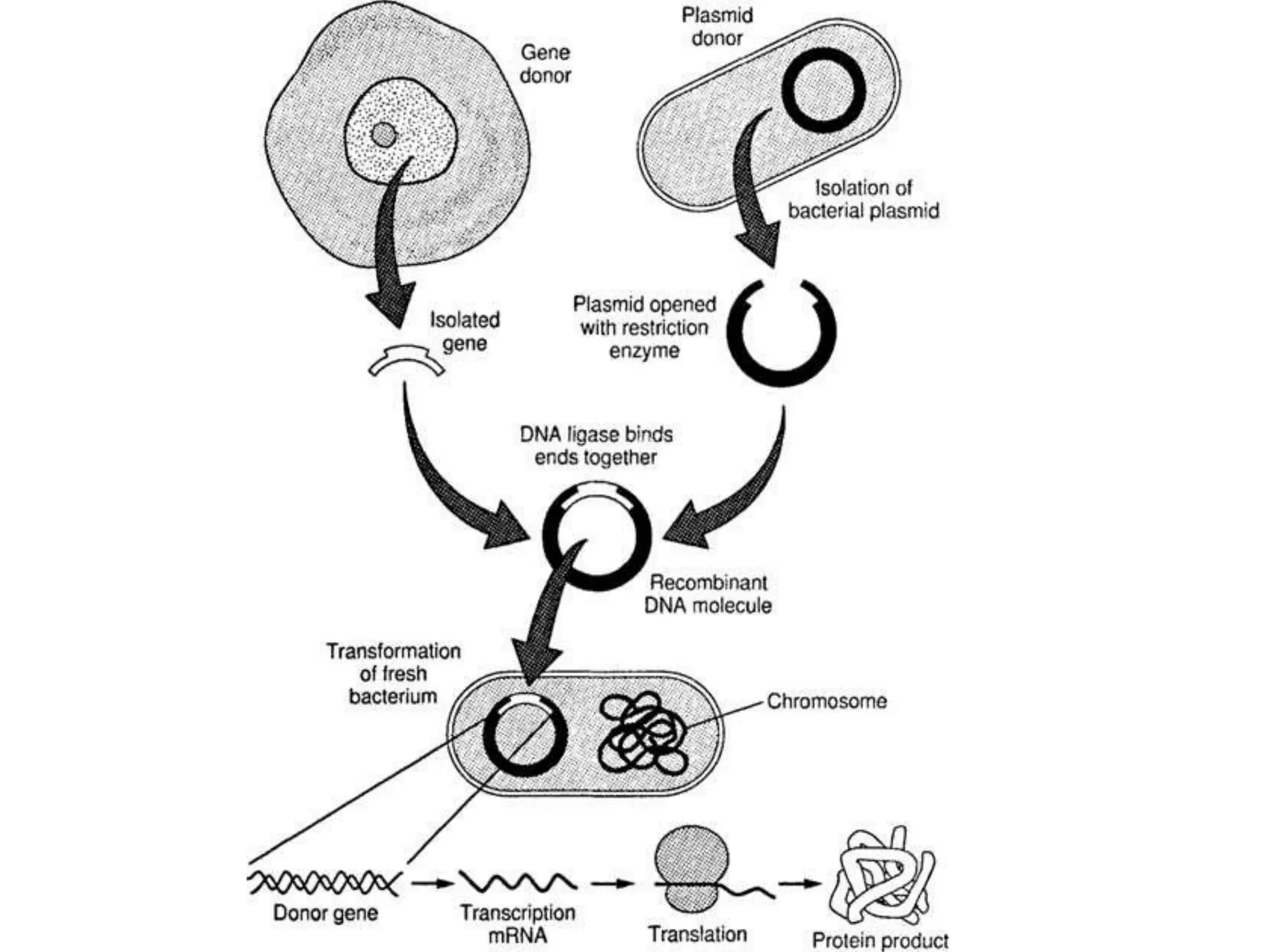
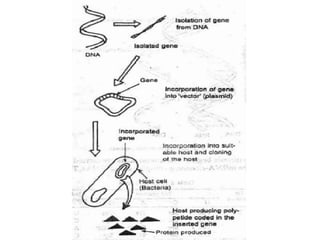
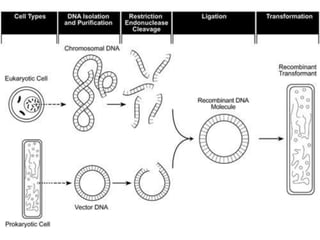
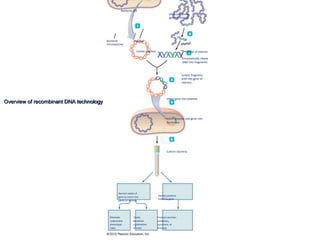
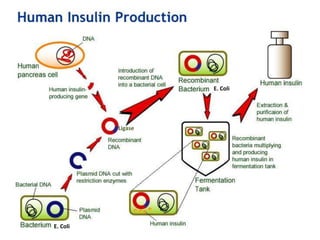
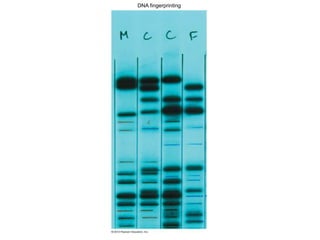
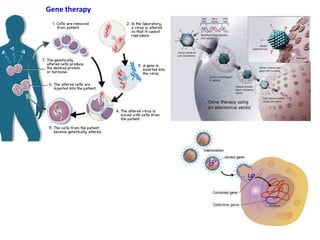
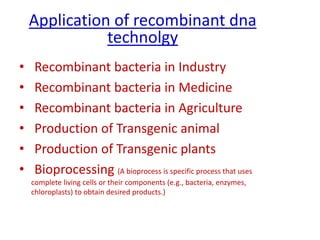

Recombinant DNA technology involves isolating a gene of interest and inserting it into a plasmid or bacterial chromosome. The modified bacteria can then be used to produce therapeutic proteins, vaccines, diagnose and screen for genetic diseases, and conduct gene therapy and DNA fingerprinting. Agricultural applications include creating herbicide-tolerant, pest-resistant, drought-tolerant and nutritionally enhanced crops. Environmental studies use recombinant DNA to identify microbes and study their roles.


