Downloaded 389 times
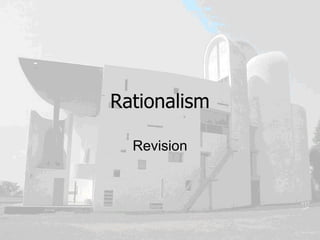


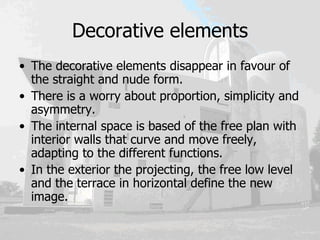


Rationalism was an architectural movement of the 20th century characterized by simplicity of form based on function. Rationalist architects used industrial materials like concrete which was cheap, durable, and allowed for free floor plans. Buildings featured load-bearing pillars and curtain walls with many windows to let in light. Ornamentation was minimized in favor of straightforward forms. Rationalism aimed to accommodate new living standards through urban planning like garden cities and industrial zones. Mies van der Rohe and Le Corbusier were influential Rationalist architects who pioneered the use of steel and glass in skyscrapers and applied principles like pilotis and free facades.


