Download as PPSX, PPTX
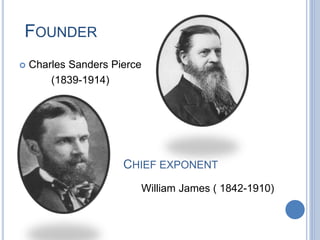

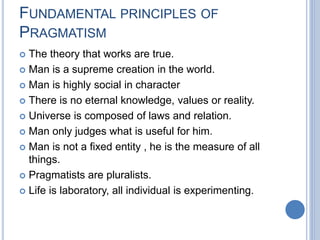





This document discusses the philosophy of pragmatism. It was founded by Charles Sanders Pierce in the late 19th century and its chief exponent was William James. Some key principles of pragmatism are that theories or beliefs are true if they work effectively, there are no absolute truths as values change over time and place, and the goal of education is to meet personal and social needs rather than have a single aim. Pragmatism advocates for an activity-centered and practically useful curriculum, discipline developed through self-experience, and teaching methods focused on experience.


