Nuclear Power Plant
Nuclear Power  Plants Introduction History Advantages How it Works Parts Disadvantages Effects
is a thermal power station in which the heat source is one or more nuclear reactors. Nuclear power plants are base load stations, which work best when the power output is constant (although boiling  water  reactors can come down to half power at night)  Nuclear Power Plant (NPP)
Introduction Our high dependence of fossil fuels for energy has brought about a rapid depletion of those energy sources which resulted in the steady increase in the prices of oil, coal and gas. Therefore, there is a dire need to find new sources of energy. There is, however, one major alternative energy source whose potential for generating electricity is vast but which entails many risks- nuclear energy.
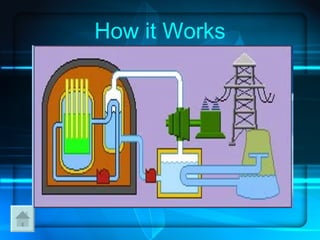
A nuclear power plant has a place where the nuclear reaction happens called a reactor. The plant also has machines which remove heat from the reactor and make electricity. Electricity made by nuclear power plants is called nuclear power.
Nuclear power plants use uranium as fuel. When the reactor is on, uranium atoms inside the reactor split into two smaller atoms. When uranium atoms split, they give off a large amount of heat. This splitting of atoms is called fission.
 
History 1951 (Dec. 20) First electricity is generated from atomic power at EBR-1 Idaho National Engineering Lab, Idaho Falls. This is a government-funded demonstration project. 1954 (Sept.6) Ground broken for Shippingport Atomic Power Station.(Pennsylvania) 1955 (July) Arco, Idaho becomes the first U.S town to be powered by nuclear energy. 1956 Ground broken for GE-Vallecitos, a boiling water reactor, near Pleasanton, California. Issued Power Reactor License by #1 by the U.S Atomic Energy Commission. .
1957 (July) The Sodium Reactor Experiment in Santa Susana, California, generates the first power from a civilian nuclear reactor.  1957 (Aug.3) Vallecitos goes critical. 1957 (Oct.19) Vallecitos connects to the electrical grid and becomes the first privately funded plant to supply power in megawatt amounts to the electric utility grid. It closed in 1963. 1957 (Dec.2) Shippingport, a pressurized water reactor/ light water breeder reactor, goes critical in Shippingport, Pennsylvania. It holds the honor as the first commercial nuclear power plant in the United States. It closed in Oct. 1982.
Parts http://www.animatedsoftware.com/environm/nukequiz/nukequiz_one/nuke_parts/reactor_parts.swf
How it Works
Advantages Essentially no greenhouse gas emissions  Does not produce air pollutants such as carbon monoxide, sulfur dioxide, mercury, nitrogen oxides or particulates  The quantity of waste produced is small  Small number of accidents  Low fuel costs  Large fuel reserves  Ease of transport and stockpiling of fuel  Future designs may be small and modular
Disadvantages Nuclear waste produced is dangerous for thousands of years  Consequences of an accident might be disastrous  Risk of nuclear proliferation associated with some designs  High capital costs  In the past long construction periods, imposing large finance costs and delaying return on investment  High maintenance costs  High cost of decommissioning plants  Current designs are all large-scale
Effects in the Economy A sustainable nuclear power plant uplifts the economy. It helps maintain the good credit rating of the government. It provides continuous production of goods with less material and human costs.
Bibliography http:// www.ida.liu.se/~her/npp/demo.html http://en.wikipedia.org/wiki/Economics_of_new_nuclear_power_plants http://en.wikipedia.org/wiki/Talk:Nuclear_power_plant http://ezinearticles.com/?Advantages-and-Disadvantages-of-Nuclear-Power&id=1494512 http://powerelectrical.blogspot.com/2007/04/nuclear-power-planttypes-advantages-and.html http://wiki.answers.com/Q/What_are_the_advantages_and_disadvantages_of_nuclear_power_plants http://www.experiencefestival.com/a/Nuclear_power_plant_-_Advantages_and_disadvantages/id/5344008 http://www.mass.gov/?pageID=eopsterminal&L=4&L0=Home&L1=Homeland+Security+%26+Emergency+Response&L2=Planning+%26+Preparedness&L3=Family&sid=Eeops&b=terminalcontent&f=mema_nuclear_power_plants_info&csid=Eeops http://science.howstuffworks.com/nuclear-power3.htm

Radiation In Nuclear Power Plants

  • 1.
    NuclearPower Plant
  • 2.
    Nuclear Power Plants Introduction History Advantages How it Works Parts Disadvantages Effects
  • 3.
    is a thermalpower station in which the heat source is one or more nuclear reactors. Nuclear power plants are base load stations, which work best when the power output is constant (although boiling water reactors can come down to half power at night) Nuclear Power Plant (NPP)
  • 4.
    Introduction Our highdependence of fossil fuels for energy has brought about a rapid depletion of those energy sources which resulted in the steady increase in the prices of oil, coal and gas. Therefore, there is a dire need to find new sources of energy. There is, however, one major alternative energy source whose potential for generating electricity is vast but which entails many risks- nuclear energy.
  • 5.
    A nuclear powerplant has a place where the nuclear reaction happens called a reactor. The plant also has machines which remove heat from the reactor and make electricity. Electricity made by nuclear power plants is called nuclear power.
  • 6.
    Nuclear power plantsuse uranium as fuel. When the reactor is on, uranium atoms inside the reactor split into two smaller atoms. When uranium atoms split, they give off a large amount of heat. This splitting of atoms is called fission.
  • 7.
  • 8.
    History 1951 (Dec.20) First electricity is generated from atomic power at EBR-1 Idaho National Engineering Lab, Idaho Falls. This is a government-funded demonstration project. 1954 (Sept.6) Ground broken for Shippingport Atomic Power Station.(Pennsylvania) 1955 (July) Arco, Idaho becomes the first U.S town to be powered by nuclear energy. 1956 Ground broken for GE-Vallecitos, a boiling water reactor, near Pleasanton, California. Issued Power Reactor License by #1 by the U.S Atomic Energy Commission. .
  • 9.
    1957 (July) TheSodium Reactor Experiment in Santa Susana, California, generates the first power from a civilian nuclear reactor. 1957 (Aug.3) Vallecitos goes critical. 1957 (Oct.19) Vallecitos connects to the electrical grid and becomes the first privately funded plant to supply power in megawatt amounts to the electric utility grid. It closed in 1963. 1957 (Dec.2) Shippingport, a pressurized water reactor/ light water breeder reactor, goes critical in Shippingport, Pennsylvania. It holds the honor as the first commercial nuclear power plant in the United States. It closed in Oct. 1982.
  • 10.
  • 11.
  • 12.
    Advantages Essentially nogreenhouse gas emissions Does not produce air pollutants such as carbon monoxide, sulfur dioxide, mercury, nitrogen oxides or particulates The quantity of waste produced is small Small number of accidents Low fuel costs Large fuel reserves Ease of transport and stockpiling of fuel Future designs may be small and modular
  • 13.
    Disadvantages Nuclear wasteproduced is dangerous for thousands of years Consequences of an accident might be disastrous Risk of nuclear proliferation associated with some designs High capital costs In the past long construction periods, imposing large finance costs and delaying return on investment High maintenance costs High cost of decommissioning plants Current designs are all large-scale
  • 14.
    Effects in theEconomy A sustainable nuclear power plant uplifts the economy. It helps maintain the good credit rating of the government. It provides continuous production of goods with less material and human costs.
  • 15.
    Bibliography http:// www.ida.liu.se/~her/npp/demo.htmlhttp://en.wikipedia.org/wiki/Economics_of_new_nuclear_power_plants http://en.wikipedia.org/wiki/Talk:Nuclear_power_plant http://ezinearticles.com/?Advantages-and-Disadvantages-of-Nuclear-Power&id=1494512 http://powerelectrical.blogspot.com/2007/04/nuclear-power-planttypes-advantages-and.html http://wiki.answers.com/Q/What_are_the_advantages_and_disadvantages_of_nuclear_power_plants http://www.experiencefestival.com/a/Nuclear_power_plant_-_Advantages_and_disadvantages/id/5344008 http://www.mass.gov/?pageID=eopsterminal&L=4&L0=Home&L1=Homeland+Security+%26+Emergency+Response&L2=Planning+%26+Preparedness&L3=Family&sid=Eeops&b=terminalcontent&f=mema_nuclear_power_plants_info&csid=Eeops http://science.howstuffworks.com/nuclear-power3.htm