
CORRELATIONAL RESEARCH
QUANTITATIVE RESEARCH
METHODOLOGIES
Presented By: Manoj Patel
Asst. Professor
JHUNJHUNWALA BUSINESS SCHOOL
THE NATURE OF
CORRELATIONAL RESEARCH
• Sometimes called associational research
• It investigates the possibility of relationships
between only two variables
• Also sometimes referred to as a form of
descriptive research
• Describes the degree to which two or more
quantitative variables are related
PURPOSES OF CORRELATIONAL
RESEARCH
• Two basic purposes
1. Help explain important human behaviors
(Explanatory Studies)
2. Predict likely outcomes
(Prediction Studies)
EXPLANOTARY STUDIES
• Researchers often investigate a number of
variables they believe are related to a more
complex variable.
• Unrelated variables dropped from further
consideration
• Most researchers most probably trying to
gain some ideas about cause and effect
• However it does not establish cause and
effect
PREDICTION STUDIES
• Predict a score on one variable if a score on
the other variable is known
• Determine the predictive validity of
measuring instruments
• Predictor Variable; variable that is used to
make the prediction
• Criterion Variable; variable about which the
prediction is made
Using Scatter plots to Predict a Score
• We can use the scatter plots to find a
correlation between the variables
• correlational research.pptx
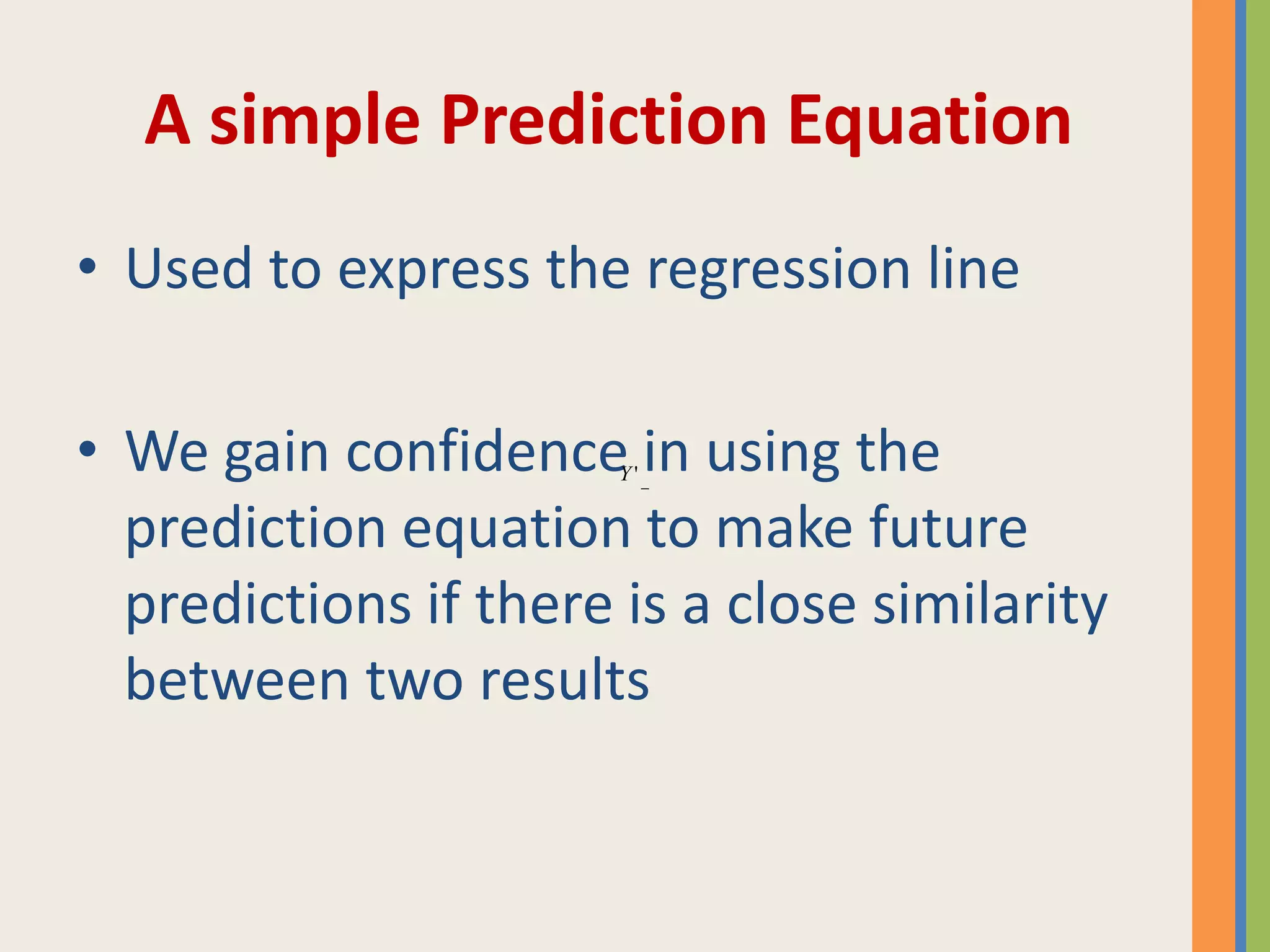
A simple Prediction Equation
• Used to express the regression line
• We gain confidence in using the
prediction equation to make future
predictions if there is a close similarity
between two results
'Y
MORE COMPLEX
CORRELATIONAL TECHNIQUES
1. Multiple Regressions; technique that
enables researchers to determine a
correlation between a criterion variable
• The best combination of two or more
predictor variables
2. The Coefficient of Multiple Correlation
• Symbolized by R; indicates the strength of
the correlation between the combination of
the predictor variables and the criterion
variables.
• multiple correlation.jpg
• The higher R is, the more reliable a
prediction will be
3. The Coefficient of Determination
• The square of the correlation between a
predictor and a criterion variable
• Indicates the percentage of the variability
among the criterion scores that can be
attributed to differences in the scores on
the predictor variable
4. Discriminant Function Analysis
• Technique used when the technique of
multiple regression cannot be used when
the criterion variable is categorical
5. Factor Analysis
• Technique that allows a researcher to
determine if many variables can be
described by a few factors.
BASIC STEPS IN
CORRELATIONAL RESEARCH
1. Problem Selection
• Three major types of problems;
a. is variable X related to variable Y?
b. how well does variable P predict variable C?
c. What are the relationship among a large
number of variables and what predictions can
be made?
2. Sample
• Should be selected carefully, and if
possible, randomly.
• Not less than 30.
3. Instruments
• Most correlational studies involve the
administration of some types of
instruments (tests, questionnaire, and so
on).
4. Design and Procedures
• Design used quite straightforward.
5. Data Collection
• Data on both variables will usually be
collected in a short time.
• Instruments used are administered in a
single session or two sessions
THREATS TO INTERNAL
VALIDITY
• There are some threats identified in
conducting correlational research
1. Subject Characteristics
• Individuals or groups have two or more
characteristics; might be a cause of
variation in the other two variables.
2. Location
• Location is different for different subject
• One location may be more comfortable
compared to others
3. Instrumentation
• Instrument decay; care must be taken to ensure
the observers don’t become tired, bored or
inattentive
• Data collector characteristics; different gender,
age or ethnicity may affect specific response
4. Testing
• Experience of responding to the first
instrument may influence subject responses
to the second instrument
5. Mortality
• Loss of subjects may make a relationship
more (or less) likely in the remaining data
EVALUATING THREATS TO
INTERNAL VALIDITY
• Follows a procedure similar to the
experimental research.
1. Subject Characteristics
• Four of many possible characteristics
a. Severity of disability
b. Socioeconomic level of parents
c. Physical strength and coordination
d. Physical appearance
2. Mortality
• Loss of subjects can be expected to reduce
magnitude of correlation
3. Location
• Threats could be controlled by
independently assessing the job-site
environments.
4. Instrumentation
• Instrument decay; observations should
scheduled
• Data collector characteristics; interaction of
data collectors and supervisors is a
necessary parts
• Data collector bias; observers should have
no knowledge of job ratings
Quantitative research methodologies  correlational research

Quantitative research methodologies correlational research

  • 1.
    CORRELATIONAL RESEARCH QUANTITATIVE RESEARCH METHODOLOGIES PresentedBy: Manoj Patel Asst. Professor JHUNJHUNWALA BUSINESS SCHOOL
  • 2.
    THE NATURE OF CORRELATIONALRESEARCH • Sometimes called associational research • It investigates the possibility of relationships between only two variables • Also sometimes referred to as a form of descriptive research • Describes the degree to which two or more quantitative variables are related
  • 3.
    PURPOSES OF CORRELATIONAL RESEARCH •Two basic purposes 1. Help explain important human behaviors (Explanatory Studies) 2. Predict likely outcomes (Prediction Studies)
  • 4.
    EXPLANOTARY STUDIES • Researchersoften investigate a number of variables they believe are related to a more complex variable. • Unrelated variables dropped from further consideration • Most researchers most probably trying to gain some ideas about cause and effect • However it does not establish cause and effect
  • 5.
    PREDICTION STUDIES • Predicta score on one variable if a score on the other variable is known • Determine the predictive validity of measuring instruments • Predictor Variable; variable that is used to make the prediction • Criterion Variable; variable about which the prediction is made
  • 6.
    Using Scatter plotsto Predict a Score • We can use the scatter plots to find a correlation between the variables • correlational research.pptx
  • 7.
    A simple PredictionEquation • Used to express the regression line • We gain confidence in using the prediction equation to make future predictions if there is a close similarity between two results 'Y
  • 8.
    MORE COMPLEX CORRELATIONAL TECHNIQUES 1.Multiple Regressions; technique that enables researchers to determine a correlation between a criterion variable • The best combination of two or more predictor variables
  • 9.
    2. The Coefficientof Multiple Correlation • Symbolized by R; indicates the strength of the correlation between the combination of the predictor variables and the criterion variables. • multiple correlation.jpg • The higher R is, the more reliable a prediction will be
  • 10.
    3. The Coefficientof Determination • The square of the correlation between a predictor and a criterion variable • Indicates the percentage of the variability among the criterion scores that can be attributed to differences in the scores on the predictor variable
  • 11.
    4. Discriminant FunctionAnalysis • Technique used when the technique of multiple regression cannot be used when the criterion variable is categorical 5. Factor Analysis • Technique that allows a researcher to determine if many variables can be described by a few factors.
  • 12.
    BASIC STEPS IN CORRELATIONALRESEARCH 1. Problem Selection • Three major types of problems; a. is variable X related to variable Y? b. how well does variable P predict variable C? c. What are the relationship among a large number of variables and what predictions can be made?
  • 13.
    2. Sample • Shouldbe selected carefully, and if possible, randomly. • Not less than 30. 3. Instruments • Most correlational studies involve the administration of some types of instruments (tests, questionnaire, and so on).
  • 14.
    4. Design andProcedures • Design used quite straightforward. 5. Data Collection • Data on both variables will usually be collected in a short time. • Instruments used are administered in a single session or two sessions
  • 15.
    THREATS TO INTERNAL VALIDITY •There are some threats identified in conducting correlational research 1. Subject Characteristics • Individuals or groups have two or more characteristics; might be a cause of variation in the other two variables.
  • 16.
    2. Location • Locationis different for different subject • One location may be more comfortable compared to others 3. Instrumentation • Instrument decay; care must be taken to ensure the observers don’t become tired, bored or inattentive • Data collector characteristics; different gender, age or ethnicity may affect specific response
  • 17.
    4. Testing • Experienceof responding to the first instrument may influence subject responses to the second instrument 5. Mortality • Loss of subjects may make a relationship more (or less) likely in the remaining data
  • 18.
    EVALUATING THREATS TO INTERNALVALIDITY • Follows a procedure similar to the experimental research. 1. Subject Characteristics • Four of many possible characteristics a. Severity of disability b. Socioeconomic level of parents c. Physical strength and coordination d. Physical appearance
  • 19.
    2. Mortality • Lossof subjects can be expected to reduce magnitude of correlation 3. Location • Threats could be controlled by independently assessing the job-site environments.
  • 20.
    4. Instrumentation • Instrumentdecay; observations should scheduled • Data collector characteristics; interaction of data collectors and supervisors is a necessary parts • Data collector bias; observers should have no knowledge of job ratings