RADHEY SHAYAM
ACUTE BACTERIAL
MENINGITIS
WHAT IS MENINGITIS?
ACUTE BACTERIAL MENINGITIS
• One of the most serious infection
• Associated with high morbidity & mortality
• Most common causes > 1 month is H.
influenzae type b , strep. Pneumoniae &
N.meningitis
EPIDEMIOLOGY
1) Major risk factor: lack of immunity to specific pathogens
2)Recent colonization with pathogenic bacteria
3)Close contacts with individuals having invasive disease
by N.meningitidis or H.influenzae type b
4) Overcrowding, poverty
5) Splenic dysfunction
6)Congenital or acquired CSF leak across mucocutaneous
barrier
7) Cochlear implant
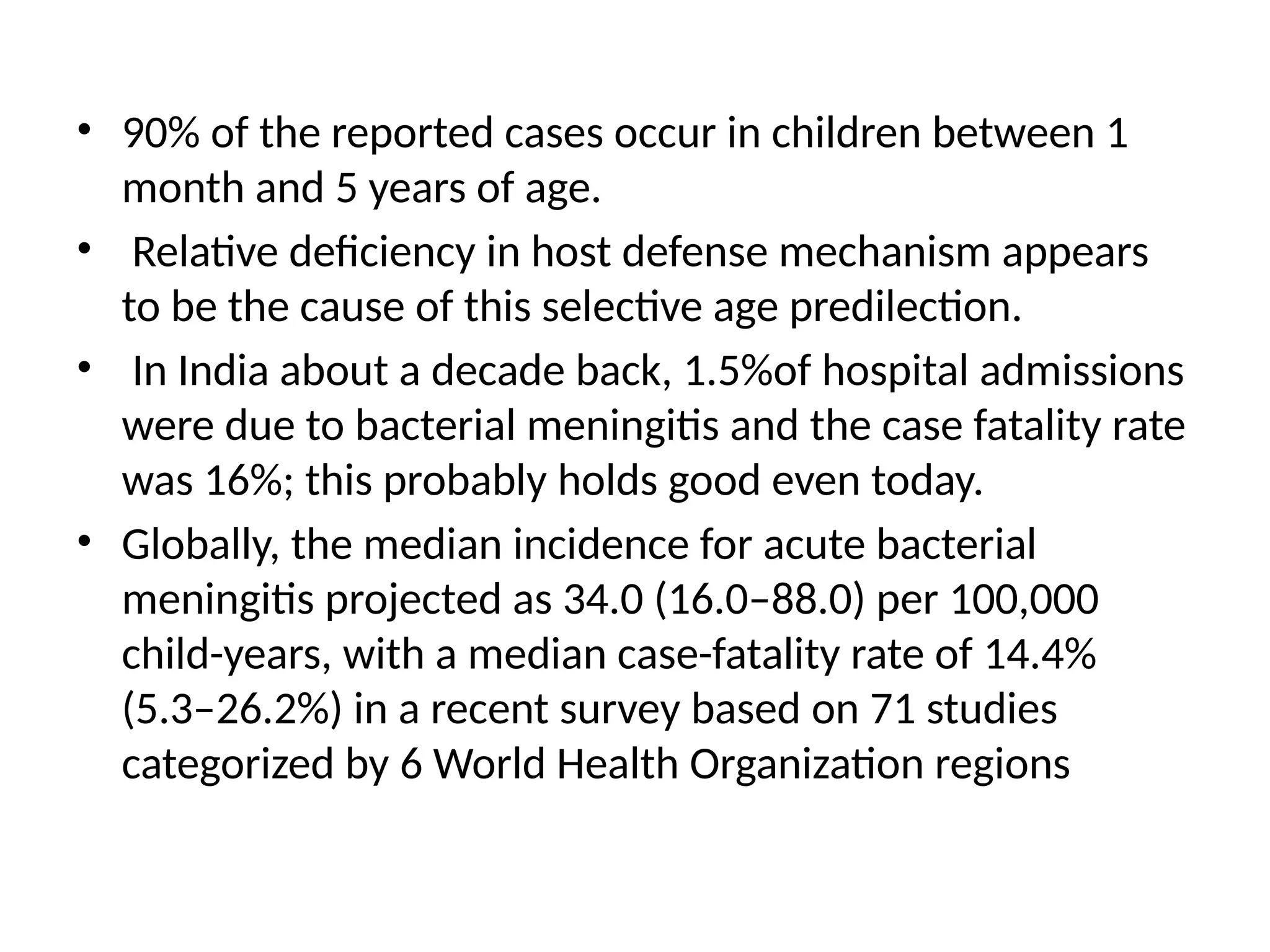
• 90% of the reported cases occur in children between 1
month and 5 years of age.
• Relative deficiency in host defense mechanism appears
to be the cause of this selective age predilection.
• In India about a decade back, 1.5%of hospital admissions
were due to bacterial meningitis and the case fatality rate
was 16%; this probably holds good even today.
• Globally, the median incidence for acute bacterial
meningitis projected as 34.0 (16.0–88.0) per 100,000
child-years, with a median case-fatality rate of 14.4%
(5.3–26.2%) in a recent survey based on 71 studies
categorized by 6 World Health Organization regions
Photo graph
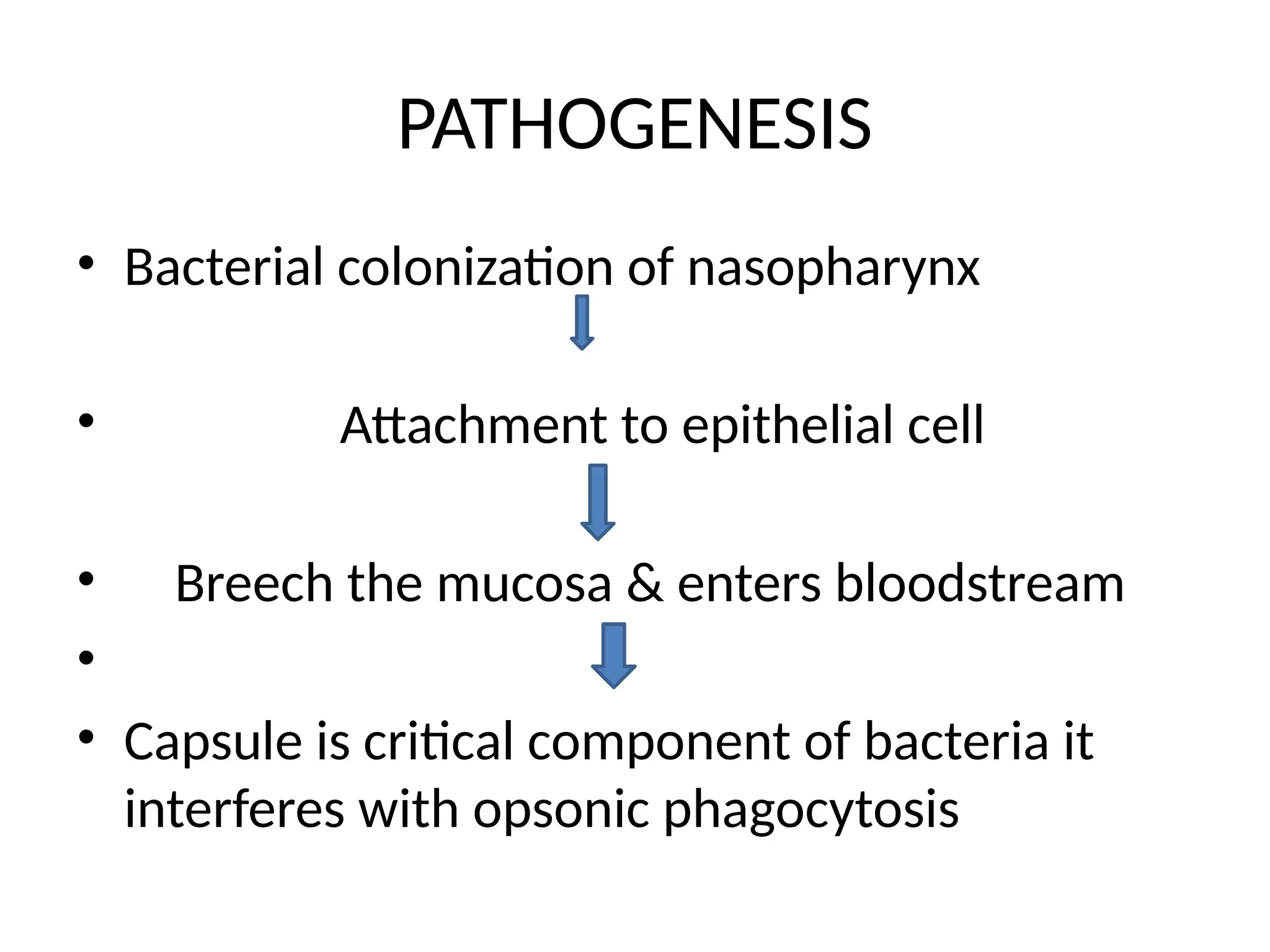
PATHOGENESIS
• Bacterial colonization of nasopharynx
• Attachment to epithelial cell
• Breech the mucosa & enters bloodstream
•
• Capsule is critical component of bacteria it
interferes with opsonic phagocytosis
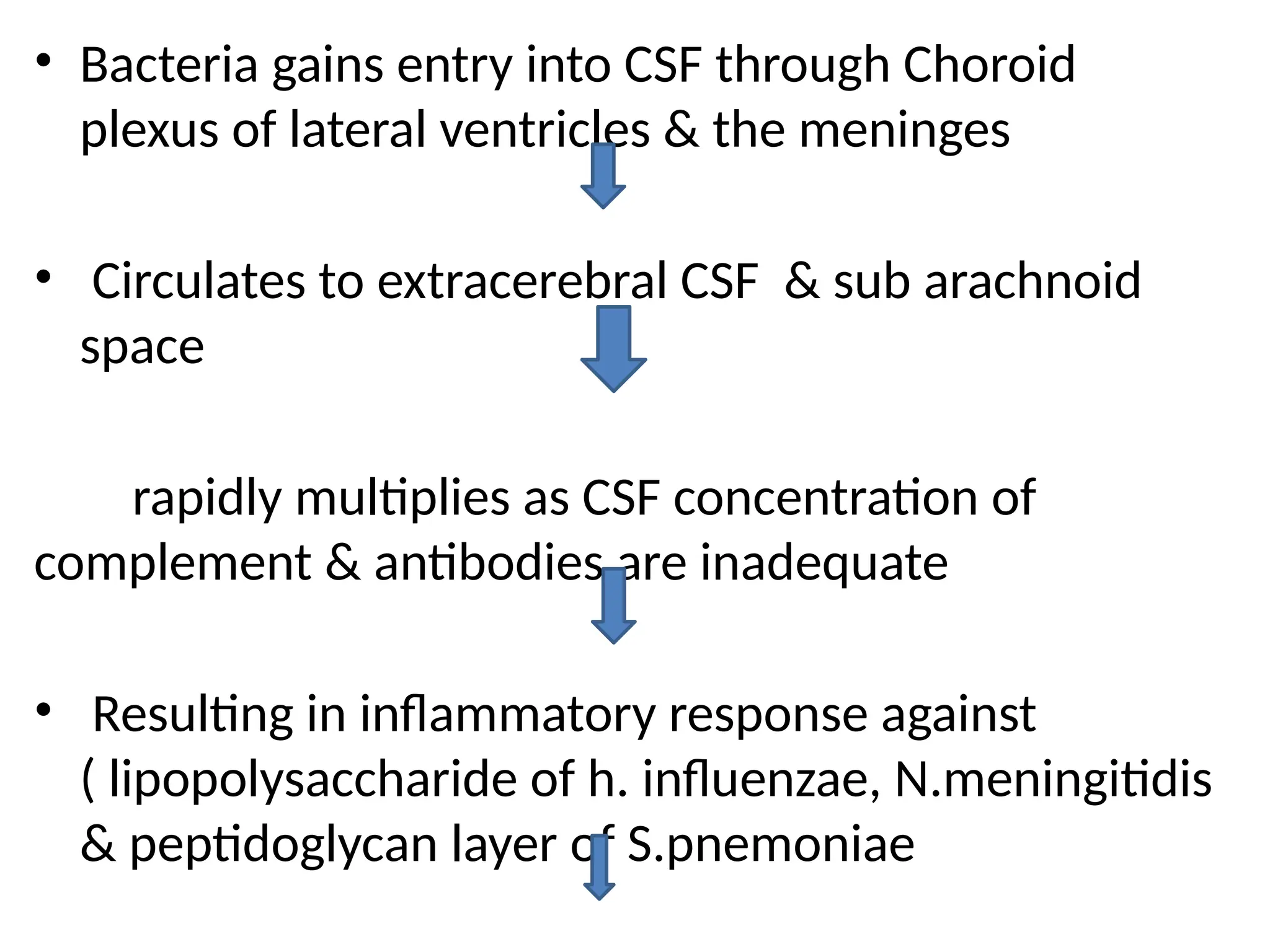
• Bacteria gains entry into CSF through Choroid
plexus of lateral ventricles & the meninges
• Circulates to extracerebral CSF & sub arachnoid
space
rapidly multiplies as CSF concentration of
complement & antibodies are inadequate
• Resulting in inflammatory response against
( lipopolysaccharide of h. influenzae, N.meningitidis
& peptidoglycan layer of S.pnemoniae
• PMNs infiltration with production of
• TNF ,IL -1,PG-E & other inflammatory
markers
•
• Increased vascular capillary permeablity, alteration
of BBB, perivascular inflammatory infiltrates
• Leading to vasogenic cerebral edema, small vessel
thrombosis
• obstructed resorption of CSF
• RAISED ICP
• Giving rise to various complications
CLINICAL FEATURES
• CLINICAL FEATURES VARY WITH AGE
• NEWBORN AND YOUNG INFANTS: Lethargy ,poor feeding,
fever ,shrill cry and sometimes seizures
• Older infants presents with fever ,poor feeding ,irritability
and photophobia, bulged anterior fontanelle in febrile infant
suggests meningitis
• Older children presents with abrupt(sudden) onset of high
fever ,severe unrelenting headache ,anorexia, nuchal
rigidity, tachcardia,mylagia, photophobia and Petechiae,
purpura ,meningeal signs ,and may develop convulsions and
coma
• Meningococcemia is typified by an initial
petechial rash that evolves into ecchymotic and
purpuric lesions.
• Meningeal irritation is manifested as nuchal
rigidity, back pain, Kernig sign (flexion of the hip
90 degrees with subsequent pain with extension
of the leg), and Brudzinski sign (involuntary
flexion of the knees and hips after passive flexion
of the neck while supine).
• Imp. Note : Meningeal signs are lacking till 2
years of age
• Increased ICP is suggested by headache, emesis, bulging fontanel or
diastasis (widening) of the sutures, 3rd (anisocoria, ptosis) or 6th nerve
paralysis, hypertension with bradycardia, apnea or hyperventilation,
decorticate or decerebrate posturing, stupor, coma, or signs of
herniation.
• Papilledema is more common in complicated meningitis and is suggestive
of a more chronic process, such as the presence of an intracranial abscess,
subdural empyema, or occlusion of a dural venous sinus
• Seizures (focal or generalized) related to cerebritis, infarction, or
electrolyte disturbances occur in 20-30% of patients with meningitis.
• Seizures that occur on presentation or within the first 4 days of onset are
usually of little prognostic significance. Poor prognosis is suggested when
seizures persist after the fourth day of illness, which can be refractory to
treatment.
• Alteration in mental status is common among patients with meningitis and
may be the consequence of increased ICP, cerebritis, or hypotension;
manifestations include irritability, lethargy, stupor, obtundation, and
coma. Comatose patients have a poor prognosis.
• Additional manifestations of meningitis
include photophobia and tache cérébrale,
which is elicited by stroking the skin with a
blunt object and observing a raised red streak
within 30-60 sec.
• DIAGNOSIS
1. CSF Study: by lumbar puncture
• confirmed by analysis of the CSF, which is typically
reveals microorganisms on gram stain & culture and
cell count by cytology, CBNAAT
• REMEMBER: In very early cases CSF examination may
be normal for cell count, protein ,sugar but culture
may be positive
CONTRAINDICATIONS OF LP:
1.evidence of increased ICP, HTN due to risk of herniation
and death
2. In patients in whom positioning for LP would further
compromise cardiopulmonary function
3.Infection of the skin overlying the site for LP
• Relative contraindications:
• Sepsis or hypotension: Should be stabilized
first
• Coagulation disorder (DIC and platelet count
<50,000/mm3): Appropriate correction first
• GCS<8 ;consider brain imaging
If an LP is delayed, empirical antibiotic therapy
should be initiated
LP may be performed after increased ICP has
been appropriately treated.
• Evidence of increased ICP (other than a
bulging fontanel) such as 3rd or 6th cranial
nerve palsy with a depressed level of
consciousness, or the Cushing reflex
(hypertension and bradycardia associated with
respiratory abnormalities)
• . Some clinicians obtain a head CT scan prior to
LP to evaluate for evidence of increased ICP, as
an LP in the setting of elevated ICP could cause
brain herniation. However, Therefore. Blood
cultures should be performed in all patients
with suspected meningitis.
• Gram stain is positive > 70% of patients with untreated bacterial meningitis.
• A diagnostic conundrum in the evaluation of children with suspected bacterial
meningitis is the analysis of CSF obtained from children already receiving
antibiotic therapy. This is a common clinical scenario, as 25-50% of children
being evaluated for bacterial meningitis have received antibiotics before a CSF
sample is obtained.
• CSF obtained from children with bacterial meningitis can be negative on Gram
stain and culture as early as 2-4 hr after administration of antibiotics,
especially in situations of N. meningitidis and sensitive S. pneumoniae
meningitis.
• However, pleocytosis with a predominance of neutrophils, an elevated protein
level, and a reduced concentration of CSF glucose will usually persist for
several days after the administration of appropriate parenteral antibiotics.
Therefore, despite negative cultures, the presumptive diagnosis of bacterial
meningitis can be made on the basis of an abnormal CSF cell count, protein,
and glucose
• PCR using broad-based bacterial 16S ribosomal RNA gene patterns may be
useful in diagnosing the cause of culture-negative meningitis or fastidious
pathogen. because of prior antibiotic therapy or the presence of a
nonculturable
CT SCAN
• Routine head CT scans prior to LP are not
recommended unless the patient has clinical signs or is
at risk for elevated ICP, including papilledema, focal
neurologic findings, coma, history of hydrocephalus, or
history of a previous neurosurgical procedure including
CSF shunt placement.
• a head CT scan may delay diagnosis of meningitis and
initiation of antimicrobials, and it does not always rule
out increased ICP.
• However, if the decision is made to obtain a CT scan
prior to LP, antimicrobial therapy should not be delayed
BLOOD CULTURE
• Blood cultures reveal the responsible bacteria
in up to 80-90% of cases of meningitis.
• Elevations of the C-reactive protein,
erythrocyte sedimentation rate, and
procalcitonin can be seen in both bacterial
and viral meningitis and should not be used to
routinely determine which patient should
receive antimicrobials
TREATMENT
• Several studies have demonstrated in initiating antimicrobial therapy, even
at the level of a that delays in hours, are significantly associated with
adverse clinical outcomes and death. If there are signs of focal neurologic
findings, papilledema, or Increased ICP, antibiotics should be given prior to
obtaining a head CT scan and LP, and the increased ICP should be treated
simultaneously
• The recommended empirical antibiotic regimen in a suspected case of
meningitis outside the neonatal period is vancomycin combined with a
third-generation cephalosporin (ceftriaxone). Because of the efficacy of
third-generation cephalosporins in the therapy of meningitis caused by
sensitive S. pneumoniae, N. meningitidis, and H. influenzae type b,
ceftriaxone (50 mg/kg/dose given every 12 hr) should be part of the initial
empirical therapy. Based on the substantial rate of resistance of S.
pneumoniae to B-lactam drugs, vancomycin (60 mg/kg/day given every 6-
8 hr; some experts would start as high as 80 mg/kg/day
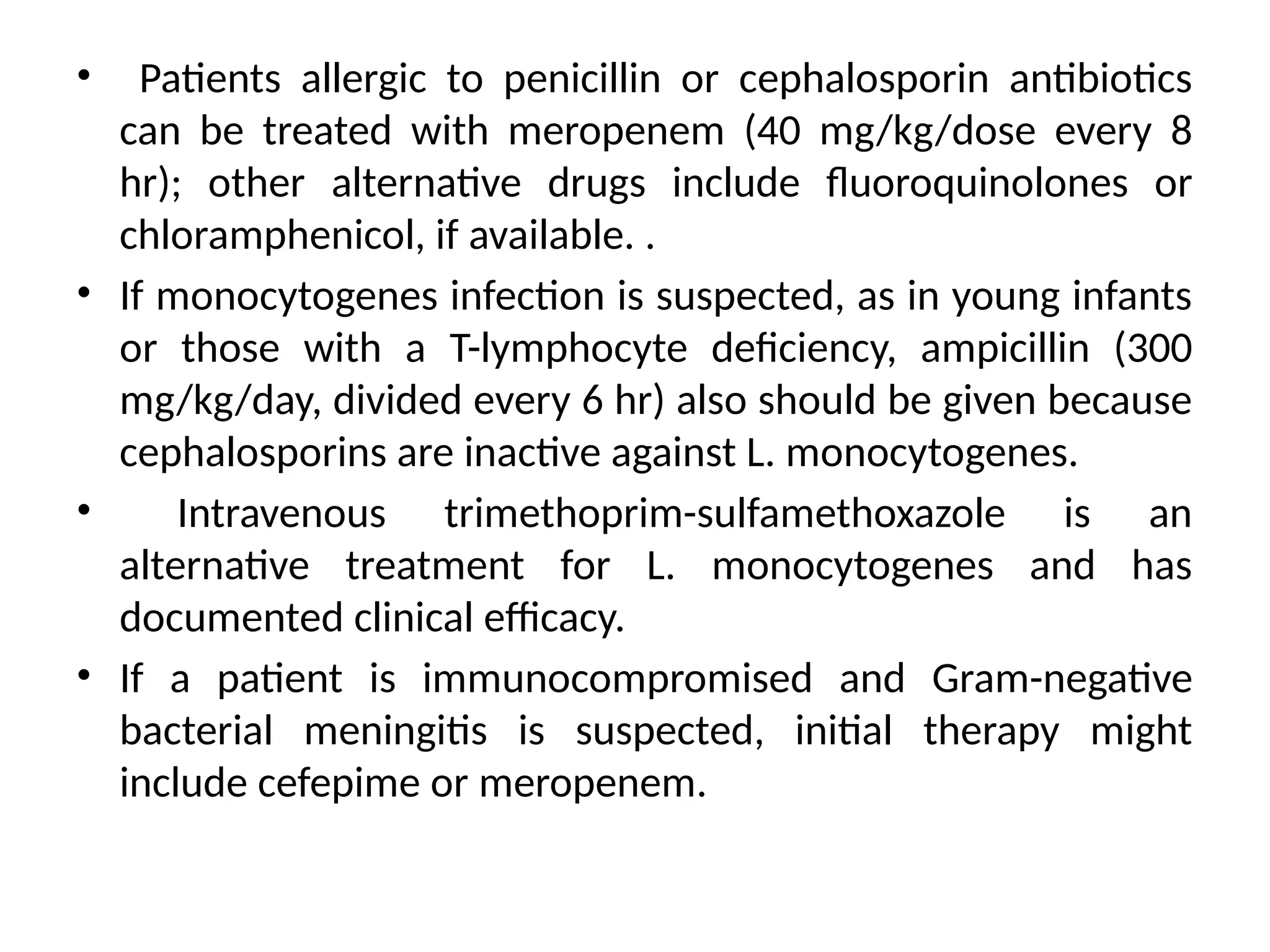
• Patients allergic to penicillin or cephalosporin antibiotics
can be treated with meropenem (40 mg/kg/dose every 8
hr); other alternative drugs include fluoroquinolones or
chloramphenicol, if available. .
• If monocytogenes infection is suspected, as in young infants
or those with a T-lymphocyte deficiency, ampicillin (300
mg/kg/day, divided every 6 hr) also should be given because
cephalosporins are inactive against L. monocytogenes.
• Intravenous trimethoprim-sulfamethoxazole is an
alternative treatment for L. monocytogenes and has
documented clinical efficacy.
• If a patient is immunocompromised and Gram-negative
bacterial meningitis is suspected, initial therapy might
include cefepime or meropenem.
DURATION OF THERAPY
• * Unspecified bacterial meningitis: 10–14 days
• * Neisseria meningitidis: 5–7 days
• * Haemophilus influenzae: 7–10 days
• * Streptococcus pneumoniae: 10–14 days
• * Gram-negative bacillary and pseudomonal meningitis: 21–
28 days
• Patients who receivable venous or oral antibiotics prior to
LP and do not have an identifiable pathogen, but do have
evidence of bacterial meningitis based on their CSF profile,
should receive therapy with ceftriaxone or cefotaxime for 7-
10 days.
ROLE OF CORTICOSTEROIDS
• Rapid killing of bacteria in the CSF effectively
sterilizes the meningeal infection but releases
toxic cell products after cell lysis
• use of IV dexamethasone, 0.15 mg/kg/dose
every 6 hourly for 2 days in treatment of H.
influenzae type b in older than 6 weeks of age.
Corticosteroids appear to have maximum
benefit in children if given 1-2 hr before
antibiotics are initiated.
COMPLICATIONS
 Seizures ,cranial nerve palsies stroke, cerebral or cerebellar herniation,
and thrombosis of the dural venous sinuses.
 Collections of fluid in the subdural space develop in 10-30% of patients
with meningitis & are asymptomatic in 85-90% of patients.
 Symptomatic subdural effusion may result in bulging fontanalle, diastasis
of sutures, enlarging head circumference , fever, emesis seizures
 SIADH occurs in some patients with meningitis, resulting in hypo-natremia
and reduced serum osmolality. This may exacerbate cerebra-edema or
result in hyponatremic seizures
 Prolonged fever (>10 days) is noted in approximately 10% of patients.
Prolonged fever is usually caused by intercurrent viral infection,
nosocomial or secondary bacterial infection, thrombophlebitis, or drug
reaction.
 In meningitis caused by N. meningitidis, pericarditis
or arthritis may occur during treatment and is
caused by either bacterial dissemination or immune
complex deposition.
 Thrombocytosis, eosinophilia, and anemia may
develop during therapy for meningitis.
 Anemia may be a result of hemolysis or bone
marrow suppression.
 Disseminated intravascular coagulation is most
often associated with the rapidly progressive
pattern of presentation and is noted most
commonly in patients with shock and purpura.
PROGNOSIS
• Appropriate antibiotic therapy and supportive care have reduced the
mortality rate of bacterial meningitis beyond the neonatal period to <
10%.
• The highest mortality rates are observed with pneumococcal meningitis.
• Severe neurodevelopmental sequelae may occur in 10-20% of patients
recovering from bacterial meningitis, and as many as 50% have some
neurologic sequelae.
• The prognosis is worse among infants younger than 6 months and in
those with a high bacterial burden in their CSF. Those with seizures
occurring more than 4 days into therapy or with coma or focal neurologic
signs on presentation also have an increased risk of long-term sequelae
• The most common neurological sequele include hearing loss ,cognitive
impairment, recurrent seizures ,visual impairment
• Hearing loss is most common sequele because of cochlear & auditory
nerve inflammation
• THANK YOU

Acute meningitis in pediatrics population

  • 1.
  • 2.
  • 3.
  • 4.
    ACUTE BACTERIAL MENINGITIS •One of the most serious infection • Associated with high morbidity & mortality • Most common causes > 1 month is H. influenzae type b , strep. Pneumoniae & N.meningitis
  • 5.
    EPIDEMIOLOGY 1) Major riskfactor: lack of immunity to specific pathogens 2)Recent colonization with pathogenic bacteria 3)Close contacts with individuals having invasive disease by N.meningitidis or H.influenzae type b 4) Overcrowding, poverty 5) Splenic dysfunction 6)Congenital or acquired CSF leak across mucocutaneous barrier 7) Cochlear implant
  • 6.
    • 90% ofthe reported cases occur in children between 1 month and 5 years of age. • Relative deficiency in host defense mechanism appears to be the cause of this selective age predilection. • In India about a decade back, 1.5%of hospital admissions were due to bacterial meningitis and the case fatality rate was 16%; this probably holds good even today. • Globally, the median incidence for acute bacterial meningitis projected as 34.0 (16.0–88.0) per 100,000 child-years, with a median case-fatality rate of 14.4% (5.3–26.2%) in a recent survey based on 71 studies categorized by 6 World Health Organization regions
  • 7.
  • 9.
    PATHOGENESIS • Bacterial colonizationof nasopharynx • Attachment to epithelial cell • Breech the mucosa & enters bloodstream • • Capsule is critical component of bacteria it interferes with opsonic phagocytosis
  • 10.
    • Bacteria gainsentry into CSF through Choroid plexus of lateral ventricles & the meninges • Circulates to extracerebral CSF & sub arachnoid space rapidly multiplies as CSF concentration of complement & antibodies are inadequate • Resulting in inflammatory response against ( lipopolysaccharide of h. influenzae, N.meningitidis & peptidoglycan layer of S.pnemoniae
  • 11.
    • PMNs infiltrationwith production of • TNF ,IL -1,PG-E & other inflammatory markers • • Increased vascular capillary permeablity, alteration of BBB, perivascular inflammatory infiltrates • Leading to vasogenic cerebral edema, small vessel thrombosis • obstructed resorption of CSF
  • 12.
    • RAISED ICP •Giving rise to various complications
  • 13.
    CLINICAL FEATURES • CLINICALFEATURES VARY WITH AGE • NEWBORN AND YOUNG INFANTS: Lethargy ,poor feeding, fever ,shrill cry and sometimes seizures • Older infants presents with fever ,poor feeding ,irritability and photophobia, bulged anterior fontanelle in febrile infant suggests meningitis • Older children presents with abrupt(sudden) onset of high fever ,severe unrelenting headache ,anorexia, nuchal rigidity, tachcardia,mylagia, photophobia and Petechiae, purpura ,meningeal signs ,and may develop convulsions and coma
  • 14.
    • Meningococcemia istypified by an initial petechial rash that evolves into ecchymotic and purpuric lesions. • Meningeal irritation is manifested as nuchal rigidity, back pain, Kernig sign (flexion of the hip 90 degrees with subsequent pain with extension of the leg), and Brudzinski sign (involuntary flexion of the knees and hips after passive flexion of the neck while supine). • Imp. Note : Meningeal signs are lacking till 2 years of age
  • 18.
    • Increased ICPis suggested by headache, emesis, bulging fontanel or diastasis (widening) of the sutures, 3rd (anisocoria, ptosis) or 6th nerve paralysis, hypertension with bradycardia, apnea or hyperventilation, decorticate or decerebrate posturing, stupor, coma, or signs of herniation. • Papilledema is more common in complicated meningitis and is suggestive of a more chronic process, such as the presence of an intracranial abscess, subdural empyema, or occlusion of a dural venous sinus • Seizures (focal or generalized) related to cerebritis, infarction, or electrolyte disturbances occur in 20-30% of patients with meningitis. • Seizures that occur on presentation or within the first 4 days of onset are usually of little prognostic significance. Poor prognosis is suggested when seizures persist after the fourth day of illness, which can be refractory to treatment. • Alteration in mental status is common among patients with meningitis and may be the consequence of increased ICP, cerebritis, or hypotension; manifestations include irritability, lethargy, stupor, obtundation, and coma. Comatose patients have a poor prognosis.
  • 19.
    • Additional manifestationsof meningitis include photophobia and tache cérébrale, which is elicited by stroking the skin with a blunt object and observing a raised red streak within 30-60 sec.
  • 20.
    • DIAGNOSIS 1. CSFStudy: by lumbar puncture • confirmed by analysis of the CSF, which is typically reveals microorganisms on gram stain & culture and cell count by cytology, CBNAAT • REMEMBER: In very early cases CSF examination may be normal for cell count, protein ,sugar but culture may be positive CONTRAINDICATIONS OF LP: 1.evidence of increased ICP, HTN due to risk of herniation and death 2. In patients in whom positioning for LP would further compromise cardiopulmonary function 3.Infection of the skin overlying the site for LP
  • 21.
    • Relative contraindications: •Sepsis or hypotension: Should be stabilized first • Coagulation disorder (DIC and platelet count <50,000/mm3): Appropriate correction first • GCS<8 ;consider brain imaging
  • 22.
    If an LPis delayed, empirical antibiotic therapy should be initiated LP may be performed after increased ICP has been appropriately treated. • Evidence of increased ICP (other than a bulging fontanel) such as 3rd or 6th cranial nerve palsy with a depressed level of consciousness, or the Cushing reflex (hypertension and bradycardia associated with respiratory abnormalities)
  • 23.
    • . Someclinicians obtain a head CT scan prior to LP to evaluate for evidence of increased ICP, as an LP in the setting of elevated ICP could cause brain herniation. However, Therefore. Blood cultures should be performed in all patients with suspected meningitis.
  • 26.
    • Gram stainis positive > 70% of patients with untreated bacterial meningitis. • A diagnostic conundrum in the evaluation of children with suspected bacterial meningitis is the analysis of CSF obtained from children already receiving antibiotic therapy. This is a common clinical scenario, as 25-50% of children being evaluated for bacterial meningitis have received antibiotics before a CSF sample is obtained. • CSF obtained from children with bacterial meningitis can be negative on Gram stain and culture as early as 2-4 hr after administration of antibiotics, especially in situations of N. meningitidis and sensitive S. pneumoniae meningitis. • However, pleocytosis with a predominance of neutrophils, an elevated protein level, and a reduced concentration of CSF glucose will usually persist for several days after the administration of appropriate parenteral antibiotics. Therefore, despite negative cultures, the presumptive diagnosis of bacterial meningitis can be made on the basis of an abnormal CSF cell count, protein, and glucose • PCR using broad-based bacterial 16S ribosomal RNA gene patterns may be useful in diagnosing the cause of culture-negative meningitis or fastidious pathogen. because of prior antibiotic therapy or the presence of a nonculturable
  • 27.
    CT SCAN • Routinehead CT scans prior to LP are not recommended unless the patient has clinical signs or is at risk for elevated ICP, including papilledema, focal neurologic findings, coma, history of hydrocephalus, or history of a previous neurosurgical procedure including CSF shunt placement. • a head CT scan may delay diagnosis of meningitis and initiation of antimicrobials, and it does not always rule out increased ICP. • However, if the decision is made to obtain a CT scan prior to LP, antimicrobial therapy should not be delayed
  • 28.
    BLOOD CULTURE • Bloodcultures reveal the responsible bacteria in up to 80-90% of cases of meningitis. • Elevations of the C-reactive protein, erythrocyte sedimentation rate, and procalcitonin can be seen in both bacterial and viral meningitis and should not be used to routinely determine which patient should receive antimicrobials
  • 29.
    TREATMENT • Several studieshave demonstrated in initiating antimicrobial therapy, even at the level of a that delays in hours, are significantly associated with adverse clinical outcomes and death. If there are signs of focal neurologic findings, papilledema, or Increased ICP, antibiotics should be given prior to obtaining a head CT scan and LP, and the increased ICP should be treated simultaneously • The recommended empirical antibiotic regimen in a suspected case of meningitis outside the neonatal period is vancomycin combined with a third-generation cephalosporin (ceftriaxone). Because of the efficacy of third-generation cephalosporins in the therapy of meningitis caused by sensitive S. pneumoniae, N. meningitidis, and H. influenzae type b, ceftriaxone (50 mg/kg/dose given every 12 hr) should be part of the initial empirical therapy. Based on the substantial rate of resistance of S. pneumoniae to B-lactam drugs, vancomycin (60 mg/kg/day given every 6- 8 hr; some experts would start as high as 80 mg/kg/day
  • 30.
    • Patients allergicto penicillin or cephalosporin antibiotics can be treated with meropenem (40 mg/kg/dose every 8 hr); other alternative drugs include fluoroquinolones or chloramphenicol, if available. . • If monocytogenes infection is suspected, as in young infants or those with a T-lymphocyte deficiency, ampicillin (300 mg/kg/day, divided every 6 hr) also should be given because cephalosporins are inactive against L. monocytogenes. • Intravenous trimethoprim-sulfamethoxazole is an alternative treatment for L. monocytogenes and has documented clinical efficacy. • If a patient is immunocompromised and Gram-negative bacterial meningitis is suspected, initial therapy might include cefepime or meropenem.
  • 32.
    DURATION OF THERAPY •* Unspecified bacterial meningitis: 10–14 days • * Neisseria meningitidis: 5–7 days • * Haemophilus influenzae: 7–10 days • * Streptococcus pneumoniae: 10–14 days • * Gram-negative bacillary and pseudomonal meningitis: 21– 28 days • Patients who receivable venous or oral antibiotics prior to LP and do not have an identifiable pathogen, but do have evidence of bacterial meningitis based on their CSF profile, should receive therapy with ceftriaxone or cefotaxime for 7- 10 days.
  • 33.
    ROLE OF CORTICOSTEROIDS •Rapid killing of bacteria in the CSF effectively sterilizes the meningeal infection but releases toxic cell products after cell lysis • use of IV dexamethasone, 0.15 mg/kg/dose every 6 hourly for 2 days in treatment of H. influenzae type b in older than 6 weeks of age. Corticosteroids appear to have maximum benefit in children if given 1-2 hr before antibiotics are initiated.
  • 34.
    COMPLICATIONS  Seizures ,cranialnerve palsies stroke, cerebral or cerebellar herniation, and thrombosis of the dural venous sinuses.  Collections of fluid in the subdural space develop in 10-30% of patients with meningitis & are asymptomatic in 85-90% of patients.  Symptomatic subdural effusion may result in bulging fontanalle, diastasis of sutures, enlarging head circumference , fever, emesis seizures  SIADH occurs in some patients with meningitis, resulting in hypo-natremia and reduced serum osmolality. This may exacerbate cerebra-edema or result in hyponatremic seizures  Prolonged fever (>10 days) is noted in approximately 10% of patients. Prolonged fever is usually caused by intercurrent viral infection, nosocomial or secondary bacterial infection, thrombophlebitis, or drug reaction.
  • 35.
     In meningitiscaused by N. meningitidis, pericarditis or arthritis may occur during treatment and is caused by either bacterial dissemination or immune complex deposition.  Thrombocytosis, eosinophilia, and anemia may develop during therapy for meningitis.  Anemia may be a result of hemolysis or bone marrow suppression.  Disseminated intravascular coagulation is most often associated with the rapidly progressive pattern of presentation and is noted most commonly in patients with shock and purpura.
  • 36.
    PROGNOSIS • Appropriate antibiotictherapy and supportive care have reduced the mortality rate of bacterial meningitis beyond the neonatal period to < 10%. • The highest mortality rates are observed with pneumococcal meningitis. • Severe neurodevelopmental sequelae may occur in 10-20% of patients recovering from bacterial meningitis, and as many as 50% have some neurologic sequelae. • The prognosis is worse among infants younger than 6 months and in those with a high bacterial burden in their CSF. Those with seizures occurring more than 4 days into therapy or with coma or focal neurologic signs on presentation also have an increased risk of long-term sequelae • The most common neurological sequele include hearing loss ,cognitive impairment, recurrent seizures ,visual impairment • Hearing loss is most common sequele because of cochlear & auditory nerve inflammation
  • 37.