Ca homeostasis: Role of PTH & vit.
              D3

           Nermeen Bastawy
        Physiology Department
          Faculty of Medicine
            Cairo University
Calcium
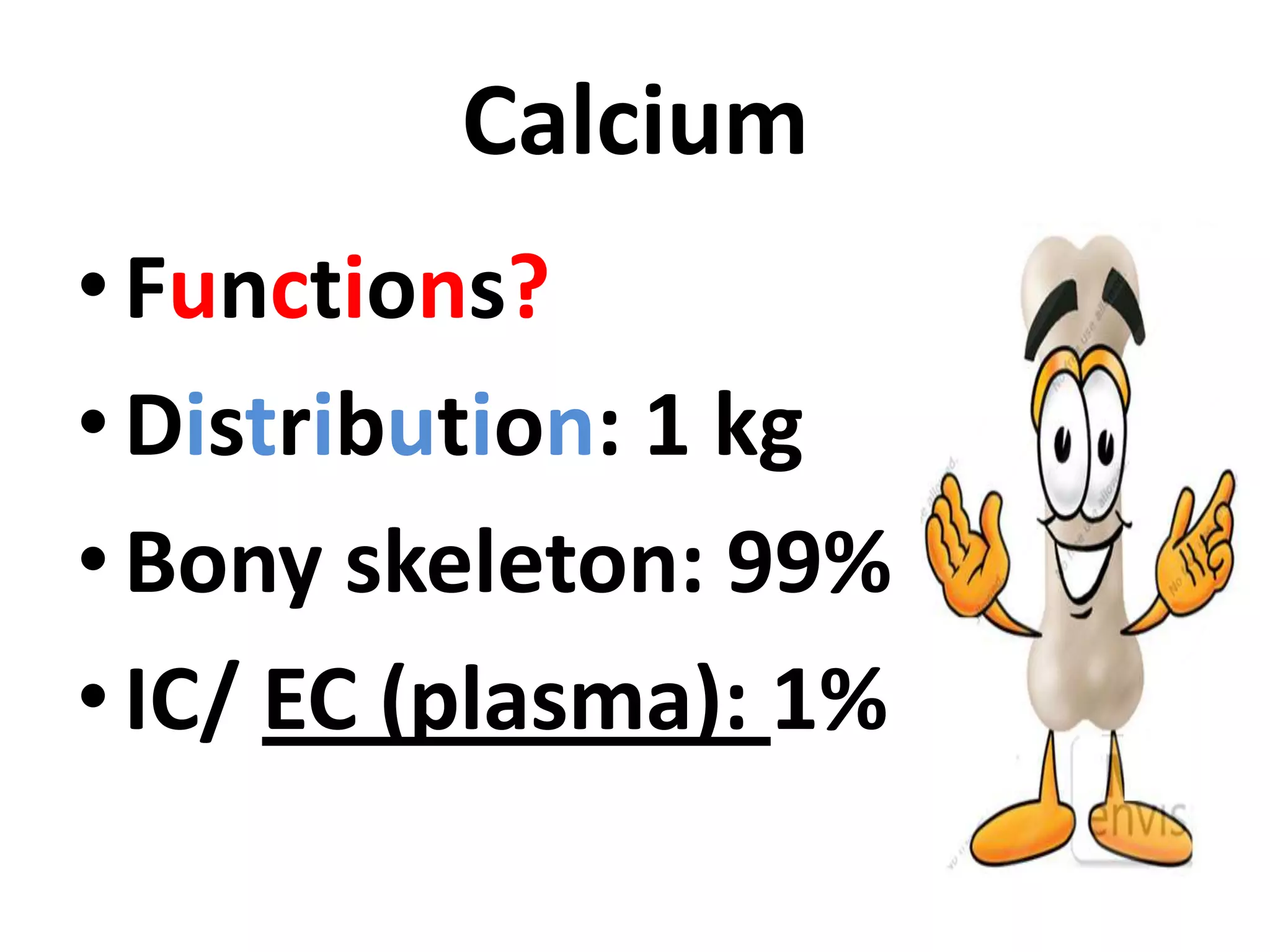
• Functions?
• Distribution: 1 kg
• Bony skeleton: 99%
• IC/ EC (plasma): 1%
Bony skeleton
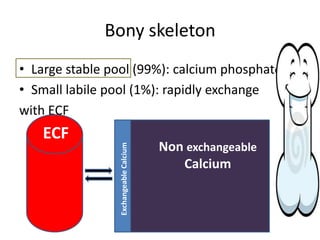
• Large stable pool (99%): calcium phosphate
• Small labile pool (1%): rapidly exchange
with ECF
   ECF
                                       Non exchangeable
                Exchangeable Calcium


                                          Calcium
++ Ca
• Functions?
• Distribution: 1000 g
• Bony skeleton: 99%
• IC/ EC (plasma): 1%
Plasma Calcium
•   Total : 9.4 -11 mg %:
•   Diffusible (mostly ionized as Ca++)
•   Non diffusible (plasma ptn-bound)
•   Ionised Ca is necessary for:

           Coagulation
        Muscles contraction
        Nerve function
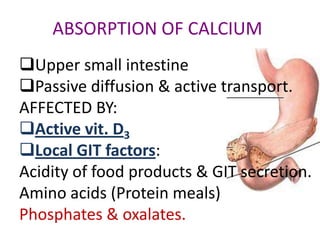
ABSORPTION OF CALCIUM
Upper small intestine
Passive diffusion & active transport.
AFFECTED BY:
Active vit. D3
Local GIT factors:
Acidity of food products & GIT secretion.
Amino acids (Protein meals)
Phosphates & oxalates.
PHOSPHOROUS

 500 - 800 g (90% in the skeleton).
 12 mg/dl
 ATP, cAMP, 2,3DPG,
Phosphoproteins, Phospholipid
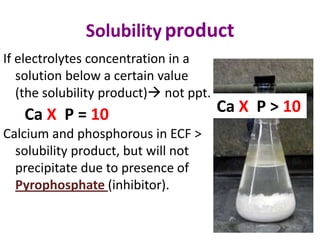
Solubility product
If electrolytes concentration in a
   solution below a certain value
   (the solubility product) not ppt.
   Ca X P = 10                          Ca X P > 10
Calcium and phosphorous in ECF >
  solubility product, but will not
  precipitate due to presence of
  Pyrophosphate (inhibitor).
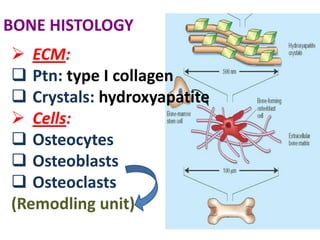
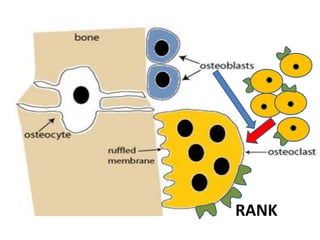
BONE HISTOLOGY
 ECM:
 Ptn: type I collagen
 Crystals: hydroxyapatite
 Cells:
 Osteocytes
 Osteoblasts
 Osteoclasts
(Remodling unit)
RANK
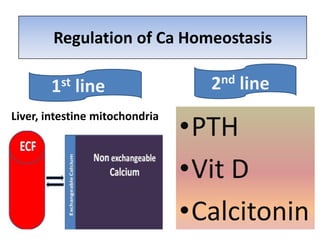
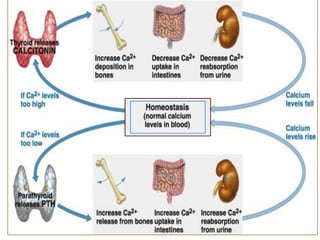
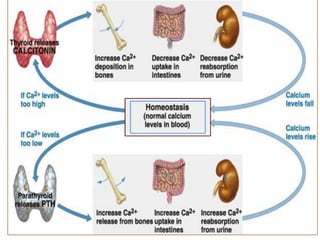
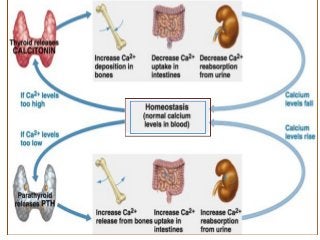
Regulation of Ca Homeostasis

        1 line
          st                       2nd line
Liver, intestine mitochondria
                                • PTH
                                • Vit D
                                • Calcitonin
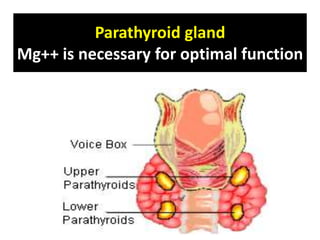
Parathyroid gland
Mg++ is necessary for optimal function
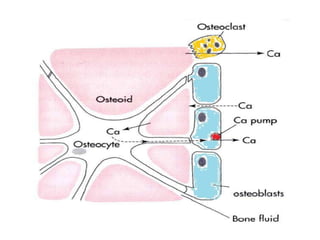
ACTIONS OF PTH ON BONE

 Rapid Phase: (min-hrs.)
 Slow phase: (days- weeks).
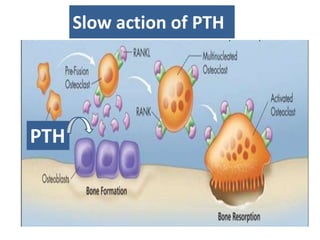
Slow action of PTH


PTH
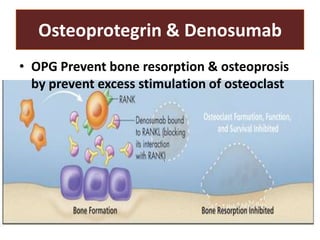
Osteoprotegrin & Denosumab
• OPG Prevent bone resorption & osteoprosis
  by prevent excess stimulation of osteoclast
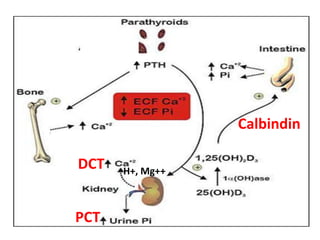
Calbindin

DCT   ++H+, Mg


PCT
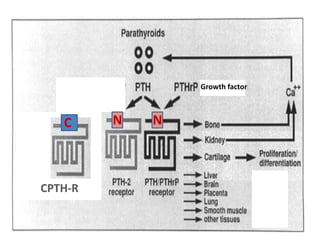
Growth factor


   C     N   N


CPTH-R
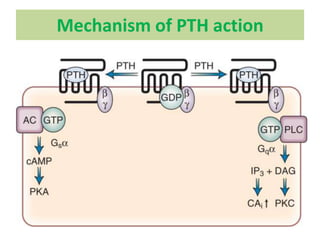
Mechanism of PTH action
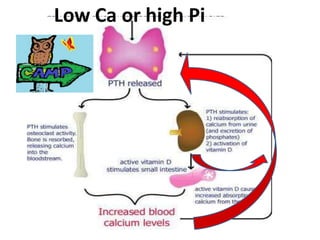
Low Ca or high Pi
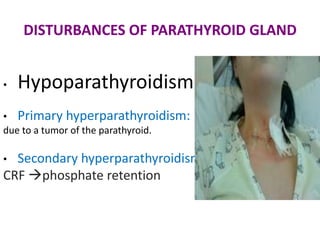
DISTURBANCES OF PARATHYROID GLAND


•   Hypoparathyroidism
• Primary hyperparathyroidism:
due to a tumor of the parathyroid.

• Secondary hyperparathyroidism:
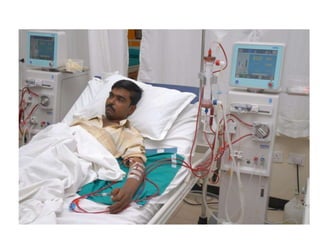
CRF phosphate retention
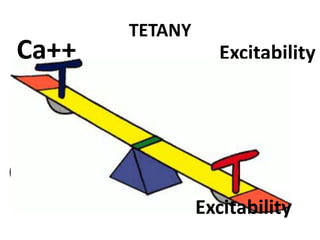
TETANY
+Ca              Excitability
+

+Ca
+              Excitability
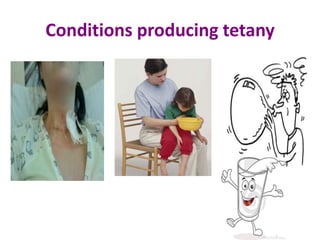
Conditions producing tetany
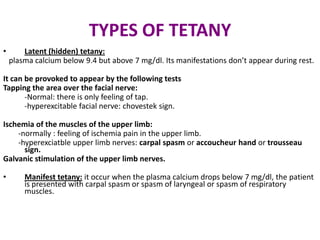
TYPES OF TETANY
•       Latent (hidden) tetany:
    plasma calcium below 9.4 but above 7 mg/dl. Its manifestations don’t appear during rest.

It can be provoked to appear by the following tests
Tapping the area over the facial nerve:
       -Normal: there is only feeling of tap.
       -hyperexcitable facial nerve: chovestek sign.

Ischemia of the muscles of the upper limb:
    -normally : feeling of ischemia pain in the upper limb.
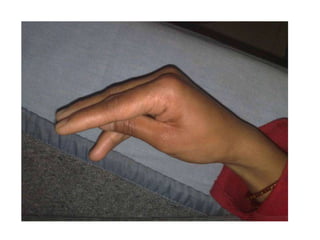
    -hyperexciatble upper limb nerves: carpal spasm or accoucheur hand or trousseau
      sign.
Galvanic stimulation of the upper limb nerves.

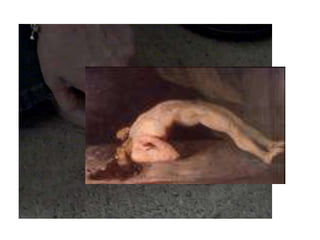
•       Manifest tetany: it occur when the plasma calcium drops below 7 mg/dl, the patient
        is presented with carpal spasm or spasm of laryngeal or spasm of respiratory
        muscles.
Pth

Pth

  • 1.
    Ca homeostasis: Roleof PTH & vit. D3 Nermeen Bastawy Physiology Department Faculty of Medicine Cairo University
  • 2.
    Calcium • Functions? • Distribution:1 kg • Bony skeleton: 99% • IC/ EC (plasma): 1%
  • 3.
    Bony skeleton • Largestable pool (99%): calcium phosphate • Small labile pool (1%): rapidly exchange with ECF ECF Non exchangeable Exchangeable Calcium Calcium
  • 4.
    ++ Ca • Functions? •Distribution: 1000 g • Bony skeleton: 99% • IC/ EC (plasma): 1%
  • 5.
    Plasma Calcium • Total : 9.4 -11 mg %: • Diffusible (mostly ionized as Ca++) • Non diffusible (plasma ptn-bound) • Ionised Ca is necessary for: Coagulation Muscles contraction Nerve function
  • 6.
    ABSORPTION OF CALCIUM Uppersmall intestine Passive diffusion & active transport. AFFECTED BY: Active vit. D3 Local GIT factors: Acidity of food products & GIT secretion. Amino acids (Protein meals) Phosphates & oxalates.
  • 7.
    PHOSPHOROUS  500 -800 g (90% in the skeleton).  12 mg/dl  ATP, cAMP, 2,3DPG, Phosphoproteins, Phospholipid
  • 8.
    Solubility product If electrolytesconcentration in a solution below a certain value (the solubility product) not ppt. Ca X P = 10 Ca X P > 10 Calcium and phosphorous in ECF > solubility product, but will not precipitate due to presence of Pyrophosphate (inhibitor).
  • 9.
    BONE HISTOLOGY  ECM: Ptn: type I collagen  Crystals: hydroxyapatite  Cells:  Osteocytes  Osteoblasts  Osteoclasts (Remodling unit)
  • 10.
  • 11.
    Regulation of CaHomeostasis 1 line st 2nd line Liver, intestine mitochondria • PTH • Vit D • Calcitonin
  • 13.
    Parathyroid gland Mg++ isnecessary for optimal function
  • 14.
    ACTIONS OF PTHON BONE  Rapid Phase: (min-hrs.)  Slow phase: (days- weeks).
  • 16.
  • 17.
    Osteoprotegrin & Denosumab •OPG Prevent bone resorption & osteoprosis by prevent excess stimulation of osteoclast
  • 18.
    Calbindin DCT ++H+, Mg PCT
  • 19.
    Growth factor C N N CPTH-R
  • 20.
  • 21.
    Low Ca orhigh Pi
  • 22.
    DISTURBANCES OF PARATHYROIDGLAND • Hypoparathyroidism • Primary hyperparathyroidism: due to a tumor of the parathyroid. • Secondary hyperparathyroidism: CRF phosphate retention
  • 23.
    TETANY +Ca Excitability + +Ca + Excitability
  • 26.
  • 28.
    TYPES OF TETANY • Latent (hidden) tetany: plasma calcium below 9.4 but above 7 mg/dl. Its manifestations don’t appear during rest. It can be provoked to appear by the following tests Tapping the area over the facial nerve: -Normal: there is only feeling of tap. -hyperexcitable facial nerve: chovestek sign. Ischemia of the muscles of the upper limb: -normally : feeling of ischemia pain in the upper limb. -hyperexciatble upper limb nerves: carpal spasm or accoucheur hand or trousseau sign. Galvanic stimulation of the upper limb nerves. • Manifest tetany: it occur when the plasma calcium drops below 7 mg/dl, the patient is presented with carpal spasm or spasm of laryngeal or spasm of respiratory muscles.

Editor's Notes

  • #3 IC: ms contraction & enzymes activity EC: clotting, release of cells contents ,,,,
  • #5 IC: ms contraction & enzymes activity EC: clotting, release of cells contents ,,,,
  • #28 Ca sensor receptor