PSYCHO-ANALYTIC APPROACH
BY:
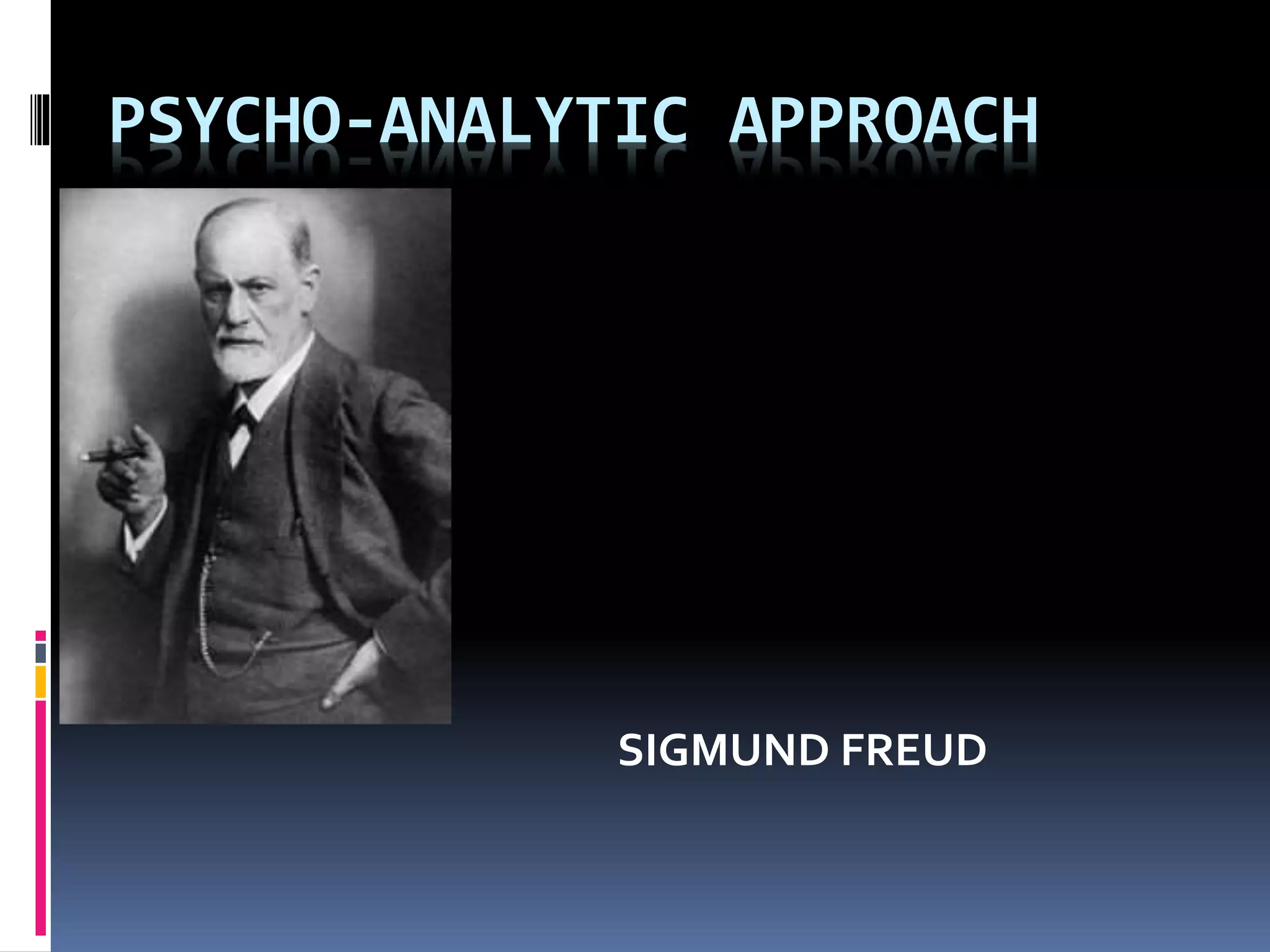
SIGMUND FREUD
 personality is to be understood in terms of
interactions and conflicts arising out of the
needs and impulses of an individual.
 Some of which at least operate at an
unconscious level
FREUDS THEORY OF PERSONALITY
 Psycho analytic theory of Freud has two
major parts
 1.theory of personality dynamics
 2.theory of personality structure
THEORY OF PERSONALITY
DYNAMICS
 Freud postulated a dynamic concept of
personality by exploring the unconscious part
of human mind
 According to Freud the human mind has
three levels of consciousness-the conscious,
the preconscious and the unconscious
CONSCIOUS MIND
• Only level of mental life that are directly
available to us
• The awareness of our own mental
process (Thoughts/feeling)
• Layer of mind which contains
memories,thoughts,and desires of which
the individual concerned is aware at a
given moment.
PRECONSCIOUS MIND
• This layer stands between conscious and
unconscious part of the mind.
• Facts stored in a part of the brain, which
are not conscious but are available for
possible use in the future
 (E.g. A person will never think of her
home address at that moment but when
her friend ask for it, she can easily recall
it)
UNCONSCIOUS MIND
• Contains all the feeling, urges or instinct
that are beyond our awareness but it
affect our expression, feeling, action
 (E.g. Slip of tongue, dreams, wishes)
 Freud believed that the most important
factor in psychic activity (behaviour) is
unconsciousness.
 The unsatisfied desires and painful
experiences of the individual are forced down
to the unconscious layer of the
mind(repression)
 Personality of an individual is determined by
the suppressed desires and experiences that
constitute the unconscious mind.
 Repression of feelings and desires result in
blocking up of the libido(the psychic energy
that provide energy for all mental activities.)
 It give birth to severe anxietyand conflicts
leading to mental illness and abnormal
personality development.
THEORY OF PERSONALITY STRUCTURE
STRUCTURE OF PERSONALITY
Consist of three parts :
1.Id
2.Ego
3.Superego
ID(libidinal energy)
• Is the original system of personality
• It is the reservoir of psychic energy
• It furnishes all energy for the
functioning of ego and superego
• Infants are born with Id intact
• Operates on PLEASURE PRINCIPE – to gain
pleasure, avoid pain
• It is not concerned with good or bad, right or
wrong, real or un real.
• For reduction of tension it chooses a path
which is most pleasurable to the individual.
 There are two processes employed by the id
for the fulfillment of its goal
 1.reflex action
 2.primary process
Reflex action
 Are inborn and automatic like sneezing and
blinking.They reduce the tension
immediately
 PRIMARY PROCESS
 It attempt to discharge the function by
formulating an image of an object or action
that will produce pressure and thus remove
the tension.
 The objects or action thus selected by the id
for deserving pleasure are said to be cathexes
 Eg:sucking thumb
. Ego
• The ego develops out of id
• It derives energy from id
• Apart from id ego has no existence
• .The rational level of personality
• Operates on REALITY PRINCIPLES – does
realistic and logical thinking
• The balance between Id and Superego
 Ego operates by means of the secondary
process.ie,realistic thinking
 Principle of reality is concerned with whether
an experience is true or false.
 The ego formulate a plan for the satisfaction
of the need and executes it, keeping in to
consideration the reality principle.
 Its main role is to mediate between the
instinctual requirements of the organism and
the realities posed by the environment.
 Relationship between id and ego is similar to
the relationship between a horse(id) and a
rider(ego).usually the rider determines the
direction of horse, there are sometimes when
it is the horse who leads the rider.
Superego
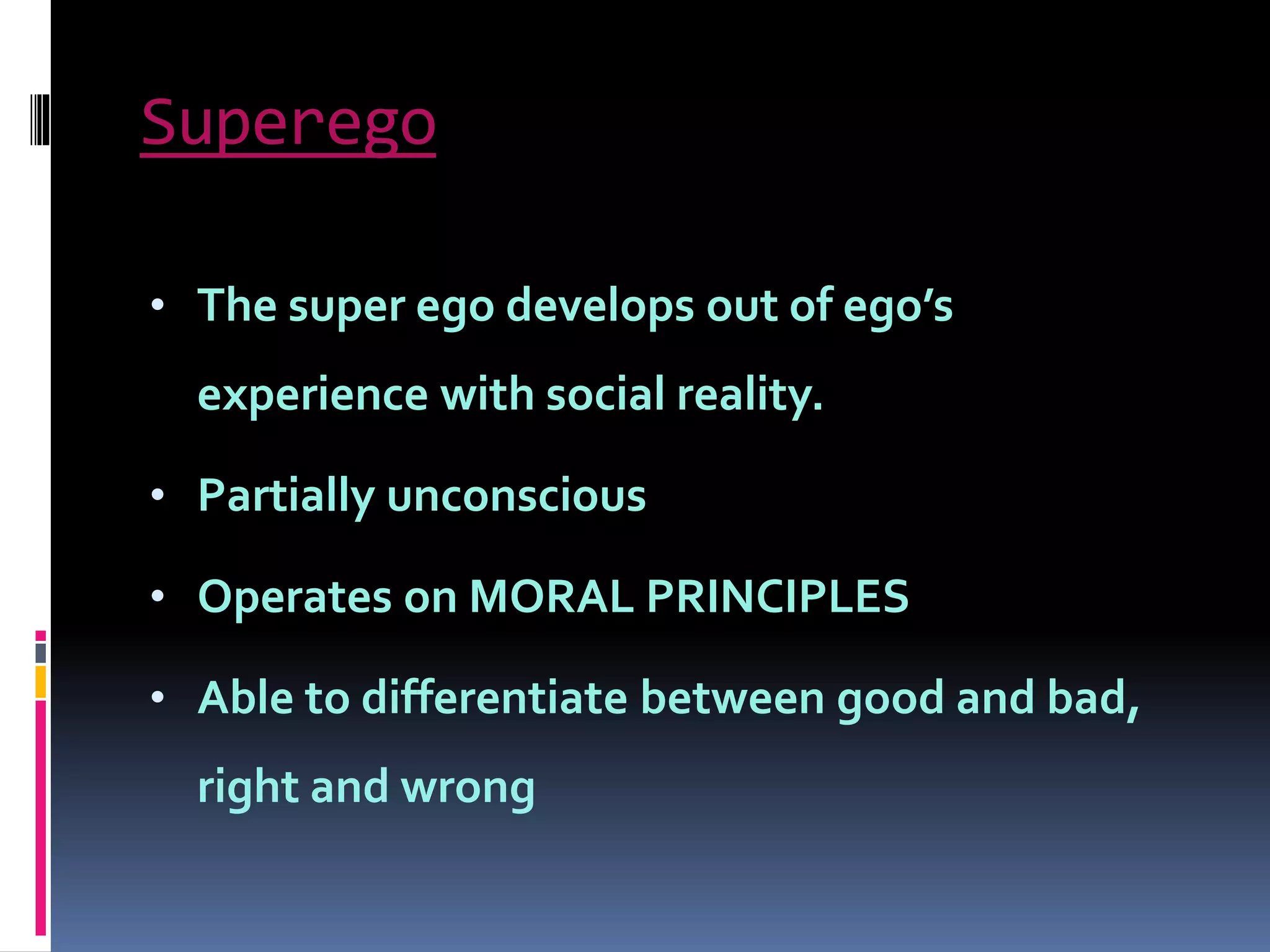
• The super ego develops out of ego’s
experience with social reality.
• Partially unconscious
• Operates on MORAL PRINCIPLES
• Able to differentiate between good and bad,
right and wrong
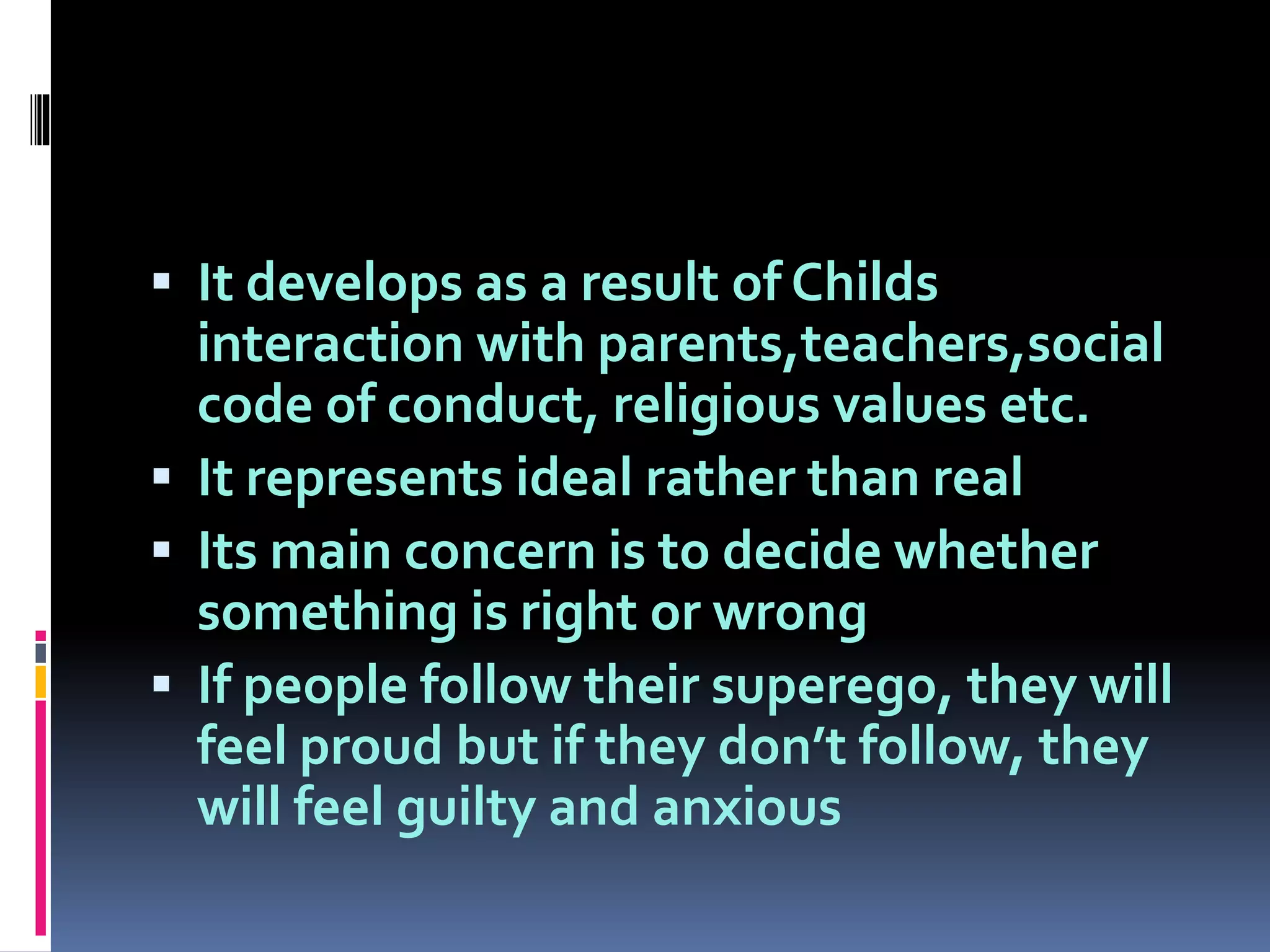
 It develops as a result of Childs
interaction with parents,teachers,social
code of conduct, religious values etc.
 It represents ideal rather than real
 Its main concern is to decide whether
something is right or wrong
 If people follow their superego, they will
feel proud but if they don’t follow, they
will feel guilty and anxious
Two subsystem of super ego
 Edo ideal
 Ego ideal is formed through reward
 It is developed by the feeling of pride
 Conscience
 Conscience is arise as a result of punishment
 It is developed by the feeling of guilt
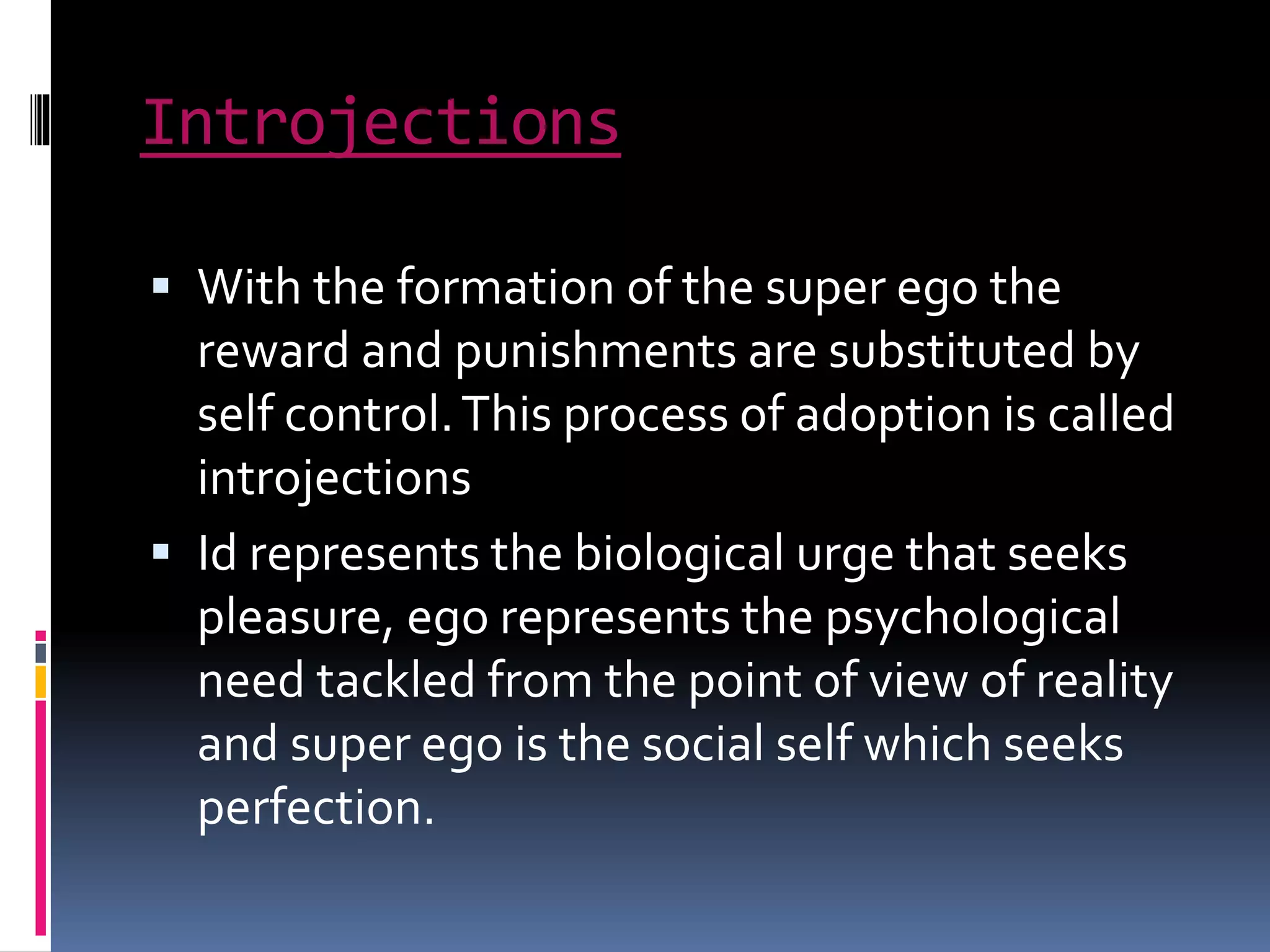
Introjections
 With the formation of the super ego the
reward and punishments are substituted by
self control.This process of adoption is called
introjections
 Id represents the biological urge that seeks
pleasure, ego represents the psychological
need tackled from the point of view of reality
and super ego is the social self which seeks
perfection.
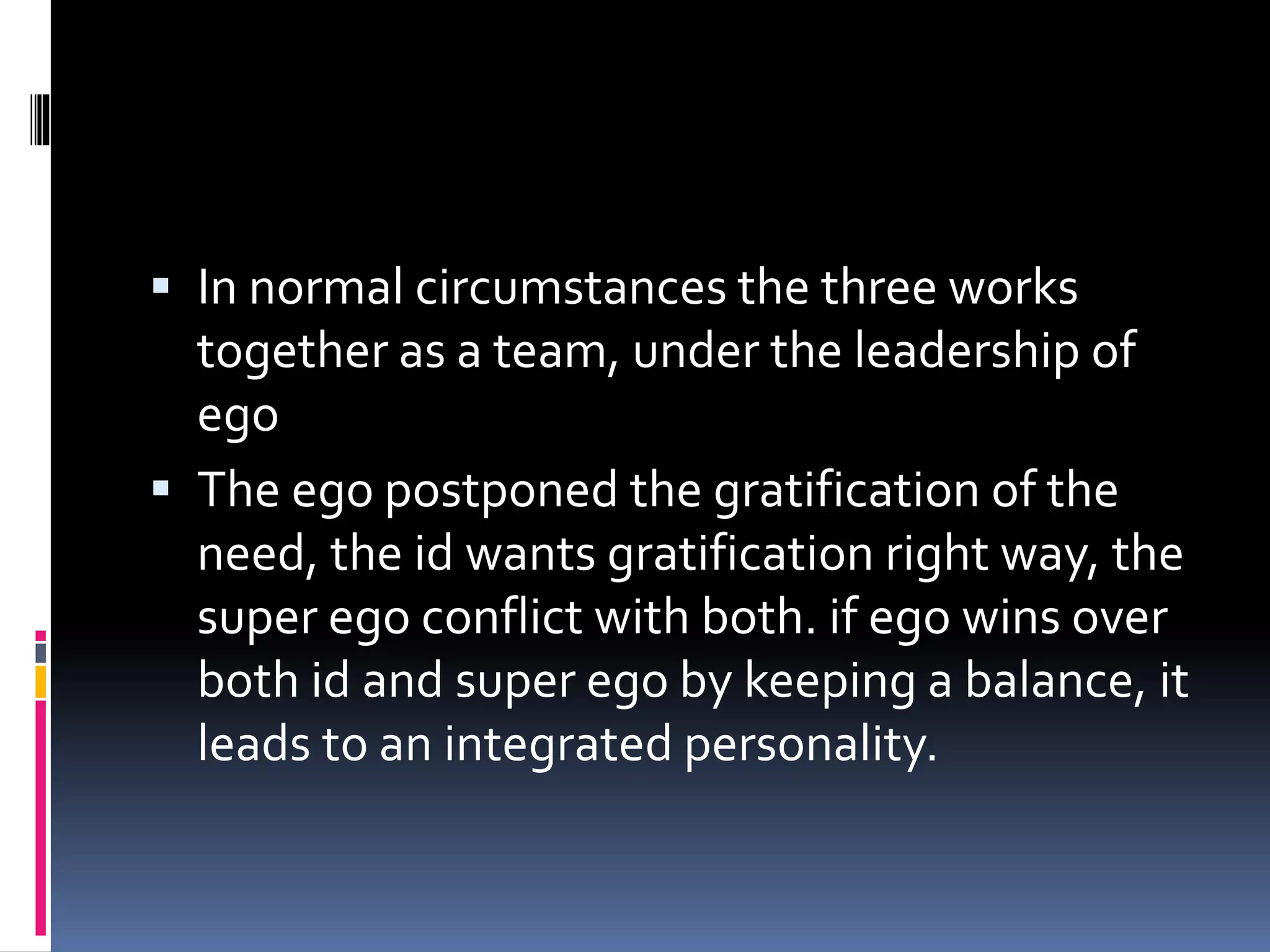
 In normal circumstances the three works
together as a team, under the leadership of
ego
 The ego postponed the gratification of the
need, the id wants gratification right way, the
super ego conflict with both. if ego wins over
both id and super ego by keeping a balance, it
leads to an integrated personality.
Psycho analytic approach

Psycho analytic approach

  • 1.
  • 2.
     personality isto be understood in terms of interactions and conflicts arising out of the needs and impulses of an individual.  Some of which at least operate at an unconscious level
  • 3.
    FREUDS THEORY OFPERSONALITY  Psycho analytic theory of Freud has two major parts  1.theory of personality dynamics  2.theory of personality structure
  • 4.
    THEORY OF PERSONALITY DYNAMICS Freud postulated a dynamic concept of personality by exploring the unconscious part of human mind  According to Freud the human mind has three levels of consciousness-the conscious, the preconscious and the unconscious
  • 5.
    CONSCIOUS MIND • Onlylevel of mental life that are directly available to us • The awareness of our own mental process (Thoughts/feeling) • Layer of mind which contains memories,thoughts,and desires of which the individual concerned is aware at a given moment.
  • 6.
    PRECONSCIOUS MIND • Thislayer stands between conscious and unconscious part of the mind. • Facts stored in a part of the brain, which are not conscious but are available for possible use in the future  (E.g. A person will never think of her home address at that moment but when her friend ask for it, she can easily recall it)
  • 7.
    UNCONSCIOUS MIND • Containsall the feeling, urges or instinct that are beyond our awareness but it affect our expression, feeling, action  (E.g. Slip of tongue, dreams, wishes)
  • 8.
     Freud believedthat the most important factor in psychic activity (behaviour) is unconsciousness.  The unsatisfied desires and painful experiences of the individual are forced down to the unconscious layer of the mind(repression)  Personality of an individual is determined by the suppressed desires and experiences that constitute the unconscious mind.
  • 9.
     Repression offeelings and desires result in blocking up of the libido(the psychic energy that provide energy for all mental activities.)  It give birth to severe anxietyand conflicts leading to mental illness and abnormal personality development.
  • 10.
    THEORY OF PERSONALITYSTRUCTURE STRUCTURE OF PERSONALITY Consist of three parts : 1.Id 2.Ego 3.Superego
  • 11.
    ID(libidinal energy) • Isthe original system of personality • It is the reservoir of psychic energy • It furnishes all energy for the functioning of ego and superego • Infants are born with Id intact
  • 12.
    • Operates onPLEASURE PRINCIPE – to gain pleasure, avoid pain • It is not concerned with good or bad, right or wrong, real or un real. • For reduction of tension it chooses a path which is most pleasurable to the individual.
  • 13.
     There aretwo processes employed by the id for the fulfillment of its goal  1.reflex action  2.primary process
  • 14.
    Reflex action  Areinborn and automatic like sneezing and blinking.They reduce the tension immediately  PRIMARY PROCESS  It attempt to discharge the function by formulating an image of an object or action that will produce pressure and thus remove the tension.
  • 15.
     The objectsor action thus selected by the id for deserving pleasure are said to be cathexes  Eg:sucking thumb
  • 16.
    . Ego • Theego develops out of id • It derives energy from id • Apart from id ego has no existence • .The rational level of personality • Operates on REALITY PRINCIPLES – does realistic and logical thinking • The balance between Id and Superego
  • 17.
     Ego operatesby means of the secondary process.ie,realistic thinking  Principle of reality is concerned with whether an experience is true or false.  The ego formulate a plan for the satisfaction of the need and executes it, keeping in to consideration the reality principle.
  • 18.
     Its mainrole is to mediate between the instinctual requirements of the organism and the realities posed by the environment.  Relationship between id and ego is similar to the relationship between a horse(id) and a rider(ego).usually the rider determines the direction of horse, there are sometimes when it is the horse who leads the rider.
  • 19.
    Superego • The superego develops out of ego’s experience with social reality. • Partially unconscious • Operates on MORAL PRINCIPLES • Able to differentiate between good and bad, right and wrong
  • 20.
     It developsas a result of Childs interaction with parents,teachers,social code of conduct, religious values etc.  It represents ideal rather than real  Its main concern is to decide whether something is right or wrong  If people follow their superego, they will feel proud but if they don’t follow, they will feel guilty and anxious
  • 21.
    Two subsystem ofsuper ego  Edo ideal  Ego ideal is formed through reward  It is developed by the feeling of pride  Conscience  Conscience is arise as a result of punishment  It is developed by the feeling of guilt
  • 22.
    Introjections  With theformation of the super ego the reward and punishments are substituted by self control.This process of adoption is called introjections  Id represents the biological urge that seeks pleasure, ego represents the psychological need tackled from the point of view of reality and super ego is the social self which seeks perfection.
  • 23.
     In normalcircumstances the three works together as a team, under the leadership of ego  The ego postponed the gratification of the need, the id wants gratification right way, the super ego conflict with both. if ego wins over both id and super ego by keeping a balance, it leads to an integrated personality.