PSYCHOSOCIAL DEVELOPMENT 
( By Erik Erikson) 
PRESENTED BY 
MAMOONA SHAHZAD 
MP/2012-27 
/
Erik Erikson
Erik Erikson’s Life History 
• Born: 15 June 1902 
• Developmental 
Psychologist 
• Known for his theory on 
psychosocial development 
• Served as professor at Harvard 
and Yale
cont….. 
1. Born in Germany, an illegitimate 
child of Danish parents 
2. This fact bothered him all his life 
3. Dropped out of high school and 
spent time traveling in Europe 
and studying art
4. Met Sigmund Freud and studied 
Psychoanalysis with Freud’s 
daughter, Anna Freud 
5. Studied young people in different 
cultures 
6. Became interested in how young 
people acquire a personal identity 
and how society helps shape it
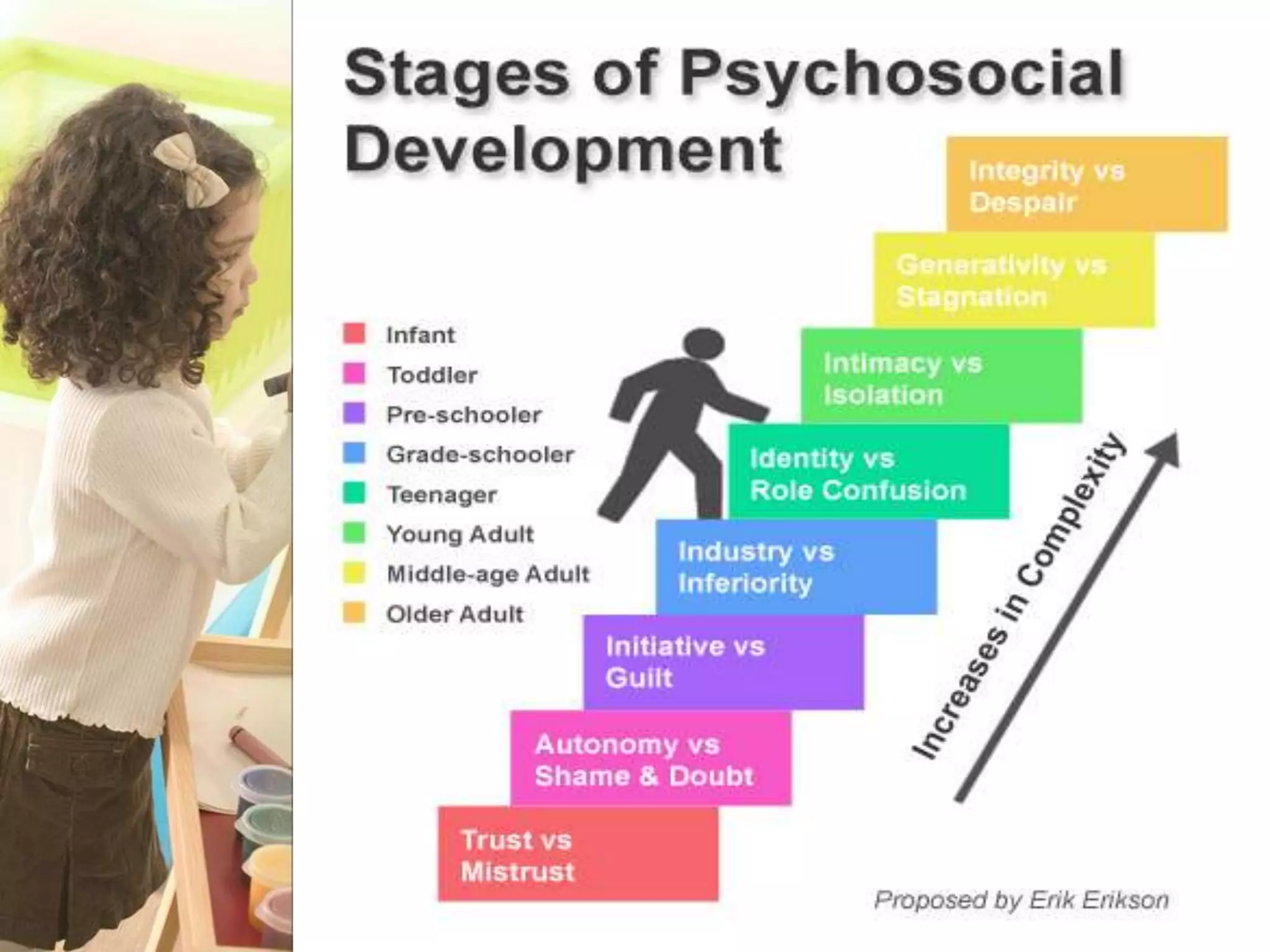
• Erikson believed that personality 
emerges from an inner and outer 
conflicts 
• The crises arise at each of the 
eight stages of life.
Stage 1: Trust versus 
mistrust 
• Children are completely dependent 
on others 
– Trust: Established when babies given 
adequate warmth, touching, love, 
and physical care 
– Mistrust: Caused by inadequate or 
unpredictable care and by cold, 
indifferent, and rejecting parents
Stage Two: Autonomy 
versus Shame and Doubt 
• Autonomy: Doing things for 
themselves 
• Overprotective or ridiculing parents 
may cause children to doubt 
abilities and feel shameful about 
their actions
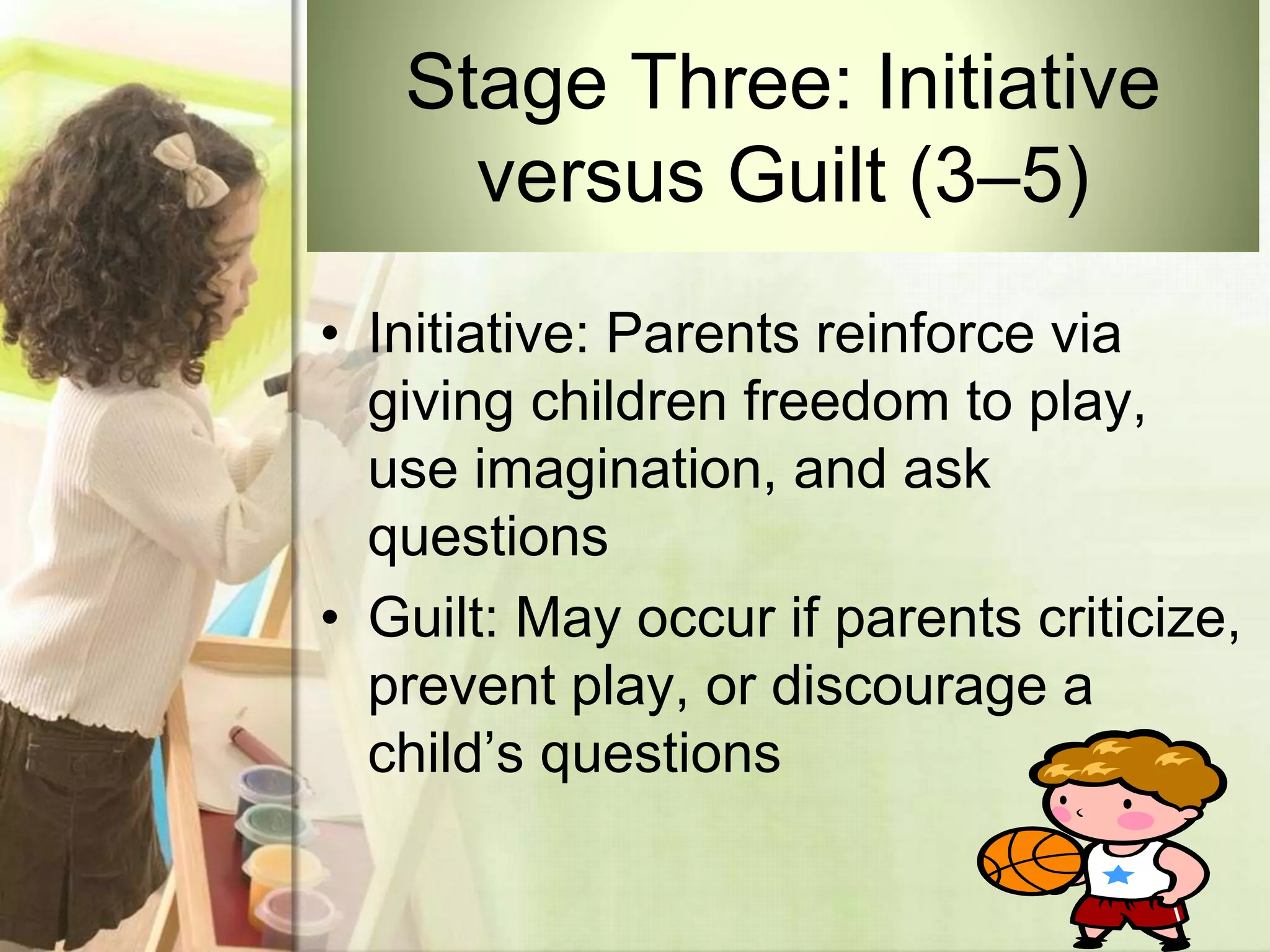
Stage Three: Initiative 
versus Guilt (3–5) 
• Initiative: Parents reinforce via 
giving children freedom to play, 
use imagination, and ask 
questions 
• Guilt: May occur if parents criticize, 
prevent play, or discourage a 
child’s questions
Guidelines for Teachers 
• Teacher should encourage 
initiative in pre-school children 
• Examples 
– Have a free choice time when children can 
select any activity or game 
– Have some costumes and props that go with 
stories the children enjoy. Encourage the 
children to act out the stories or make up 
new adventures for favorite characters
Stage Four: Industry 
versus Inferiority (6–12) 
• Industry: Occurs when child is 
praised for productive activities, 
such as painting and building 
• Inferiority: Occurs if child’s efforts 
are regarded as messy or 
inadequate
Guidelines for Teachers 
• Make sure that students have 
opportunities to set and work 
toward their goals 
• Examples 
– Begin with short assignments, then move to 
longer ones. Monitor student progress by 
setting up progress checkpoints 
– Have rewards for most improved, most 
helpful, most hardworking for providing 
support who seem discouraged
Stage Five (Adolescence): 
Identity versus Role 
Confusion 
• Identity: For adolescents; problems 
answering, “Who am I?” 
• Role Confusion: Occurs when 
adolescents are unsure of where 
they are going and who they are
Guidelines for Teachers 
• Give students many models for 
career choices and other adult 
roles 
• Examples 
– Invite guest speakers to describe how and 
why they choose their profession 
– Encourage them to talk to school counselors 
– Be tolerant with teenage and don’t impose 
strict dress and hair codes 
– Give students realistic feedback about 
themselves
Stage Six (Young 
Adulthood): Intimacy 
versus Isolation 
• Intimacy: Ability to care about 
others and to share experiences 
with them 
• Isolation: Feeling alone and 
uncared for in life
Stage Seven (Middle 
Adulthood): Generativity 
versus Stagnation 
• Generativity: Interest in guiding the 
next generation 
• Stagnation: When one is only 
concerned with one’s own needs 
and comforts
Stage Eight (Late 
Adulthood): Integrity 
versus Despair 
• Integrity: Self-respect; developed 
when people have lived richly and 
responsibly 
• Despair: Occurs when previous life 
events are viewed with regret; 
experiences heartache and 
remorse 
cont…..
Stage Eight (Late 
Adulthood): Integrity 
versus Despair 
1. This phase occurs during old age 
and is focused on reflecting back 
on life. 
2. Those who are unsuccessful 
during this phase will feel that 
their life has been wasted and will 
experience many regrets. The 
individual will be left with feelings 
of bitterness and despair.
Thanks for your 
precious

PSYCHOSOCIAL DEVELOPMENT ( By Erik Erikson)

  • 1.
    PSYCHOSOCIAL DEVELOPMENT (By Erik Erikson) PRESENTED BY MAMOONA SHAHZAD MP/2012-27 /
  • 2.
  • 3.
    Erik Erikson’s LifeHistory • Born: 15 June 1902 • Developmental Psychologist • Known for his theory on psychosocial development • Served as professor at Harvard and Yale
  • 4.
    cont….. 1. Bornin Germany, an illegitimate child of Danish parents 2. This fact bothered him all his life 3. Dropped out of high school and spent time traveling in Europe and studying art
  • 5.
    4. Met SigmundFreud and studied Psychoanalysis with Freud’s daughter, Anna Freud 5. Studied young people in different cultures 6. Became interested in how young people acquire a personal identity and how society helps shape it
  • 7.
    • Erikson believedthat personality emerges from an inner and outer conflicts • The crises arise at each of the eight stages of life.
  • 8.
    Stage 1: Trustversus mistrust • Children are completely dependent on others – Trust: Established when babies given adequate warmth, touching, love, and physical care – Mistrust: Caused by inadequate or unpredictable care and by cold, indifferent, and rejecting parents
  • 9.
    Stage Two: Autonomy versus Shame and Doubt • Autonomy: Doing things for themselves • Overprotective or ridiculing parents may cause children to doubt abilities and feel shameful about their actions
  • 10.
    Stage Three: Initiative versus Guilt (3–5) • Initiative: Parents reinforce via giving children freedom to play, use imagination, and ask questions • Guilt: May occur if parents criticize, prevent play, or discourage a child’s questions
  • 11.
    Guidelines for Teachers • Teacher should encourage initiative in pre-school children • Examples – Have a free choice time when children can select any activity or game – Have some costumes and props that go with stories the children enjoy. Encourage the children to act out the stories or make up new adventures for favorite characters
  • 12.
    Stage Four: Industry versus Inferiority (6–12) • Industry: Occurs when child is praised for productive activities, such as painting and building • Inferiority: Occurs if child’s efforts are regarded as messy or inadequate
  • 13.
    Guidelines for Teachers • Make sure that students have opportunities to set and work toward their goals • Examples – Begin with short assignments, then move to longer ones. Monitor student progress by setting up progress checkpoints – Have rewards for most improved, most helpful, most hardworking for providing support who seem discouraged
  • 14.
    Stage Five (Adolescence): Identity versus Role Confusion • Identity: For adolescents; problems answering, “Who am I?” • Role Confusion: Occurs when adolescents are unsure of where they are going and who they are
  • 15.
    Guidelines for Teachers • Give students many models for career choices and other adult roles • Examples – Invite guest speakers to describe how and why they choose their profession – Encourage them to talk to school counselors – Be tolerant with teenage and don’t impose strict dress and hair codes – Give students realistic feedback about themselves
  • 16.
    Stage Six (Young Adulthood): Intimacy versus Isolation • Intimacy: Ability to care about others and to share experiences with them • Isolation: Feeling alone and uncared for in life
  • 17.
    Stage Seven (Middle Adulthood): Generativity versus Stagnation • Generativity: Interest in guiding the next generation • Stagnation: When one is only concerned with one’s own needs and comforts
  • 18.
    Stage Eight (Late Adulthood): Integrity versus Despair • Integrity: Self-respect; developed when people have lived richly and responsibly • Despair: Occurs when previous life events are viewed with regret; experiences heartache and remorse cont…..
  • 19.
    Stage Eight (Late Adulthood): Integrity versus Despair 1. This phase occurs during old age and is focused on reflecting back on life. 2. Those who are unsuccessful during this phase will feel that their life has been wasted and will experience many regrets. The individual will be left with feelings of bitterness and despair.
  • 20.
    Thanks for your precious