PERSONALITY DEVELOPMENT
PSYCHO-ANALYTICAL THEORY BY SIGMUND FREUD.
• Sigmund Freud’s psychoanalytic theory of personality argued
that human behavior was the result of the interaction of three
component parts of mind: the id, ego and superego.
• Sigmund Freud emphasized the importance of the unconscious
mind, and a primary assumption of Freudian theory is that the
unconscious mind governs behavior to a greater degree than
people suspect. Indeed, the goal of psychoanalysis is to make
the unconscious conscious.
• According to Sigmund Freud, human personality is complex
and has more than a single component. In his famous
psychoanalytic theory, Freud states that personality is
composed of three elements known as the id, the ego, and the
superego. These elements work together to create complex
human behaviors.
• Each component adds its own unique contribution to
personality and the three interact in ways that have a powerful
influence on an individual. Each element of personality emerges
at different points in life.
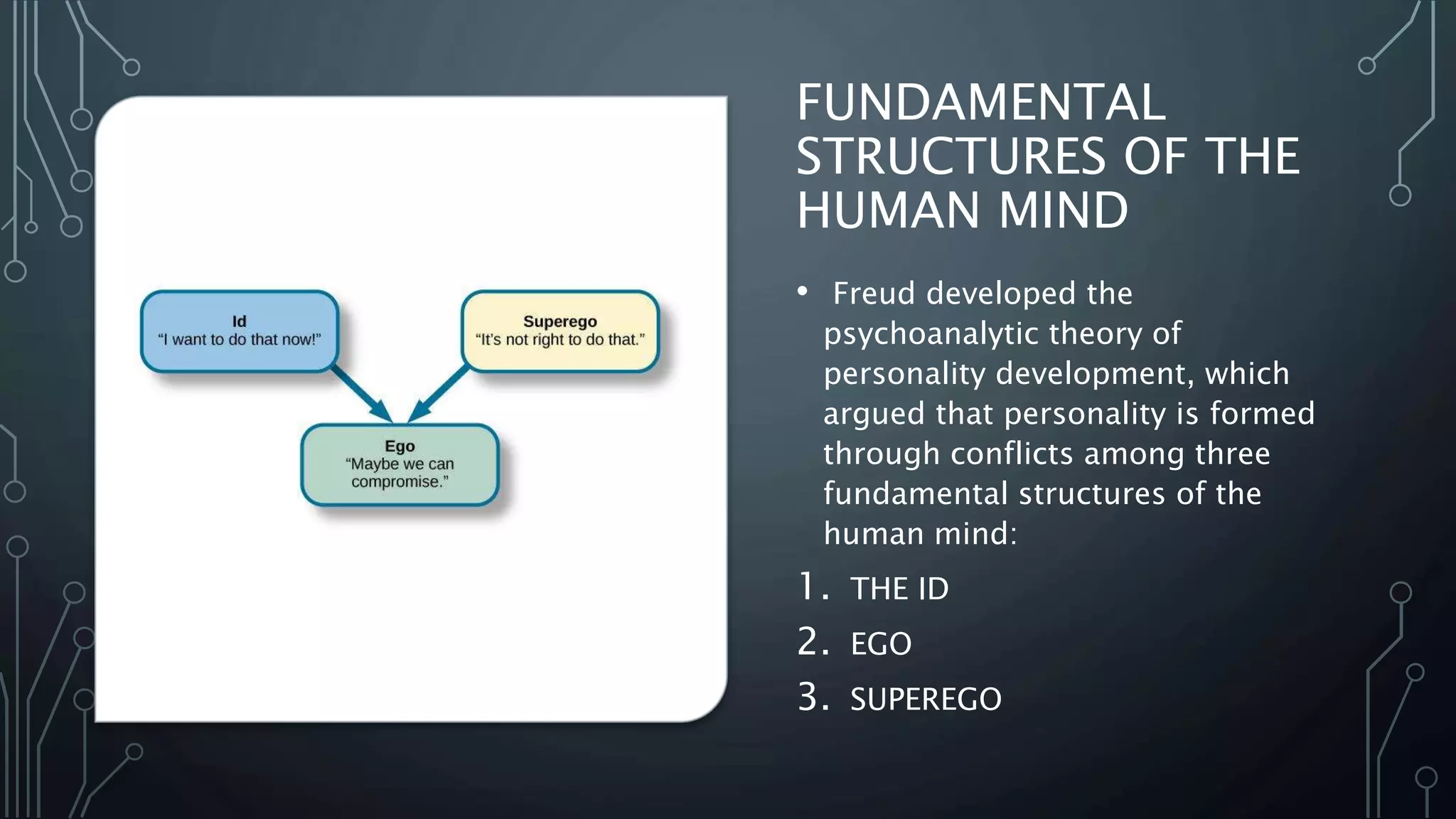
FUNDAMENTAL
STRUCTURES OF THE
HUMAN MIND
• Freud developed the
psychoanalytic theory of
personality development, which
argued that personality is formed
through conflicts among three
fundamental structures of the
human mind:
1. THE ID
2. EGO
3. SUPEREGO
THE ID
• According to Freud, the id is the source of all psychic energy,
making it the primary component of personality.
• The id is the only component of personality that is present
from birth.
• This aspect of personality is entirely unconscious and includes
instinctive and primitive behaviors.
• The id is very important early in life because it ensures that an
infant's needs are met. If the infant is hungry or uncomfortable,
they will cry until the demands of the id are satisfied. Young
infants are ruled entirely by the id, there is no reasoning with
them when these needs demand satisfaction
THE EGO
• According to Freud, The ego develops from the id and ensures
that the impulses of the id can be expressed in a manner
acceptable in the real world.
• The ego functions in the conscious, preconscious, and
unconscious mind.
• The ego is the component of personality that is responsible for
dealing with reality.
THE SUPEREGO
• The last component of personality to develop is the superego.
• According to Freud, the superego begins to emerge at around
age five.
• The superego holds the internalized moral standards and ideals
that we acquire from our parents and society (our sense of
right and wrong).
• The superego provides guidelines for making judgments.
• The superego has two parts:
1. The conscience includes information about things that are
viewed as bad by parents and society. These behaviors are
often forbidden and lead to bad consequences, punishments,
or feelings of guilt and remorse.
2. The ego ideal includes the rules and standards for behaviors
that the ego aspires to.
• The superego tries to perfect and civilize our behavior. It works
to suppress all unacceptable urges of the id and struggles to
make the ego act upon idealistic standards rather that upon
realistic principles. The superego is present in the conscious,
preconscious, and unconscious.
THE INTERACTION OF THE ID, EGO, AND
SUPEREGO
• When talking about the id, the ego, and the superego, it is
important to remember that these are not three separate
entities with clearly defined boundaries. These aspects are
dynamic and always interacting to influence an individual's
overall personality and behavior.
• With many competing forces, it is easy to see how conflict
might arise between the id, ego, and superego. Freud used the
term ego strength to refer to the ego's ability to function
despite these dueling forces

Personality development freud theory

  • 1.
  • 2.
    • Sigmund Freud’spsychoanalytic theory of personality argued that human behavior was the result of the interaction of three component parts of mind: the id, ego and superego. • Sigmund Freud emphasized the importance of the unconscious mind, and a primary assumption of Freudian theory is that the unconscious mind governs behavior to a greater degree than people suspect. Indeed, the goal of psychoanalysis is to make the unconscious conscious.
  • 3.
    • According toSigmund Freud, human personality is complex and has more than a single component. In his famous psychoanalytic theory, Freud states that personality is composed of three elements known as the id, the ego, and the superego. These elements work together to create complex human behaviors. • Each component adds its own unique contribution to personality and the three interact in ways that have a powerful influence on an individual. Each element of personality emerges at different points in life.
  • 4.
    FUNDAMENTAL STRUCTURES OF THE HUMANMIND • Freud developed the psychoanalytic theory of personality development, which argued that personality is formed through conflicts among three fundamental structures of the human mind: 1. THE ID 2. EGO 3. SUPEREGO
  • 5.
    THE ID • Accordingto Freud, the id is the source of all psychic energy, making it the primary component of personality. • The id is the only component of personality that is present from birth. • This aspect of personality is entirely unconscious and includes instinctive and primitive behaviors. • The id is very important early in life because it ensures that an infant's needs are met. If the infant is hungry or uncomfortable, they will cry until the demands of the id are satisfied. Young infants are ruled entirely by the id, there is no reasoning with them when these needs demand satisfaction
  • 6.
    THE EGO • Accordingto Freud, The ego develops from the id and ensures that the impulses of the id can be expressed in a manner acceptable in the real world. • The ego functions in the conscious, preconscious, and unconscious mind. • The ego is the component of personality that is responsible for dealing with reality.
  • 7.
    THE SUPEREGO • Thelast component of personality to develop is the superego. • According to Freud, the superego begins to emerge at around age five. • The superego holds the internalized moral standards and ideals that we acquire from our parents and society (our sense of right and wrong). • The superego provides guidelines for making judgments.
  • 8.
    • The superegohas two parts: 1. The conscience includes information about things that are viewed as bad by parents and society. These behaviors are often forbidden and lead to bad consequences, punishments, or feelings of guilt and remorse. 2. The ego ideal includes the rules and standards for behaviors that the ego aspires to.
  • 9.
    • The superegotries to perfect and civilize our behavior. It works to suppress all unacceptable urges of the id and struggles to make the ego act upon idealistic standards rather that upon realistic principles. The superego is present in the conscious, preconscious, and unconscious.
  • 10.
    THE INTERACTION OFTHE ID, EGO, AND SUPEREGO • When talking about the id, the ego, and the superego, it is important to remember that these are not three separate entities with clearly defined boundaries. These aspects are dynamic and always interacting to influence an individual's overall personality and behavior. • With many competing forces, it is easy to see how conflict might arise between the id, ego, and superego. Freud used the term ego strength to refer to the ego's ability to function despite these dueling forces