Psoriasis


      By
T.SHIVAKUMAR
Definition
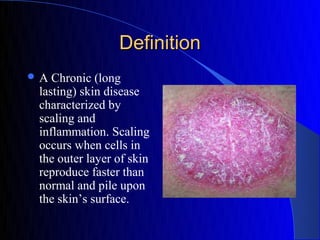
A  Chronic (long
 lasting) skin disease
 characterized by
 scaling and
 inflammation. Scaling
 occurs when cells in
 the outer layer of skin
 reproduce faster than
 normal and pile upon
 the skin’s surface.
Introduction
    Psoriasis is a chronic, autoimmune disease
    that appears on the skin. It occurs when the
    immune system sends out faulty signals
    speed up growth cycle of skin cells.
 The   scaly patches commonly caused by
    psoriasis, called psoriatic plaques.
 Fingernails   and toenails are frequently
    affected and can seen as an isolated
    symptom.
Classification
 Nonpustular   psoriasis
  Plaque psoriasis ( psoriasis vulgaris ) is the
  most common form of psoriasis.
  Erythrodermic psoriasis involves the
  widespread inflammation of the skin.
 Pustular psoriasis

 Other Psoriasis
 Guttate psoriasis
 Psoriatic arthritis
 Nail psoriasis
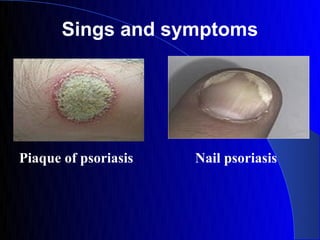
Sings and symptoms


Piaque of psoriasis   Nail psoriasis
Quality of life
 Itshows affect health-related quality of life to an
  extent similar to the effects of other chronic as
  depression, myocardial infarction, hypertension
  congestive heart failure or type 2 Diabetes.
Severity

Psoriasis is usually graded as mild,moderate
severe.
Cause
Genetic factors
 Many genes are associated with it. Most of
  them involve the immune system, particularly.
  the major histocompatibility complex and
 T cells.
Immunological factors
 In psoriasis, immune cells move from the
 dermis to the epidermis, where they stimulate
 skin cells to proliferate.
Diagnosis
    A diagnosis of psoriasis is usually based on
    the appearance of the skin. There are no
    special blood tests or diagnostic procedures for
    psoriasis. Sometimes a skin biopsy, or
    scraping, may be needed to rule out other
    disorders and to confirm the diagnosis.
Management
 Cognitive  behaviour therapy
 Tropical treatment
 Photo therapy treatment
 Photo chemotherapy
 Systemic treatment
 Alternative therapy
Tropical Treatment
 Sunlight
 Corticosteroids
 Calcipotrience
 Coal tar
 Moisturizes
 Bath solution
 Salicylic acid
Phototheraphy Treatment
 UVB photo therapy
 UVA (ultraviolet A (UVA)
Systemic Treatment
 Methotrexate
 Cyclosporine
 Hydroxyurea
 Retionoids
 Antibiotics
Prongosis
    Psoriasis is a lifelong condition. There is
    currently no cure but various treatments can
    help to control the symptoms.

                 Epidemiology
    Psoriasis affects both sexes equally and can
    occur at any age, although it most commonly
    appears for the first time between the ages of 15
    and 25 years.
Thanking you

Psoriasis

  • 1.
    Psoriasis By T.SHIVAKUMAR
  • 2.
    Definition A Chronic(long lasting) skin disease characterized by scaling and inflammation. Scaling occurs when cells in the outer layer of skin reproduce faster than normal and pile upon the skin’s surface.
  • 3.
    Introduction  Psoriasis is a chronic, autoimmune disease that appears on the skin. It occurs when the immune system sends out faulty signals speed up growth cycle of skin cells.  The scaly patches commonly caused by psoriasis, called psoriatic plaques.  Fingernails and toenails are frequently affected and can seen as an isolated symptom.
  • 4.
    Classification  Nonpustular psoriasis Plaque psoriasis ( psoriasis vulgaris ) is the most common form of psoriasis. Erythrodermic psoriasis involves the widespread inflammation of the skin.  Pustular psoriasis Other Psoriasis Guttate psoriasis Psoriatic arthritis Nail psoriasis
  • 5.
    Sings and symptoms Piaqueof psoriasis Nail psoriasis
  • 6.
    Quality of life Itshows affect health-related quality of life to an extent similar to the effects of other chronic as depression, myocardial infarction, hypertension congestive heart failure or type 2 Diabetes. Severity Psoriasis is usually graded as mild,moderate severe.
  • 7.
    Cause Genetic factors  Manygenes are associated with it. Most of them involve the immune system, particularly. the major histocompatibility complex and T cells. Immunological factors  In psoriasis, immune cells move from the dermis to the epidermis, where they stimulate skin cells to proliferate.
  • 8.
    Diagnosis  A diagnosis of psoriasis is usually based on the appearance of the skin. There are no special blood tests or diagnostic procedures for psoriasis. Sometimes a skin biopsy, or scraping, may be needed to rule out other disorders and to confirm the diagnosis.
  • 9.
    Management  Cognitive behaviour therapy  Tropical treatment  Photo therapy treatment  Photo chemotherapy  Systemic treatment  Alternative therapy
  • 10.
    Tropical Treatment  Sunlight Corticosteroids  Calcipotrience  Coal tar  Moisturizes  Bath solution  Salicylic acid
  • 11.
    Phototheraphy Treatment  UVBphoto therapy  UVA (ultraviolet A (UVA)
  • 12.
    Systemic Treatment  Methotrexate Cyclosporine  Hydroxyurea  Retionoids  Antibiotics
  • 13.
    Prongosis  Psoriasis is a lifelong condition. There is currently no cure but various treatments can help to control the symptoms. Epidemiology  Psoriasis affects both sexes equally and can occur at any age, although it most commonly appears for the first time between the ages of 15 and 25 years.
  • 14.