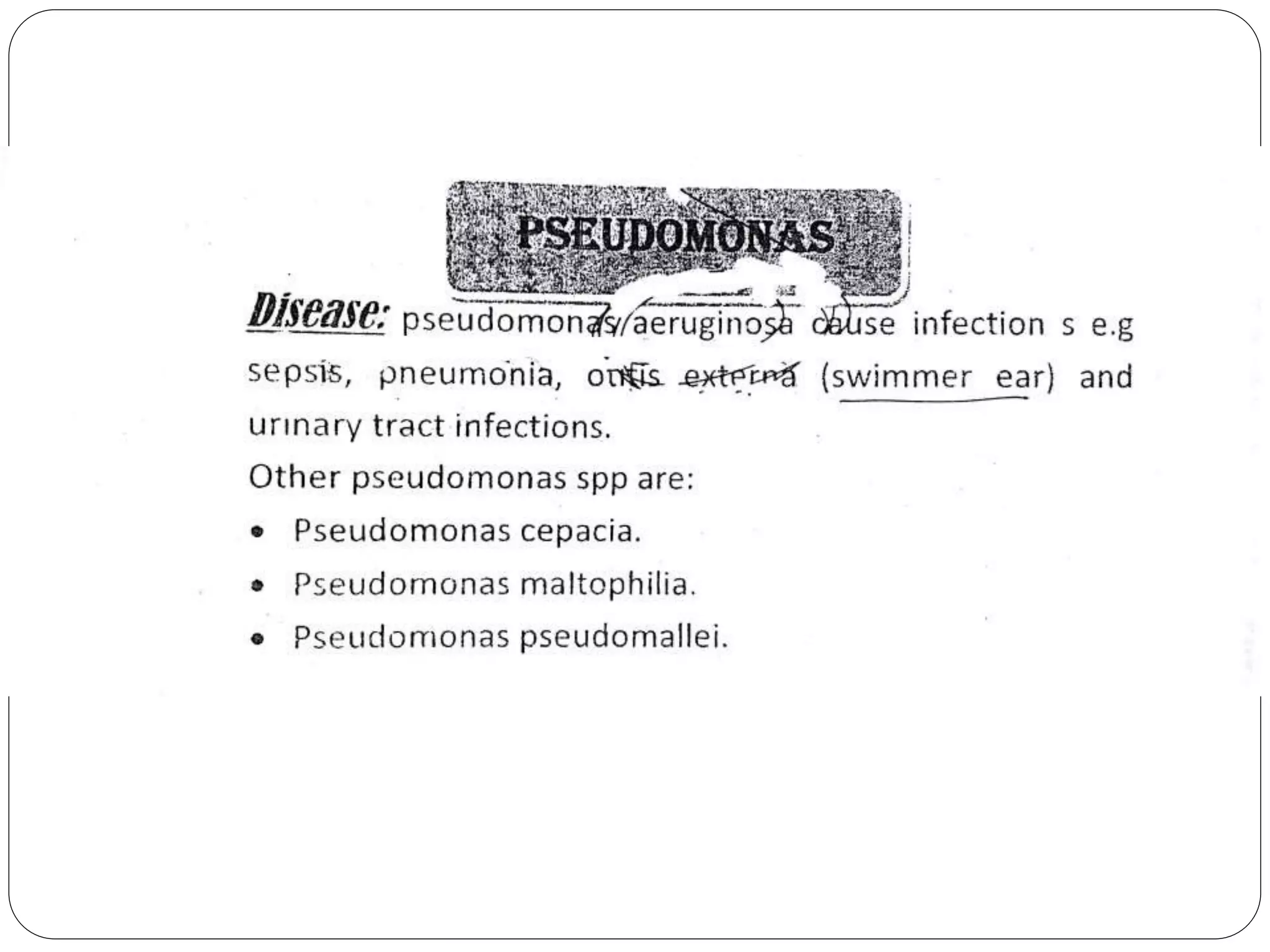
Pseudomonas
Pseudomonas and related organisms
Aerobic gram-negative nonfermentative rods
Pseudomonas aeruginosa:
opportunistic infections of multiple
sites
Pseudomonas
Structure and
Physiology
Gram-negative rods.
Motile with polar flagella.
Obligate aerobe.
Oxidase-positive.
Do not ferment carbohydrates.
Resistant to multiple drugs.
P. aeruginosa
Forms round colonies with a
fluorescent greenish color, sweet
odor, and b-hemolysis.
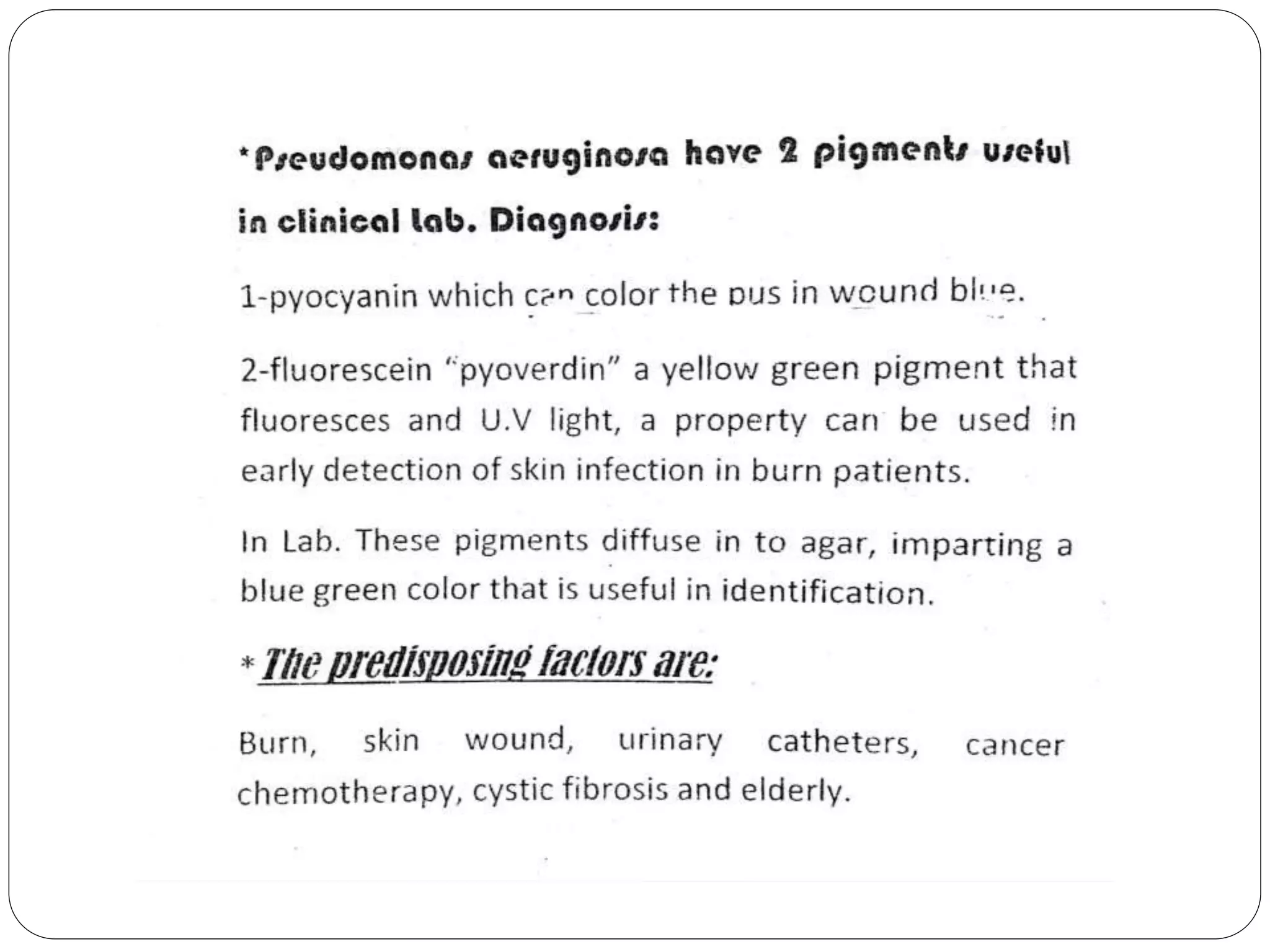
Pyocyanin- nonfluorescent
bluish pigment;
pyoverdin- fluorescent
greenish pigment;
pyorubin, and pyomelanin
Some strains have a prominent
capsule (alginate).
Identification of P. aeruginosa is usually based on oxidase test
and its colonial morphology: b-hemolysis, the presence of
characteristic pigments and sweet odor, and growth at 42 oC.
P. aeruginosa
Pathogenesis and Immunity
This organism is widely distributed in nature and is commonly
present in moist environments in hospitals. It is pathogenic only
when introduced into areas devoid of normal defenses, e.g.,
1. Disruption of mucous membrane and skin.
2. Usage of intravenous or urinary catheters.
3. Neutropenia (as in cancer therapy).
P. aeruginosa can infect almost any external site or organ.
P. aeruginosa is invasive and toxigenic. It attaches to and colonizes
the mucous membrane or skin, invade locally, and produces
systemic diseases and septicemia.
P. aeruginosa is resistant to many antibiotics. It becomes dominant
when more susceptible bacteria of the normal flora are suppressed.
P. aeruginosa
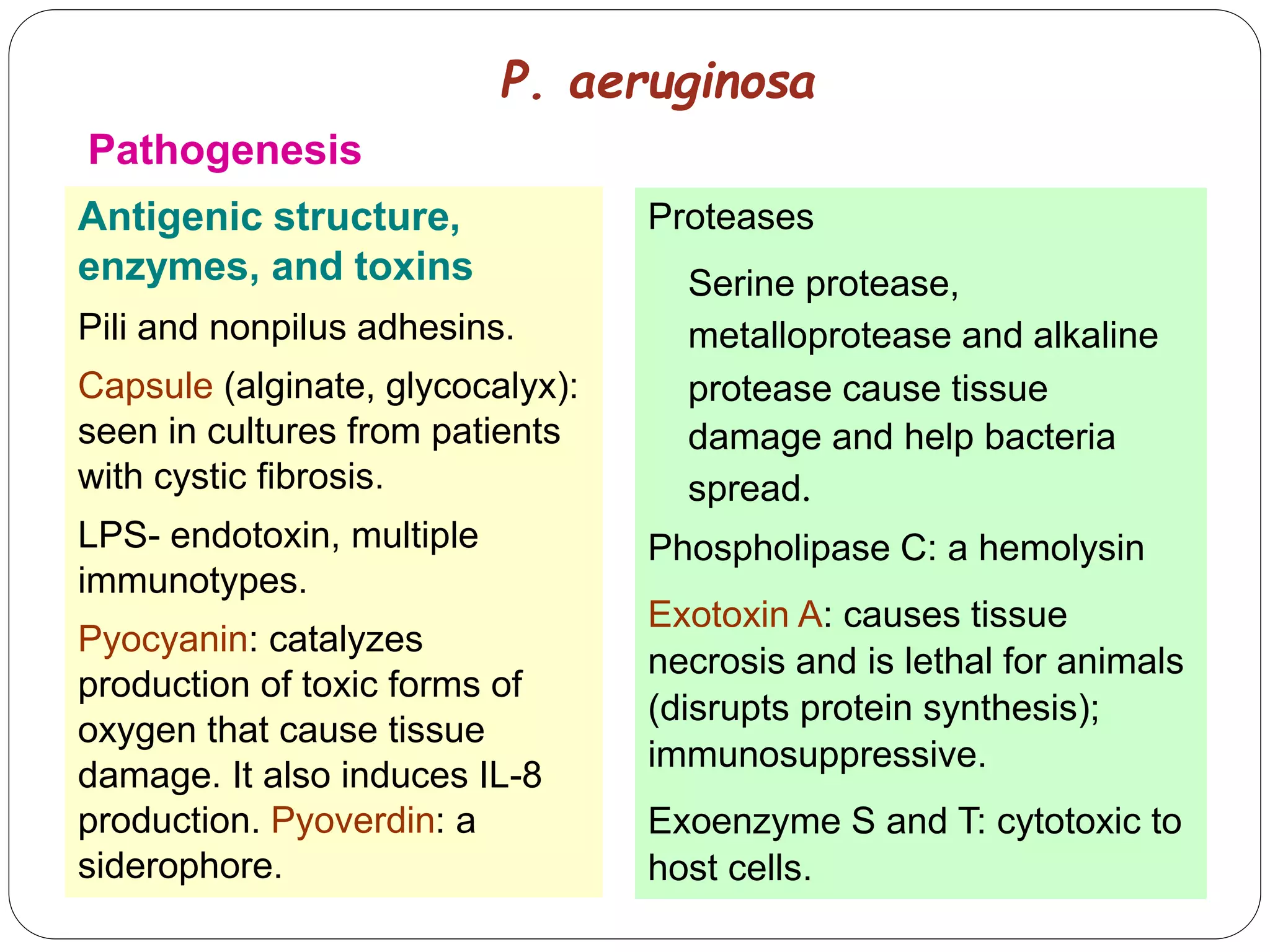
Antigenic structure,
enzymes, and toxins
Pili and nonpilus adhesins.
Capsule (alginate, glycocalyx):
seen in cultures from patients
with cystic fibrosis.
LPS- endotoxin, multiple
immunotypes.
Pyocyanin: catalyzes
production of toxic forms of
oxygen that cause tissue
damage. It also induces IL-8
production. Pyoverdin: a
siderophore.
Proteases
Serine protease,
metalloprotease and alkaline
protease cause tissue
damage and help bacteria
spread.
Phospholipase C: a hemolysin
Exotoxin A: causes tissue
necrosis and is lethal for animals
(disrupts protein synthesis);
immunosuppressive.
Exoenzyme S and T: cytotoxic to
host cells.
Pathogenesis
P. aeruginosa
Infection of wounds and burns
(blue-green pus). Patients with
severe burns may develop into
bacteriemia.
Skin and nail infections
Meningitis (when introduced by
lumbar puncture).
Pulmonary infection
Tracheobronchitis
Necrotizing pneumonia in CF
patients: diffuse, bilateral
bronchopneumonia with
microabscess and necrosis.
Eye infections: corneal ulcer.
Ear infections
Otitis externa: mild in
swimmers; malignant (invasive)
in diabetic patients.
Chronic otitis media
Osteochondritis of the foot.
Urinary tract infection
Sepsis: most cases originate
from infections of lower RT, UT,
and skin and soft tissue.
Ecthyma gangrenosum
(hemorrhagic necrosis of skin)
may be seen in some patients.
Clinical Diseases
Laboratory Diagnosis
Specimen: skin lesions, pus, urine, blood, spinal fluid, sputum.
Culture: blood agar plate and differential media. Identification
of P. aeruginosa is described above.
Several subtyping methods, including phage typing and
molecular typing, are available for epidemiologic purposes.
P. aeruginosa
Genus Pseudomonas
Pseudomonas
Pyocyanine Pigment
Genus Pseudomonas
Pseudomonas
Pyocyanine Pigment
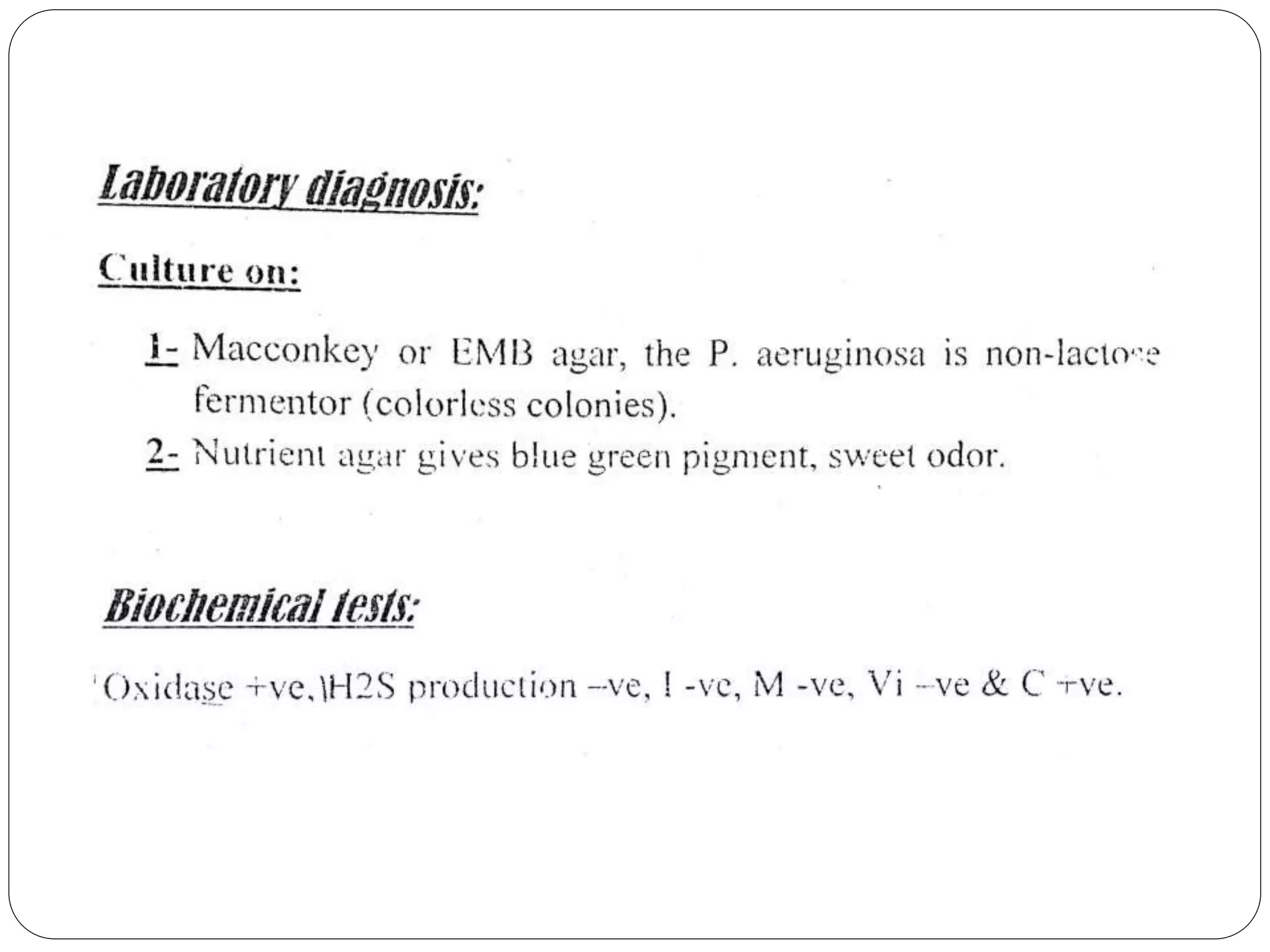
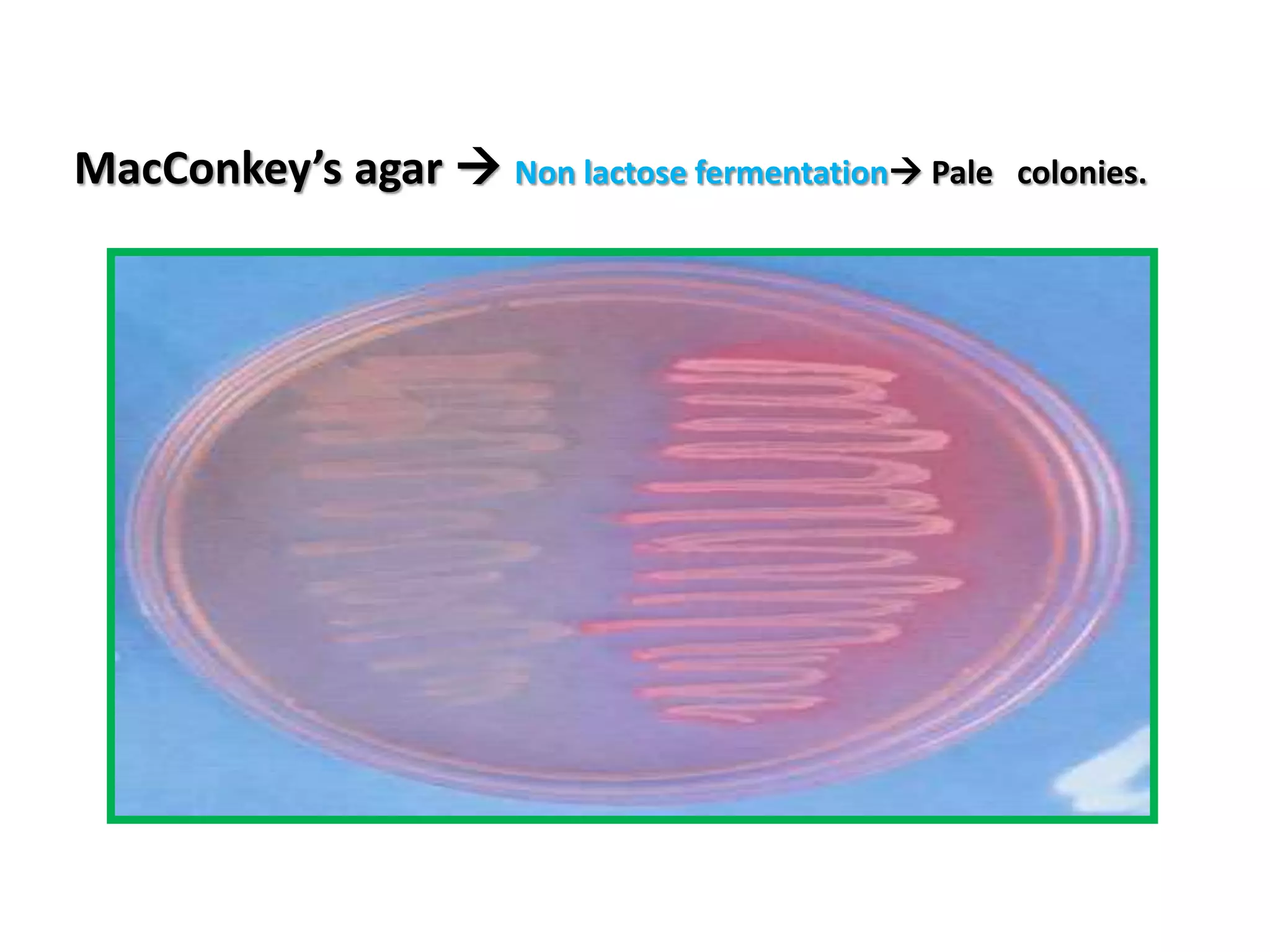
MacConkey’s agar  Non lactose fermentation Pale colonies.
Laboratory diagnosis
Nutrient agar  Demonstrate pigment
production.
Laboratory diagnosis
Blood agar spreading flat pigmented, sometime
with Beta- hemolysis, mucoid, confluent growth.
Laboratory diagnosis
Biochemical tests: Oxidase test, catalase test all are
positive.
Catalase +ve Oxidase +ve
Combined antibiotic therapy is generally required to avoid
resistance that develops rapidly when single drugs are employed.
Avoid using inappropriate broad-spectrum antibiotics, which can
suppress the normal flora and permit overgrowth of resistant
pseudomonads.
P. aeruginosa
Prevention and Control
Pseudomonas spp. normally inhabit soil, water, and
vegetation and can be isolated from the skin, throat, and
stool of healthy persons.
Spread is via contact with fomites or by ingestion of
contaminated food and water.
High risk population: patients receiving broad-spectrum
antibiotics, with leukemia, burns, cystic fibrosis, and
immunosuppression.
Methods for control of infection are similar to those for other
nosocomial pathogens. Special attention should be paid to
sinks, water baths, showers, hot tubs, and other wet areas.
P. aeruginosa
Prevention and Control
Control:
1. Patients at high risk should not be admitted to a ward
where cases of pseudomonas infection are present.
2. Patients infected with P. aeruginosa should be isolated.
3. Sterilize
all instruments, apparatus, and dressing;
antimicrobial and other therapeutic substances.
4. Monitor clinically relevant isolates of P. aeruginosa by a
suitable typing system to identify epidemic strains.
Thank you

Pseudomonas.ppt

  • 1.
  • 3.
    Pseudomonas and relatedorganisms Aerobic gram-negative nonfermentative rods Pseudomonas aeruginosa: opportunistic infections of multiple sites
  • 5.
    Pseudomonas Structure and Physiology Gram-negative rods. Motilewith polar flagella. Obligate aerobe. Oxidase-positive. Do not ferment carbohydrates. Resistant to multiple drugs.
  • 7.
    P. aeruginosa Forms roundcolonies with a fluorescent greenish color, sweet odor, and b-hemolysis. Pyocyanin- nonfluorescent bluish pigment; pyoverdin- fluorescent greenish pigment; pyorubin, and pyomelanin Some strains have a prominent capsule (alginate). Identification of P. aeruginosa is usually based on oxidase test and its colonial morphology: b-hemolysis, the presence of characteristic pigments and sweet odor, and growth at 42 oC.
  • 8.
    P. aeruginosa Pathogenesis andImmunity This organism is widely distributed in nature and is commonly present in moist environments in hospitals. It is pathogenic only when introduced into areas devoid of normal defenses, e.g., 1. Disruption of mucous membrane and skin. 2. Usage of intravenous or urinary catheters. 3. Neutropenia (as in cancer therapy). P. aeruginosa can infect almost any external site or organ. P. aeruginosa is invasive and toxigenic. It attaches to and colonizes the mucous membrane or skin, invade locally, and produces systemic diseases and septicemia. P. aeruginosa is resistant to many antibiotics. It becomes dominant when more susceptible bacteria of the normal flora are suppressed.
  • 9.
    P. aeruginosa Antigenic structure, enzymes,and toxins Pili and nonpilus adhesins. Capsule (alginate, glycocalyx): seen in cultures from patients with cystic fibrosis. LPS- endotoxin, multiple immunotypes. Pyocyanin: catalyzes production of toxic forms of oxygen that cause tissue damage. It also induces IL-8 production. Pyoverdin: a siderophore. Proteases Serine protease, metalloprotease and alkaline protease cause tissue damage and help bacteria spread. Phospholipase C: a hemolysin Exotoxin A: causes tissue necrosis and is lethal for animals (disrupts protein synthesis); immunosuppressive. Exoenzyme S and T: cytotoxic to host cells. Pathogenesis
  • 11.
    P. aeruginosa Infection ofwounds and burns (blue-green pus). Patients with severe burns may develop into bacteriemia. Skin and nail infections Meningitis (when introduced by lumbar puncture). Pulmonary infection Tracheobronchitis Necrotizing pneumonia in CF patients: diffuse, bilateral bronchopneumonia with microabscess and necrosis. Eye infections: corneal ulcer. Ear infections Otitis externa: mild in swimmers; malignant (invasive) in diabetic patients. Chronic otitis media Osteochondritis of the foot. Urinary tract infection Sepsis: most cases originate from infections of lower RT, UT, and skin and soft tissue. Ecthyma gangrenosum (hemorrhagic necrosis of skin) may be seen in some patients. Clinical Diseases
  • 13.
    Laboratory Diagnosis Specimen: skinlesions, pus, urine, blood, spinal fluid, sputum. Culture: blood agar plate and differential media. Identification of P. aeruginosa is described above. Several subtyping methods, including phage typing and molecular typing, are available for epidemiologic purposes. P. aeruginosa
  • 14.
  • 15.
  • 16.
    MacConkey’s agar Non lactose fermentation Pale colonies.
  • 17.
    Laboratory diagnosis Nutrient agar Demonstrate pigment production.
  • 18.
    Laboratory diagnosis Blood agarspreading flat pigmented, sometime with Beta- hemolysis, mucoid, confluent growth.
  • 19.
    Laboratory diagnosis Biochemical tests:Oxidase test, catalase test all are positive. Catalase +ve Oxidase +ve
  • 20.
    Combined antibiotic therapyis generally required to avoid resistance that develops rapidly when single drugs are employed. Avoid using inappropriate broad-spectrum antibiotics, which can suppress the normal flora and permit overgrowth of resistant pseudomonads.
  • 21.
    P. aeruginosa Prevention andControl Pseudomonas spp. normally inhabit soil, water, and vegetation and can be isolated from the skin, throat, and stool of healthy persons. Spread is via contact with fomites or by ingestion of contaminated food and water. High risk population: patients receiving broad-spectrum antibiotics, with leukemia, burns, cystic fibrosis, and immunosuppression. Methods for control of infection are similar to those for other nosocomial pathogens. Special attention should be paid to sinks, water baths, showers, hot tubs, and other wet areas.
  • 22.
    P. aeruginosa Prevention andControl Control: 1. Patients at high risk should not be admitted to a ward where cases of pseudomonas infection are present. 2. Patients infected with P. aeruginosa should be isolated. 3. Sterilize all instruments, apparatus, and dressing; antimicrobial and other therapeutic substances. 4. Monitor clinically relevant isolates of P. aeruginosa by a suitable typing system to identify epidemic strains.
  • 23.