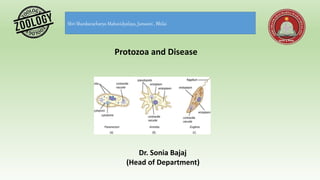
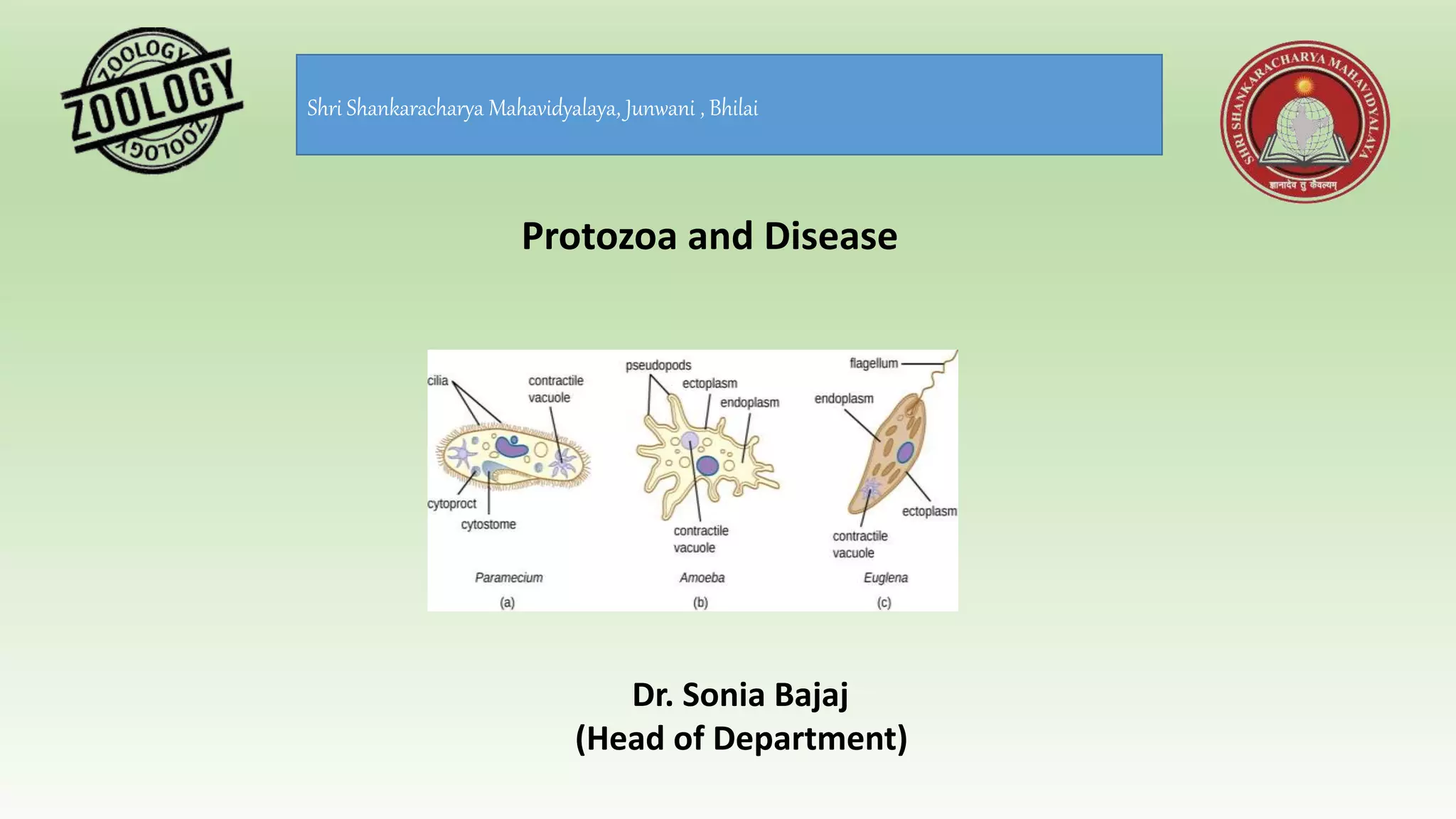
1. Protozoa are single-celled microscopic organisms that can be free-living or parasitic. They cause diseases by multiplying within human hosts through fecal-oral transmission or an arthropod vector.
2. There are two main types of parasitic protozoa: ectoparasites found on the host's body and endoparasites found within the host. Their life cycles can be either monogenetic within one host or digenetic requiring two hosts.
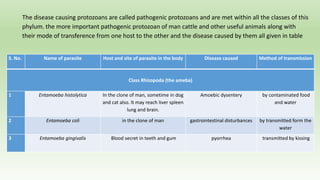
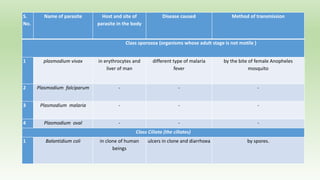
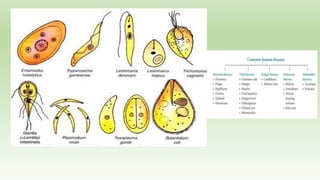
3. Common pathogenic protozoa include Entamoeba histolytica causing amoebic dysentery, Trypanosoma gambiense causing African sleeping sickness, and Plasmodium vivax causing malaria. They




![Polymer [ बहुलक ] Chemistry Notes PDF - Irfanullah Mehar - JJ Sir Chemistry.pdf](https://cdn.slidesharecdn.com/ss_thumbnails/polymerchemistrynotespdf-irfanullahmehar-jjsirchemistry-260210172118-3f9b37f7-thumbnail.jpg?width=640&height=640&fit=bounds)


