ProtozoaBy Sanchay GumberProtozoaWhat are protozoa?Protozoa are microorganisms classified as unicellular eukaryotes. Protozoa are paraphyletic. Though they have sometimes been described as a subkingdom or phylum, they do not constitute a formal taxon in modern classification systems .
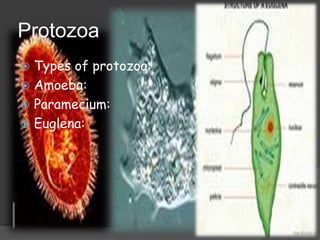
ProtozoaTypes of protozoa:Amoeba: Paramecium:Euglena:
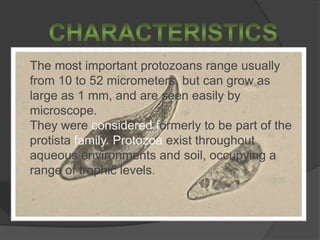
CharacteristicsThe most important protozoans range usually from 10 to 52 micrometers, but can grow as large as 1 mm, and are seen easily by microscope.They were considered formerly to be part of the protista family. Protozoa exist throughout aqueous environments and soil, occupying a range of trophic levels.
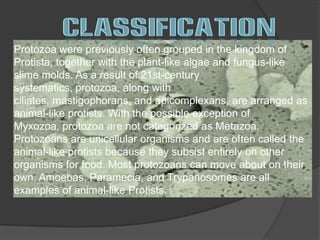
ClassificationProtozoa were previously often grouped in the kingdom of Protista, together with the plant-like algae and fungus-like slime molds. As a result of 21st-century systematics, protozoa, along with ciliates, mastigophorans, and apicomplexans, are arranged as animal-like protists. With the possible exception of Myxozoa, protozoa are not categorized as Metazoa. Protozoans are unicellular organisms and are often called the animal-like protists because they subsist entirely on other organisms for food. Most protozoans can move about on their own. Amoebas, Paramecia, and Trypanosomes are all examples of animal-like Protists.
Thank you
Protozoa

Protozoa

  • 1.
    ProtozoaBy Sanchay GumberProtozoaWhatare protozoa?Protozoa are microorganisms classified as unicellular eukaryotes. Protozoa are paraphyletic. Though they have sometimes been described as a subkingdom or phylum, they do not constitute a formal taxon in modern classification systems .
  • 2.
  • 3.
    CharacteristicsThe most importantprotozoans range usually from 10 to 52 micrometers, but can grow as large as 1 mm, and are seen easily by microscope.They were considered formerly to be part of the protista family. Protozoa exist throughout aqueous environments and soil, occupying a range of trophic levels.
  • 4.
    ClassificationProtozoa were previouslyoften grouped in the kingdom of Protista, together with the plant-like algae and fungus-like slime molds. As a result of 21st-century systematics, protozoa, along with ciliates, mastigophorans, and apicomplexans, are arranged as animal-like protists. With the possible exception of Myxozoa, protozoa are not categorized as Metazoa. Protozoans are unicellular organisms and are often called the animal-like protists because they subsist entirely on other organisms for food. Most protozoans can move about on their own. Amoebas, Paramecia, and Trypanosomes are all examples of animal-like Protists.
  • 5.