Five Kingdom
Classification
• In 1937, E-Chatton suggested the
terms of, “Procariotique” to
describe bacteria and
“Eucariotique” to describe animal
and plant cells.
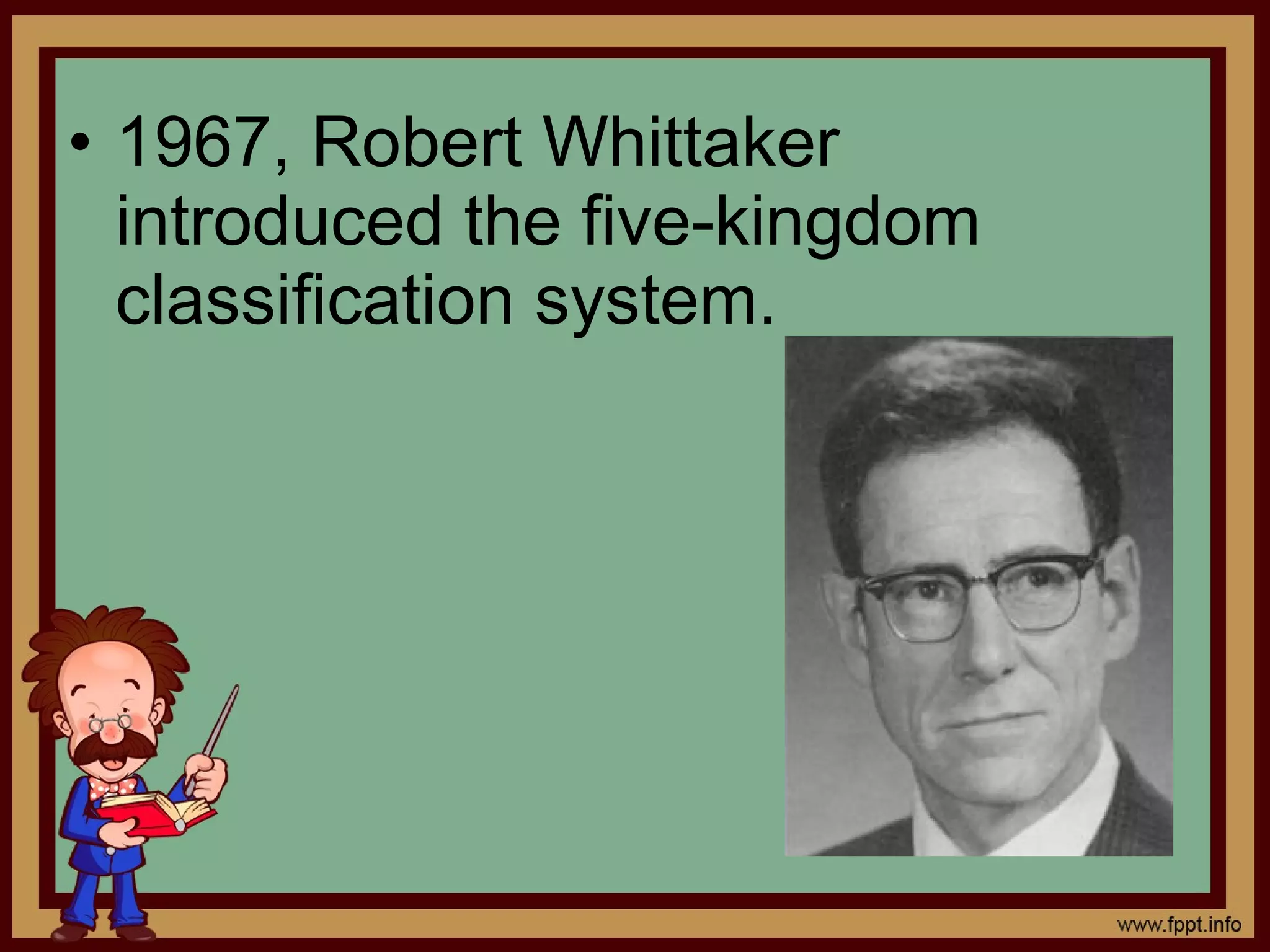
• 1967, Robert Whittaker
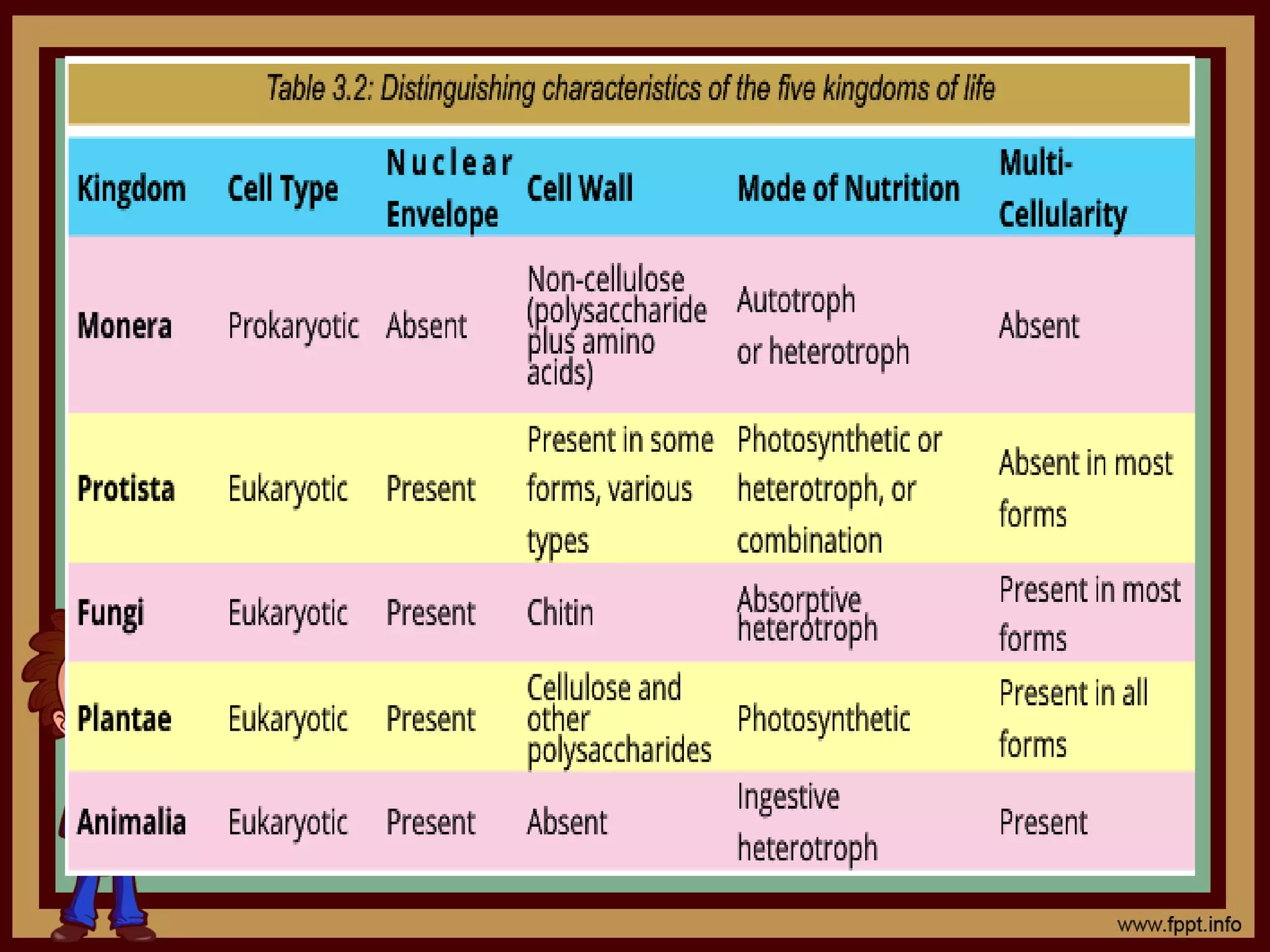
introduced the five-kingdom
classification system.
• The levels of cellular organization:
> prokaryotic
> unicellular eukaryotic
> multicellular eukaryotic
• The principal modes of nutrition
> photosynthesis
> absorption
>ingestion
Basis of Five Kindom System
Five Kingdoms
• In 1988, Margulis and Schwartz modified
the five-kingdom classification of
Whittaker.
• They considered genetics along with
cellular organization and mode of nutrition
in classification.
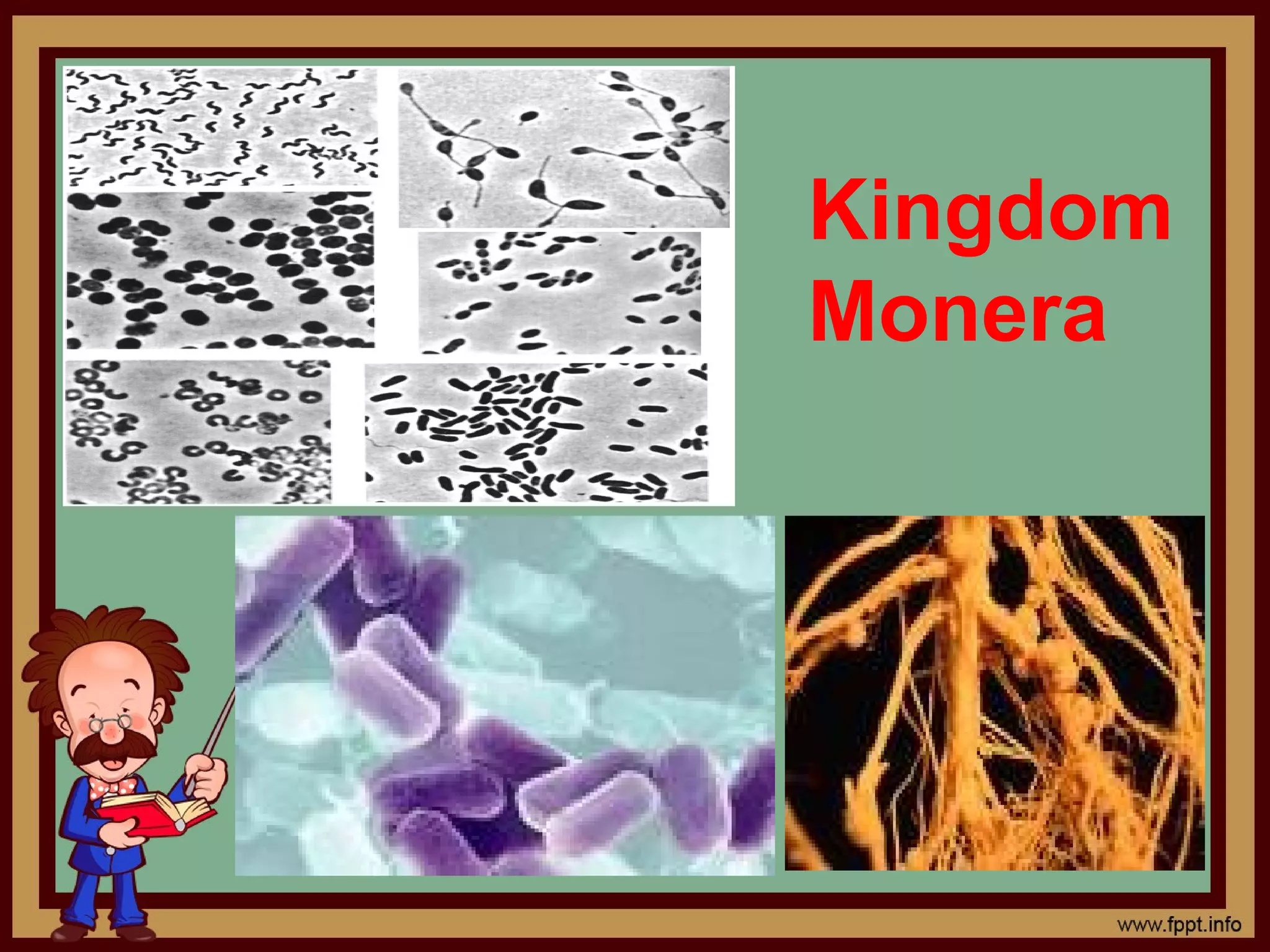
Kingdom
Monera
Characteristics
• It includes prokaryotic organisms
• Monerans are unicellular
• Most are heterotrophic but some perform
photosynthesis
• two different kinds of
organisms i.e.bacteria
and cyanobacteria.
There are two subkingdoms of Kingdom
Monera:
• Archaebacteria-can live in the most
extreme of environments.
• Eubacteria-Is also called the true
bacteria
These bacteria live in very hot, acid habitats of 60-80
and pH 2-4, like the photo of a "Hot springs" below,
the red stain on the rocks are the prokaryotic cells.
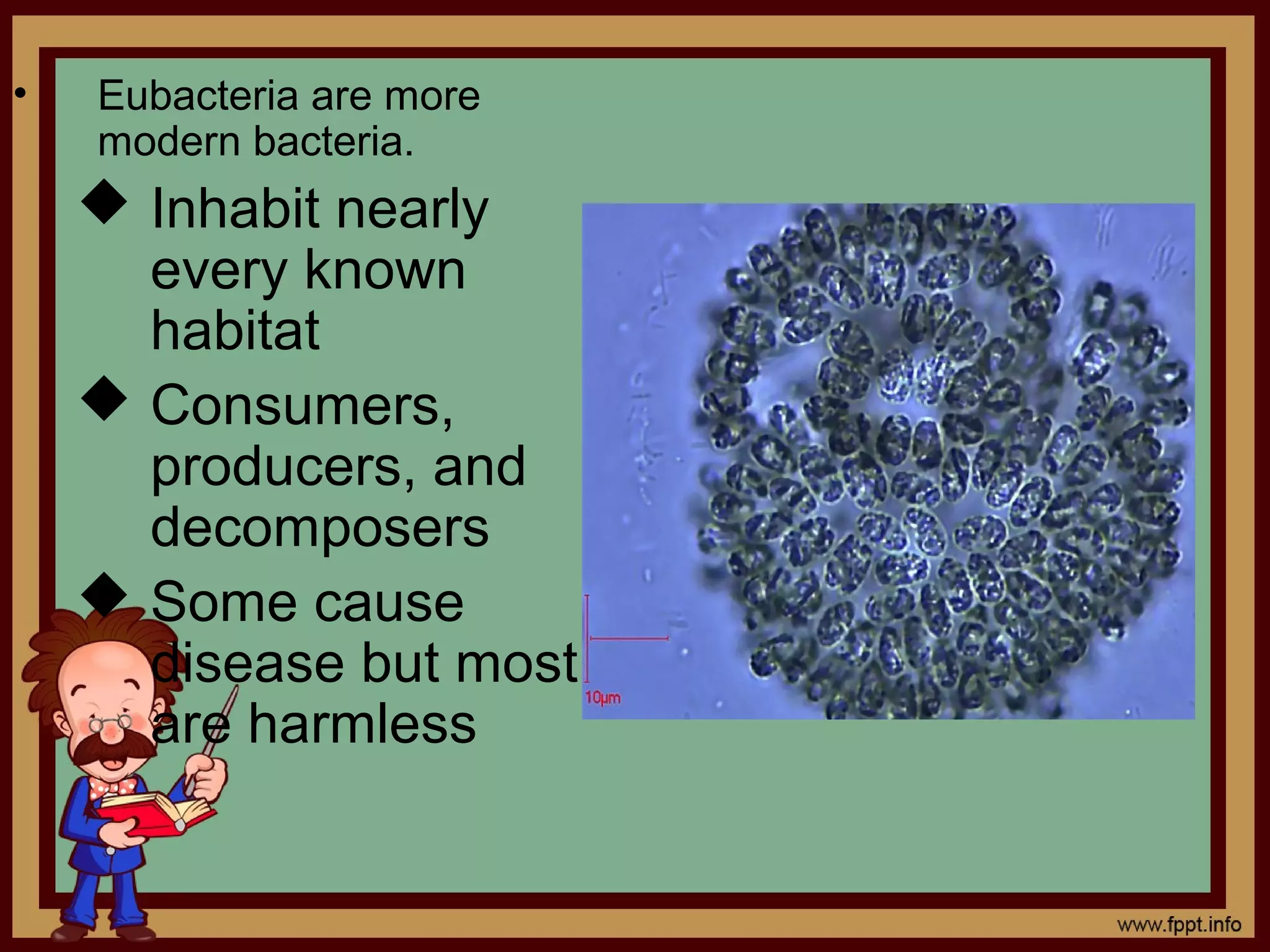
• Eubacteria are more
modern bacteria.
 Inhabit nearly
every known
habitat
 Consumers,
producers, and
decomposers
 Some cause
disease but most
are harmless
Kingdom protista
Characteristics
• It includes eukaryotic unicellular and
simple multicellular organisms
• There are three main types of protists.
1) Algae
2) Protozoans
• 3) Fungi like protists
Characteristics
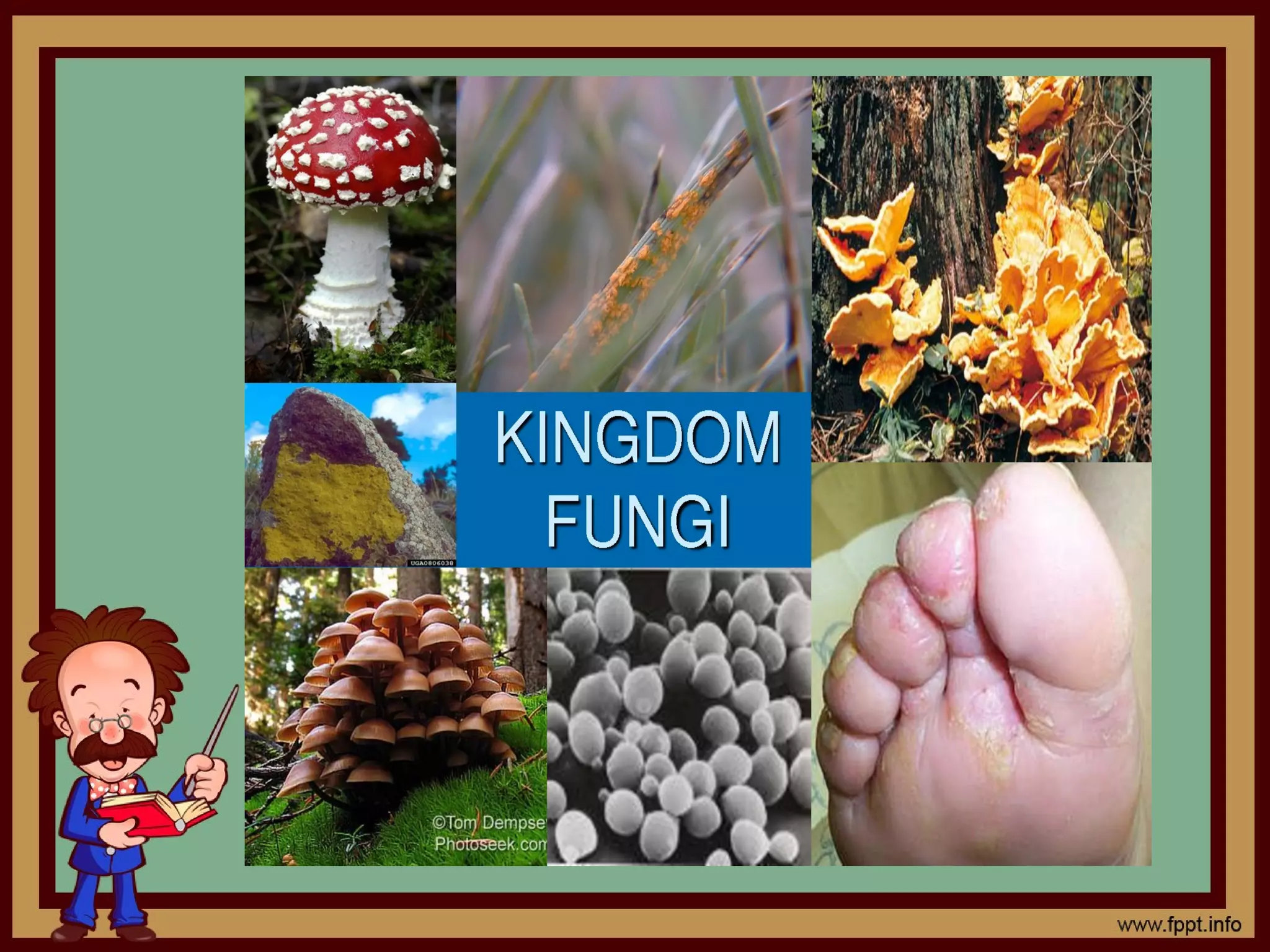
• It includes eukaryotic multicellular
heterotrophs which are absorptive in their
nutritional mode e.g. mushrooms.
• Most fungi are decomposers.
• They live on organic material, secrete
digestive enzymes and absorb small
organic molecules formed by the
digestion by enzymes.
Characteristics
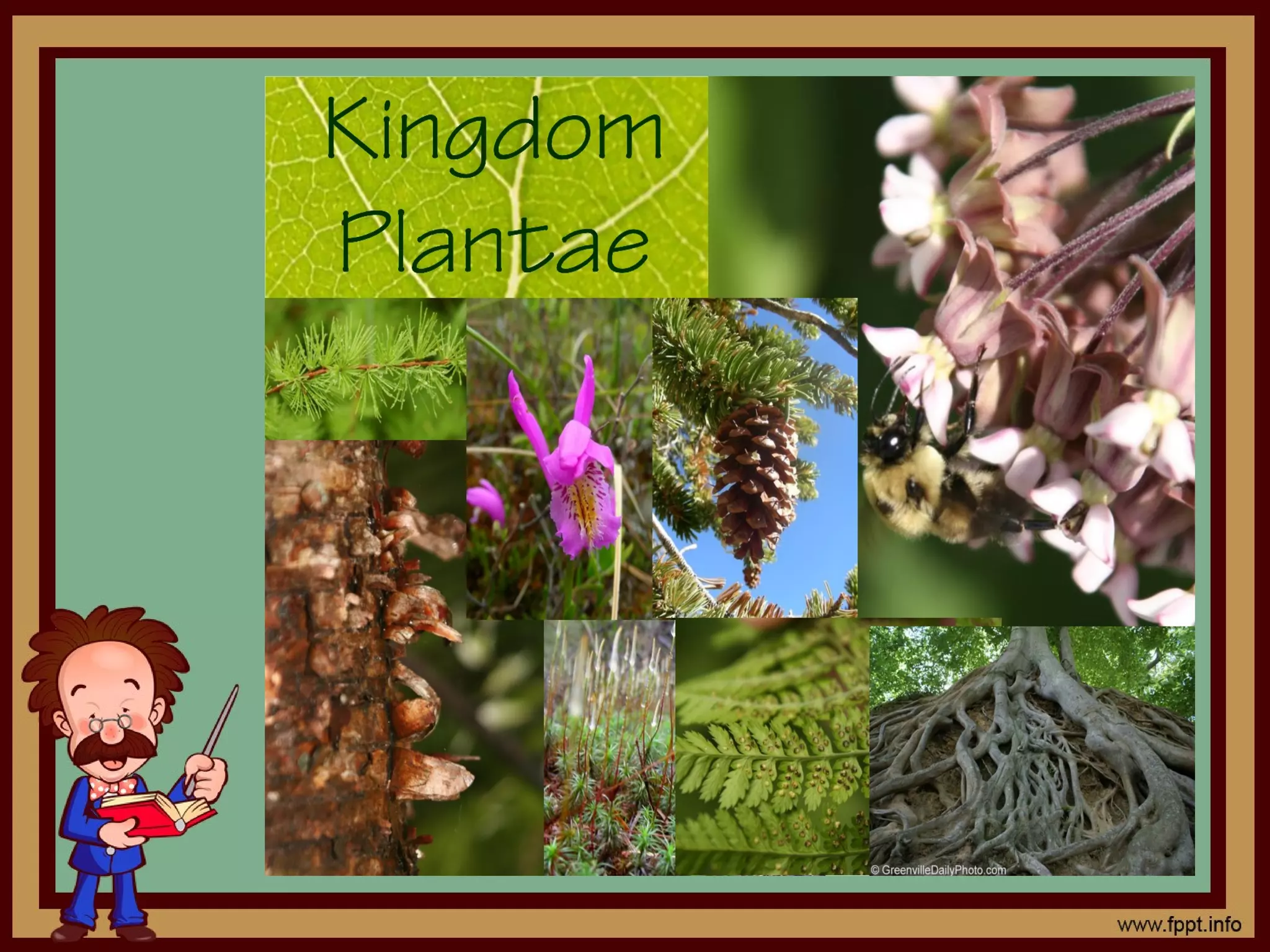
• It includes eukaryotic multicellular
autotrophs.
• Plants are autotrophic in nutritional mode,
making their own food by photosynthesis.
• They have multicellular sex organs and
form embryos during their life cycles.
• Examples: Mosses, ferns and flowering
plants are included in this kingdom.
Characteristics
• It includes eukaryotic multicellular
consumers.
• Animals live mostly by ingesting food and
digesting it within specialized cavities.
• They lackcell wall and show movements.
Five kingdom Classification

Five kingdom Classification

  • 1.
  • 2.
    • In 1937,E-Chatton suggested the terms of, “Procariotique” to describe bacteria and “Eucariotique” to describe animal and plant cells.
  • 3.
    • 1967, RobertWhittaker introduced the five-kingdom classification system.
  • 4.
    • The levelsof cellular organization: > prokaryotic > unicellular eukaryotic > multicellular eukaryotic • The principal modes of nutrition > photosynthesis > absorption >ingestion Basis of Five Kindom System
  • 5.
  • 6.
    • In 1988,Margulis and Schwartz modified the five-kingdom classification of Whittaker. • They considered genetics along with cellular organization and mode of nutrition in classification.
  • 7.
  • 8.
    Characteristics • It includesprokaryotic organisms • Monerans are unicellular • Most are heterotrophic but some perform photosynthesis • two different kinds of organisms i.e.bacteria and cyanobacteria.
  • 10.
    There are twosubkingdoms of Kingdom Monera: • Archaebacteria-can live in the most extreme of environments. • Eubacteria-Is also called the true bacteria
  • 11.
    These bacteria livein very hot, acid habitats of 60-80 and pH 2-4, like the photo of a "Hot springs" below, the red stain on the rocks are the prokaryotic cells.
  • 12.
    • Eubacteria aremore modern bacteria.  Inhabit nearly every known habitat  Consumers, producers, and decomposers  Some cause disease but most are harmless
  • 13.
  • 14.
    Characteristics • It includeseukaryotic unicellular and simple multicellular organisms • There are three main types of protists. 1) Algae 2) Protozoans • 3) Fungi like protists
  • 16.
    Characteristics • It includeseukaryotic multicellular heterotrophs which are absorptive in their nutritional mode e.g. mushrooms. • Most fungi are decomposers. • They live on organic material, secrete digestive enzymes and absorb small organic molecules formed by the digestion by enzymes.
  • 18.
    Characteristics • It includeseukaryotic multicellular autotrophs. • Plants are autotrophic in nutritional mode, making their own food by photosynthesis. • They have multicellular sex organs and form embryos during their life cycles. • Examples: Mosses, ferns and flowering plants are included in this kingdom.
  • 20.
    Characteristics • It includeseukaryotic multicellular consumers. • Animals live mostly by ingesting food and digesting it within specialized cavities. • They lackcell wall and show movements.