Dr. P. Suganya
Assistant Professor
Sri Kaliswari College (Autonomous)
 Post translational modifications refer to any
alteration in the amino acid sequence of the
protein after its synthesis.
 It may involve the modification of the amino acid
side chain, terminal amino or carboxyl group by
means of covalent or enzymatic means
following protein biosynthesis.
 Generally, these modifications influence the
structure, stability, activity, cellular localization or
substrate specificity of the protein.
 Post translational modification provides
complexity to proteome for diverse function with
limited number of genes.
 Post-translational modifications (PTMs) mainly
occur in the endoplasmic reticulum of the cell
but sometimes continue in the golgi bodies as
well.
 As the newly synthesized protein is released in the
lumen of the ER, signal peptidases cleave peptide
sequence. Apart from signal peptide, some
polypeptide sequence of the protein is also cleaved
resulting in the final sequence.
 Example:
 Insulin is synthesized in the cells in its inactive
form which cannot perform its function. Post
translational modifications ensure proper function
which involves the removal of the part of protein
to convert it into a three dimensional and fully
active form.
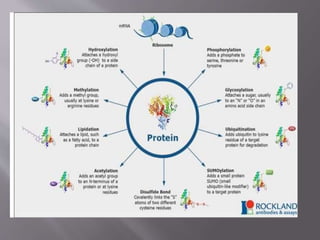
 Phosphoryalation is the addition of one or
more phosphate groups to the protein. Post
Translational Phosphorylation is one of the
most common protein modifications that occur
in animal cells. Majority of phosphorylation
occurs as a mechanism to regulate the
biological activity of a protein. In animal cells
Serine, tyrosine and thereonine are the amino
acids that subjected to the phosphorylation.
 Glycosylation is the addition of carbohydrate
molecules to the polypeptide chain and
modifying it into glycoproteins. Many of the
proteins that are destined to become a part of
plasma membrane or to be secreted from the
cell, have carbohydrate chains attached to the
amide nitrogen of asparagine(N linked) or the
hydroxyl groups of serine, threonine(O
linked). N glycosylation occurs in ER and O
glycosylation occurs in the golgi complex.
 Sulfate modidication takes place by the
addition of sulphate molecules and these
modifications of proteins occurs at tyrosine
residues. Tyrosine sulfation accomplished via
the activity of tyrosylproteinsulfotransferases
(TPST) which are membrane associated
enzymes of trans-Golgi network. There are two
known TPSTs. TPST-1 TPST-2 The universal
phosphate donor is 3’-phosphoadenosyl- 5’-
phosphosulphate (PSPA).
 The transfer of one-carbon methyl groups to
nitrogen or oxygen to amino acid side chains
increases the hydrophobicity of the protein and
can neutralize a negative amino acid charge
when bound to carboxylic acids. Methylation is
mediated by methyltransferases and S-
adenosyl methionine (SAM) is the primary
methyl group donor.
 The biological process of addition of a hydroxy
group to a protein amino acid is called
Hydroxylation. Protein hydroxylation is one
type of PTM that involves the conversion of –
CH group into –COH group and these
hydroxylated amino acids are involved in the
regulation of some important factors called
transcription factors. Among the 20 amino
acids, the two amino acids regulated by this
method are proline and lysine.
 a) SUMOylation
 SUMO (small ubiquitin related modifier) proteins
are 100 amino acid residue proteins which bind to
the target protein in the same way as ubiquitin.
They also confer the transcription regulatory
activity of the protein and help in the transport of
the target protein from cytosol to the nucleus.
 b) Disulfide bond formation
 Stabilizes protein structure and involved in redox
processes.
 c) Lipidylation, Acetylation, Prenylation etc.
 Proteins are synthesized
by ribosomes translating mRNA into polypeptide
chains, which may then undergo modifications to
form the mature protein product.
 Post-translational modifications of proteins, which
are not gene- template based, can regulate the
protein functions, by causing changes in protein
activity, their cellular locations and dynamic
interactions with other proteins.
 PTMs have significant biological functions which
include:

 Aids in proper protein folding – few lectin
molecules called calnexin binds to glycosylated
proteins and assist in its folding.
 Confers stability to the protein- glycosylation can
modify the stability of the protein by increasing
protein half life.
 It protects the protein against cleavage by
proteolytic enzyme by blocking the cleavage sites.
 Protein sorting or translocation- If phosphorylated
mannose residues are present in the protein it
always goes to lysosome.
 It regulates protein activity and function-
phosphorylation of protein is a reversible PTM which
activates the protein.
 Acetylation regulates many diverse functions,
including DNA recognition, protein-protein interaction
and protein stability.
 Redox-dependent PTM of proteins is emerging as a key
signaling system conserved through evolution,
influences many aspects of cellular homeostasis.
 PTMs are important components in cell signaling, as
for example when prohormones are converted
to hormones.
 It significantly increases the diversity and complexity
in the proteome.
 https://nptel.ac.in/courses/102103017/pdf/le
cture%2019.pdf
 https://en.wikipedia.org/wiki/Post-
translational_modification
 https://microbenotes.com/post-translational-
modification/#:~:text=Post%20translational%2
0modifications%20refer%20to,enzymatic%20m
eans%20following%20protein%20biosynthesis.

POST TRANSLATIONAL MODIFICATIONS.pptx

  • 1.
    Dr. P. Suganya AssistantProfessor Sri Kaliswari College (Autonomous)
  • 2.
     Post translationalmodifications refer to any alteration in the amino acid sequence of the protein after its synthesis.  It may involve the modification of the amino acid side chain, terminal amino or carboxyl group by means of covalent or enzymatic means following protein biosynthesis.  Generally, these modifications influence the structure, stability, activity, cellular localization or substrate specificity of the protein.  Post translational modification provides complexity to proteome for diverse function with limited number of genes.
  • 4.
     Post-translational modifications(PTMs) mainly occur in the endoplasmic reticulum of the cell but sometimes continue in the golgi bodies as well.
  • 6.
     As thenewly synthesized protein is released in the lumen of the ER, signal peptidases cleave peptide sequence. Apart from signal peptide, some polypeptide sequence of the protein is also cleaved resulting in the final sequence.  Example:  Insulin is synthesized in the cells in its inactive form which cannot perform its function. Post translational modifications ensure proper function which involves the removal of the part of protein to convert it into a three dimensional and fully active form.
  • 7.
     Phosphoryalation isthe addition of one or more phosphate groups to the protein. Post Translational Phosphorylation is one of the most common protein modifications that occur in animal cells. Majority of phosphorylation occurs as a mechanism to regulate the biological activity of a protein. In animal cells Serine, tyrosine and thereonine are the amino acids that subjected to the phosphorylation.
  • 8.
     Glycosylation isthe addition of carbohydrate molecules to the polypeptide chain and modifying it into glycoproteins. Many of the proteins that are destined to become a part of plasma membrane or to be secreted from the cell, have carbohydrate chains attached to the amide nitrogen of asparagine(N linked) or the hydroxyl groups of serine, threonine(O linked). N glycosylation occurs in ER and O glycosylation occurs in the golgi complex.
  • 9.
     Sulfate modidicationtakes place by the addition of sulphate molecules and these modifications of proteins occurs at tyrosine residues. Tyrosine sulfation accomplished via the activity of tyrosylproteinsulfotransferases (TPST) which are membrane associated enzymes of trans-Golgi network. There are two known TPSTs. TPST-1 TPST-2 The universal phosphate donor is 3’-phosphoadenosyl- 5’- phosphosulphate (PSPA).
  • 10.
     The transferof one-carbon methyl groups to nitrogen or oxygen to amino acid side chains increases the hydrophobicity of the protein and can neutralize a negative amino acid charge when bound to carboxylic acids. Methylation is mediated by methyltransferases and S- adenosyl methionine (SAM) is the primary methyl group donor.
  • 11.
     The biologicalprocess of addition of a hydroxy group to a protein amino acid is called Hydroxylation. Protein hydroxylation is one type of PTM that involves the conversion of – CH group into –COH group and these hydroxylated amino acids are involved in the regulation of some important factors called transcription factors. Among the 20 amino acids, the two amino acids regulated by this method are proline and lysine.
  • 12.
     a) SUMOylation SUMO (small ubiquitin related modifier) proteins are 100 amino acid residue proteins which bind to the target protein in the same way as ubiquitin. They also confer the transcription regulatory activity of the protein and help in the transport of the target protein from cytosol to the nucleus.  b) Disulfide bond formation  Stabilizes protein structure and involved in redox processes.  c) Lipidylation, Acetylation, Prenylation etc.
  • 13.
     Proteins aresynthesized by ribosomes translating mRNA into polypeptide chains, which may then undergo modifications to form the mature protein product.  Post-translational modifications of proteins, which are not gene- template based, can regulate the protein functions, by causing changes in protein activity, their cellular locations and dynamic interactions with other proteins.  PTMs have significant biological functions which include: 
  • 14.
     Aids inproper protein folding – few lectin molecules called calnexin binds to glycosylated proteins and assist in its folding.  Confers stability to the protein- glycosylation can modify the stability of the protein by increasing protein half life.  It protects the protein against cleavage by proteolytic enzyme by blocking the cleavage sites.  Protein sorting or translocation- If phosphorylated mannose residues are present in the protein it always goes to lysosome.
  • 15.
     It regulatesprotein activity and function- phosphorylation of protein is a reversible PTM which activates the protein.  Acetylation regulates many diverse functions, including DNA recognition, protein-protein interaction and protein stability.  Redox-dependent PTM of proteins is emerging as a key signaling system conserved through evolution, influences many aspects of cellular homeostasis.  PTMs are important components in cell signaling, as for example when prohormones are converted to hormones.  It significantly increases the diversity and complexity in the proteome.
  • 16.
     https://nptel.ac.in/courses/102103017/pdf/le cture%2019.pdf  https://en.wikipedia.org/wiki/Post- translational_modification https://microbenotes.com/post-translational- modification/#:~:text=Post%20translational%2 0modifications%20refer%20to,enzymatic%20m eans%20following%20protein%20biosynthesis.