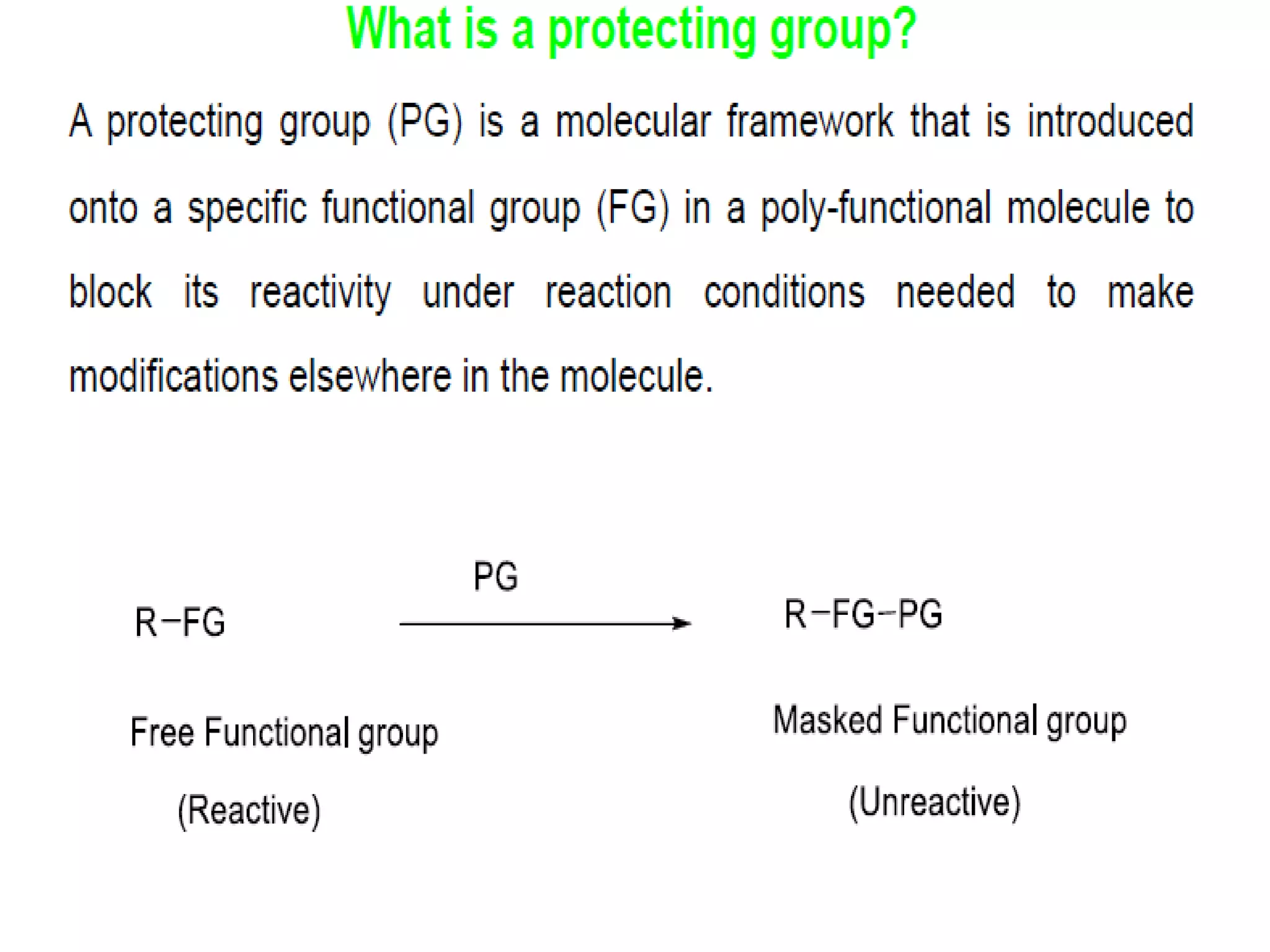
Protection and Deprotection
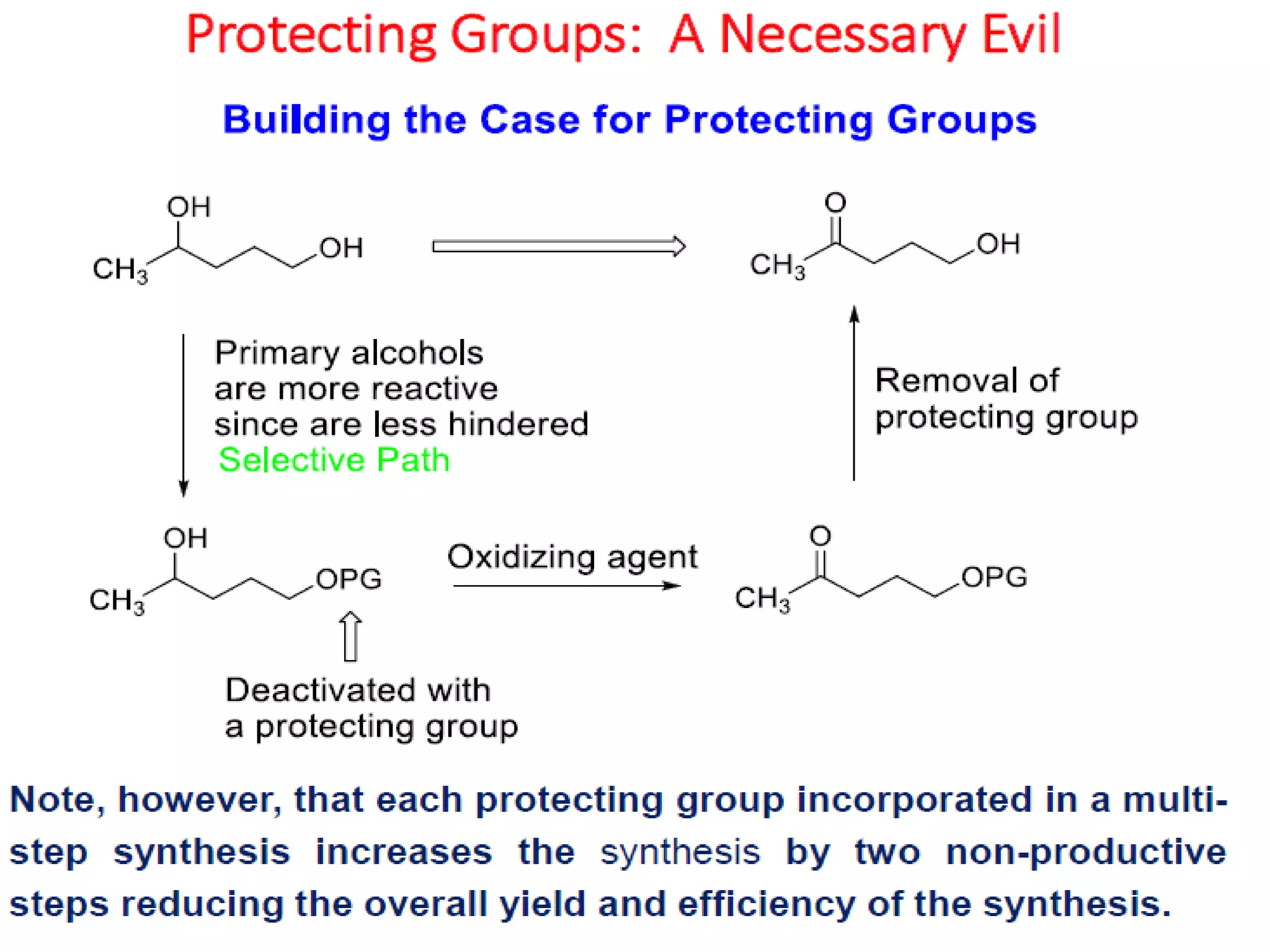
When a chemical reaction is to be carried out
selectively at one reactive site in a multifunctional
compound, other reactive sites must be temporarily
blocked; this action is called protection of functional
group.
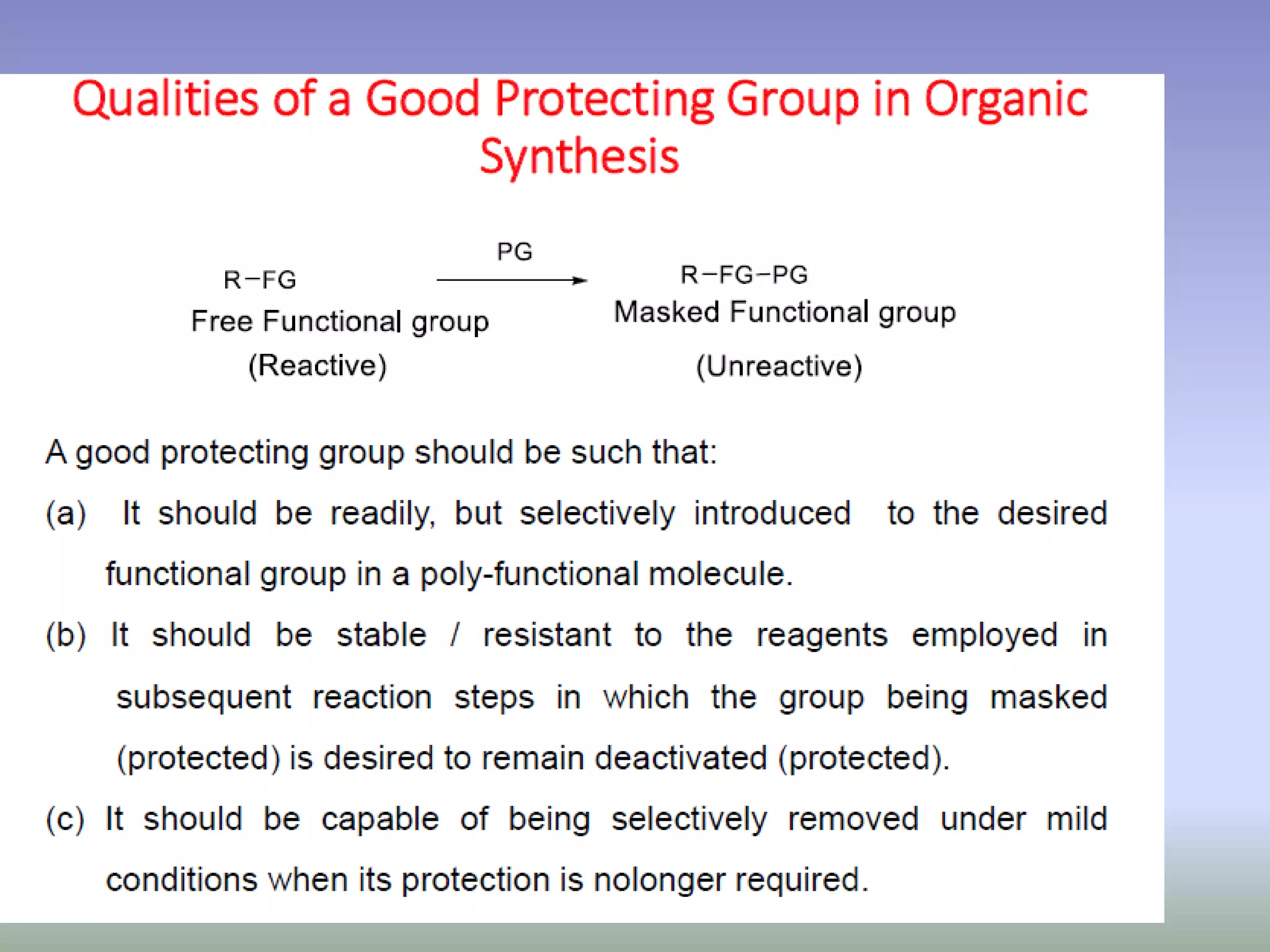
A protecting group must fulfill a
number of requirements
The protecting group reagent must react selectively
(kinetic chemoselectivity) in good yield to give a
protected substrate that is stable to the projected
reactions.
• The protecting group must be selectively
removed in good yield by readily available
reagents.
• The protecting group should not have additional
functionality that might provide additional sites
of reaction.
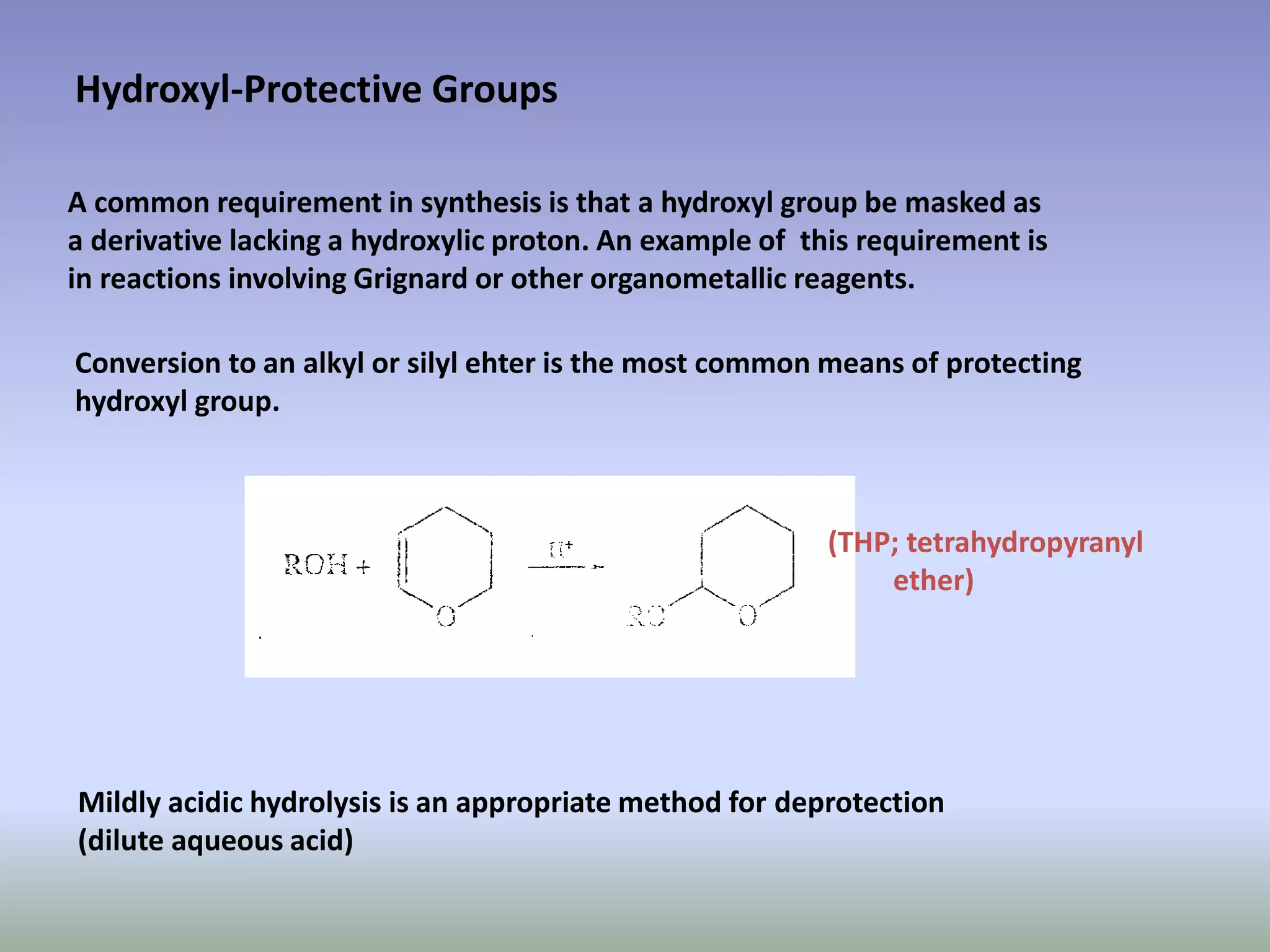
Hydroxyl-Protective Groups
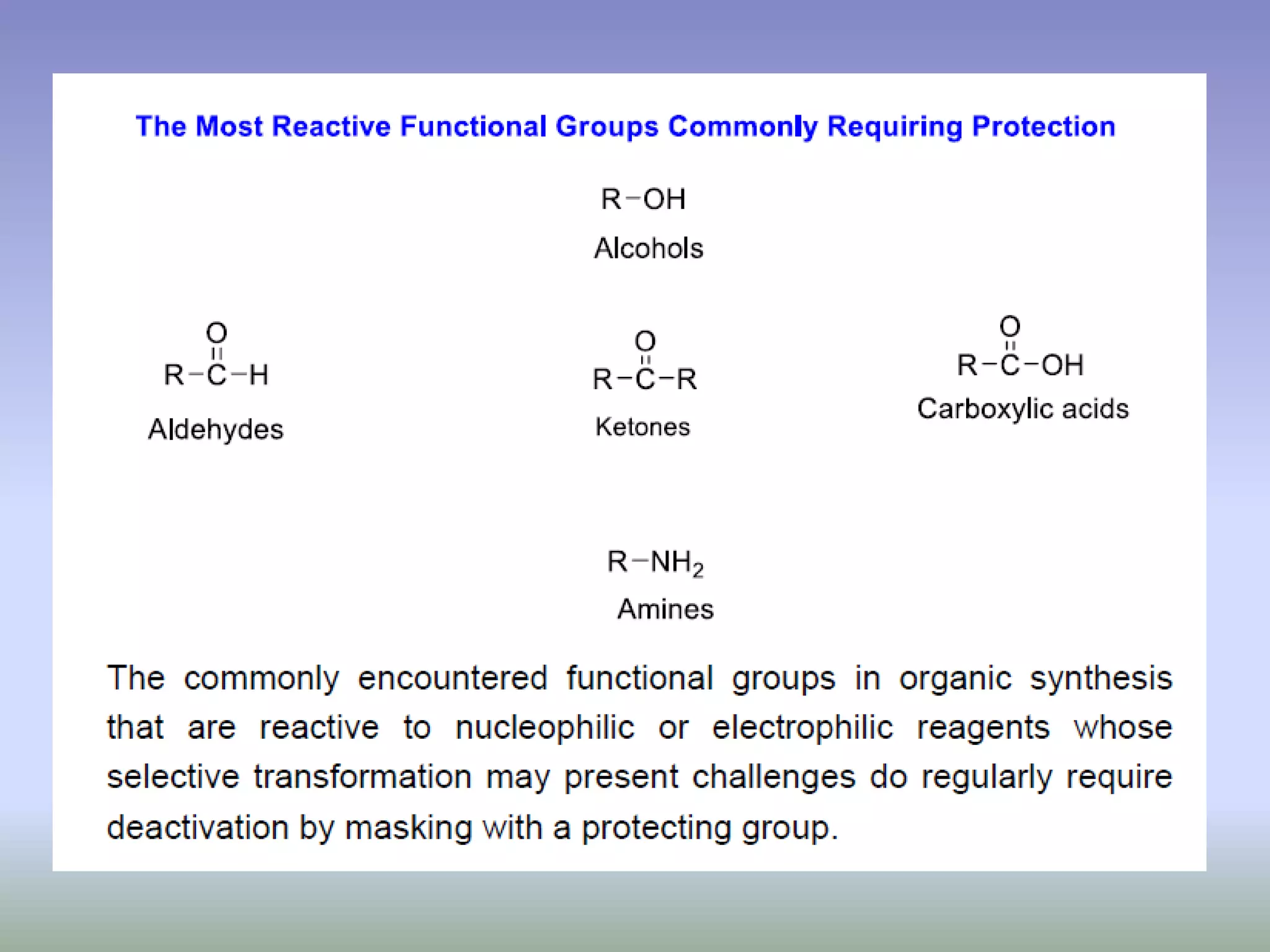
A common requirement in synthesis is that a hydroxyl group be masked as
a derivative lacking a hydroxylic proton. An example of this requirement is
in reactions involving Grignard or other organometallic reagents.
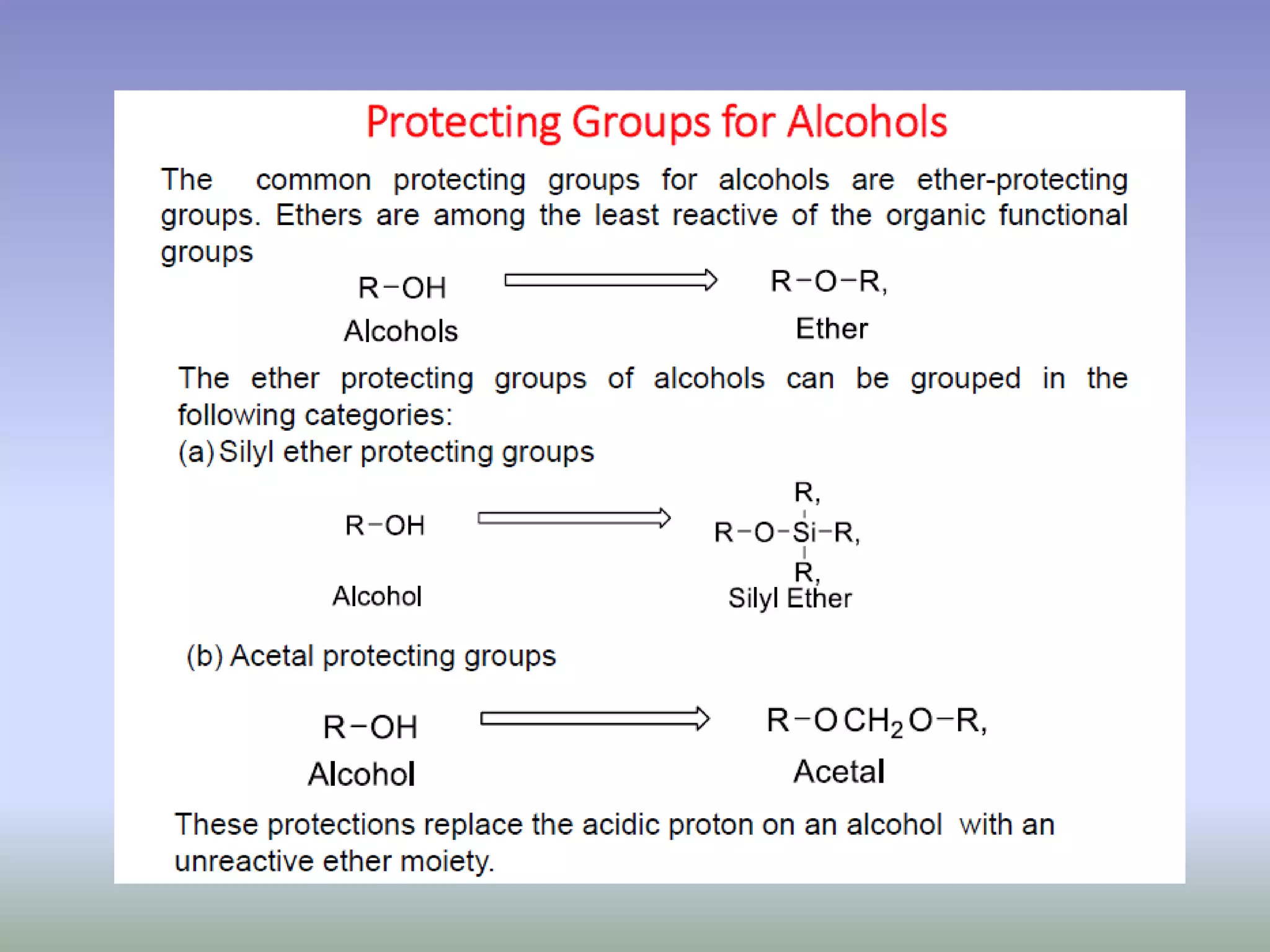
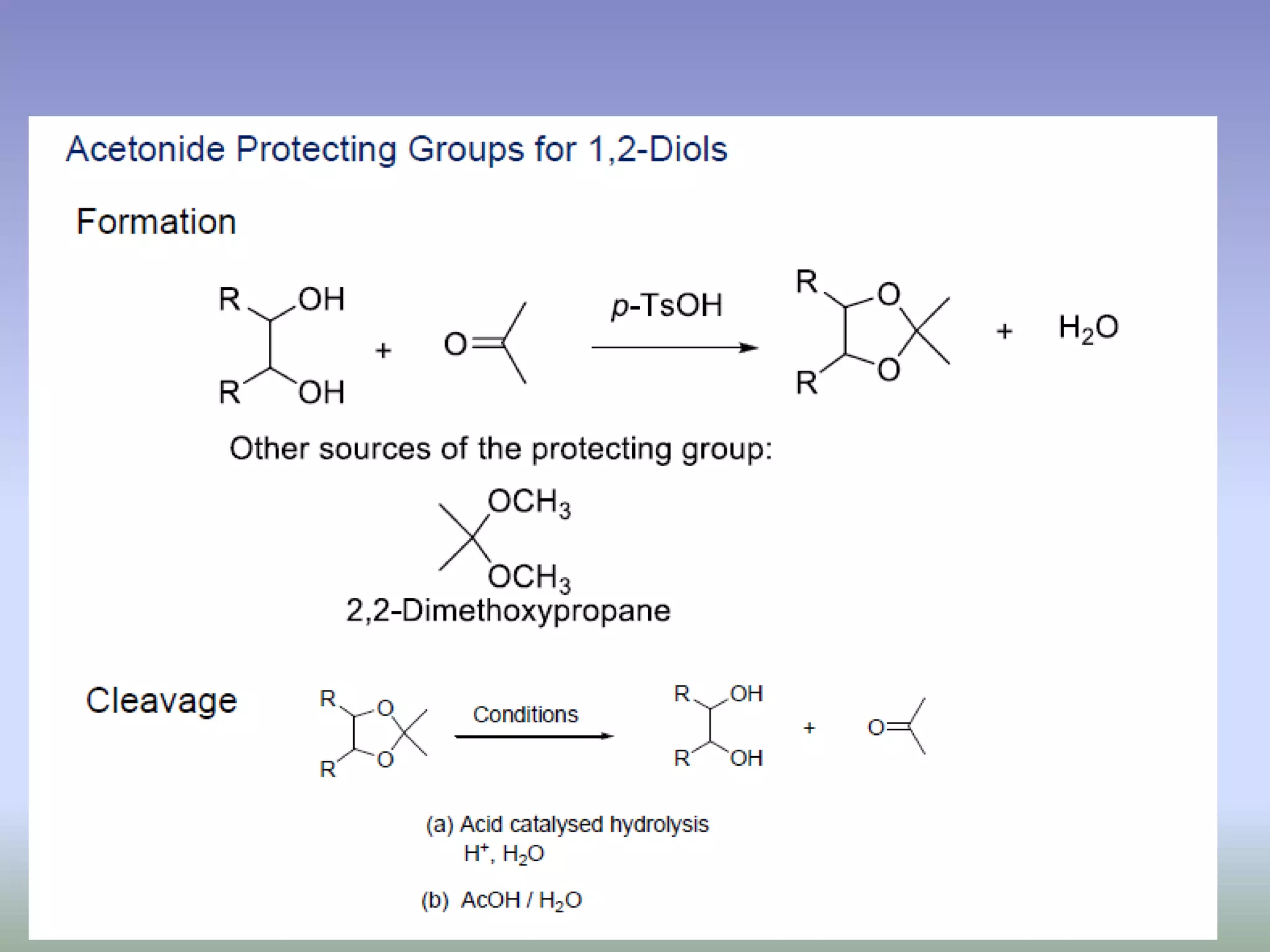
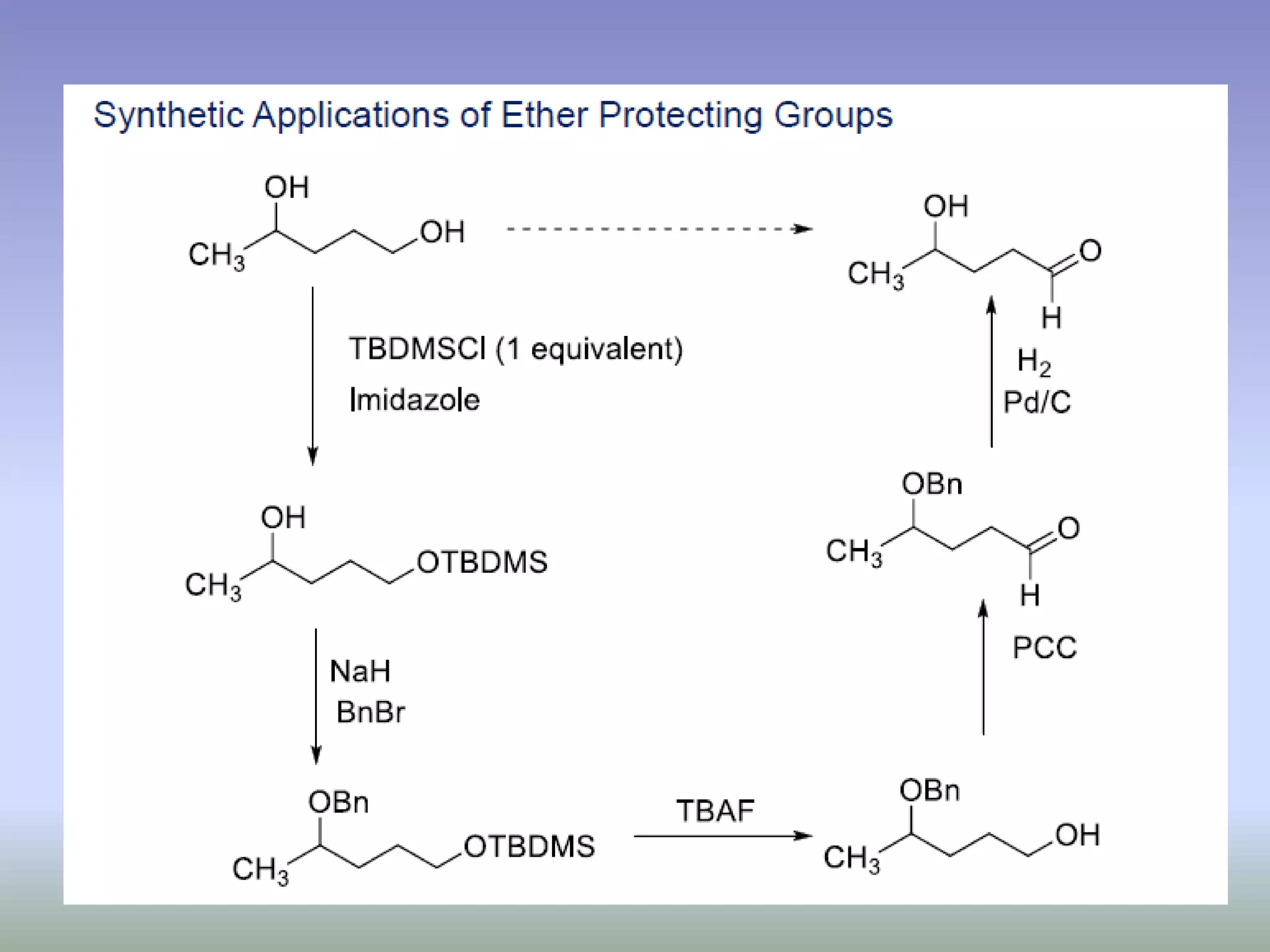
Conversion to an alkyl or silyl ehter is the most common means of protecting
hydroxyl group.
Mildly acidic hydrolysis is an appropriate method for deprotection
(dilute aqueous acid)
(THP; tetrahydropyranyl
ether)
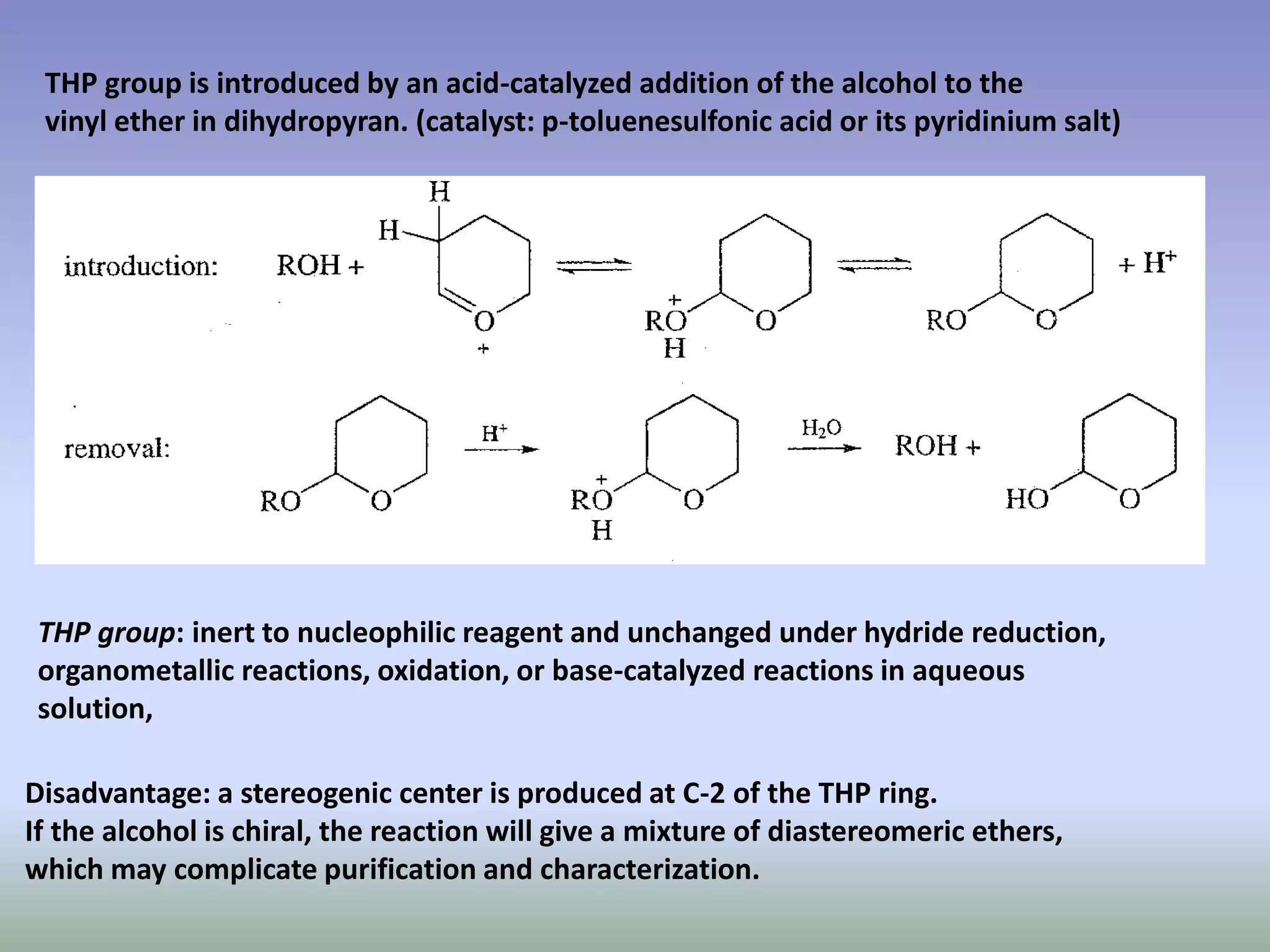
THP group is introduced by an acid-catalyzed addition of the alcohol to the
vinyl ether in dihydropyran. (catalyst: p-toluenesulfonic acid or its pyridinium salt)
THP group: inert to nucleophilic reagent and unchanged under hydride reduction,
organometallic reactions, oxidation, or base-catalyzed reactions in aqueous
solution,
Disadvantage: a stereogenic center is produced at C-2 of the THP ring.
If the alcohol is chiral, the reaction will give a mixture of diastereomeric ethers,
which may complicate purification and characterization.
WISHING YOU HAPPY
LEARNING
THANK YOU.

Protection and deprotection of Functional group in synthethis of new compounds.

  • 1.
    Protection and Deprotection Whena chemical reaction is to be carried out selectively at one reactive site in a multifunctional compound, other reactive sites must be temporarily blocked; this action is called protection of functional group.
  • 3.
    A protecting groupmust fulfill a number of requirements The protecting group reagent must react selectively (kinetic chemoselectivity) in good yield to give a protected substrate that is stable to the projected reactions. • The protecting group must be selectively removed in good yield by readily available reagents. • The protecting group should not have additional functionality that might provide additional sites of reaction.
  • 12.
    Hydroxyl-Protective Groups A commonrequirement in synthesis is that a hydroxyl group be masked as a derivative lacking a hydroxylic proton. An example of this requirement is in reactions involving Grignard or other organometallic reagents. Conversion to an alkyl or silyl ehter is the most common means of protecting hydroxyl group. Mildly acidic hydrolysis is an appropriate method for deprotection (dilute aqueous acid) (THP; tetrahydropyranyl ether)
  • 13.
    THP group isintroduced by an acid-catalyzed addition of the alcohol to the vinyl ether in dihydropyran. (catalyst: p-toluenesulfonic acid or its pyridinium salt) THP group: inert to nucleophilic reagent and unchanged under hydride reduction, organometallic reactions, oxidation, or base-catalyzed reactions in aqueous solution, Disadvantage: a stereogenic center is produced at C-2 of the THP ring. If the alcohol is chiral, the reaction will give a mixture of diastereomeric ethers, which may complicate purification and characterization.
  • 29.