BY,
SHARMEEN SHAKOOR
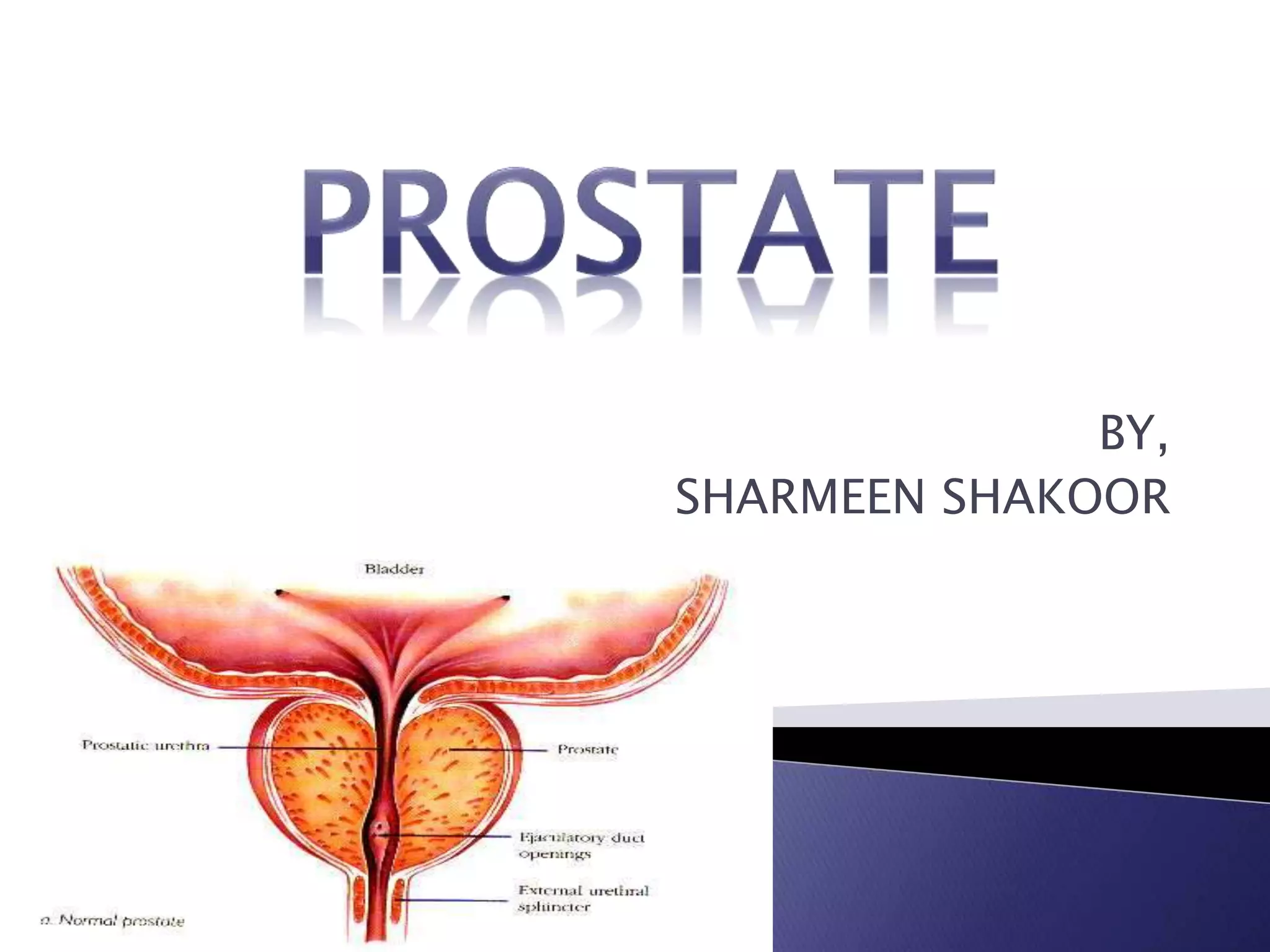
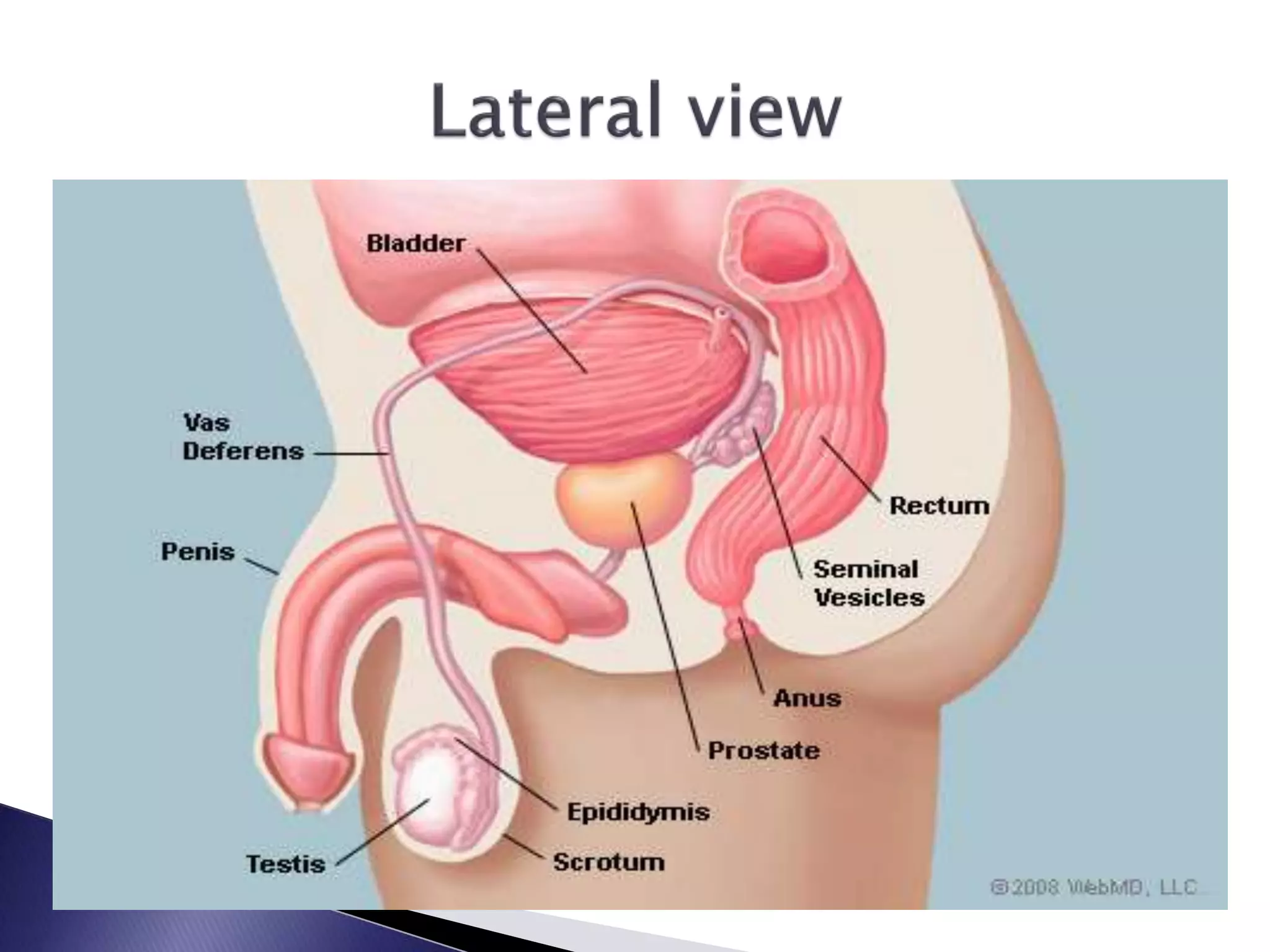
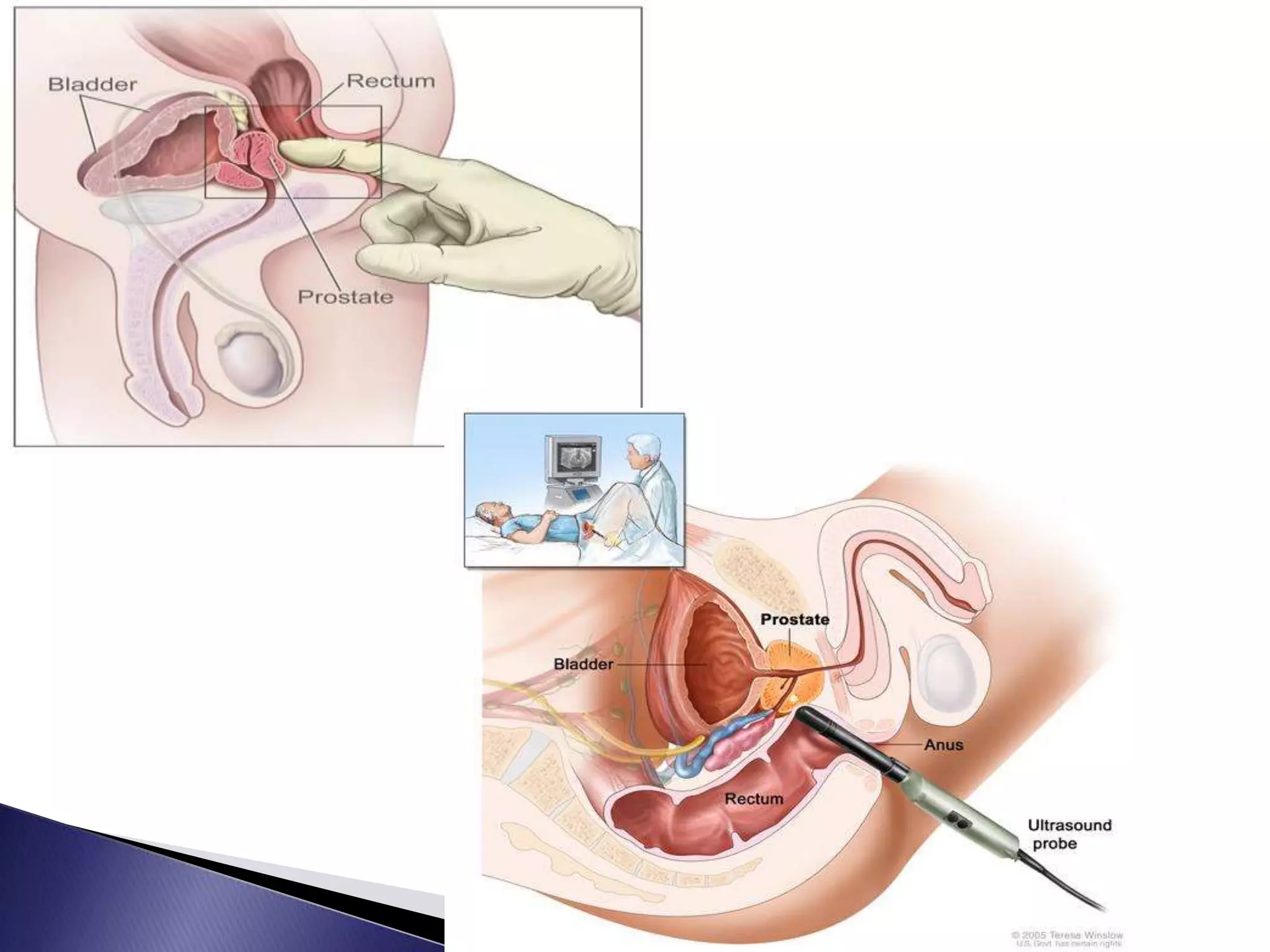
 The prostate is a walnut-sized gland located
between the bladder and the penis.
 The prostate is just in front of the rectum.
 The urethra runs through the center of the
prostate, from the bladder to the penis,
letting urine flow out of the body.
 The prostate secretes fluid that nourishes and
protects sperm. During ejaculation, the
prostate squeezes this fluid into the urethra,
and it’s expelled with sperm as semen
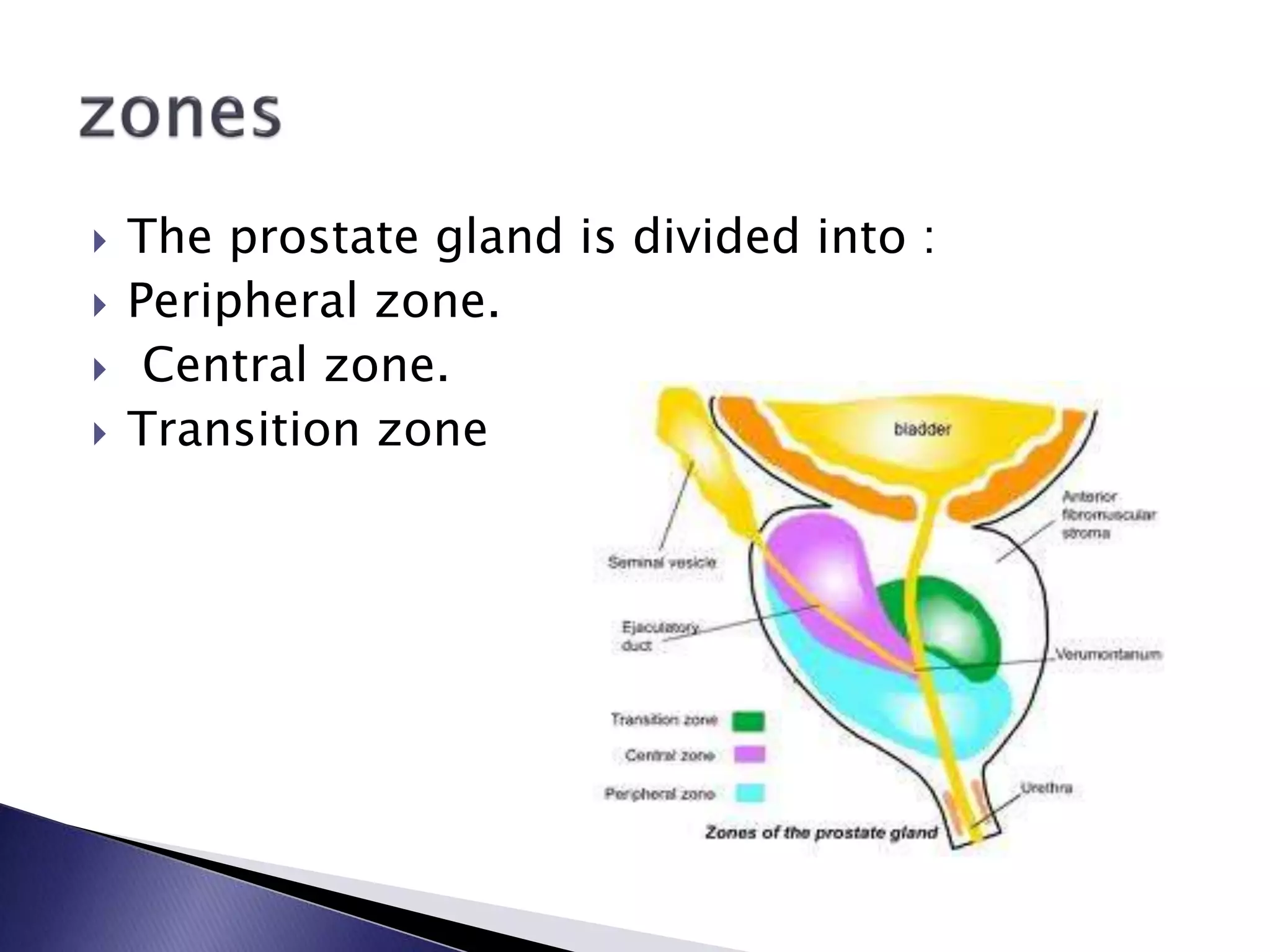
 The prostate gland is divided into :
 Peripheral zone.
 Central zone.
 Transition zone
 Glandular cells
 Smooth muscle cells
 Stromal cells
 The prostate gland also contains an enzyme5
alpha-reductase type-2 that
convertstestosterone to Dihydrotestosterone
(morepotent)
 Enlarged prostate i.e Benign prostatic
hyperplasia
 Prostate cancer
 Prostatitis
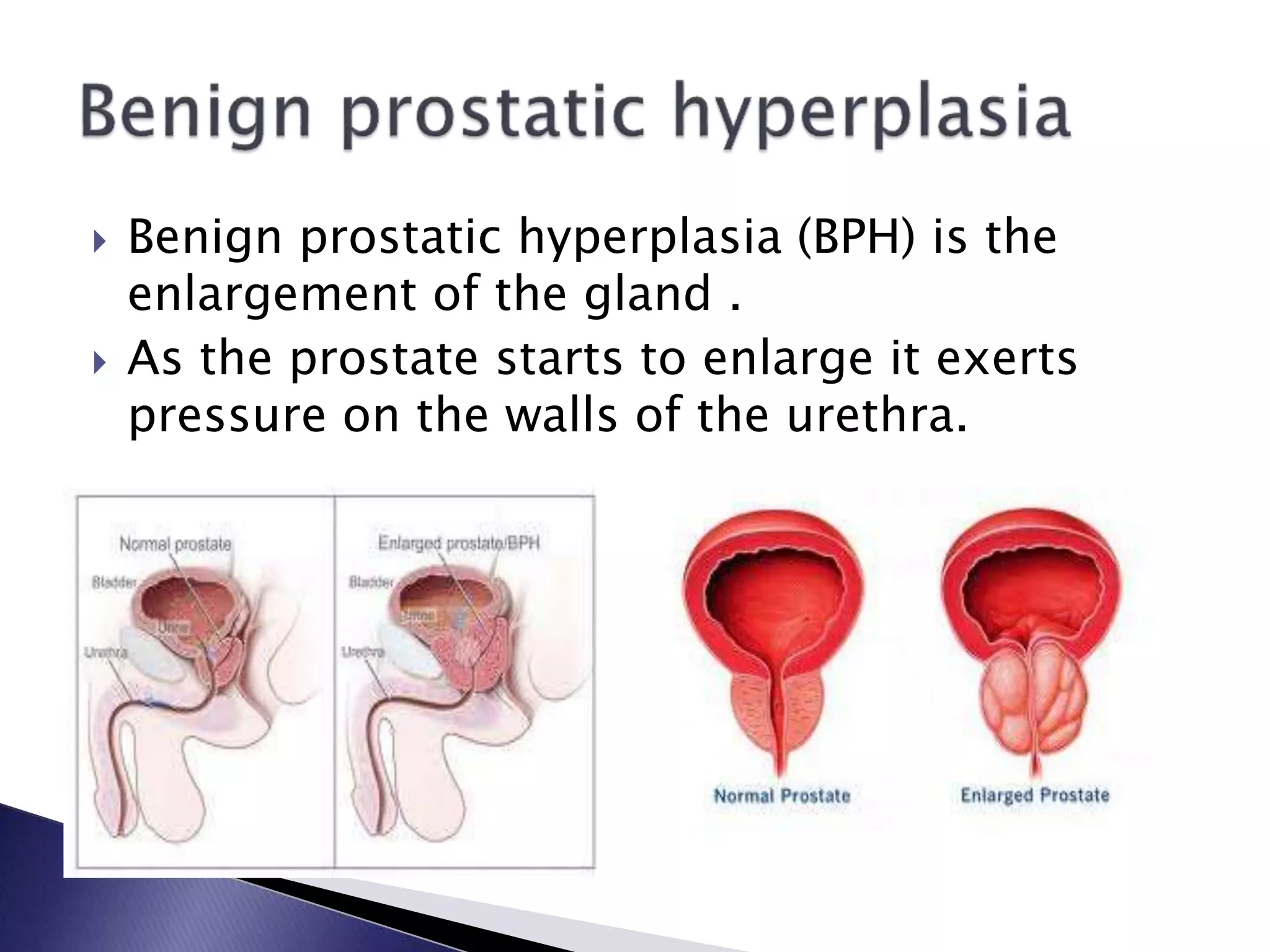
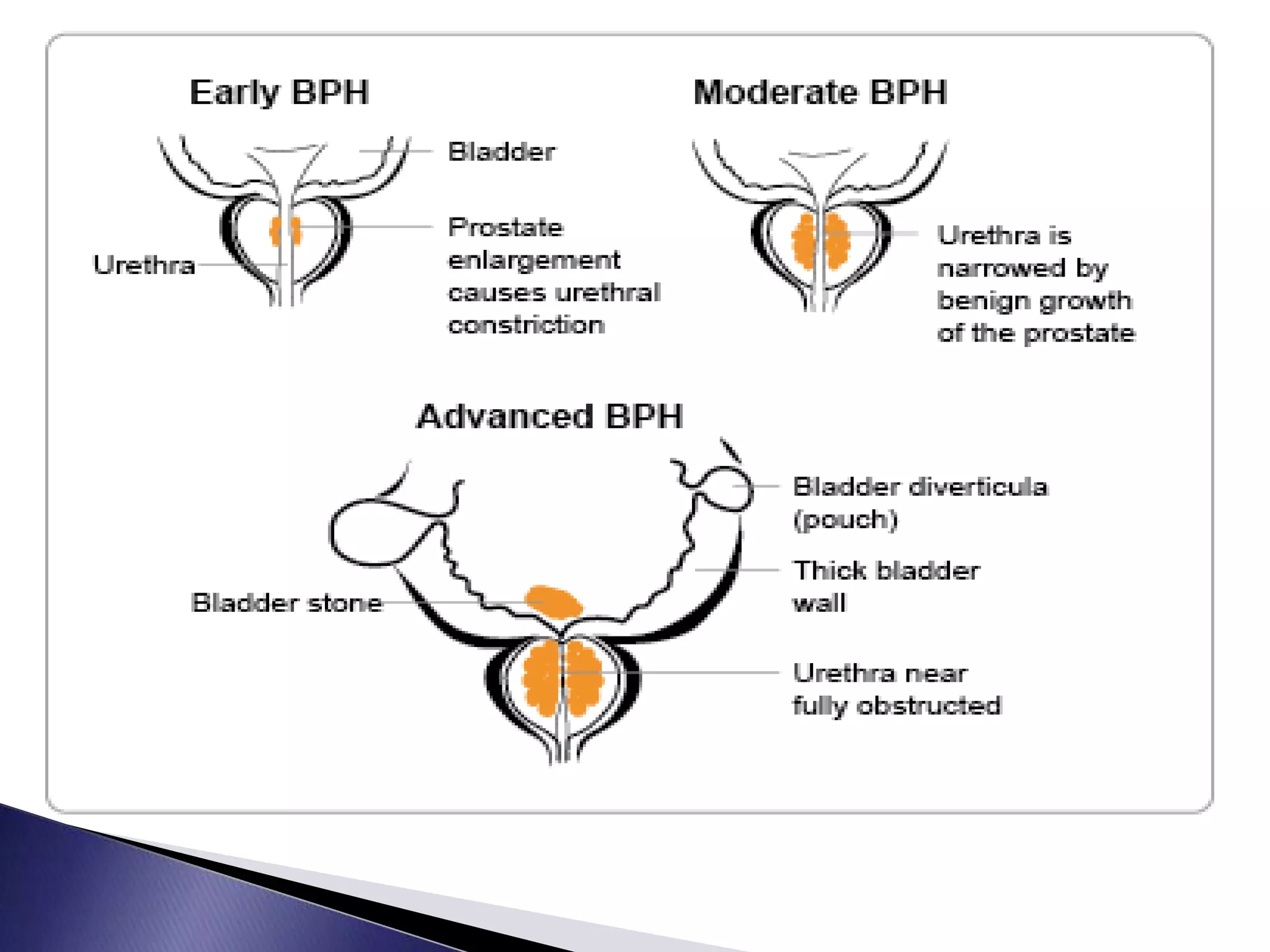
 Benign prostatic hyperplasia (BPH) is the
enlargement of the gland .
 As the prostate starts to enlarge it exerts
pressure on the walls of the urethra.
 The exact etiology of BPH is still poorly
Understood.
 In BPH there is decrease in testosterone level
with advancing age but estrogen level does
not decrease equally.
 Inc in estrogen level causes hypertrophy of
prostate.
 DIHYDROTESTOSTRONE is main mediator of
BPH.
Symptoms related to urine storage in the
bladder are the following:
 Frequent micturition.
 Nocturia (nocturnal urination).
 Urinary urgency.
 Urge incontinence
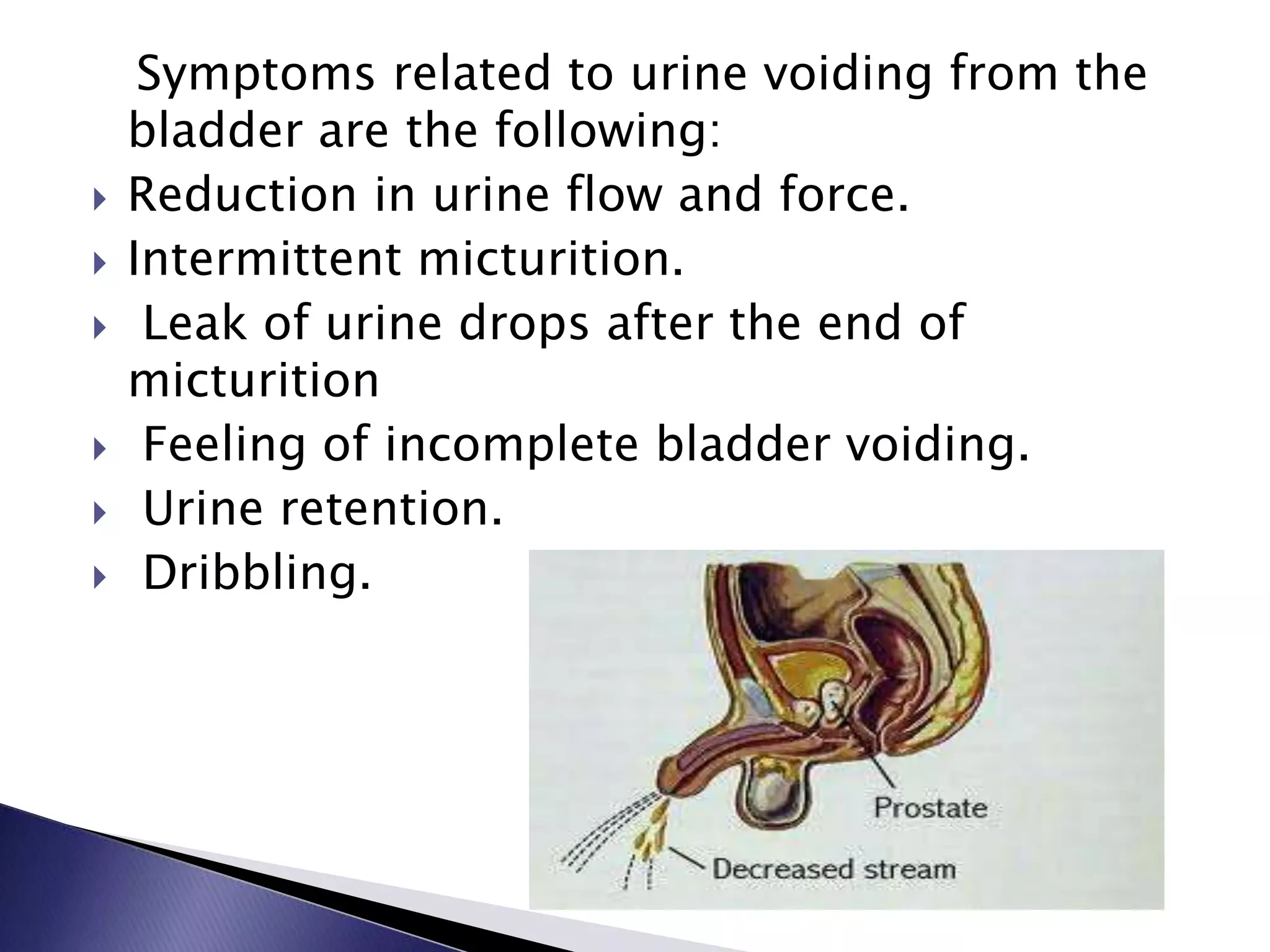
Symptoms related to urine voiding from the
bladder are the following:
 Reduction in urine flow and force.
 Intermittent micturition.
 Leak of urine drops after the end of
micturition
 Feeling of incomplete bladder voiding.
 Urine retention.
 Dribbling.
 history
 Physical examination :
• digital rectum test
• palpate
 PrUrinalysis
 Uroflowmetry
 Cystoscopy
 Ultrasound
 prostate Specific Antigen (PSA) Test
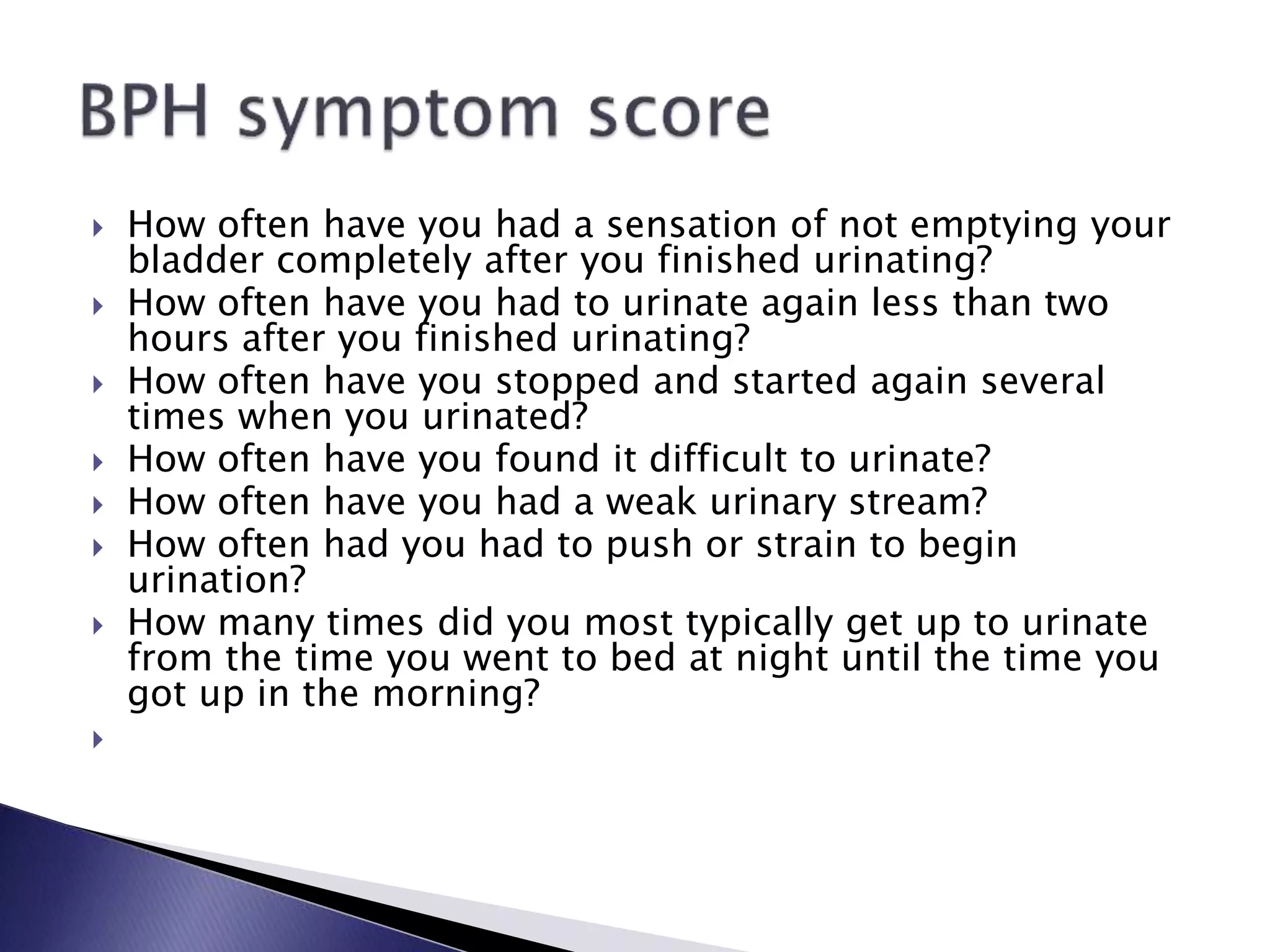
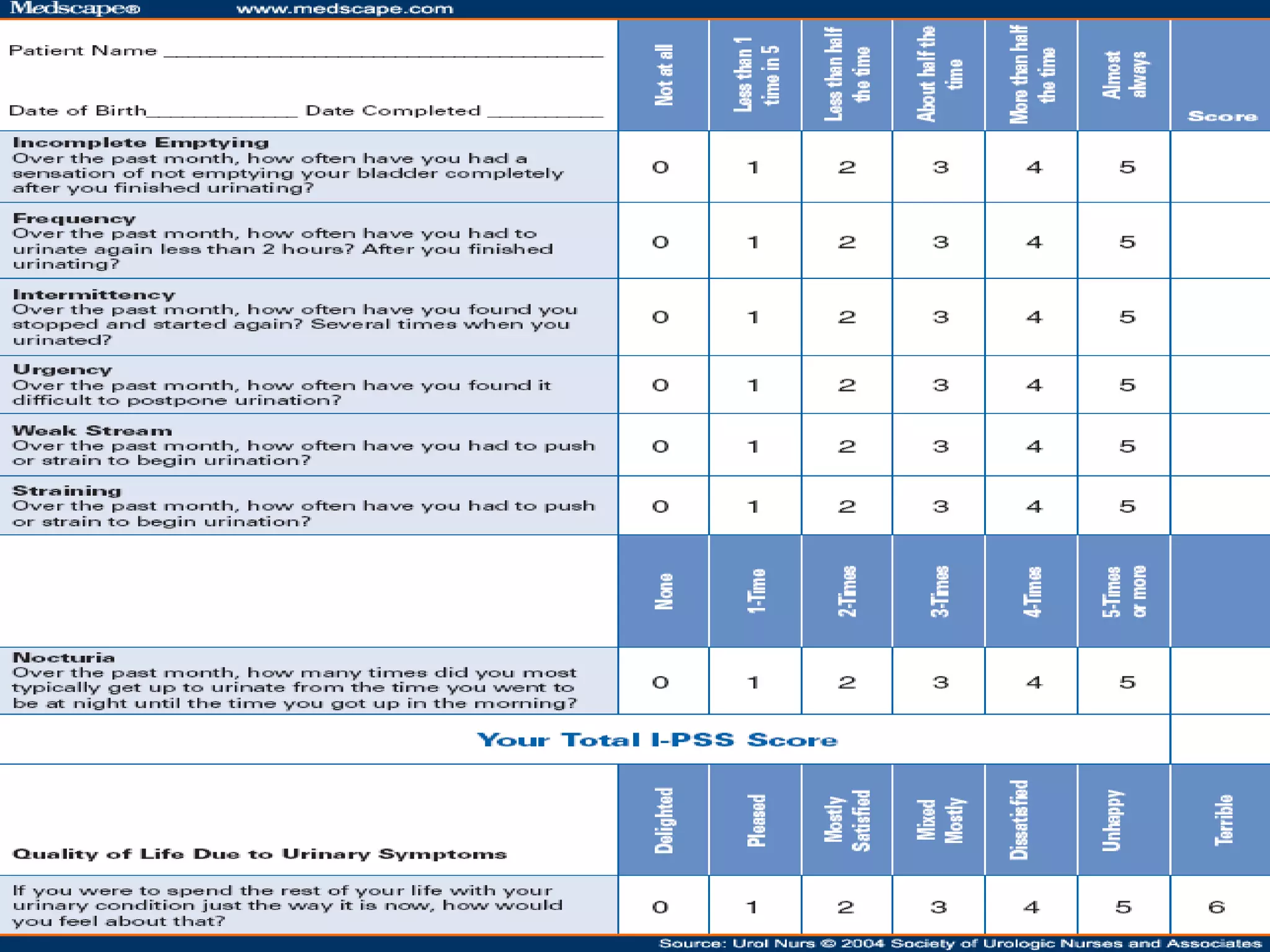
 How often have you had a sensation of not emptying your
bladder completely after you finished urinating?
 How often have you had to urinate again less than two
hours after you finished urinating?
 How often have you stopped and started again several
times when you urinated?
 How often have you found it difficult to urinate?
 How often have you had a weak urinary stream?
 How often had you had to push or strain to begin
urination?
 How many times did you most typically get up to urinate

from the time you went to bed at night until the time you
got up in the morning?

 Prostatitis
 Bladder obstruction
 Bladder cancer
 Neurogenic bladder
 Watching waiting
 Home plan
 Medications :
 surgery
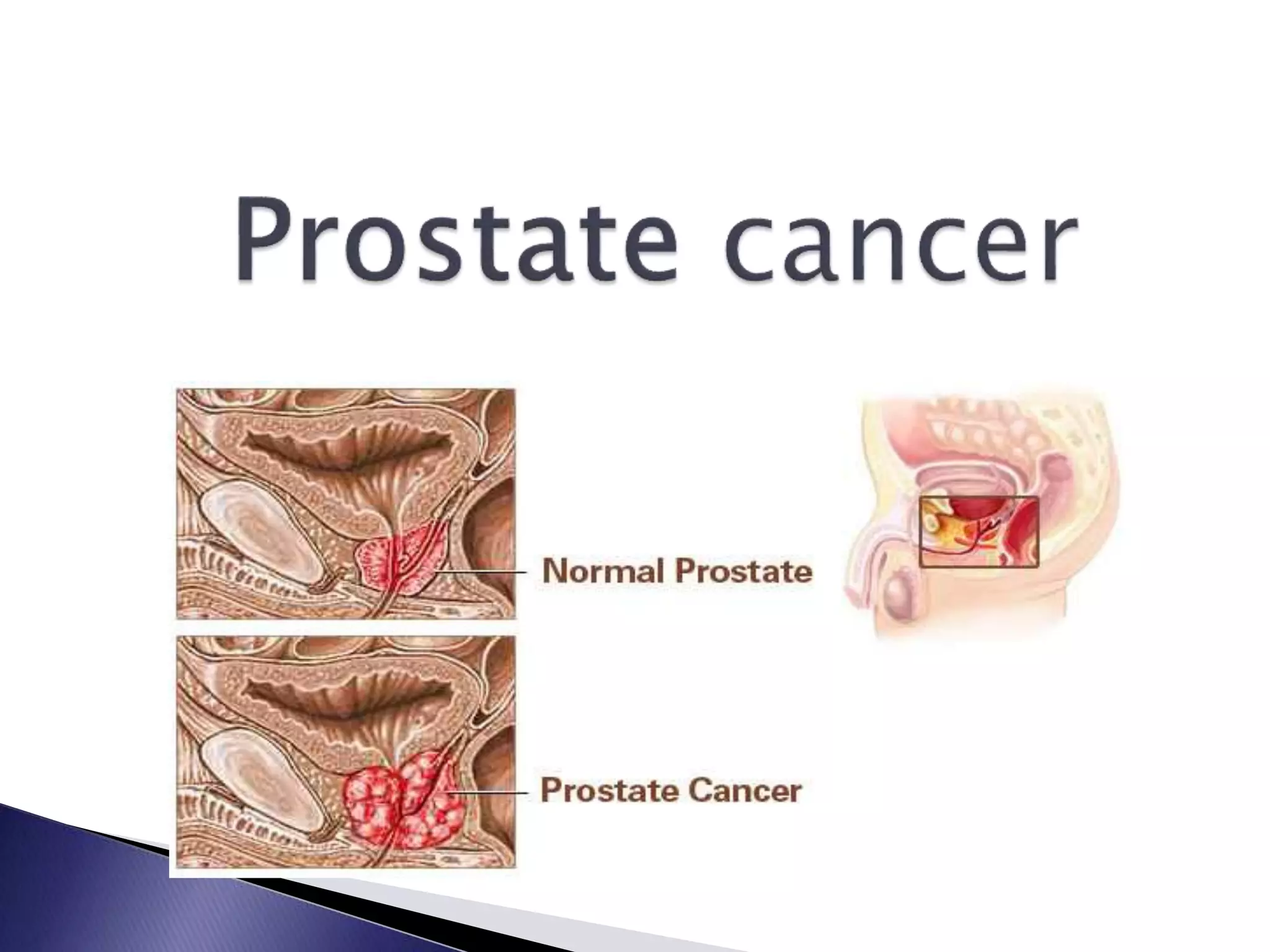
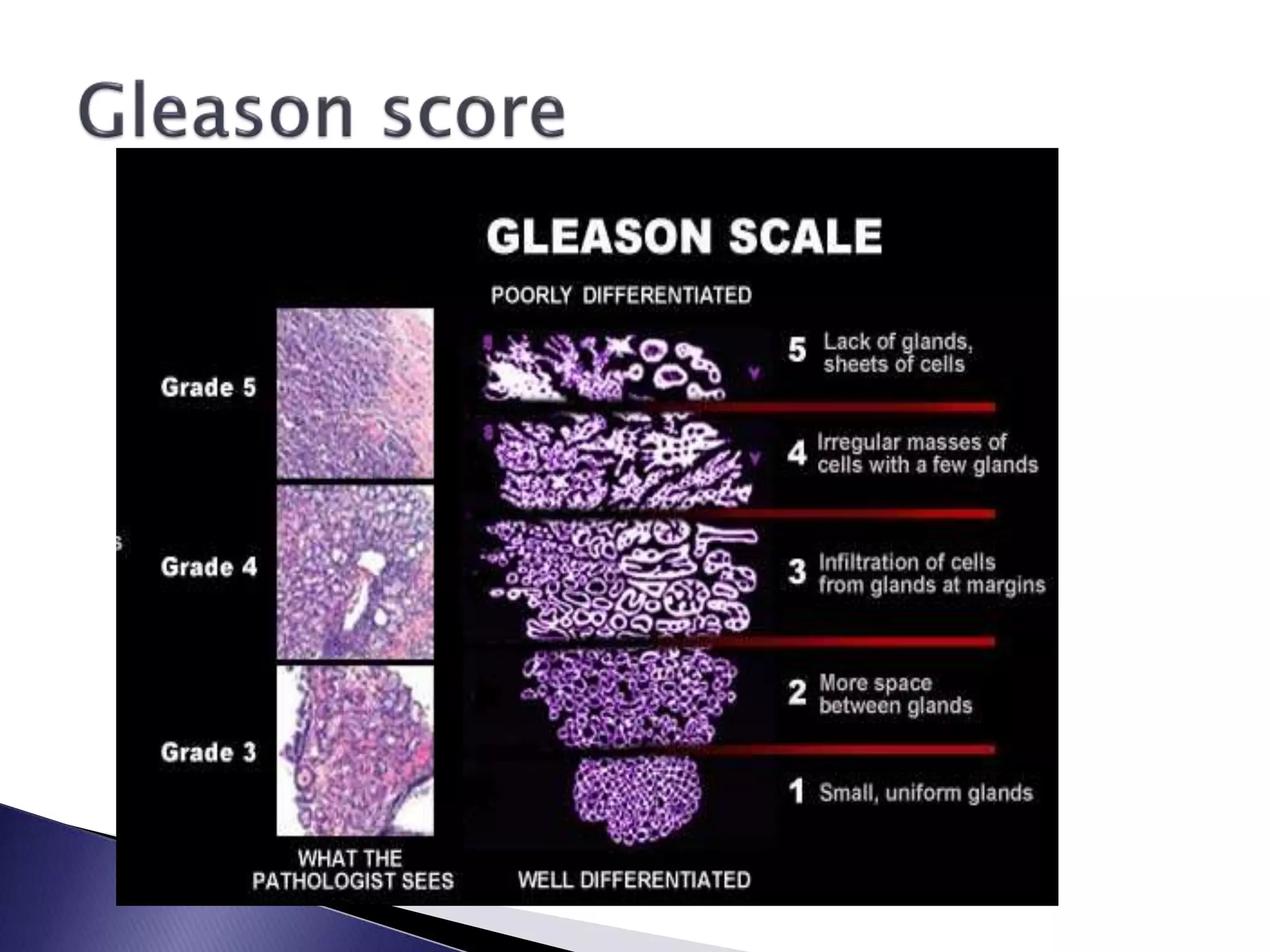
 the prostate cancer starts in the gland cells -
this is called adenocarcinoma.
 prostate cancer starts with tiny alterations in
the shape and size of the prostate gland cells.
Prostatic intraepithelial neoplasia (PIN).
 Prostatic intraepithelial neoplasia means
"dysplastic changes involving glands and
ducts of the prostate that may be a precursor
of adenocarcinoma
 Most prostate cancers are slow growing;
however, there are cases of aggressive
prostate cancers
 If the tumor is within the gland, the cancer is
said to be localized and curable
 If the cancer escapes the gland it is
considered incurable
 Early detection before the cancer escapes the
gland becomes very important
- Age
- Genetics
- Faulty BRCA2 gene linked to aggressive.
- Diet
- Medication
- Obesity
- STDs
- Agent orange
- Enzyme PRSS3 linked to aggressive
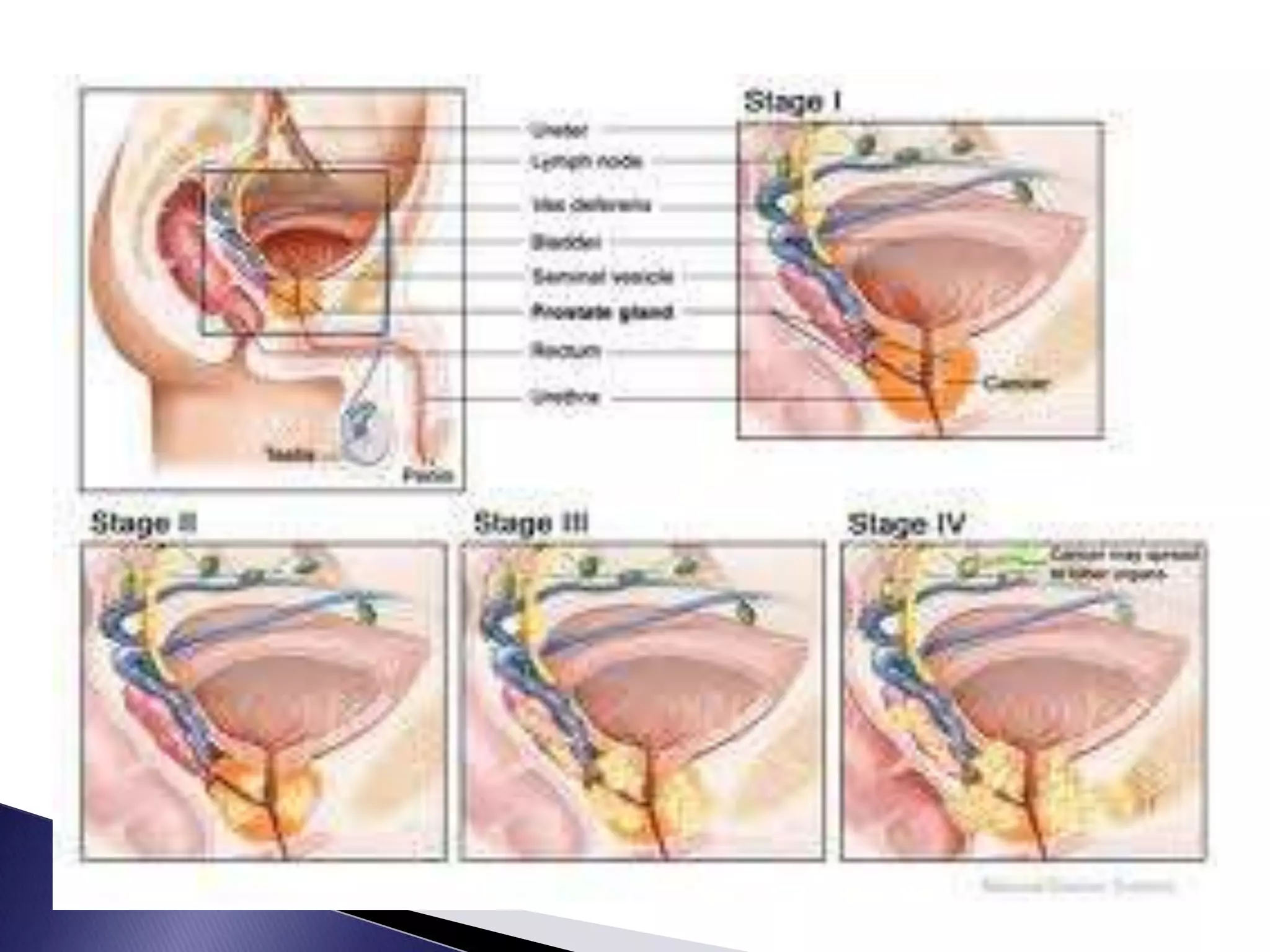
 Stage I
 Stage II
 Stage III
 Stage IV
During the early stages:
 The patient urinates more often
 The patient gets up at night more often to
urinate
 He may find it hard to start urinating
 He may find it hard to keep urinating once he has
started
 There may be blood in the urine
 Urination might be painful
 Ejaculation may be painful (less common)
 Achieving or maintaining an erection may be
difficult (less common)
 Bone pain, often in the spine (vertebrae),
pelvis, or ribs
 The proximal part of the femur can be painful
 Leg weakness (if cancer has spread to the
spine and compressed the spinal cord)
 Urinary incontinence (if cancer has spread to
the spine and compressed the spinal cord)
 Fecal incontinence (if cancer has spread to
the spine and compressed the spinal cord)
 Metastasis
 Incontinence
 Erectile dysfunction
 Metabolic factors
 A 60-year-old black man presents to his general
practitioner with complaints of difficulty with
urination. He describes a weak stream and a
sense of incomplete voiding. He describes
nocturia (5 episodes per night) and has been
taking an alpha-blocker for this with minimal
improvement. He says he can last about 60 to 90
minutes without urinating. He denies any
suprapubic tenderness, dysuria, or haematuria.
He further denies any back pain or
gastrointestinal complaints.
 PSA test blood test
 Prostate biopsy
 Transrectal ultrasound
 Bone scan
 CT
 MRI
 ProstaScintTM scan
 Prostatitis
 BPH
 Medication
 Watchful waiting
 Prostatectomy
 Radiation placed inside your body
(brachytherapy)
 Radiation that comes from outside of your body
(external beam radiation)
 Hormonotherapy
 Chemotherapy
 Freezing prostate tissue
 Heating prostate tissue using Ultrasound
 cryotherapy
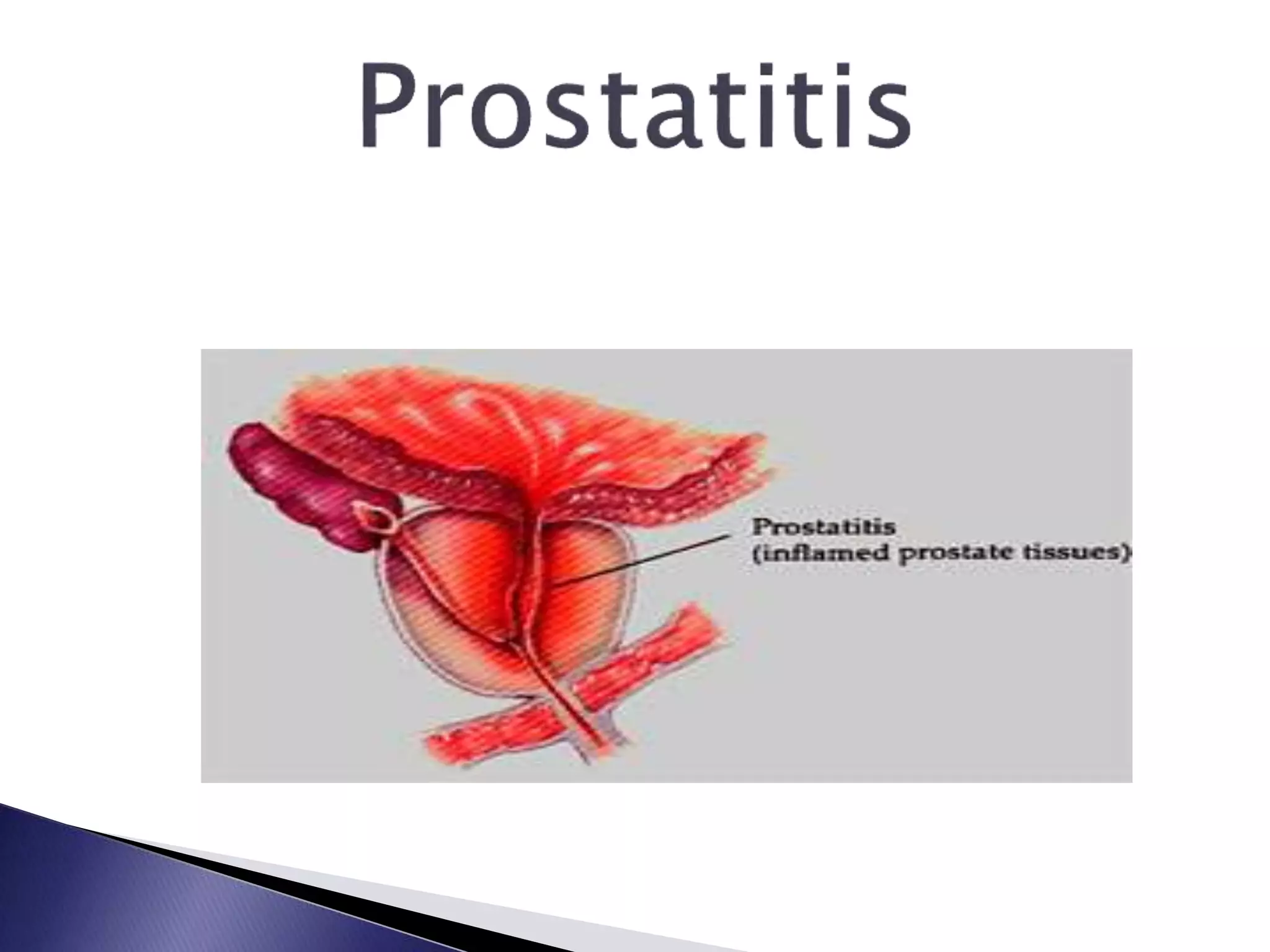
 Prostatitis is inflammation caused by an
infection of the prostate.
 Treated with antibiotics
Prostate

Prostate

  • 1.
  • 2.
     The prostateis a walnut-sized gland located between the bladder and the penis.  The prostate is just in front of the rectum.  The urethra runs through the center of the prostate, from the bladder to the penis, letting urine flow out of the body.  The prostate secretes fluid that nourishes and protects sperm. During ejaculation, the prostate squeezes this fluid into the urethra, and it’s expelled with sperm as semen
  • 4.
     The prostategland is divided into :  Peripheral zone.  Central zone.  Transition zone
  • 5.
     Glandular cells Smooth muscle cells  Stromal cells  The prostate gland also contains an enzyme5 alpha-reductase type-2 that convertstestosterone to Dihydrotestosterone (morepotent)
  • 6.
     Enlarged prostatei.e Benign prostatic hyperplasia  Prostate cancer  Prostatitis
  • 7.
     Benign prostatichyperplasia (BPH) is the enlargement of the gland .  As the prostate starts to enlarge it exerts pressure on the walls of the urethra.
  • 9.
     The exactetiology of BPH is still poorly Understood.  In BPH there is decrease in testosterone level with advancing age but estrogen level does not decrease equally.  Inc in estrogen level causes hypertrophy of prostate.  DIHYDROTESTOSTRONE is main mediator of BPH.
  • 10.
    Symptoms related tourine storage in the bladder are the following:  Frequent micturition.  Nocturia (nocturnal urination).  Urinary urgency.  Urge incontinence
  • 11.
    Symptoms related tourine voiding from the bladder are the following:  Reduction in urine flow and force.  Intermittent micturition.  Leak of urine drops after the end of micturition  Feeling of incomplete bladder voiding.  Urine retention.  Dribbling.
  • 12.
     history  Physicalexamination : • digital rectum test • palpate  PrUrinalysis  Uroflowmetry  Cystoscopy  Ultrasound  prostate Specific Antigen (PSA) Test
  • 14.
     How oftenhave you had a sensation of not emptying your bladder completely after you finished urinating?  How often have you had to urinate again less than two hours after you finished urinating?  How often have you stopped and started again several times when you urinated?  How often have you found it difficult to urinate?  How often have you had a weak urinary stream?  How often had you had to push or strain to begin urination?  How many times did you most typically get up to urinate from the time you went to bed at night until the time you got up in the morning? 
  • 17.
     Prostatitis  Bladderobstruction  Bladder cancer  Neurogenic bladder
  • 18.
     Watching waiting Home plan  Medications :  surgery
  • 20.
     the prostatecancer starts in the gland cells - this is called adenocarcinoma.  prostate cancer starts with tiny alterations in the shape and size of the prostate gland cells. Prostatic intraepithelial neoplasia (PIN).  Prostatic intraepithelial neoplasia means "dysplastic changes involving glands and ducts of the prostate that may be a precursor of adenocarcinoma
  • 21.
     Most prostatecancers are slow growing; however, there are cases of aggressive prostate cancers  If the tumor is within the gland, the cancer is said to be localized and curable  If the cancer escapes the gland it is considered incurable  Early detection before the cancer escapes the gland becomes very important
  • 22.
    - Age - Genetics -Faulty BRCA2 gene linked to aggressive. - Diet - Medication - Obesity - STDs - Agent orange - Enzyme PRSS3 linked to aggressive
  • 23.
     Stage I Stage II  Stage III  Stage IV
  • 25.
    During the earlystages:  The patient urinates more often  The patient gets up at night more often to urinate  He may find it hard to start urinating  He may find it hard to keep urinating once he has started  There may be blood in the urine  Urination might be painful  Ejaculation may be painful (less common)  Achieving or maintaining an erection may be difficult (less common)
  • 26.
     Bone pain,often in the spine (vertebrae), pelvis, or ribs  The proximal part of the femur can be painful  Leg weakness (if cancer has spread to the spine and compressed the spinal cord)  Urinary incontinence (if cancer has spread to the spine and compressed the spinal cord)  Fecal incontinence (if cancer has spread to the spine and compressed the spinal cord)
  • 27.
     Metastasis  Incontinence Erectile dysfunction  Metabolic factors
  • 28.
     A 60-year-oldblack man presents to his general practitioner with complaints of difficulty with urination. He describes a weak stream and a sense of incomplete voiding. He describes nocturia (5 episodes per night) and has been taking an alpha-blocker for this with minimal improvement. He says he can last about 60 to 90 minutes without urinating. He denies any suprapubic tenderness, dysuria, or haematuria. He further denies any back pain or gastrointestinal complaints.
  • 29.
     PSA testblood test  Prostate biopsy  Transrectal ultrasound  Bone scan  CT  MRI  ProstaScintTM scan
  • 31.
  • 32.
     Medication  Watchfulwaiting  Prostatectomy  Radiation placed inside your body (brachytherapy)  Radiation that comes from outside of your body (external beam radiation)  Hormonotherapy  Chemotherapy  Freezing prostate tissue  Heating prostate tissue using Ultrasound  cryotherapy
  • 34.
     Prostatitis isinflammation caused by an infection of the prostate.  Treated with antibiotics