
Bacteria are typical members of the Kingdom Monera that
includes prokaryotic organisms. The structures present in
the bacteria may be internal or External. Firstly, the
external structures are:
Flagella
They are hair like projections coming out of the cell wall and help in the
movement of the bacteria. It has 3 parts; viz.,
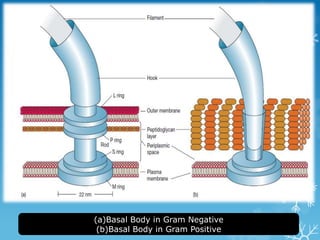
1. Basal Body: Associated with plasma membrane and cell wall.
2. Hook: It connects the basal body to the filament.
3. Filament: It is long & slender. It is made up of protein called Flagellin.
These bacteria are divided on the basis of number of bacteria present.
1. Monotrichous
2. Amphitrichous
3. Cephalotrichous
4. Lophotrichous
5. Peritrichous
(a)Basal Body in Gram Negative
(b)Basal Body in Gram Positive
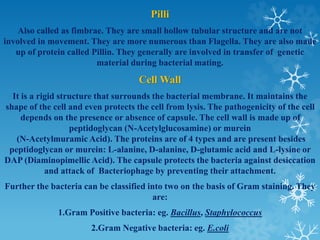
Pilli
Also called as fimbrae. They are small hollow tubular structure and are not
involved in movement. They are more numerous than Flagella. They are also made
up of protein called Pillin. They generally are involved in transfer of genetic
material during bacterial mating.
Cell Wall
It is a rigid structure that surrounds the bacterial membrane. It maintains the
shape of the cell and even protects the cell from lysis. The pathogenicity of the cell
depends on the presence or absence of capsule. The cell wall is made up of
peptidoglycan (N-Acetylglucosamine) or murein
(N-Acetylmuramic Acid). The proteins are of 4 types and are present besides
peptidoglycan or murein: L-alanine, D-alanine, D-glutamic acid and L-lysine or
DAP (Diaminopimellic Acid). The capsule protects the bacteria against desiccation
and attack of Bacteriophage by preventing their attachment.
Further the bacteria can be classified into two on the basis of Gram staining. They
are:
1.Gram Positive bacteria: eg. Bacillus, Staphylococcus
2.Gram Negative bacteria: eg. E.coli
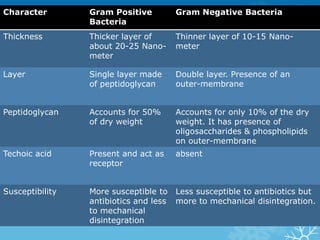
Character Gram Positive
Bacteria
Gram Negative Bacteria
Thickness Thicker layer of
about 20-25 Nano-
meter
Thinner layer of 10-15 Nano-
meter
Layer Single layer made
of peptidoglycan
Double layer. Presence of an
outer-membrane
Peptidoglycan Accounts for 50%
of dry weight
Accounts for only 10% of the dry
weight. It has presence of
oligosaccharides & phospholipids
on outer-membrane
Techoic acid Present and act as
receptor
absent
Susceptibility More susceptible to
antibiotics and less
to mechanical
disintegration
Less susceptible to antibiotics but
more to mechanical disintegration.
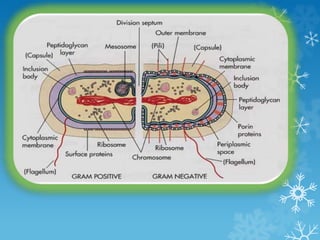
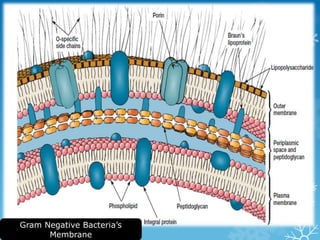
Gram Negative Bacteria’s
Membrane
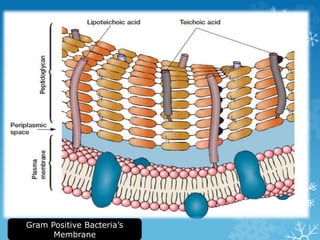
Gram Positive Bacteria’s
Membrane
The structures internally present in the cell are as
follows:
Cytoplasmic membrane
This is about 7.5 ηm thick and is immediately beneath the cell wall. This is
primarily composed of phospholipids (20-30%) and proteins (60-70%). On
the inner side of this layer are present respiratory enzymes that help in
ATP synthesis and also are present enzymes that help in formation of cell
wall component and capsule. Damage to this membrane may result in the
death of the cell due to unavailability of energy and hence, no movement.
Mesosomes
It is a structure that is commonly found in Gram positive bacteria, formed
by the in-folding of the plasma membrane and nearly touches the nucleoid.
This structure helps in division and DNA replication. Its absence in Gram
negative is mainly due to the presence of thick layer of outer-membrane.
Bacterial Chromosome
Bacteria lacks the presence of true nucleus. The bacterial nucleus, present, is not
enclosed in a well-defined membranous structure. The nuclear material is
generally confined to the centre of the cell. It consists of single circular double
stranded DNA molecule in which all the genes are linked. This nuclear material is
generally designated as nucleoid or chromatin body or nuclear equivalent.
Ribosomes
Ribosomes are 70 S type consisting of 50 S and 30 S sub-units. Some ribosomes are
free in the cytoplasm and some are attached to inner surface of the cytoplasmic
membrane. There are some ribosomes that attach themselves to the RNA strand
called as Polyribosomes.
Cytoplasm
It’s a dense semi-liquid substance contained inside the cell membrane. All the
organelles are present inside cytoplasmic fluid. It provides them with the food
present in the form of fat and Volutin granules (reserve source of phosphate),
poly-β-hydroxybutyrate (PHB) and glycogen (both serving as source of carbon and
energy) are some of the granules present in the cytoplasm of some bacteria. Gas
vesicles are present in bacteria that grow in aquatic habitat.
Plasmids
These are the extra-chromosomal structures present in the bacteria. This structure
may some time fuse with the Nucleoid of the cell to form Episomes that further
increases the recombination efficiency. These plasmids are of 3 types; viz.,
1.F-plasmid
2.R-plasmid
3.Col-plasmid
Transformation
It is the process by which a donor DNA molecule is taken up from the external
environment and incorporated into the genome of the recipient cell. It involves the
use of Plasmids.
Transduction
It involves the transfer of genetic material from one bacterium to another by a
bacteriophage, acting as a vector. The virus carries its own genome plus a
fragment of DNA from the bacterium that survives its attack & recombination
occurs.
Conjugation
It is the temporary direct contact between two bacterial cells leading to an
exchange of genetic material. In this one bacterial cell is the donor of the DNA
called as Male(F+)and other is the recipient called as Female (F-). In this way
genome is transferred laterally through conjugation tube.
Spores
Spore is a metabolically dormant form, which under appropriate conditions can
undergo germination and grow out to form a vegetative cell. Spores produced
within the cell are called endospores and the spores produced outside to cell are
called exospores.
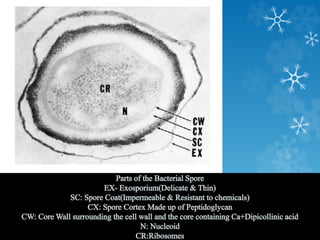
Endospores are thick walled, highly refractile bodies that are produced (one per
cell) by Bacillus, Clostridium and few other genera. They are generally
formed at the end of the active growth or during stationary phase. They are
extremely resistant to desiccation, staining, disinfecting chemicals, radiation and
heat. This is due to the presence of Ca+ Dipicolinic acid in the spore coat.
Exospores are formed external to the vegetative cell by budding at one end of the
cell in the methane oxidizing genus Methylosinus. They are resistant to desiccation
and heat.
Cysts
Cysts resemble endospores in some ways, but their structure and chemical
composition are different. Cysts are thick walled, desiccation resistant, dormant
forms that develop by differentiation of vegetative cells. Azotobacter and some
other genera produce cysts.
Prokaryotic Cell- Brief Intro

Prokaryotic Cell- Brief Intro

  • 6.
    Bacteria are typicalmembers of the Kingdom Monera that includes prokaryotic organisms. The structures present in the bacteria may be internal or External. Firstly, the external structures are: Flagella They are hair like projections coming out of the cell wall and help in the movement of the bacteria. It has 3 parts; viz., 1. Basal Body: Associated with plasma membrane and cell wall. 2. Hook: It connects the basal body to the filament. 3. Filament: It is long & slender. It is made up of protein called Flagellin. These bacteria are divided on the basis of number of bacteria present. 1. Monotrichous 2. Amphitrichous 3. Cephalotrichous 4. Lophotrichous 5. Peritrichous
  • 7.
    (a)Basal Body inGram Negative (b)Basal Body in Gram Positive
  • 8.
    Pilli Also called asfimbrae. They are small hollow tubular structure and are not involved in movement. They are more numerous than Flagella. They are also made up of protein called Pillin. They generally are involved in transfer of genetic material during bacterial mating. Cell Wall It is a rigid structure that surrounds the bacterial membrane. It maintains the shape of the cell and even protects the cell from lysis. The pathogenicity of the cell depends on the presence or absence of capsule. The cell wall is made up of peptidoglycan (N-Acetylglucosamine) or murein (N-Acetylmuramic Acid). The proteins are of 4 types and are present besides peptidoglycan or murein: L-alanine, D-alanine, D-glutamic acid and L-lysine or DAP (Diaminopimellic Acid). The capsule protects the bacteria against desiccation and attack of Bacteriophage by preventing their attachment. Further the bacteria can be classified into two on the basis of Gram staining. They are: 1.Gram Positive bacteria: eg. Bacillus, Staphylococcus 2.Gram Negative bacteria: eg. E.coli
  • 9.
    Character Gram Positive Bacteria GramNegative Bacteria Thickness Thicker layer of about 20-25 Nano- meter Thinner layer of 10-15 Nano- meter Layer Single layer made of peptidoglycan Double layer. Presence of an outer-membrane Peptidoglycan Accounts for 50% of dry weight Accounts for only 10% of the dry weight. It has presence of oligosaccharides & phospholipids on outer-membrane Techoic acid Present and act as receptor absent Susceptibility More susceptible to antibiotics and less to mechanical disintegration Less susceptible to antibiotics but more to mechanical disintegration.
  • 10.
  • 11.
  • 12.
    The structures internallypresent in the cell are as follows: Cytoplasmic membrane This is about 7.5 ηm thick and is immediately beneath the cell wall. This is primarily composed of phospholipids (20-30%) and proteins (60-70%). On the inner side of this layer are present respiratory enzymes that help in ATP synthesis and also are present enzymes that help in formation of cell wall component and capsule. Damage to this membrane may result in the death of the cell due to unavailability of energy and hence, no movement. Mesosomes It is a structure that is commonly found in Gram positive bacteria, formed by the in-folding of the plasma membrane and nearly touches the nucleoid. This structure helps in division and DNA replication. Its absence in Gram negative is mainly due to the presence of thick layer of outer-membrane.
  • 13.
    Bacterial Chromosome Bacteria lacksthe presence of true nucleus. The bacterial nucleus, present, is not enclosed in a well-defined membranous structure. The nuclear material is generally confined to the centre of the cell. It consists of single circular double stranded DNA molecule in which all the genes are linked. This nuclear material is generally designated as nucleoid or chromatin body or nuclear equivalent. Ribosomes Ribosomes are 70 S type consisting of 50 S and 30 S sub-units. Some ribosomes are free in the cytoplasm and some are attached to inner surface of the cytoplasmic membrane. There are some ribosomes that attach themselves to the RNA strand called as Polyribosomes. Cytoplasm It’s a dense semi-liquid substance contained inside the cell membrane. All the organelles are present inside cytoplasmic fluid. It provides them with the food present in the form of fat and Volutin granules (reserve source of phosphate), poly-β-hydroxybutyrate (PHB) and glycogen (both serving as source of carbon and energy) are some of the granules present in the cytoplasm of some bacteria. Gas vesicles are present in bacteria that grow in aquatic habitat.
  • 14.
    Plasmids These are theextra-chromosomal structures present in the bacteria. This structure may some time fuse with the Nucleoid of the cell to form Episomes that further increases the recombination efficiency. These plasmids are of 3 types; viz., 1.F-plasmid 2.R-plasmid 3.Col-plasmid
  • 15.
    Transformation It is theprocess by which a donor DNA molecule is taken up from the external environment and incorporated into the genome of the recipient cell. It involves the use of Plasmids. Transduction It involves the transfer of genetic material from one bacterium to another by a bacteriophage, acting as a vector. The virus carries its own genome plus a fragment of DNA from the bacterium that survives its attack & recombination occurs. Conjugation It is the temporary direct contact between two bacterial cells leading to an exchange of genetic material. In this one bacterial cell is the donor of the DNA called as Male(F+)and other is the recipient called as Female (F-). In this way genome is transferred laterally through conjugation tube.
  • 16.
    Spores Spore is ametabolically dormant form, which under appropriate conditions can undergo germination and grow out to form a vegetative cell. Spores produced within the cell are called endospores and the spores produced outside to cell are called exospores. Endospores are thick walled, highly refractile bodies that are produced (one per cell) by Bacillus, Clostridium and few other genera. They are generally formed at the end of the active growth or during stationary phase. They are extremely resistant to desiccation, staining, disinfecting chemicals, radiation and heat. This is due to the presence of Ca+ Dipicolinic acid in the spore coat. Exospores are formed external to the vegetative cell by budding at one end of the cell in the methane oxidizing genus Methylosinus. They are resistant to desiccation and heat. Cysts Cysts resemble endospores in some ways, but their structure and chemical composition are different. Cysts are thick walled, desiccation resistant, dormant forms that develop by differentiation of vegetative cells. Azotobacter and some other genera produce cysts.