Presented by:
MICHELLE ALCOSEBA
RIZZA MAE C. PELOMINO
CLARINE DAVIZ
MAE GELLEGAN
TITLE:
Our project proposal focuses on advancing the creativity and
adaptability of basket weavers through the utilization of local materials.
basket weaving is an art form deeply rooted in cultural traditions and is
an essential source of income for many communities worldwide.
However, traditional basket weaving techniques often face challenges
in meeting evolving market demands and sustaining economic viability.
The primary objective of this project is to expose innovative approaches
and techniques that empower basket weavers to enhance their creativity
and adaptability while utilizing locally available materials. by doing so, we
aim to create sustainable livelihood opportunities, preserve cultural
heritage, and contribute to economic development of communities.
• Preserve Cultural Heritage
• Foster Creativity and
Innovation
• Sustain weaving creativity and
adaptability
• Helps community lessen plastic
garbage
• Safe and Non-toxic storage
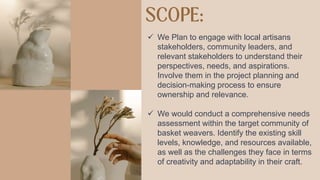
•Collaborate with experts in
creative design, basket
weaving, and other relevant
fields to design workshops
tailored to the weavers' needs
•Conduct workshops to teach
new design techniques,
explore innovative ideas, and
encourage experimentation
with local materials.
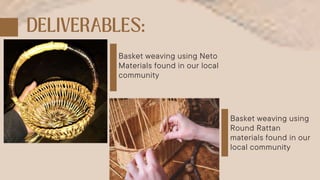
•Clearly define the
project's objectives and
outcomes in terms of
creativity enhancement,
adaptability
improvement, and
promotion of local
material use.
•Develop a detailed
project plan, including
timelines, budget, and
•Identify and establish
partnerships with local
suppliers or producers of
sustainable and eco-
friendly materials suitable
for basket weaving.
•Raise awareness and
promote the benefits of
using local materials to
the weavers and potential
customers
•Facilitate market access
for the weavers by
connecting them with
potential buyers, both
locally and
internationally.
•Develop a marketing
strategy to promote the
uniqueness and value of
locally woven products.
•Set up a monitoring and
evaluation framework with
predefined indicators and
methods to measure
progress and project impact.
•Regularly collect data to
track the weavers' progress,
assess workshop
effectiveness, and determine
changes in creativity and
adaptability levels
•Ensure the project’s
environmental
sustainability by
encouraging the use of
eco-friendly materials and
promoting sustainable
weaving practices.
 We Plan to engage with local artisans
stakeholders, community leaders, and
relevant stakeholders to understand their
perspectives, needs, and aspirations.
Involve them in the project planning and
decision-making process to ensure
ownership and relevance.
 We would conduct a comprehensive needs
assessment within the target community of
basket weavers. Identify the existing skill
levels, knowledge, and resources available,
as well as the challenges they face in terms
of creativity and adaptability in their craft.
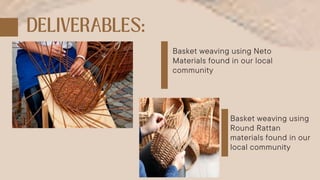
Basket weaving using Neto
Materials found in our local
community
Basket weaving using
Round Rattan
materials found in our
local community
Basket weaving using Neto
Materials found in our local
community
Basket weaving using
Round Rattan
materials found in our
local community
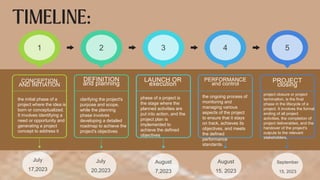
CONCEPTION
AND INITIATION
DEFINITION
and planning
LAUNCH OR
execution
PERFORMANCE
and control
PROJECT
closing
the initial phase of a
project where the idea is
born or conceptualized.
It involves identifying a
need or opportunity and
generating a project
concept to address it
clarifying the project's
purpose and scope,
while the planning
phase involves
developing a detailed
roadmap to achieve the
project's objectives
phase of a project is
the stage where the
planned activities are
put into action, and the
project plan is
implemented to
achieve the defined
objectives
the ongoing process of
monitoring and
managing various
aspects of the project
to ensure that it stays
on track, achieves its
objectives, and meets
the defined
performance
standards.
project closure or project
termination, is the final
phase in the lifecycle of a
project. It involves the formal
ending of all project
activities, the completion of
project deliverables, and the
handover of the project's
outputs to the relevant
stakeholders.
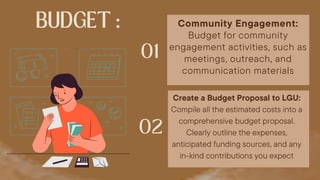
Create a Budget Proposal to LGU:
Compile all the estimated costs into a
comprehensive budget proposal.
Clearly outline the expenses,
anticipated funding sources, and any
in-kind contributions you expect
Community Engagement:
Budget for community
engagement activities, such as
meetings, outreach, and
communication materials
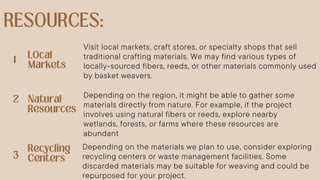
Visit local markets, craft stores, or specialty shops that sell
traditional crafting materials. We may find various types of
locally-sourced fibers, reeds, or other materials commonly used
by basket weavers.
Depending on the materials we plan to use, consider exploring
recycling centers or waste management facilities. Some
discarded materials may be suitable for weaving and could be
repurposed for your project.
Depending on the region, it might be able to gather some
materials directly from nature. For example, if the project
involves using natural fibers or reeds, explore nearby
wetlands, forests, or farms where these resources are
abundant
Look for suppliers or manufacturers who specialize in traditional
crafting materials. They might offer a wider range of options and
can be a reliable source for bulk purchases.
Connect with local artisan communities or cooperatives that
work with traditional crafts. They might have access to a
variety of weaving materials and can guide you on where to
source them.
Evaluating and measuring the success of a project proposal titled
"Advancing the Creativity and Adaptability of Basket Weavers Using
Local Materials" requires setting clear objectives and identifying
appropriate metrics to assess its impact. Here are some key aspects to
consider in evaluating the project:
1. Objectives and Key Performance Indicators
2. Baseline Data
3. Project Implementation
4. Creativity and Adaptability Workshops
5. Use of Local Materials
6. Economic Impact
7. Market Access
8. Sustainability
9. Environmental Impact
10. Stakeholders Feedback
RISK: Lack of Local Material Availability.
1.Conduct a thorough assessment of local material availability
before initiating the project. Identify alternative sources or
materials that can be used if the primary ones are limited.
2.Collaborate with local suppliers or NGOs to establish a
sustainable supply chain for the required materials.
3.Encourage the cultivation or sustainable harvesting of materials,
if feasible, to ensure a continuous and reliable supply.
RISK: Limited Creativity and Adaptability
1.Provide comprehensive training and workshops focused on
creative thinking, design principles, and innovative techniques.
2.Facilitate collaboration among weavers to encourage idea
sharing and cross-pollination of creativity.
3.Invite experts and designers to mentor weavers and introduce
them to new artistic concepts and trends.
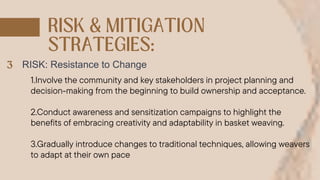
RISK: Resistance to Change
1.Involve the community and key stakeholders in project planning and
decision-making from the beginning to build ownership and acceptance.
2.Conduct awareness and sensitization campaigns to highlight the
benefits of embracing creativity and adaptability in basket weaving.
3.Gradually introduce changes to traditional techniques, allowing weavers
to adapt at their own pace
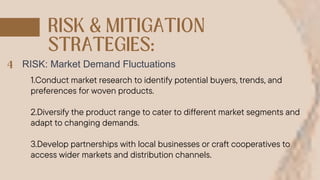
RISK: Market Demand Fluctuations
1.Conduct market research to identify potential buyers, trends, and
preferences for woven products.
2.Diversify the product range to cater to different market segments and
adapt to changing demands.
3.Develop partnerships with local businesses or craft cooperatives to
access wider markets and distribution channels.
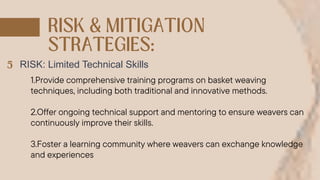
RISK: Limited Technical Skills
1.Provide comprehensive training programs on basket weaving
techniques, including both traditional and innovative methods.
2.Offer ongoing technical support and mentoring to ensure weavers can
continuously improve their skills.
3.Foster a learning community where weavers can exchange knowledge
and experiences
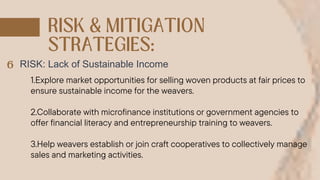
RISK: Lack of Sustainable Income
1.Explore market opportunities for selling woven products at fair prices to
ensure sustainable income for the weavers.
2.Collaborate with microfinance institutions or government agencies to
offer financial literacy and entrepreneurship training to weavers.
3.Help weavers establish or join craft cooperatives to collectively manage
sales and marketing activities.
RISK: Insufficient Community Engagement
1.Involve community leaders and representatives throughout the project's
lifecycle to ensure continuous support and engagement.
2.Organize regular community meetings and feedback sessions to keep
stakeholders informed and involved.
3.Incorporate cultural events or exhibitions to celebrate the community's
heritage and achievements in basket weaving
By identifying potential risks and implementing
effective mitigation strategies, our project can
proactively address challenges and increase
the likelihood of its success in advancing the
creativity and adaptability of basket weavers
using local materials
Cultural Preservation: By promoting traditional basket weaving
techniques and using local materials, our project can contribute to
the preservation of cultural heritage. This helps to pass down
valuable skills and knowledge from one generation to another,
fostering a sense of identity and continuity within the community
Environmental Sustainability: Utilizing local and sustainable
materials for basket weaving can reduce the need for imported or
environmentally harmful materials. This approach supports the
conservation of natural resources and minimizes the carbon
footprint associated with transportation and production
Economic Empowerment: Empowering local basket weavers
through skill development and creativity can have positive
economic impacts. As their expertise improves, they may be able to
produce higher-quality and more unique products, which could
lead to increased demand and higher incomes for the weavers.
Social Inclusivity: Involving various members of the community,
including women, youth, and marginalized groups, in the project
can enhance social inclusivity. By offering training and
opportunities for participation, your project can promote gender
equality and social cohesion.
Waste Reduction and Recycling: If our project involves using
recycled or upcycled materials, it can contribute to waste
reduction and a circular economy. By repurposing materials that
would otherwise be discarded, you can lessen the environmental
impact and promote sustainable practices.
Community Well-Being: Engaging in creative and artistic activities
like basket weaving can have positive effects on mental well-being
and community spirit. By supporting these activities, your project
can contribute to the overall well-being and happiness of the
participants
Tourism and Cultural Exchange: The promotion of locally crafted,
unique baskets can attract tourists interested in authentic cultural
experiences and traditional crafts. This can generate income for
the community and create opportunities for cultural exchange and
understanding.
Long-term Skills Development: By investing in the training and
development of local artisans, our project can create a foundation
for long-term skills development and continuous improvement in
basket weaving. This ensures the sustainability of the craft and its
ability to adapt to changing market demands.
Awareness and Advocacy: Our project can raise awareness about
the importance of preserving traditional crafts and the value of
using local and sustainable materials. This can lead to broader
advocacy efforts for cultural preservation and sustainable
practices.
In conclusion, the project proposal, "Advancing the Creativity and
Adaptability of Basket Weavers Using Local Materials," holds tremendous
promise in promoting cultural preservation, environmental sustainability,
economic empowerment, and community well-being. By focusing on
revitalizing traditional basket weaving techniques and utilizing locally-
sourced materials, this project aims to bring about positive and lasting
impacts.
Through this initiative, we aim to preserve the rich cultural heritage of
basket weaving, passing down centuries-old techniques to future
generations. By encouraging creativity and adaptability, we empower local
artisans to infuse their unique artistic expressions into their craft, creating
distinctive and high-quality baskets that hold both historical significance
and contemporary appeal.
Furthermore, the project's emphasis on using sustainable, locally-sourced
materials aligns with our commitment to environmental stewardship. By reducing
the dependence on imported or environmentally harmful resources, we promote
responsible consumption and support the conservation of natural ecosystems.
At the heart of this proposal lies the objective of fostering economic
empowerment within the community. By providing training, skill development, and
opportunities for innovation, we seek to uplift the livelihoods of basket weavers,
enabling them to thrive and sustainably support their families.
Moreover, this project places a strong emphasis on social inclusivity, ensuring that
women, youth, and marginalized groups are actively involved in the revitalization of
basket weaving. By promoting gender equality and social cohesion, we aim to
create a more equitable and cohesive community.
As we look to the future, we are mindful of the potential tourism and cultural
exchange opportunities that this initiative can bring. The promotion of locally crafted,
unique baskets can attract visitors seeking authentic cultural experiences, further
contributing to the economic growth of the community.
In conclusion, "Advancing the Creativity and Adaptability of Basket Weavers Using
Local Materials" is not only a project to revitalize a traditional craft but a
transformative journey that intertwines cultural preservation, environmental
sustainability, economic empowerment, and community well-being. By working hand
in hand with the local community, we are confident that this project will leave a
lasting legacy, breathing new life into the art of basket weaving and enriching the
lives of all involved. Together, we can ensure that this timeless craft thrives and
adapts to the ever-changing world while preserving its essence and heritage for
generations to come.
Lorem ipsum dolor sit amet, consectetur adipiscing elit. Vivamus sed vestibulum nunc, eget aliquam
felis.https://www.google.com/search?q=cultural+heritage+meaning&oq=cultural+heritage&aqs=chro
me.1.69i57j0i433i512j0i512l2j0i457i512j0i402i650j0i512l4.11771553j0j15&sourceid=chrome&ie=UTF-8
https://www.google.com/search?q=weaving&sxsrf=AB5stBjOkgqikaN4URxIMOorSnWRwKfgEQ%3A16
90521747877&ei=k1DDZNzRNOa94-
EPw76QqA0&ved=0ahUKEwic55Ci1LCAAxXm3jgGHUMfBNUQ4dUDCA8&uact=5&oq=weaving&gs_lp
=Egxnd3Mtd2l6LXNlcnAiB3dlYXZpbmcyDxAAGIoFGLEDGEMYRhj5ATIIEAAYigUYkQIyCBAAGIoFGJE
CMgoQABiKBRixAxhDMggQABiKBRiRAjIHEAAYigUYQzIHEAAYigUYQzIHEAAYigUYQzIFEAAYgAQyBRA
AGIAEMiYQABiKBRixAxhDGEYY-
QEYlwUYjAUY3QQYRhj0Axj1Axj2A9gBAUiAD1AAWMAMcAB4AZABAJgB1AKgAYYLqgEHMC41LjEuMbg
BA8gBAPgBAcICBxAjGIoFGCfCAgQQIxgnwgINEAAYigUYsQMYgwEYQ8ICEBAAGIoFGLEDGIMBGMk
DGEPCAggQABiKBRiSA8ICCxAAGIoFGLEDGJECwgINEC4YigUYsQMYgwEYQ8ICEBAuGIoFGLEDGM
cBGNEDGEPCAgsQABiABBixAxiDAcICJhAAGIoFGLEDGEMYRhj5ARiXBRiMBRjdBBhGGPQDGPUDGP
YD2AEB4gMEGAAgQYgGAboGBggBEAEYEw&sclient=gws-wiz-serp
PROJECT PROPOSAL.pptx

PROJECT PROPOSAL.pptx

  • 1.
    Presented by: MICHELLE ALCOSEBA RIZZAMAE C. PELOMINO CLARINE DAVIZ MAE GELLEGAN
  • 2.
  • 3.
    Our project proposalfocuses on advancing the creativity and adaptability of basket weavers through the utilization of local materials. basket weaving is an art form deeply rooted in cultural traditions and is an essential source of income for many communities worldwide. However, traditional basket weaving techniques often face challenges in meeting evolving market demands and sustaining economic viability. The primary objective of this project is to expose innovative approaches and techniques that empower basket weavers to enhance their creativity and adaptability while utilizing locally available materials. by doing so, we aim to create sustainable livelihood opportunities, preserve cultural heritage, and contribute to economic development of communities.
  • 4.
    • Preserve CulturalHeritage • Foster Creativity and Innovation • Sustain weaving creativity and adaptability • Helps community lessen plastic garbage • Safe and Non-toxic storage
  • 5.
    •Collaborate with expertsin creative design, basket weaving, and other relevant fields to design workshops tailored to the weavers' needs •Conduct workshops to teach new design techniques, explore innovative ideas, and encourage experimentation with local materials. •Clearly define the project's objectives and outcomes in terms of creativity enhancement, adaptability improvement, and promotion of local material use. •Develop a detailed project plan, including timelines, budget, and •Identify and establish partnerships with local suppliers or producers of sustainable and eco- friendly materials suitable for basket weaving. •Raise awareness and promote the benefits of using local materials to the weavers and potential customers
  • 6.
    •Facilitate market access forthe weavers by connecting them with potential buyers, both locally and internationally. •Develop a marketing strategy to promote the uniqueness and value of locally woven products. •Set up a monitoring and evaluation framework with predefined indicators and methods to measure progress and project impact. •Regularly collect data to track the weavers' progress, assess workshop effectiveness, and determine changes in creativity and adaptability levels •Ensure the project’s environmental sustainability by encouraging the use of eco-friendly materials and promoting sustainable weaving practices.
  • 7.
     We Planto engage with local artisans stakeholders, community leaders, and relevant stakeholders to understand their perspectives, needs, and aspirations. Involve them in the project planning and decision-making process to ensure ownership and relevance.  We would conduct a comprehensive needs assessment within the target community of basket weavers. Identify the existing skill levels, knowledge, and resources available, as well as the challenges they face in terms of creativity and adaptability in their craft.
  • 8.
    Basket weaving usingNeto Materials found in our local community Basket weaving using Round Rattan materials found in our local community
  • 9.
    Basket weaving usingNeto Materials found in our local community Basket weaving using Round Rattan materials found in our local community
  • 10.
    CONCEPTION AND INITIATION DEFINITION and planning LAUNCHOR execution PERFORMANCE and control PROJECT closing the initial phase of a project where the idea is born or conceptualized. It involves identifying a need or opportunity and generating a project concept to address it clarifying the project's purpose and scope, while the planning phase involves developing a detailed roadmap to achieve the project's objectives phase of a project is the stage where the planned activities are put into action, and the project plan is implemented to achieve the defined objectives the ongoing process of monitoring and managing various aspects of the project to ensure that it stays on track, achieves its objectives, and meets the defined performance standards. project closure or project termination, is the final phase in the lifecycle of a project. It involves the formal ending of all project activities, the completion of project deliverables, and the handover of the project's outputs to the relevant stakeholders.
  • 11.
    Create a BudgetProposal to LGU: Compile all the estimated costs into a comprehensive budget proposal. Clearly outline the expenses, anticipated funding sources, and any in-kind contributions you expect Community Engagement: Budget for community engagement activities, such as meetings, outreach, and communication materials
  • 12.
    Visit local markets,craft stores, or specialty shops that sell traditional crafting materials. We may find various types of locally-sourced fibers, reeds, or other materials commonly used by basket weavers. Depending on the materials we plan to use, consider exploring recycling centers or waste management facilities. Some discarded materials may be suitable for weaving and could be repurposed for your project. Depending on the region, it might be able to gather some materials directly from nature. For example, if the project involves using natural fibers or reeds, explore nearby wetlands, forests, or farms where these resources are abundant
  • 13.
    Look for suppliersor manufacturers who specialize in traditional crafting materials. They might offer a wider range of options and can be a reliable source for bulk purchases. Connect with local artisan communities or cooperatives that work with traditional crafts. They might have access to a variety of weaving materials and can guide you on where to source them.
  • 14.
    Evaluating and measuringthe success of a project proposal titled "Advancing the Creativity and Adaptability of Basket Weavers Using Local Materials" requires setting clear objectives and identifying appropriate metrics to assess its impact. Here are some key aspects to consider in evaluating the project: 1. Objectives and Key Performance Indicators 2. Baseline Data 3. Project Implementation 4. Creativity and Adaptability Workshops 5. Use of Local Materials 6. Economic Impact 7. Market Access 8. Sustainability 9. Environmental Impact 10. Stakeholders Feedback
  • 15.
    RISK: Lack ofLocal Material Availability. 1.Conduct a thorough assessment of local material availability before initiating the project. Identify alternative sources or materials that can be used if the primary ones are limited. 2.Collaborate with local suppliers or NGOs to establish a sustainable supply chain for the required materials. 3.Encourage the cultivation or sustainable harvesting of materials, if feasible, to ensure a continuous and reliable supply.
  • 16.
    RISK: Limited Creativityand Adaptability 1.Provide comprehensive training and workshops focused on creative thinking, design principles, and innovative techniques. 2.Facilitate collaboration among weavers to encourage idea sharing and cross-pollination of creativity. 3.Invite experts and designers to mentor weavers and introduce them to new artistic concepts and trends.
  • 17.
    RISK: Resistance toChange 1.Involve the community and key stakeholders in project planning and decision-making from the beginning to build ownership and acceptance. 2.Conduct awareness and sensitization campaigns to highlight the benefits of embracing creativity and adaptability in basket weaving. 3.Gradually introduce changes to traditional techniques, allowing weavers to adapt at their own pace
  • 18.
    RISK: Market DemandFluctuations 1.Conduct market research to identify potential buyers, trends, and preferences for woven products. 2.Diversify the product range to cater to different market segments and adapt to changing demands. 3.Develop partnerships with local businesses or craft cooperatives to access wider markets and distribution channels.
  • 19.
    RISK: Limited TechnicalSkills 1.Provide comprehensive training programs on basket weaving techniques, including both traditional and innovative methods. 2.Offer ongoing technical support and mentoring to ensure weavers can continuously improve their skills. 3.Foster a learning community where weavers can exchange knowledge and experiences
  • 20.
    RISK: Lack ofSustainable Income 1.Explore market opportunities for selling woven products at fair prices to ensure sustainable income for the weavers. 2.Collaborate with microfinance institutions or government agencies to offer financial literacy and entrepreneurship training to weavers. 3.Help weavers establish or join craft cooperatives to collectively manage sales and marketing activities.
  • 21.
    RISK: Insufficient CommunityEngagement 1.Involve community leaders and representatives throughout the project's lifecycle to ensure continuous support and engagement. 2.Organize regular community meetings and feedback sessions to keep stakeholders informed and involved. 3.Incorporate cultural events or exhibitions to celebrate the community's heritage and achievements in basket weaving
  • 22.
    By identifying potentialrisks and implementing effective mitigation strategies, our project can proactively address challenges and increase the likelihood of its success in advancing the creativity and adaptability of basket weavers using local materials
  • 23.
    Cultural Preservation: Bypromoting traditional basket weaving techniques and using local materials, our project can contribute to the preservation of cultural heritage. This helps to pass down valuable skills and knowledge from one generation to another, fostering a sense of identity and continuity within the community Environmental Sustainability: Utilizing local and sustainable materials for basket weaving can reduce the need for imported or environmentally harmful materials. This approach supports the conservation of natural resources and minimizes the carbon footprint associated with transportation and production
  • 24.
    Economic Empowerment: Empoweringlocal basket weavers through skill development and creativity can have positive economic impacts. As their expertise improves, they may be able to produce higher-quality and more unique products, which could lead to increased demand and higher incomes for the weavers. Social Inclusivity: Involving various members of the community, including women, youth, and marginalized groups, in the project can enhance social inclusivity. By offering training and opportunities for participation, your project can promote gender equality and social cohesion.
  • 25.
    Waste Reduction andRecycling: If our project involves using recycled or upcycled materials, it can contribute to waste reduction and a circular economy. By repurposing materials that would otherwise be discarded, you can lessen the environmental impact and promote sustainable practices. Community Well-Being: Engaging in creative and artistic activities like basket weaving can have positive effects on mental well-being and community spirit. By supporting these activities, your project can contribute to the overall well-being and happiness of the participants
  • 26.
    Tourism and CulturalExchange: The promotion of locally crafted, unique baskets can attract tourists interested in authentic cultural experiences and traditional crafts. This can generate income for the community and create opportunities for cultural exchange and understanding. Long-term Skills Development: By investing in the training and development of local artisans, our project can create a foundation for long-term skills development and continuous improvement in basket weaving. This ensures the sustainability of the craft and its ability to adapt to changing market demands.
  • 27.
    Awareness and Advocacy:Our project can raise awareness about the importance of preserving traditional crafts and the value of using local and sustainable materials. This can lead to broader advocacy efforts for cultural preservation and sustainable practices.
  • 28.
    In conclusion, theproject proposal, "Advancing the Creativity and Adaptability of Basket Weavers Using Local Materials," holds tremendous promise in promoting cultural preservation, environmental sustainability, economic empowerment, and community well-being. By focusing on revitalizing traditional basket weaving techniques and utilizing locally- sourced materials, this project aims to bring about positive and lasting impacts. Through this initiative, we aim to preserve the rich cultural heritage of basket weaving, passing down centuries-old techniques to future generations. By encouraging creativity and adaptability, we empower local artisans to infuse their unique artistic expressions into their craft, creating distinctive and high-quality baskets that hold both historical significance and contemporary appeal.
  • 29.
    Furthermore, the project'semphasis on using sustainable, locally-sourced materials aligns with our commitment to environmental stewardship. By reducing the dependence on imported or environmentally harmful resources, we promote responsible consumption and support the conservation of natural ecosystems. At the heart of this proposal lies the objective of fostering economic empowerment within the community. By providing training, skill development, and opportunities for innovation, we seek to uplift the livelihoods of basket weavers, enabling them to thrive and sustainably support their families. Moreover, this project places a strong emphasis on social inclusivity, ensuring that women, youth, and marginalized groups are actively involved in the revitalization of basket weaving. By promoting gender equality and social cohesion, we aim to create a more equitable and cohesive community.
  • 30.
    As we lookto the future, we are mindful of the potential tourism and cultural exchange opportunities that this initiative can bring. The promotion of locally crafted, unique baskets can attract visitors seeking authentic cultural experiences, further contributing to the economic growth of the community. In conclusion, "Advancing the Creativity and Adaptability of Basket Weavers Using Local Materials" is not only a project to revitalize a traditional craft but a transformative journey that intertwines cultural preservation, environmental sustainability, economic empowerment, and community well-being. By working hand in hand with the local community, we are confident that this project will leave a lasting legacy, breathing new life into the art of basket weaving and enriching the lives of all involved. Together, we can ensure that this timeless craft thrives and adapts to the ever-changing world while preserving its essence and heritage for generations to come.
  • 31.
    Lorem ipsum dolorsit amet, consectetur adipiscing elit. Vivamus sed vestibulum nunc, eget aliquam felis.https://www.google.com/search?q=cultural+heritage+meaning&oq=cultural+heritage&aqs=chro me.1.69i57j0i433i512j0i512l2j0i457i512j0i402i650j0i512l4.11771553j0j15&sourceid=chrome&ie=UTF-8 https://www.google.com/search?q=weaving&sxsrf=AB5stBjOkgqikaN4URxIMOorSnWRwKfgEQ%3A16 90521747877&ei=k1DDZNzRNOa94- EPw76QqA0&ved=0ahUKEwic55Ci1LCAAxXm3jgGHUMfBNUQ4dUDCA8&uact=5&oq=weaving&gs_lp =Egxnd3Mtd2l6LXNlcnAiB3dlYXZpbmcyDxAAGIoFGLEDGEMYRhj5ATIIEAAYigUYkQIyCBAAGIoFGJE CMgoQABiKBRixAxhDMggQABiKBRiRAjIHEAAYigUYQzIHEAAYigUYQzIHEAAYigUYQzIFEAAYgAQyBRA AGIAEMiYQABiKBRixAxhDGEYY- QEYlwUYjAUY3QQYRhj0Axj1Axj2A9gBAUiAD1AAWMAMcAB4AZABAJgB1AKgAYYLqgEHMC41LjEuMbg BA8gBAPgBAcICBxAjGIoFGCfCAgQQIxgnwgINEAAYigUYsQMYgwEYQ8ICEBAAGIoFGLEDGIMBGMk DGEPCAggQABiKBRiSA8ICCxAAGIoFGLEDGJECwgINEC4YigUYsQMYgwEYQ8ICEBAuGIoFGLEDGM cBGNEDGEPCAgsQABiABBixAxiDAcICJhAAGIoFGLEDGEMYRhj5ARiXBRiMBRjdBBhGGPQDGPUDGP YD2AEB4gMEGAAgQYgGAboGBggBEAEYEw&sclient=gws-wiz-serp