
DR.
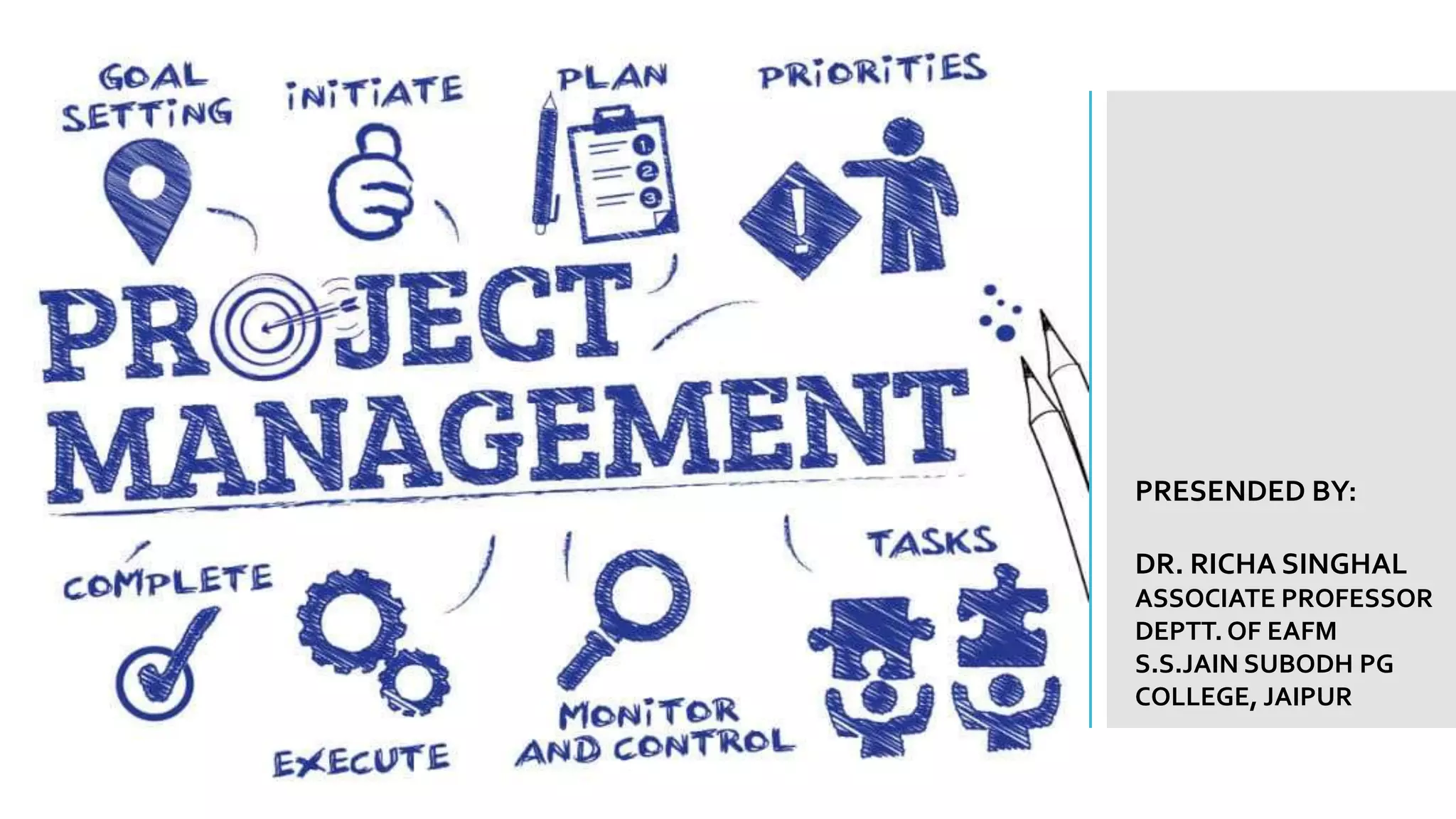
PRESENDED BY:
DR. RICHA SINGHAL
ASSOCIATE PROFESSOR
DEPTT. OF EAFM
S.S.JAIN SUBODH PG
COLLEGE, JAIPUR
PRESENTATION
CONTAINS
CONCEPT
FUNCTION
EVOLUTION OF PROJECT MANAGEMENT
PHASES
TRADITIONAL MANAGEMENTV/S
PROJECT MANAGEMENT
PROJECT MANAGER
PROJECT MANAGERV/S PRODUCT
MANAGER
DR. RICHA SINGHAL 2
PROJECT
MANAGEMENT
 A Project is a temporary, unique and progressive attempt or
endeavour made to produce some kind of a tangible or intangible
result.
 A management as a set of activities directed at the efficient and
effective utilization of resources in the pursuit of one or more
goals.
 The application of knowledge, skills, tools and techniques to
project activities to meet the project requirements.
 It defines definite beginning and end.
 The project need resources on adhoc basis.
 There is always a challenge in a project called Project Constraints:
Time, Cost and Quality.
 The Project manager is the person assigned by the performing
organization to lead the team that is responsible for achieving the
project objectives.
DR. RICHA SINGHAL 3
DEFINITION Project management is the planning, organizing,
directing and controlling of company resources for a
relatively short-term objectives that has been
established to complete specific goals and objectives.
It covers the whole range of functional management
areas.
financial awareness;
marketing appreciation;
technical knowledge;
planning skills;
strategic awareness;
quality management.
DR. RICHA SINGHAL 4
PROJECT
MANAGEMENT
FUNCTIONS
 PROJECT INTEGRATION
 STRATEGIC PLANNING
 RESOURCEALLOCATION
 SCOPE MANAGEMENT
 QUALITY MANAGEMENT
 TIME MANAGEMENT
 COST MANAGEMENT
 RISK MANAGEMENT
 HUMAN RESOURCES MANAGEMENT
 PROCUREMENT MANAGEMENT
 COMMUNICATION MANAGEMENT
DR. RICHA SINGHAL 5
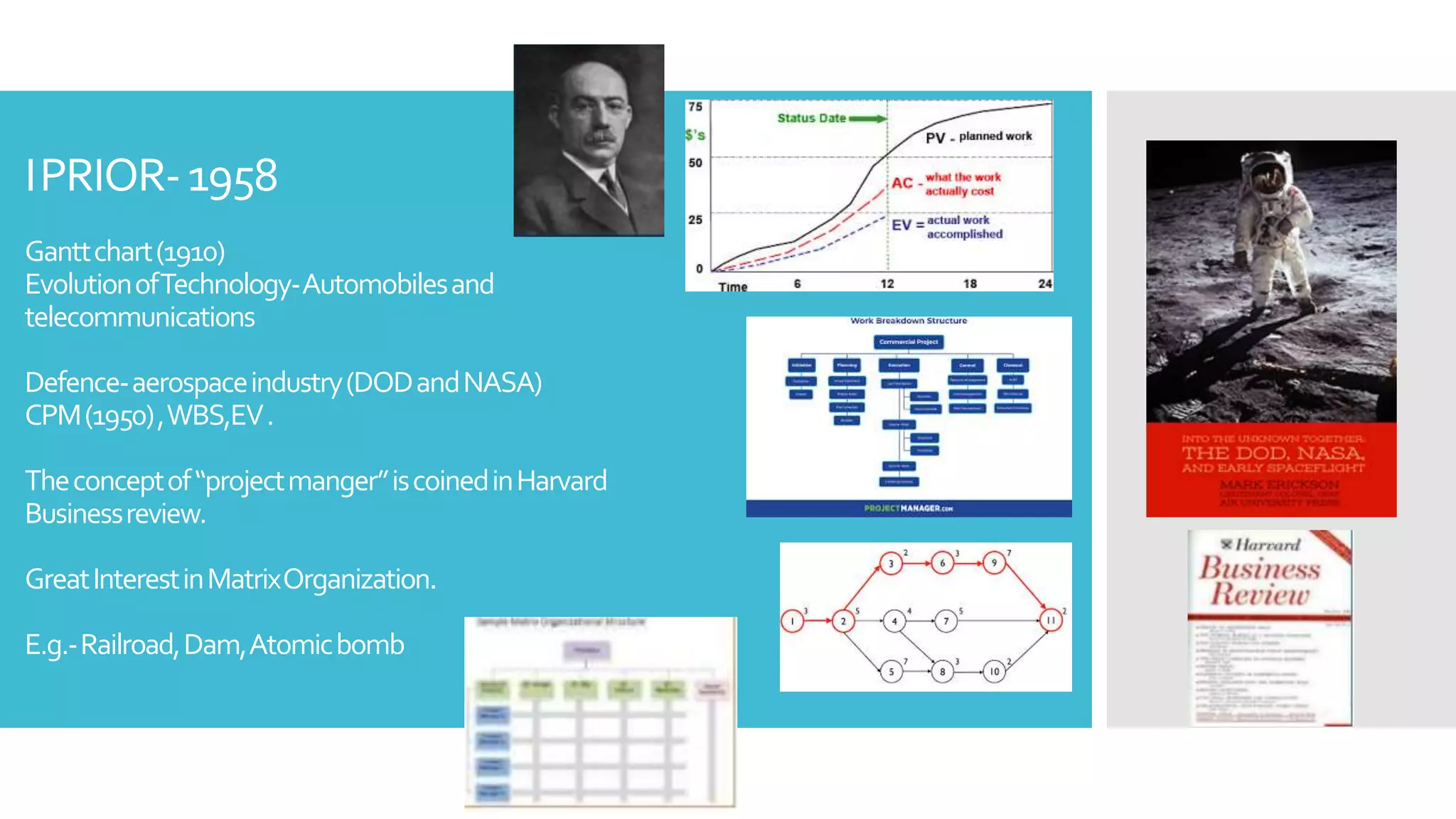
IPRIOR-1958
Ganttchart(1910)
EvolutionofTechnology-Automobilesand
telecommunications
Defence-aerospaceindustry(DODandNASA)
CPM(1950),WBS,EV.
Theconceptof“projectmanger”iscoinedinHarvard
Businessreview.
GreatInterestinMatrixOrganization.
E.g.-Railroad,Dam,Atomicbomb
II PERIOD
1959-1979
 Technology advancement (1958-1979)
 Copier by Xerox (1959)
 PERT(1960)
 Mini computer (1970)
 Microsoft by Bill Gates and Paul Allen (1975)
 Project Management Software companies:
 Artemis (1977)
 Oracle (1977)
 Scitor Corporation (1979)
Example: Polaris Missile
DR. RICHA SINGHAL 7
III PERIOD
1980-1994
 Revolutionary development in the information management
 Low cost mini tasking Personal computers
 Sig sigma Methodology (1986)
 PMBOK (1987)- Project Management body of Knowledge.(Project
Management Professionals).
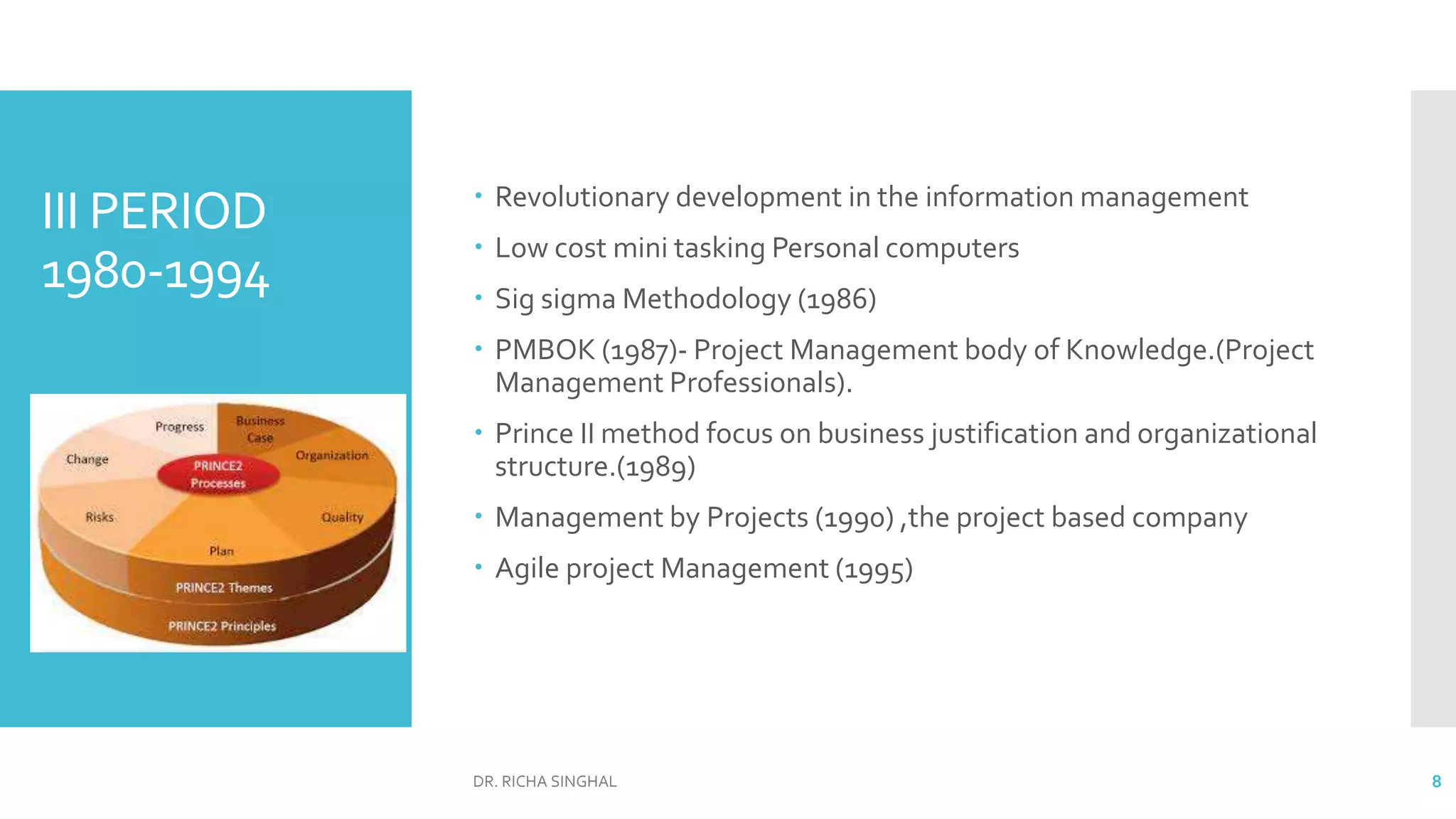
 Prince II method focus on business justification and organizational
structure.(1989)
 Management by Projects (1990) ,the project based company
 Agile project Management (1995)
DR. RICHA SINGHAL 8
IV PERIOD
1995-
PRESENT
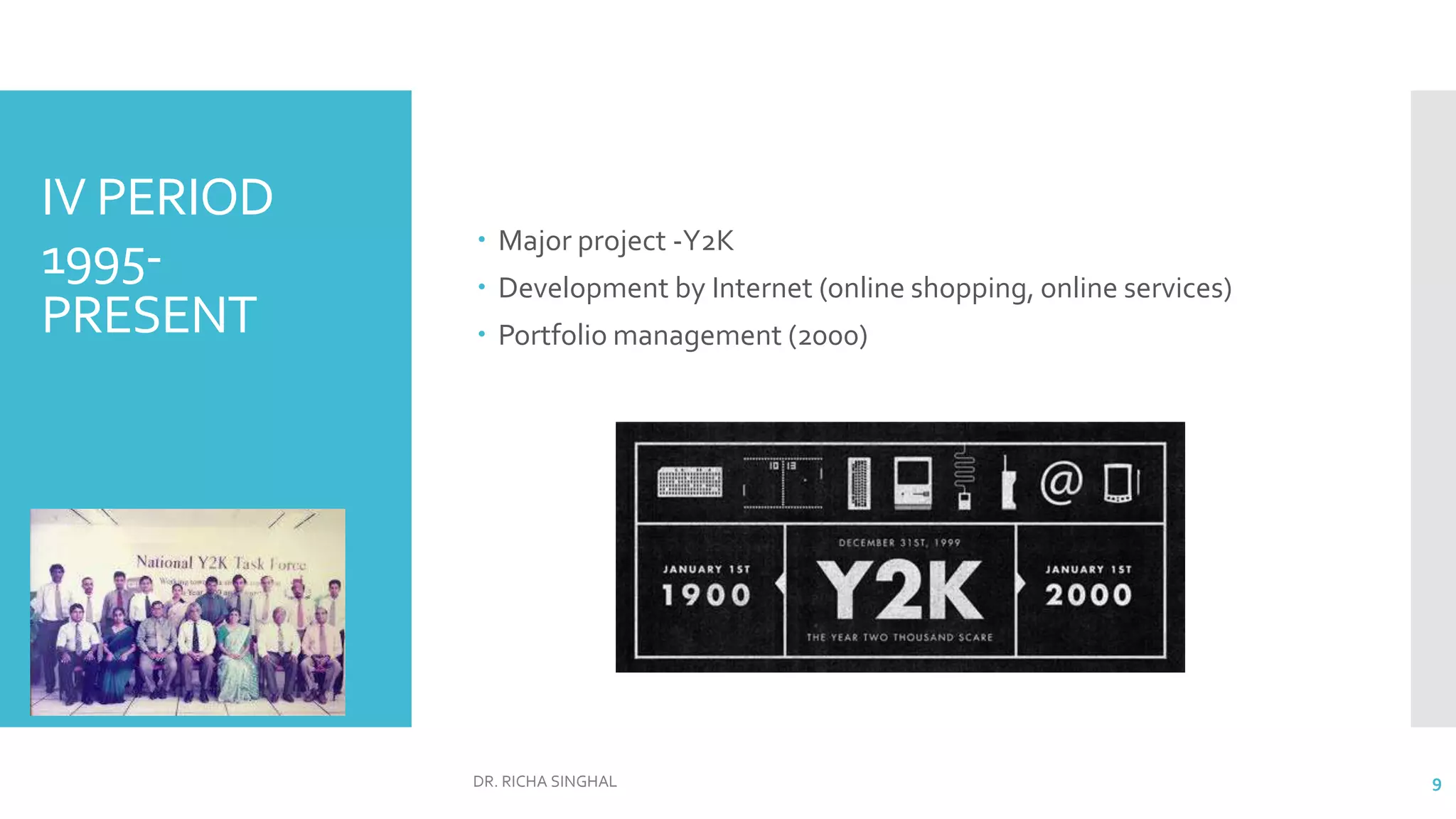
 Major project -Y2K
 Development by Internet (online shopping, online services)
 Portfolio management (2000)
DR. RICHA SINGHAL 9
DIFFERENCE
BETWEEN
TRADITIONAL
MANAGEMENT
AND
PROJECT
MANAGEMENT
TRADITIONAL
MANAGEMENT
 Centralization of Control
 Top down Planning
 Authoritarian environment
 Implied structure
 Limited Access to the plan
 LocalAccess to information
 Limited Communications
within team
 Separate projects
 Overly complex tools
 Rigidity of tools
PROJECT
MANAGEMENT
 Decentralization of control
 Bottom-up planning
 Collaborative environment
 Emergent structures
 UnlimitedAccess to the plan
 GlobalAccess to information
 Unlimited Communications
within team
 Holistic approach
 Easy to use tools
 Flexibility of tools
DR. RICHA SINGHAL 10
PROJECT
MANAGER
 The person who heads the team of planner, engineer,
accountant, secretary, procurement, expeditor, designer,
draftsman, etc. to work closely together to achieve common
goals and co-ordinates the individual’s efforts is designated as
project manager.
 DEFININGAND MAINTAININGTHE INTEGRITY
 DEVELOPMENT OF PROJECT EXECUTION PLAN
 DESIGNING ORGANIZATION FOR EXECUTIONOFTHE PLAN
 SETTINGTARGETS AND DEVELOPMENT OF PROCEDURE
 NEGOTIATIONS FOR COMMITMENTS
 DIRECTION,CO-ORDINATIONAND CONTROLOF PROJECTACTIVITIES
 HUMAN RESOURCE MANAGEMENT
 NON-HUMAN RESOURCE MANAGEMENT
 SATISFYING CUSTOMERS,GOVERNMENTAND PUBLIC
 ATTAINMENT OF PROJECT OBJECTIVES AND IMPROVED PRODUCTIVITY
DR. RICHA SINGHAL 11
PRODUCT MANAGER PROJECT MANAGER
Researching Breaking down initiatives into tasks
Setting product vision Planning project timelines
Communicating vision Allocating project resources
Developing strategic plan Monitoring task completion
Product Roadmap Progress communication
REVIEW
QUESTIONS
 DISCUSSTHEVARIOUSTYPES OF PROJECTS
AS CLASSIFIED BY FINANCIAL
INSTITUTIONS.
 WHAT IS PROJECT MANAGEMENT? TRACE
ITS HISTORY.
 EXPLAIN, WHAT PROJECT MANAGEMENT IS
AND HOW IS IT DIFFERENT FROM
TRADITIONAL MANAGEMENT. EXPLAINTHE
BASIC PROJECT MANGEMENT FUNCTIONS.
 DESCRIBE BRIEFLYTHE SALIENT FEATURES
OF PROJECT.
DR. RICHA SINGHAL 13
THANKS

Project management

  • 1.
    DR. PRESENDED BY: DR. RICHASINGHAL ASSOCIATE PROFESSOR DEPTT. OF EAFM S.S.JAIN SUBODH PG COLLEGE, JAIPUR
  • 2.
    PRESENTATION CONTAINS CONCEPT FUNCTION EVOLUTION OF PROJECTMANAGEMENT PHASES TRADITIONAL MANAGEMENTV/S PROJECT MANAGEMENT PROJECT MANAGER PROJECT MANAGERV/S PRODUCT MANAGER DR. RICHA SINGHAL 2
  • 3.
    PROJECT MANAGEMENT  A Projectis a temporary, unique and progressive attempt or endeavour made to produce some kind of a tangible or intangible result.  A management as a set of activities directed at the efficient and effective utilization of resources in the pursuit of one or more goals.  The application of knowledge, skills, tools and techniques to project activities to meet the project requirements.  It defines definite beginning and end.  The project need resources on adhoc basis.  There is always a challenge in a project called Project Constraints: Time, Cost and Quality.  The Project manager is the person assigned by the performing organization to lead the team that is responsible for achieving the project objectives. DR. RICHA SINGHAL 3
  • 4.
    DEFINITION Project managementis the planning, organizing, directing and controlling of company resources for a relatively short-term objectives that has been established to complete specific goals and objectives. It covers the whole range of functional management areas. financial awareness; marketing appreciation; technical knowledge; planning skills; strategic awareness; quality management. DR. RICHA SINGHAL 4
  • 5.
    PROJECT MANAGEMENT FUNCTIONS  PROJECT INTEGRATION STRATEGIC PLANNING  RESOURCEALLOCATION  SCOPE MANAGEMENT  QUALITY MANAGEMENT  TIME MANAGEMENT  COST MANAGEMENT  RISK MANAGEMENT  HUMAN RESOURCES MANAGEMENT  PROCUREMENT MANAGEMENT  COMMUNICATION MANAGEMENT DR. RICHA SINGHAL 5
  • 6.
  • 7.
    II PERIOD 1959-1979  Technologyadvancement (1958-1979)  Copier by Xerox (1959)  PERT(1960)  Mini computer (1970)  Microsoft by Bill Gates and Paul Allen (1975)  Project Management Software companies:  Artemis (1977)  Oracle (1977)  Scitor Corporation (1979) Example: Polaris Missile DR. RICHA SINGHAL 7
  • 8.
    III PERIOD 1980-1994  Revolutionarydevelopment in the information management  Low cost mini tasking Personal computers  Sig sigma Methodology (1986)  PMBOK (1987)- Project Management body of Knowledge.(Project Management Professionals).  Prince II method focus on business justification and organizational structure.(1989)  Management by Projects (1990) ,the project based company  Agile project Management (1995) DR. RICHA SINGHAL 8
  • 9.
    IV PERIOD 1995- PRESENT  Majorproject -Y2K  Development by Internet (online shopping, online services)  Portfolio management (2000) DR. RICHA SINGHAL 9
  • 10.
    DIFFERENCE BETWEEN TRADITIONAL MANAGEMENT AND PROJECT MANAGEMENT TRADITIONAL MANAGEMENT  Centralization ofControl  Top down Planning  Authoritarian environment  Implied structure  Limited Access to the plan  LocalAccess to information  Limited Communications within team  Separate projects  Overly complex tools  Rigidity of tools PROJECT MANAGEMENT  Decentralization of control  Bottom-up planning  Collaborative environment  Emergent structures  UnlimitedAccess to the plan  GlobalAccess to information  Unlimited Communications within team  Holistic approach  Easy to use tools  Flexibility of tools DR. RICHA SINGHAL 10
  • 11.
    PROJECT MANAGER  The personwho heads the team of planner, engineer, accountant, secretary, procurement, expeditor, designer, draftsman, etc. to work closely together to achieve common goals and co-ordinates the individual’s efforts is designated as project manager.  DEFININGAND MAINTAININGTHE INTEGRITY  DEVELOPMENT OF PROJECT EXECUTION PLAN  DESIGNING ORGANIZATION FOR EXECUTIONOFTHE PLAN  SETTINGTARGETS AND DEVELOPMENT OF PROCEDURE  NEGOTIATIONS FOR COMMITMENTS  DIRECTION,CO-ORDINATIONAND CONTROLOF PROJECTACTIVITIES  HUMAN RESOURCE MANAGEMENT  NON-HUMAN RESOURCE MANAGEMENT  SATISFYING CUSTOMERS,GOVERNMENTAND PUBLIC  ATTAINMENT OF PROJECT OBJECTIVES AND IMPROVED PRODUCTIVITY DR. RICHA SINGHAL 11
  • 12.
    PRODUCT MANAGER PROJECTMANAGER Researching Breaking down initiatives into tasks Setting product vision Planning project timelines Communicating vision Allocating project resources Developing strategic plan Monitoring task completion Product Roadmap Progress communication
  • 13.
    REVIEW QUESTIONS  DISCUSSTHEVARIOUSTYPES OFPROJECTS AS CLASSIFIED BY FINANCIAL INSTITUTIONS.  WHAT IS PROJECT MANAGEMENT? TRACE ITS HISTORY.  EXPLAIN, WHAT PROJECT MANAGEMENT IS AND HOW IS IT DIFFERENT FROM TRADITIONAL MANAGEMENT. EXPLAINTHE BASIC PROJECT MANGEMENT FUNCTIONS.  DESCRIBE BRIEFLYTHE SALIENT FEATURES OF PROJECT. DR. RICHA SINGHAL 13
  • 14.