Problem and
Project Based
Learning
By Patrick Walsh
Introduction
 What


This is a learner based technique of
teaching that attempts to teach the learner
through problem solving.

 What


is Problem – based learning?

is Project – based learning?

Also a learner based form of teaching but,
this method aims to teach by having the
learner partake in a project based
classroom.
Problem-based Learning
 Goals:


to engage students in learning

Based on several theories:
 Students

work on problems perceived as
meaningful or relevant
 People try to fill in the gaps when presented
with a situation that they do not readily
understand


Students should work in groups in order to
review the problem, research, discuss,
analyze, and create explanations/ solutions
Problem-based Learning


Tasks for Problem-based learning:










Does a problem exist?
Determine exactly what the problem is
Identify the information needed to comprehend
the problem
What can be used to gather information about
the problem?
Create solutions to the problem
Evaluate the solutions
Present the solution
** as stated by Finkle and Torp (1995)
Project-based Learning
 Goals:


Focuses on the creation of a product or
performance.
 Requires

learners to choose and organize
activities, research, and organize information
on their own.



Emphasis on a physical creation as part of
the learning experience based on actual
experience with other group members.
Project-based Learning
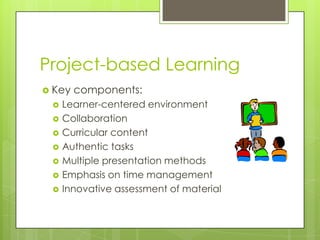
 Key








components:

Learner-centered environment
Collaboration
Curricular content
Authentic tasks
Multiple presentation methods
Emphasis on time management
Innovative assessment of material
Reflection


Problem vs. Project Based Learning
 I believe that both approaches to learning are extremely
beneficial to the student. Both methods have perks for
the student.
 Problem-based benefits: Engages the student to think
critically and has an application rather then just
reading about the material
 Project-based benefits: Students working in groups
allows for a more diverse understanding of the
material based off of the different perspectives of the
students in each project group. Creates a learning
environment that promotes group-work, time
management, and several other useful skills.
Reflection
 Have

these methods been used in my
learning?




Yes, there has been a countless number of
times that I have been a part of both of
these learning techniques, especially on the
collegiate level.
These methods are an important part of
learning process for several classes I have
taken here at Miami.

Problem and Project based learning

  • 1.
  • 2.
    Introduction  What  This isa learner based technique of teaching that attempts to teach the learner through problem solving.  What  is Problem – based learning? is Project – based learning? Also a learner based form of teaching but, this method aims to teach by having the learner partake in a project based classroom.
  • 3.
    Problem-based Learning  Goals:  toengage students in learning Based on several theories:  Students work on problems perceived as meaningful or relevant  People try to fill in the gaps when presented with a situation that they do not readily understand  Students should work in groups in order to review the problem, research, discuss, analyze, and create explanations/ solutions
  • 4.
    Problem-based Learning  Tasks forProblem-based learning:         Does a problem exist? Determine exactly what the problem is Identify the information needed to comprehend the problem What can be used to gather information about the problem? Create solutions to the problem Evaluate the solutions Present the solution ** as stated by Finkle and Torp (1995)
  • 5.
    Project-based Learning  Goals:  Focuseson the creation of a product or performance.  Requires learners to choose and organize activities, research, and organize information on their own.  Emphasis on a physical creation as part of the learning experience based on actual experience with other group members.
  • 6.
    Project-based Learning  Key        components: Learner-centeredenvironment Collaboration Curricular content Authentic tasks Multiple presentation methods Emphasis on time management Innovative assessment of material
  • 7.
    Reflection  Problem vs. ProjectBased Learning  I believe that both approaches to learning are extremely beneficial to the student. Both methods have perks for the student.  Problem-based benefits: Engages the student to think critically and has an application rather then just reading about the material  Project-based benefits: Students working in groups allows for a more diverse understanding of the material based off of the different perspectives of the students in each project group. Creates a learning environment that promotes group-work, time management, and several other useful skills.
  • 8.
    Reflection  Have these methodsbeen used in my learning?   Yes, there has been a countless number of times that I have been a part of both of these learning techniques, especially on the collegiate level. These methods are an important part of learning process for several classes I have taken here at Miami.