ENHANCE PEDAGOGIES
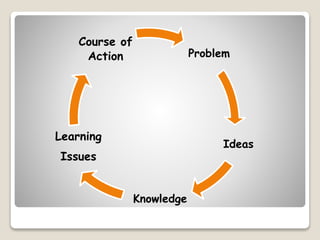
 Problem-based Learning
Simultaneously develops both problem
solving strategies and disciplinary
knowledge bases and skills by placing
students in the active role of
problemsolver confronted with an ill-
structured problem that mirrors real
world problems
Problem
Ideas
Knowledge
Learning
Issues
Course of
Action
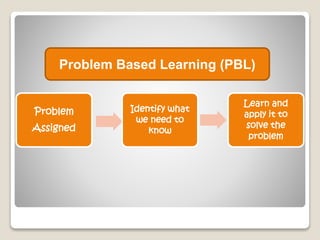
Problem
Assigned
Identify what
we need to
know
Learn and
apply it to
solve the
problem
Problem Based Learning (PBL)
 Collaborative Learning
Students work in groups toward a common
academic goal. The active exchange of ideas
within small groups not only increases
interest among the participants but also
promotes critical thinking. The shared
learning gives students an opportunity to
engage in discussion, take responsibility for
their own learning, and thus become critical
thinkers.
Authentic Learning/Activity
Typically focuses on real-world, complex
problems and their solutions, using role
playing exercises, problem-based activities,
case studies, participation in virtual
communities practice. Going beyond content,
it brings into play multiple disciplines,
multiple perspectives, ways of working,
habits of minds, and community.
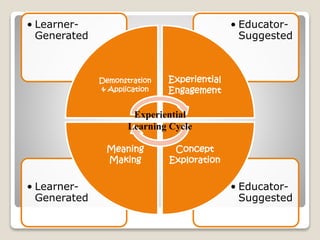
• Educator-
Suggested
• Learner-
Generated
• Educator-
Suggested
• Learner-
Generated
Demonstration
& Application
Experiential
Engagement
Concept
Exploration
Meaning
Making
Experiential
Learning Cycle
Integrated Theater Arts Approach
A method and approach to teaching and
learning, utilizing creative, fun and
nonthreatening processes as practiced by
PETA. The exploration of the arts-based
activities an educational medium and to ways
of actively engaging the students and the
learning process. A systematic and
cumulative weaving together of drama and
sound and music, body movement, creative
writing, visual arts, and group dynamics.
Inquiry Learning
Involvement is the key word for inquiry
learning. It implies possessing skills and
attitudes that permit the learners to seek
resolutions to questions and issues while
they construct new knowledge. Lessons
are designed to make the students
connect the knowledge from the previous
one and will require them to bring their
questions and investigate to satisfy their
own questions.
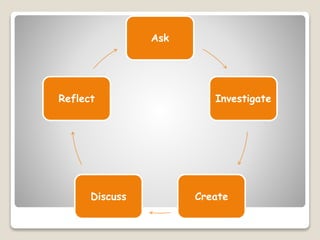
Ask
Investigate
CreateDiscuss
Reflect
Project-based Learning
Emphasizes learning activities that are
long-term, interdisciplinary and student-
centered. Built upon authentic learning
activities that engage student interest and
motivation. The activities are designed to
answer a question or solve a problem and
generally reflect the types of learning and
work people do in the everyday world
outside the classroom.
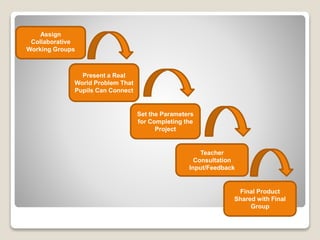
Assign
Collaborative
Working Groups
Present a Real
World Problem That
Pupils Can Connect
Final Product
Shared with Final
Group
Set the Parameters
for Completing the
Project
Teacher
Consultation
Input/Feedback
Problem-solving Approach
Formulating new answers, going beyond the
simple application of previously learned rules
to achieve a goal; or creating new solutions
for problems.
Problem-solving methods can be:
● General problem solving
-approaches that apply to all problems
● Specific Techniques
– ways of thinking about particular domains
(e.g. problem-solving in Math, Arts and
Science,etc.)
Differentiated Instruction
Tailor fitting instruction to meet individual
needs. Differentiation consists of the
efforts of teachers to respond to variance
among learners in the classroom. It is the
process of reaching out to an individual or
small group to vary the teacher’s
instruction in order to create the best
learning experience possible.
Teachers can differentiate at least four (4)
classroom elements based of student
readiness, interest or learning profile:
● content
● process
●product
●learning environment
Know the Learner
Questioning
Strategies
Adjustable
Assignments
]
Assess the Learner
Curriculum
Approaches
Evaluation
Synthesis
Analysis
Application
Comprehension
Knowledge
Create
Evaluate
Analyze
Apply
Understand
Remember
1956 2001

Enhance Pedadogies

  • 1.
  • 2.
     Problem-based Learning Simultaneouslydevelops both problem solving strategies and disciplinary knowledge bases and skills by placing students in the active role of problemsolver confronted with an ill- structured problem that mirrors real world problems
  • 3.
  • 4.
    Problem Assigned Identify what we needto know Learn and apply it to solve the problem Problem Based Learning (PBL)
  • 5.
     Collaborative Learning Studentswork in groups toward a common academic goal. The active exchange of ideas within small groups not only increases interest among the participants but also promotes critical thinking. The shared learning gives students an opportunity to engage in discussion, take responsibility for their own learning, and thus become critical thinkers.
  • 6.
    Authentic Learning/Activity Typically focuseson real-world, complex problems and their solutions, using role playing exercises, problem-based activities, case studies, participation in virtual communities practice. Going beyond content, it brings into play multiple disciplines, multiple perspectives, ways of working, habits of minds, and community.
  • 7.
    • Educator- Suggested • Learner- Generated •Educator- Suggested • Learner- Generated Demonstration & Application Experiential Engagement Concept Exploration Meaning Making Experiential Learning Cycle
  • 8.
    Integrated Theater ArtsApproach A method and approach to teaching and learning, utilizing creative, fun and nonthreatening processes as practiced by PETA. The exploration of the arts-based activities an educational medium and to ways of actively engaging the students and the learning process. A systematic and cumulative weaving together of drama and sound and music, body movement, creative writing, visual arts, and group dynamics.
  • 9.
    Inquiry Learning Involvement isthe key word for inquiry learning. It implies possessing skills and attitudes that permit the learners to seek resolutions to questions and issues while they construct new knowledge. Lessons are designed to make the students connect the knowledge from the previous one and will require them to bring their questions and investigate to satisfy their own questions.
  • 10.
  • 11.
    Project-based Learning Emphasizes learningactivities that are long-term, interdisciplinary and student- centered. Built upon authentic learning activities that engage student interest and motivation. The activities are designed to answer a question or solve a problem and generally reflect the types of learning and work people do in the everyday world outside the classroom.
  • 12.
    Assign Collaborative Working Groups Present aReal World Problem That Pupils Can Connect Final Product Shared with Final Group Set the Parameters for Completing the Project Teacher Consultation Input/Feedback
  • 13.
    Problem-solving Approach Formulating newanswers, going beyond the simple application of previously learned rules to achieve a goal; or creating new solutions for problems. Problem-solving methods can be: ● General problem solving -approaches that apply to all problems ● Specific Techniques – ways of thinking about particular domains (e.g. problem-solving in Math, Arts and Science,etc.)
  • 14.
    Differentiated Instruction Tailor fittinginstruction to meet individual needs. Differentiation consists of the efforts of teachers to respond to variance among learners in the classroom. It is the process of reaching out to an individual or small group to vary the teacher’s instruction in order to create the best learning experience possible.
  • 15.
    Teachers can differentiateat least four (4) classroom elements based of student readiness, interest or learning profile: ● content ● process ●product ●learning environment
  • 16.
  • 17.