TYPES OF SHIPS 
A ship is a large buoyant watercraft. Ships are 
generally distinguished from boats based on size, 
shape and cargo or passenger capacity. Ships are used 
on lakes, seas, and rivers for a variety of activities, 
such as the transport of people or goods, fishing, 
entertainment, public safety, and warfare. Historically, 
a "ship" was a sailing vessel with at least three 
square-rigged masts and a full bowsprit.
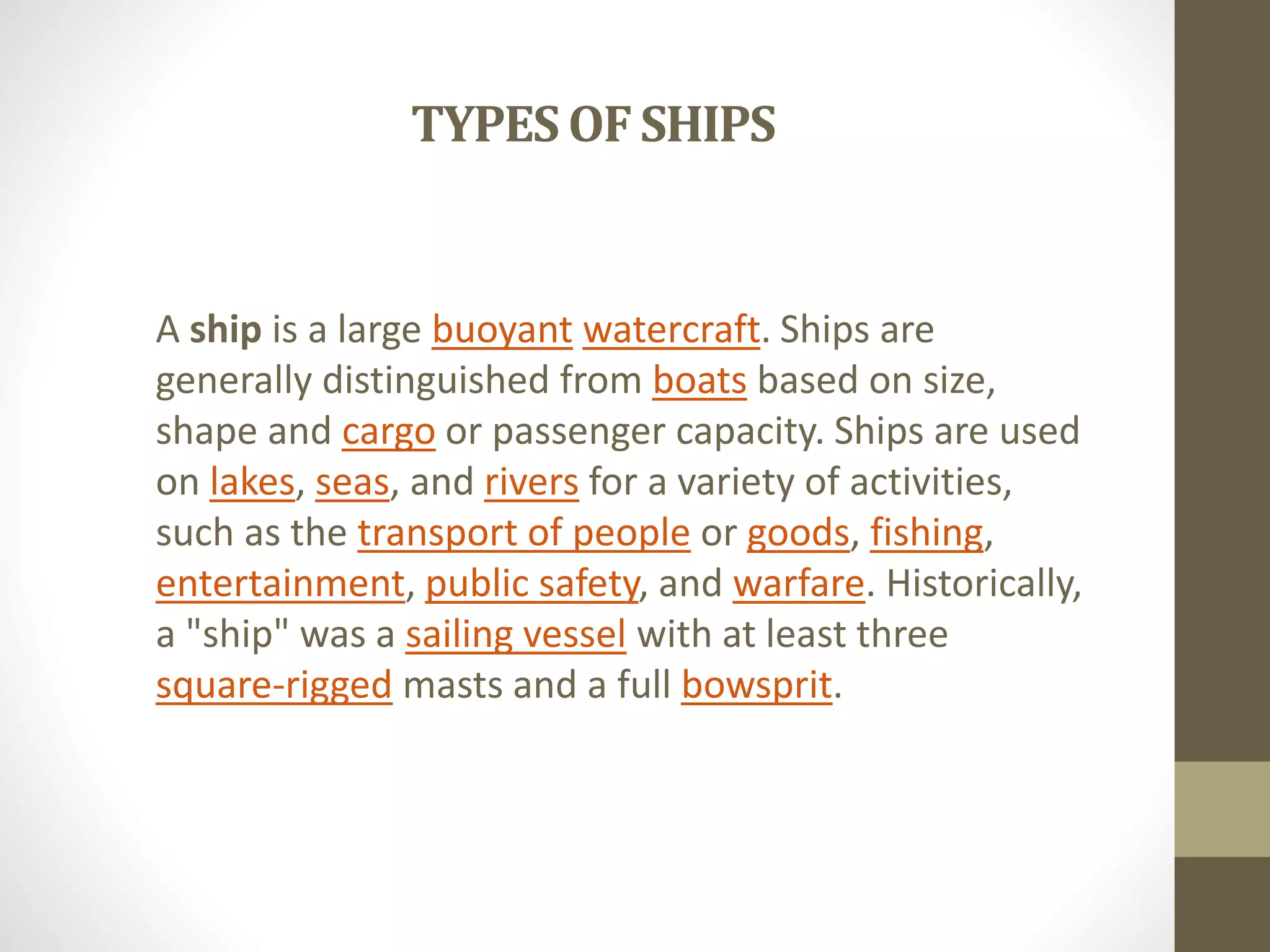
Ships and boats have developed alongside humanity. In 
armed conflict and in daily life they have become an integral 
part of modern commercial and military systems. Fishing 
boats are used by millions of fishermen throughout the 
world. Military forces operate vessels for combat and to 
transport and support forces ashore. Commercial vessels, 
nearly 35,000 in number, carried 7.4 billion tons of cargo in 
2007. As of 2011, there are about 104,304 ships with IMO 
numbers in the world.
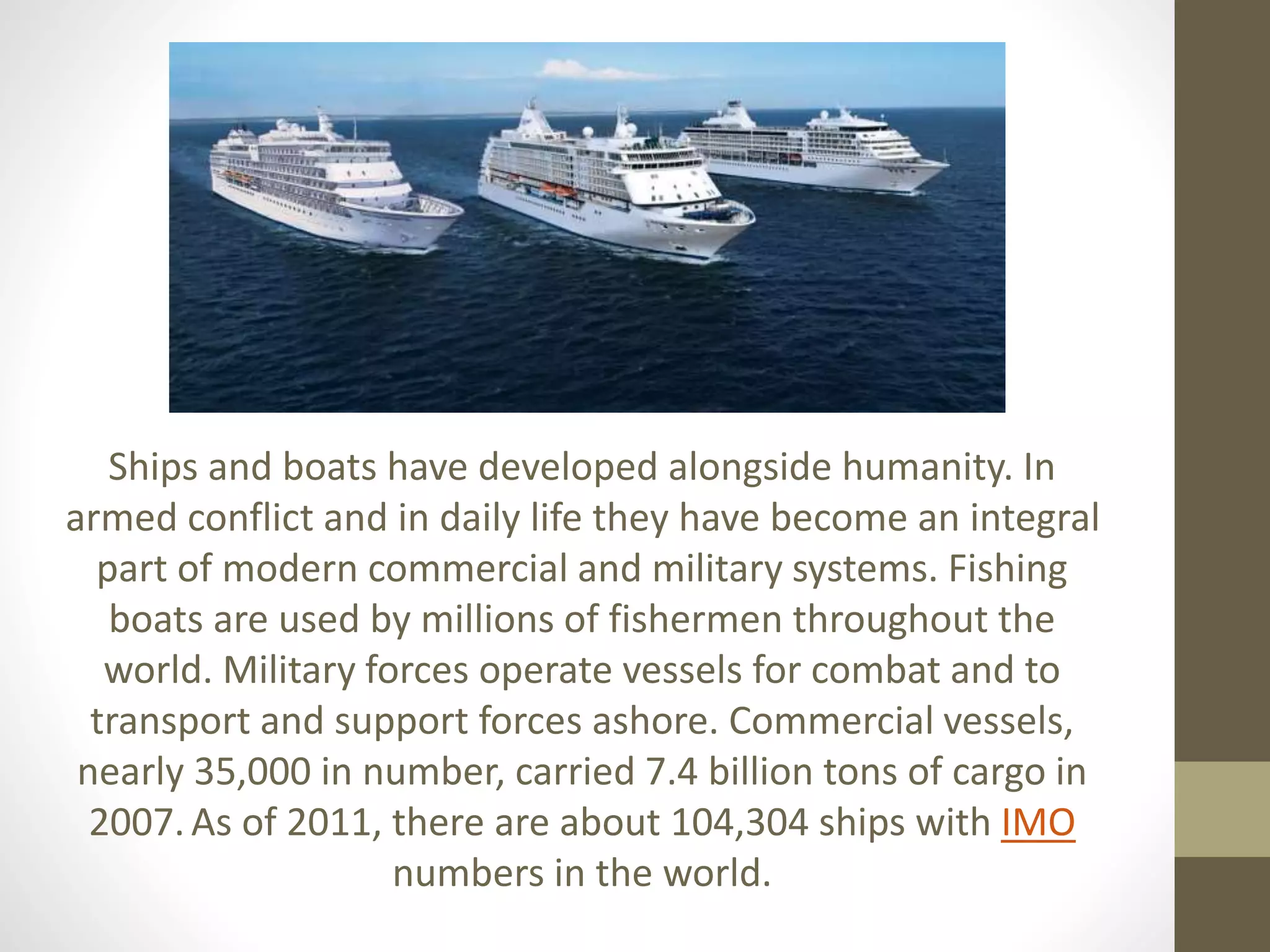
BULK CARRIER 
A bulk carrier, bulk freighter, or bulker is a merchant ship 
specially designed to transport unpackaged bulk cargo, 
such as grains, coal, ore, and cement in its cargo holds.
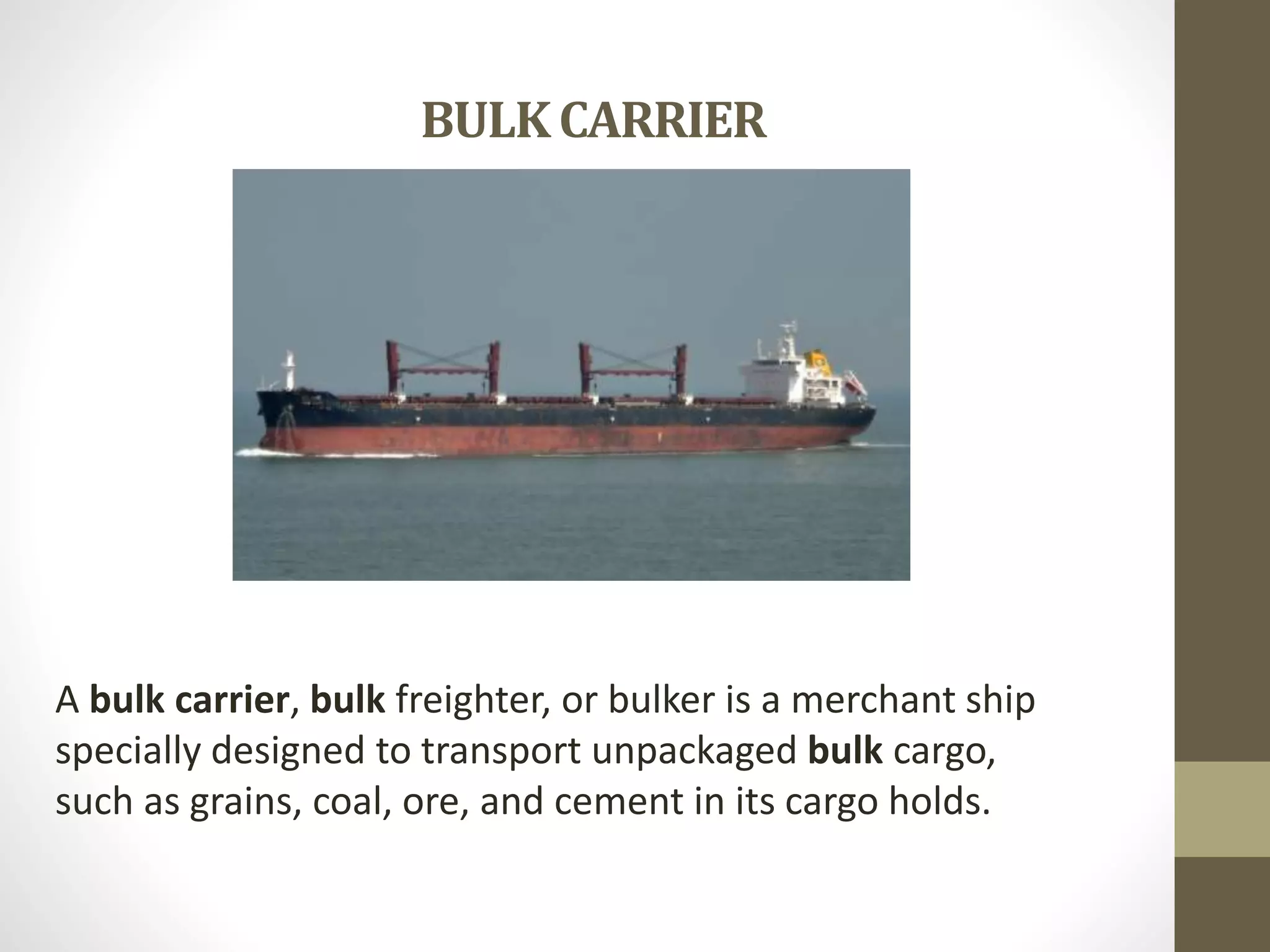
CONTAINER CARRIER 
Container ships are cargo ships that carry all of their load in 
truck-size intermodal containers, in a technique called 
containerization. They are a common means of commercial 
intermodal freight transport and now carry most seagoing 
non-bulk cargo.
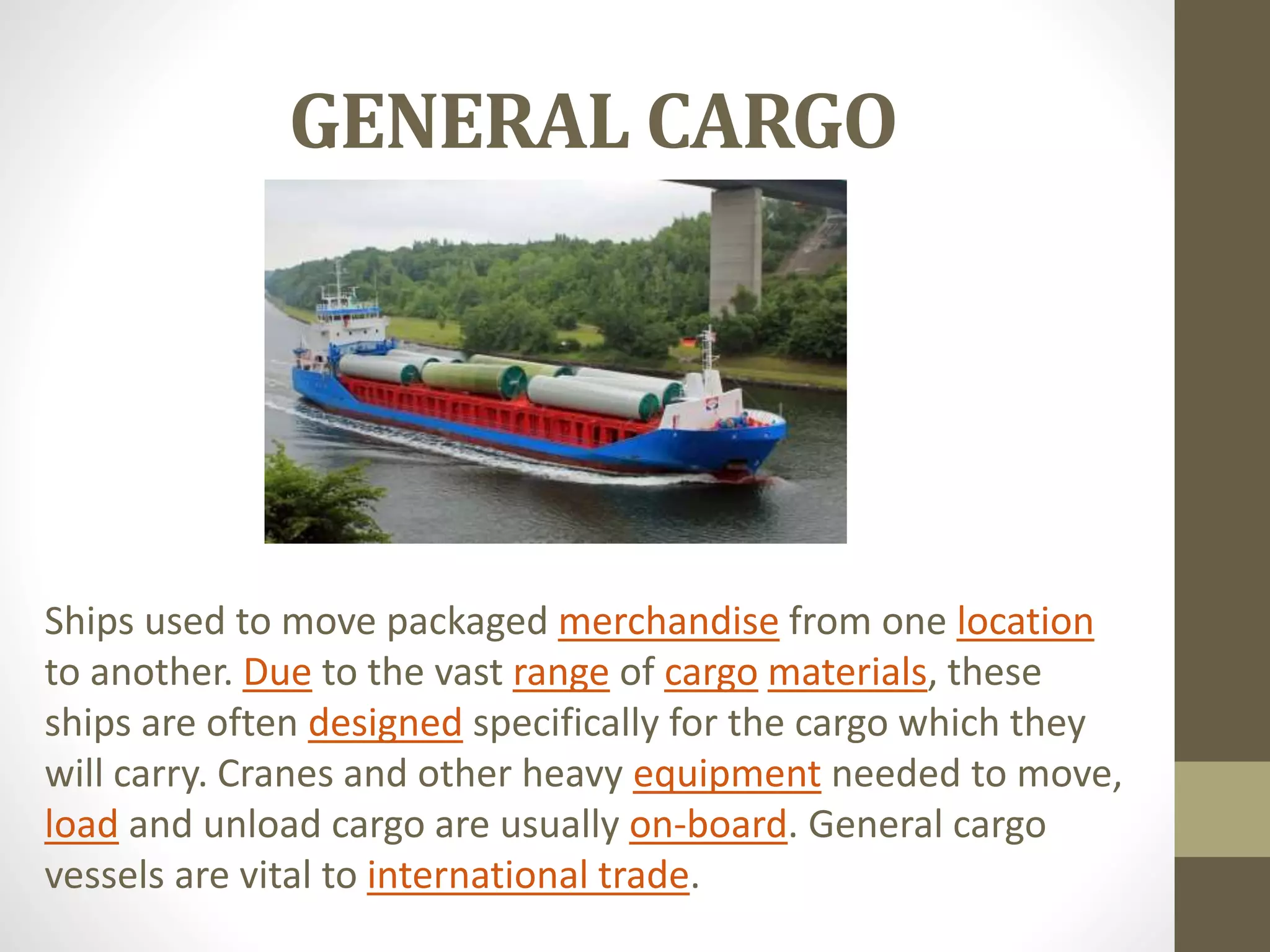
GENERAL CARGO 
Ships used to move packaged merchandise from one location 
to another. Due to the vast range of cargo materials, these 
ships are often designed specifically for the cargo which they 
will carry. Cranes and other heavy equipment needed to move, 
load and unload cargo are usually on-board. General cargo 
vessels are vital to international trade.
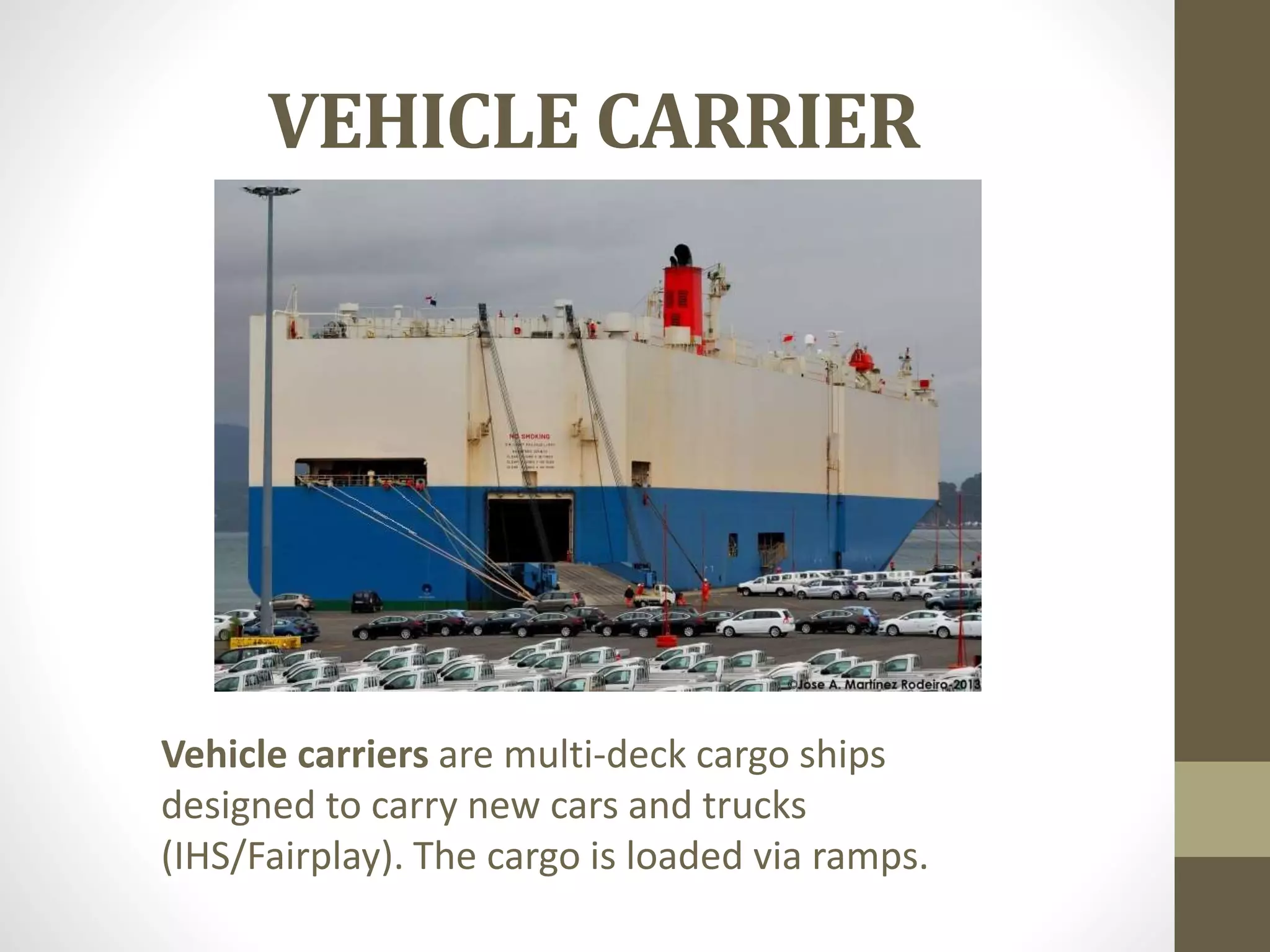
VEHICLE CARRIER 
Vehicle carriers are multi-deck cargo ships 
designed to carry new cars and trucks 
(IHS/Fairplay). The cargo is loaded via ramps.
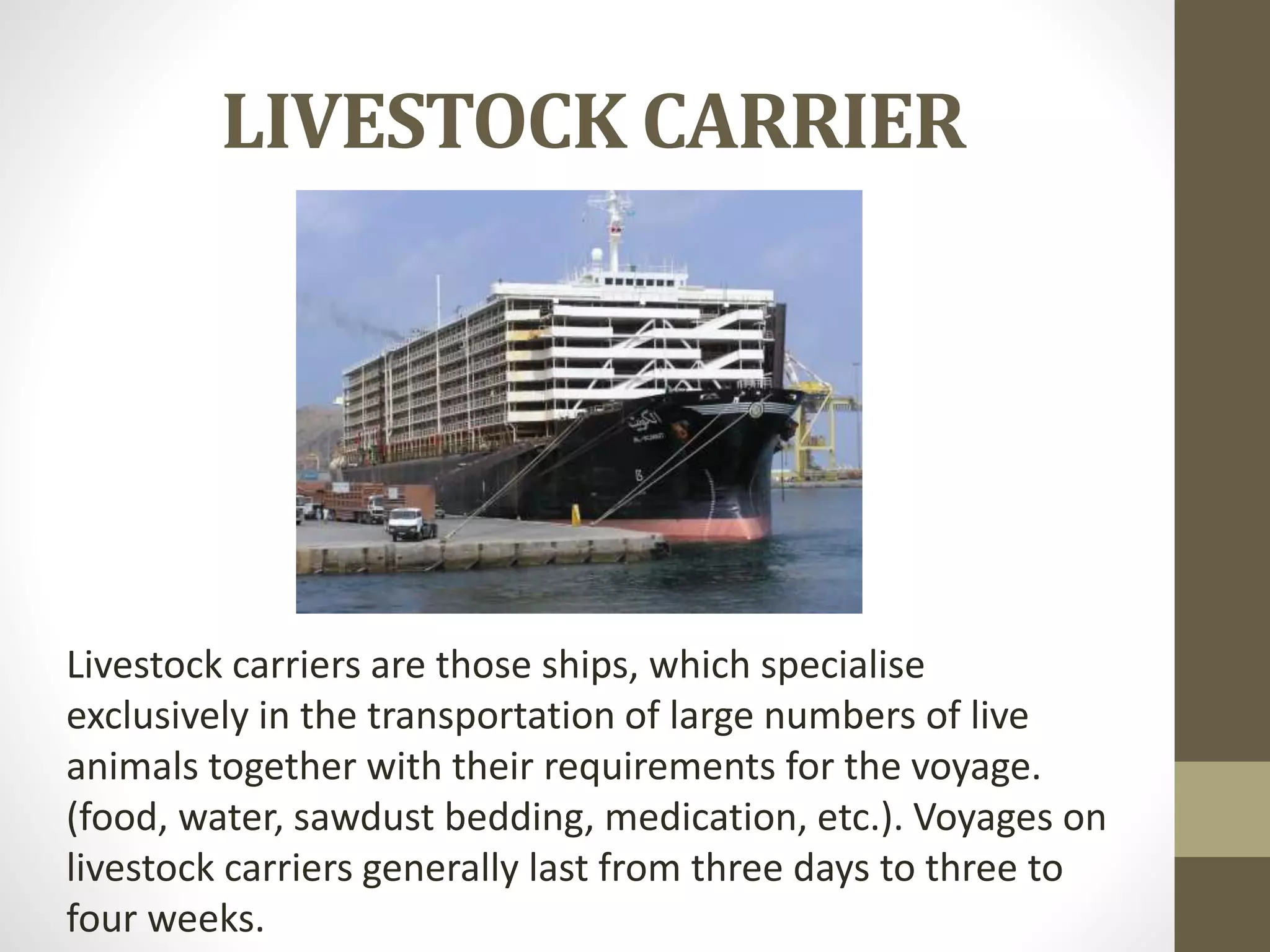
LIVESTOCK CARRIER 
Livestock carriers are those ships, which specialise 
exclusively in the transportation of large numbers of live 
animals together with their requirements for the voyage. 
(food, water, sawdust bedding, medication, etc.). Voyages on 
livestock carriers generally last from three days to three to 
four weeks.
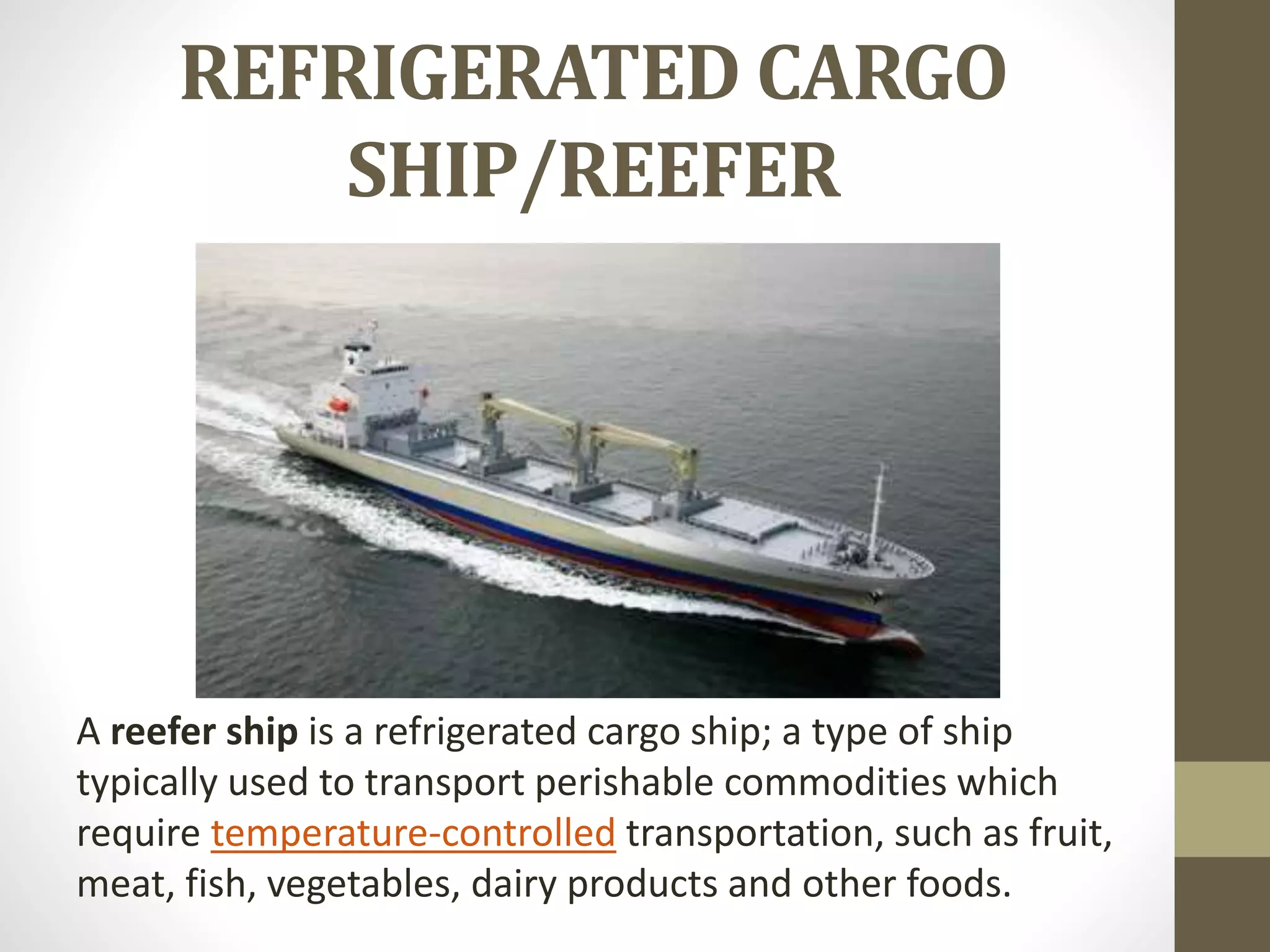
REFRIGERATED CARGO 
SHIP/REEFER 
A reefer ship is a refrigerated cargo ship; a type of ship 
typically used to transport perishable commodities which 
require temperature-controlled transportation, such as fruit, 
meat, fish, vegetables, dairy products and other foods.
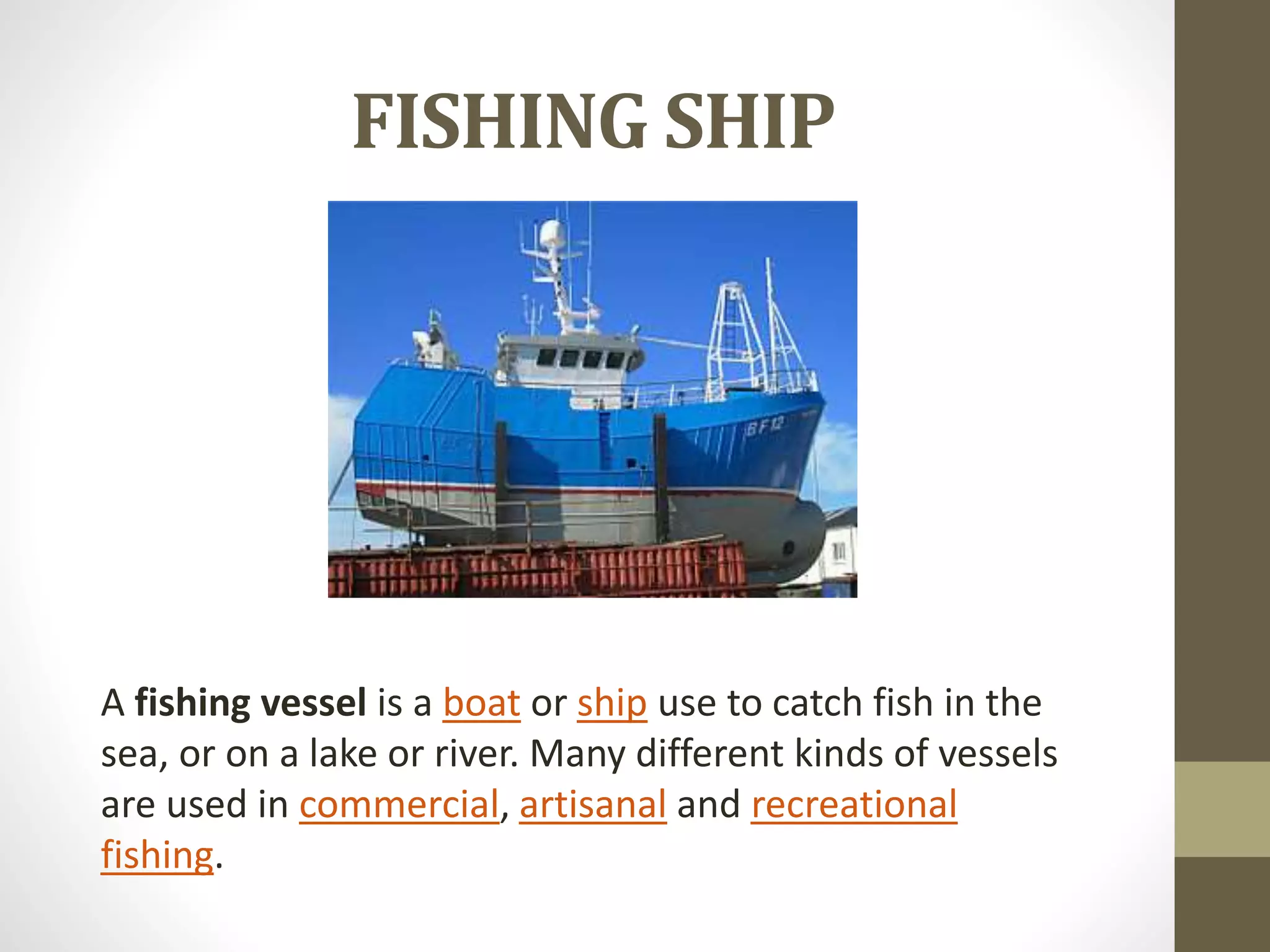
FISHING SHIP 
A fishing vessel is a boat or ship use to catch fish in the 
sea, or on a lake or river. Many different kinds of vessels 
are used in commercial, artisanal and recreational 
fishing.
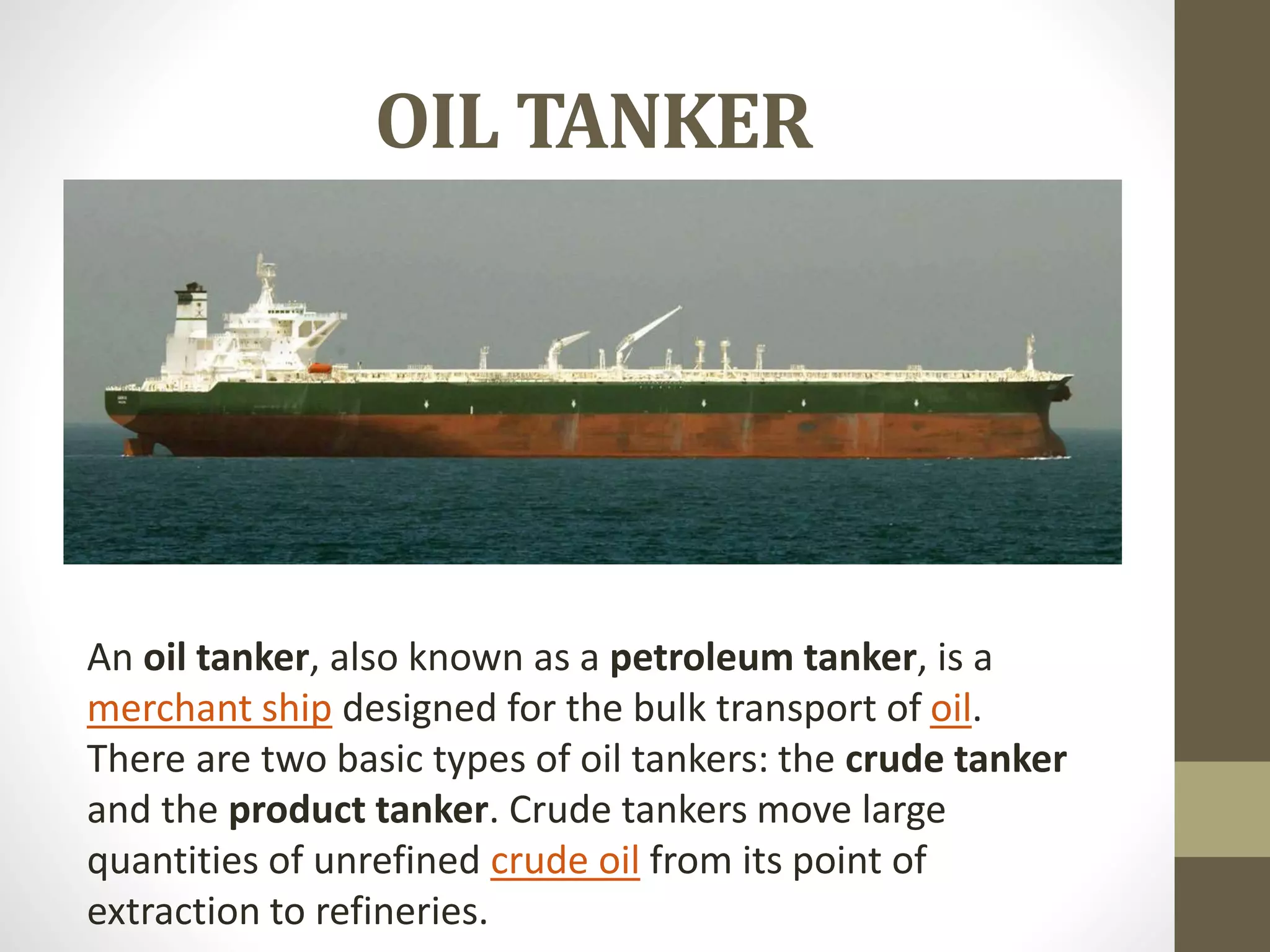
OIL TANKER 
An oil tanker, also known as a petroleum tanker, is a 
merchant ship designed for the bulk transport of oil. 
There are two basic types of oil tankers: the crude tanker 
and the product tanker. Crude tankers move large 
quantities of unrefined crude oil from its point of 
extraction to refineries.
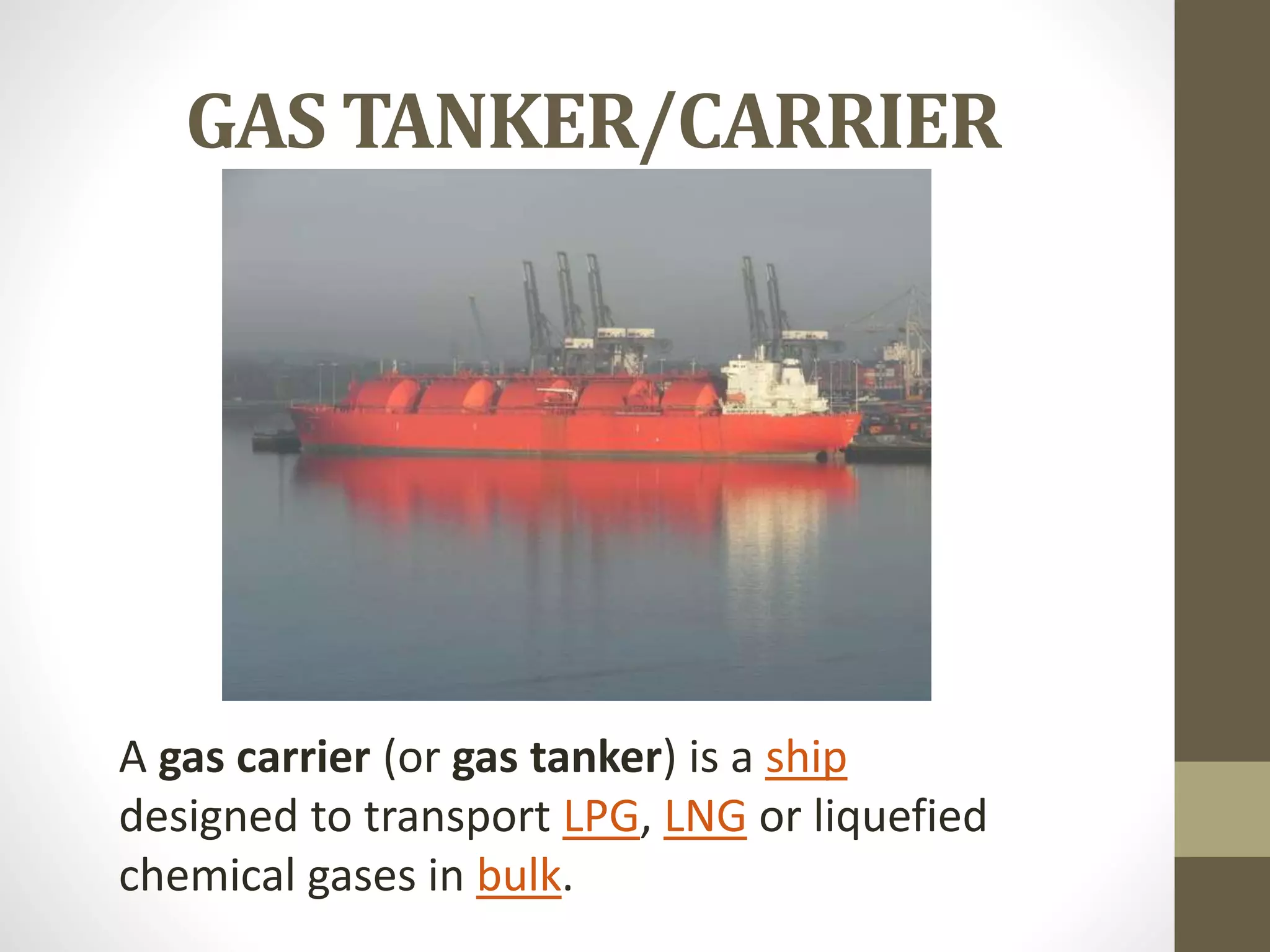
GAS TANKER/CARRIER 
A gas carrier (or gas tanker) is a ship 
designed to transport LPG, LNG or liquefied 
chemical gases in bulk.
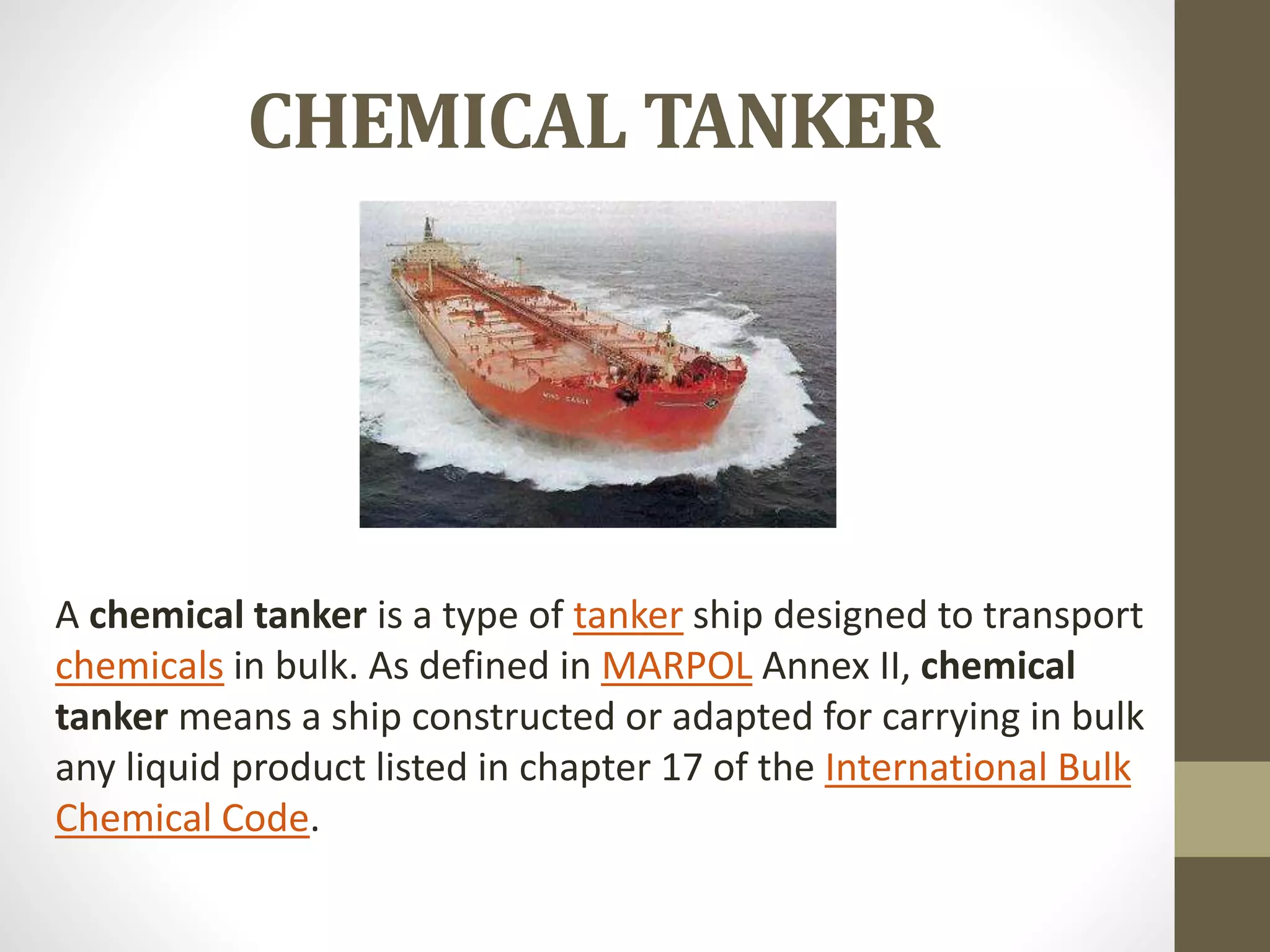
CHEMICAL TANKER 
A chemical tanker is a type of tanker ship designed to transport 
chemicals in bulk. As defined in MARPOL Annex II, chemical 
tanker means a ship constructed or adapted for carrying in bulk 
any liquid product listed in chapter 17 of the International Bulk 
Chemical Code.
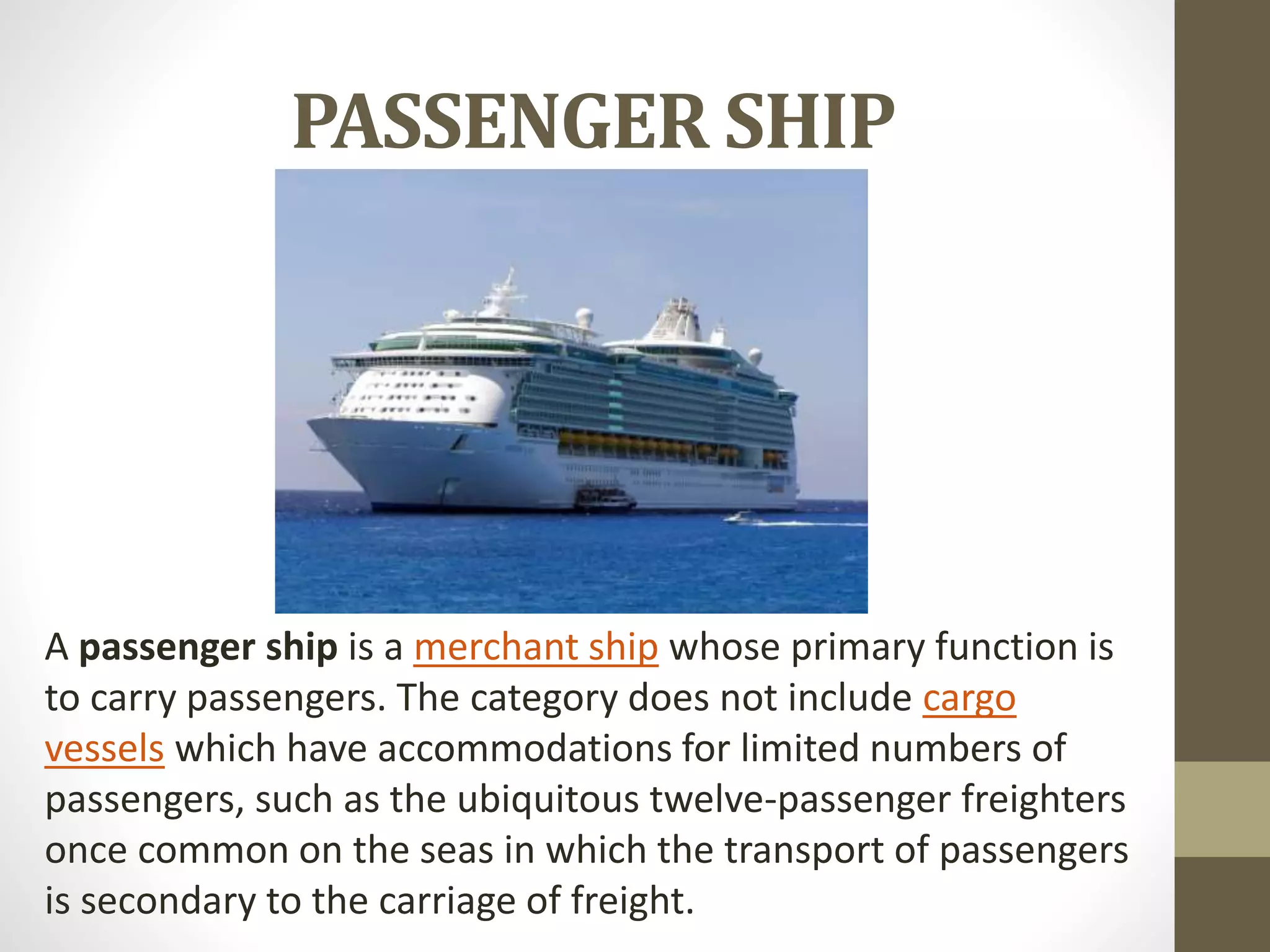
PASSENGER SHIP 
A passenger ship is a merchant ship whose primary function is 
to carry passengers. The category does not include cargo 
vessels which have accommodations for limited numbers of 
passengers, such as the ubiquitous twelve-passenger freighters 
once common on the seas in which the transport of passengers 
is secondary to the carriage of freight.

Types of ships

  • 1.
    TYPES OF SHIPS A ship is a large buoyant watercraft. Ships are generally distinguished from boats based on size, shape and cargo or passenger capacity. Ships are used on lakes, seas, and rivers for a variety of activities, such as the transport of people or goods, fishing, entertainment, public safety, and warfare. Historically, a "ship" was a sailing vessel with at least three square-rigged masts and a full bowsprit.
  • 2.
    Ships and boatshave developed alongside humanity. In armed conflict and in daily life they have become an integral part of modern commercial and military systems. Fishing boats are used by millions of fishermen throughout the world. Military forces operate vessels for combat and to transport and support forces ashore. Commercial vessels, nearly 35,000 in number, carried 7.4 billion tons of cargo in 2007. As of 2011, there are about 104,304 ships with IMO numbers in the world.
  • 3.
    BULK CARRIER Abulk carrier, bulk freighter, or bulker is a merchant ship specially designed to transport unpackaged bulk cargo, such as grains, coal, ore, and cement in its cargo holds.
  • 4.
    CONTAINER CARRIER Containerships are cargo ships that carry all of their load in truck-size intermodal containers, in a technique called containerization. They are a common means of commercial intermodal freight transport and now carry most seagoing non-bulk cargo.
  • 5.
    GENERAL CARGO Shipsused to move packaged merchandise from one location to another. Due to the vast range of cargo materials, these ships are often designed specifically for the cargo which they will carry. Cranes and other heavy equipment needed to move, load and unload cargo are usually on-board. General cargo vessels are vital to international trade.
  • 6.
    VEHICLE CARRIER Vehiclecarriers are multi-deck cargo ships designed to carry new cars and trucks (IHS/Fairplay). The cargo is loaded via ramps.
  • 7.
    LIVESTOCK CARRIER Livestockcarriers are those ships, which specialise exclusively in the transportation of large numbers of live animals together with their requirements for the voyage. (food, water, sawdust bedding, medication, etc.). Voyages on livestock carriers generally last from three days to three to four weeks.
  • 8.
    REFRIGERATED CARGO SHIP/REEFER A reefer ship is a refrigerated cargo ship; a type of ship typically used to transport perishable commodities which require temperature-controlled transportation, such as fruit, meat, fish, vegetables, dairy products and other foods.
  • 9.
    FISHING SHIP Afishing vessel is a boat or ship use to catch fish in the sea, or on a lake or river. Many different kinds of vessels are used in commercial, artisanal and recreational fishing.
  • 10.
    OIL TANKER Anoil tanker, also known as a petroleum tanker, is a merchant ship designed for the bulk transport of oil. There are two basic types of oil tankers: the crude tanker and the product tanker. Crude tankers move large quantities of unrefined crude oil from its point of extraction to refineries.
  • 11.
    GAS TANKER/CARRIER Agas carrier (or gas tanker) is a ship designed to transport LPG, LNG or liquefied chemical gases in bulk.
  • 12.
    CHEMICAL TANKER Achemical tanker is a type of tanker ship designed to transport chemicals in bulk. As defined in MARPOL Annex II, chemical tanker means a ship constructed or adapted for carrying in bulk any liquid product listed in chapter 17 of the International Bulk Chemical Code.
  • 13.
    PASSENGER SHIP Apassenger ship is a merchant ship whose primary function is to carry passengers. The category does not include cargo vessels which have accommodations for limited numbers of passengers, such as the ubiquitous twelve-passenger freighters once common on the seas in which the transport of passengers is secondary to the carriage of freight.