+

Project and Problem
Based Learning
Erica Rodriguez
+

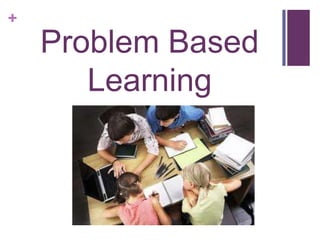
Problem Based
Learning
+

What is it?

 This

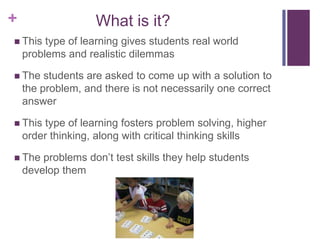
type of learning gives students real world
problems and realistic dilemmas

 The

students are asked to come up with a solution to
the problem, and there is not necessarily one correct
answer

 This

type of learning fosters problem solving, higher
order thinking, along with critical thinking skills

 The

problems don’t test skills they help students
develop them
+

Steps to Problem based instruction
 1.

Present the problem and scenario

 2.

List what is known

 3.

Develop a problem statement

 4.

List what is needed

 5.

List possible outcomes, solutions, or
recommendations

 6.

Present and Support solutions
+

Example


A teacher wants a first grade class to think critically about how
to get a class pet. Their teacher has given them the following
problem:



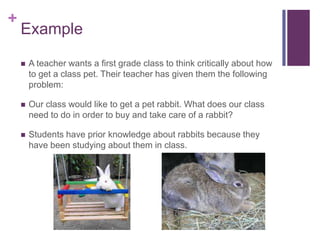
Our class would like to get a pet rabbit. What does our class
need to do in order to buy and take care of a rabbit?



Students have prior knowledge about rabbits because they
have been studying about them in class.
+

Example continued


The students will develop a statement about what they are
going to solve. They may work in groups and so the class will
have several different statements.



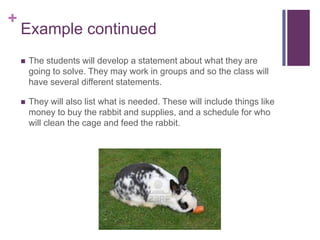
They will also list what is needed. These will include things like
money to buy the rabbit and supplies, and a schedule for who
will clean the cage and feed the rabbit.
+

Example continued


The students will then work together to come up with solutions
for the problem. Some solutions may include; having a bake
sale or car wash to raise money, and creating a calendar where
students rotate who cleans and feeds the rabbit.



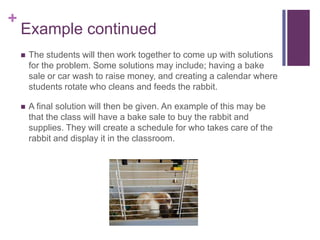
A final solution will then be given. An example of this may be
that the class will have a bake sale to buy the rabbit and
supplies. They will create a schedule for who takes care of the
rabbit and display it in the classroom.
+

Problem Based Learning Works!


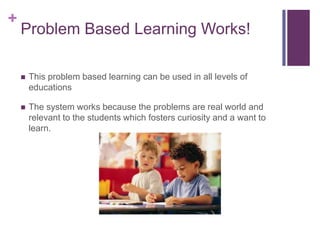
This problem based learning can be used in all levels of
educations



The system works because the problems are real world and
relevant to the students which fosters curiosity and a want to
learn.
+

Project Based
Learning
+

Project Based Learning


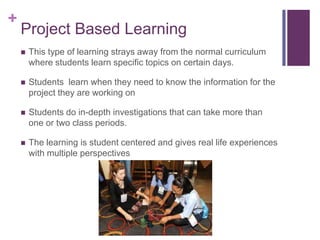
This type of learning strays away from the normal curriculum
where students learn specific topics on certain days.



Students learn when they need to know the information for the
project they are working on



Students do in-depth investigations that can take more than
one or two class periods.



The learning is student centered and gives real life experiences
with multiple perspectives
+

7 aspects to project learning


1.

Learner centered environments

 2.

Collaboration with other students and
professionals

 3.

Curricular content but not a standard curriculum

 4. Authentic

real life tasks

 5.

Multiple modes to express learning

 6.

Emphasis on time management

 7.

Innovative assessment
+

Example


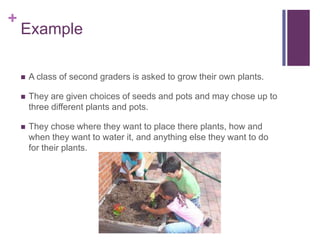
A class of second graders is asked to grow their own plants.



They are given choices of seeds and pots and may chose up to
three different plants and pots.



They chose where they want to place there plants, how and
when they want to water it, and anything else they want to do
for their plants.
+

Example Continued


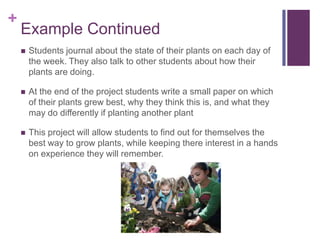
Students journal about the state of their plants on each day of
the week. They also talk to other students about how their
plants are doing.



At the end of the project students write a small paper on which
of their plants grew best, why they think this is, and what they
may do differently if planting another plant



This project will allow students to find out for themselves the
best way to grow plants, while keeping there interest in a hands
on experience they will remember.
+

Both Problem based
and project based
learning can improve
students learning
tremendously!

Problem and Project based learning

  • 1.
    + Project and Problem BasedLearning Erica Rodriguez
  • 2.
  • 3.
    + What is it? This type of learning gives students real world problems and realistic dilemmas  The students are asked to come up with a solution to the problem, and there is not necessarily one correct answer  This type of learning fosters problem solving, higher order thinking, along with critical thinking skills  The problems don’t test skills they help students develop them
  • 4.
    + Steps to Problembased instruction  1. Present the problem and scenario  2. List what is known  3. Develop a problem statement  4. List what is needed  5. List possible outcomes, solutions, or recommendations  6. Present and Support solutions
  • 5.
    + Example  A teacher wantsa first grade class to think critically about how to get a class pet. Their teacher has given them the following problem:  Our class would like to get a pet rabbit. What does our class need to do in order to buy and take care of a rabbit?  Students have prior knowledge about rabbits because they have been studying about them in class.
  • 6.
    + Example continued  The studentswill develop a statement about what they are going to solve. They may work in groups and so the class will have several different statements.  They will also list what is needed. These will include things like money to buy the rabbit and supplies, and a schedule for who will clean the cage and feed the rabbit.
  • 7.
    + Example continued  The studentswill then work together to come up with solutions for the problem. Some solutions may include; having a bake sale or car wash to raise money, and creating a calendar where students rotate who cleans and feeds the rabbit.  A final solution will then be given. An example of this may be that the class will have a bake sale to buy the rabbit and supplies. They will create a schedule for who takes care of the rabbit and display it in the classroom.
  • 8.
    + Problem Based LearningWorks!  This problem based learning can be used in all levels of educations  The system works because the problems are real world and relevant to the students which fosters curiosity and a want to learn.
  • 9.
  • 10.
    + Project Based Learning  Thistype of learning strays away from the normal curriculum where students learn specific topics on certain days.  Students learn when they need to know the information for the project they are working on  Students do in-depth investigations that can take more than one or two class periods.  The learning is student centered and gives real life experiences with multiple perspectives
  • 11.
    + 7 aspects toproject learning  1. Learner centered environments  2. Collaboration with other students and professionals  3. Curricular content but not a standard curriculum  4. Authentic real life tasks  5. Multiple modes to express learning  6. Emphasis on time management  7. Innovative assessment
  • 12.
    + Example  A class ofsecond graders is asked to grow their own plants.  They are given choices of seeds and pots and may chose up to three different plants and pots.  They chose where they want to place there plants, how and when they want to water it, and anything else they want to do for their plants.
  • 13.
    + Example Continued  Students journalabout the state of their plants on each day of the week. They also talk to other students about how their plants are doing.  At the end of the project students write a small paper on which of their plants grew best, why they think this is, and what they may do differently if planting another plant  This project will allow students to find out for themselves the best way to grow plants, while keeping there interest in a hands on experience they will remember.
  • 14.
    + Both Problem based andproject based learning can improve students learning tremendously!