Principles
    of Written
  Communication


Chapter 14
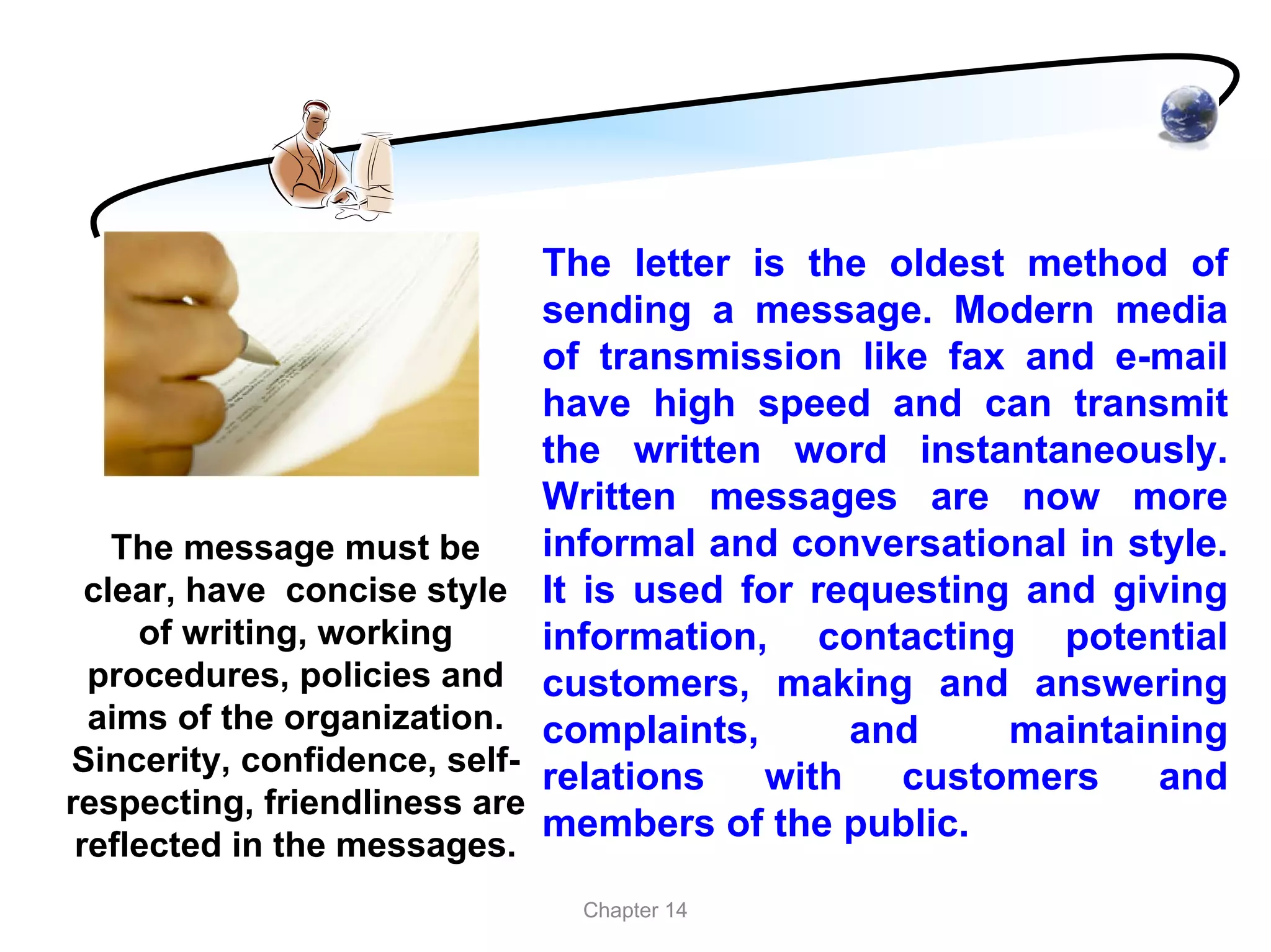
The letter is the oldest method of
                               sending a message. Modern media
                               of transmission like fax and e-mail
                               have high speed and can transmit
                               the written word instantaneously.
                               Written messages are now more
    The message must be        informal and conversational in style.
  clear, have concise style    It is used for requesting and giving
     of writing, working       information, contacting potential
  procedures, policies and     customers, making and answering
  aims of the organization.    complaints,      and     maintaining
Sincerity, confidence, self-
                               relations   with   customers     and
respecting, friendliness are
                               members of the public.
 reflected in the messages.
                                 Chapter 14
Careful planning is the basis of success in
   most tasks. It gives you time to calm any
     emotions, helps to make sure that all
information and idea are included and correct,
   enables to compose the letter in a logical
  order and it separates the two elements of
 communication i.e. planning the content and
 choosing the language/style for presentation.

                     Chapter 14
The main content of the
message should be suitable to
  the reader’s interest and
        convenience


             Chapter 14
While composing a letter consider
the aspects like: language and style,
recipient, how much recipient knows
           and his attitudes

   All these aspects influences the
         recipient’s response

                 Chapter 14
The first and the last paragraphs are important
places. Do not begin by repeating what is said in the
   subject line or end by making a flat and useless
 statement. The opening sentence establishes good
feeling and rapport, and draws a favorable response
   from the reader. Showing interest in the reader’s
  needs and paying attention to his/her feelings and
 desires creates goodwill. If there is no subject line,
 the opening sentence has to indicate the subject of
  the letter, and it may have to refer to any previous
             communication on the subject.
                       Chapter 14
Chapter 14
The last sentence tells what is the next action to be
taken and who is to take it, the writer or the reader;
 wins a favorable response for whatever has been
 said in the letter; a goodwill message is a suitable
ending if the matter has been settled, and no further
    action or communication is to follow. A firm,
persuasive and convincing argument can be spoilt
by a weak ending. A confident and lively ending has
          a better chance of getting action.

                         Chapter 14
The last sentence leaves the final
 impression on the reader’s mind, and can
be used to remind him about the lat date for
 taking action or impressing upon him the
advantage offered or for leaving a pleasant
                  memory.


                   Chapter 14
The main qualities of good
 communication are correctness, clarity,
conciseness and courtesy. Other related
 qualities are completeness, coherence,
compactness, confidence, consideration,
   friendliness, directness and vigor


                 Chapter 14
Correctness depends on completeness.
A letter is complete when it presents all
the ideas and information required for a
            particular situation.

A letter must be correct in every respects


                  Chapter 14
1. In spelling, grammar and use of language :There
   must be consistency in the use of numbers, units
   of measure, technical terms, abbreviations,
   hyphens, grammar, spelling, punctuation and
   capitalizations

2. In appearance and form of layout: Appearance
   depends on placing the parts of layout correctly
   on the letterhead, even spacing between letters,
   words, lines and parts of layouts, and having
   proper margins on all sides
                         Chapter 14
3. In the information it conveys: All dates and days,
   time, numbers and facts must be in agreement,
   There must not be mismatched information

4. In tone, formality and style: The tone must be
   appropriate to the occasion, the content and the
   relationship between the writer and the reader


                        Chapter 14
The message of the letter must be
 clear at the first reading. Clearly
     written messages a void
misunderstanding and save time.
Write to express not to impress.


                Chapter 14
Clarity depends of 5 factors: Simple,
     common everyday words which
 everyone understand; short and simple
 sentences; proper punctuation; giving
definite and concrete details with figures
  and names; logical sequence of ideas


                  Chapter 14
Conciseness means expressing much in a
   few words, keeping to the point without
 sacrificing the clarity or courtesy. It means
  every words count. It can be achieved by
  leaving unnecessary modifiers, reducing
unimportant ideas to phrase or single words
and making sure that only the necessary and
         relevant details are included.

                    Chapter 14
Courtesy is consideration for other people’s feelings.
  In a letter, the style the manner and the choice of
words reflect the courtesy of the writer. The rule for it
  are: use the courtesy words, express appropriate
  feeling according to the situation, make the other
 person feel comfortable, be attentive and prompt in
  responding, let the tone, the choice of words and
 style of the message reflect your consideration for
         the feelings and needs of the reader.

                         Chapter 14
Presenting ideas, suggestions, proposals in
  such a way that the reader sees how it is
advantageous to himself is called the “You”
attitude . ? You must show understanding of
   the reader’s needs and desires. A letter
usually proposes that the reader should take
                  an action

                    Chapter 14
Chapter 14
The main point and emphasis should be on the
advantage to take the action you are suggesting in
  the letter. In every communication, there are two
   points of view and therefore, two sets of ideas:
    one that interests the recipients and one that
 interests the sender; messages can be conveyed
         with the recipient’s interest in mind.


                       Chapter 14
Appeal to the common human needs and
desires like desire for security, status, leisure,
  comfort, need for sympathy, courtesy and
                consideration.

The purpose of a letter is to create a response.


                       Chapter 14
A sales letter may convince an
       executive of the value of
 computerizing the office work, but he
or she may feel emotionally inclined to
        go to a competing firm


                  Chapter 14

Principles of written communication

  • 1.
    Principles of Written Communication Chapter 14
  • 2.
    The letter isthe oldest method of sending a message. Modern media of transmission like fax and e-mail have high speed and can transmit the written word instantaneously. Written messages are now more The message must be informal and conversational in style. clear, have concise style It is used for requesting and giving of writing, working information, contacting potential procedures, policies and customers, making and answering aims of the organization. complaints, and maintaining Sincerity, confidence, self- relations with customers and respecting, friendliness are members of the public. reflected in the messages. Chapter 14
  • 3.
    Careful planning isthe basis of success in most tasks. It gives you time to calm any emotions, helps to make sure that all information and idea are included and correct, enables to compose the letter in a logical order and it separates the two elements of communication i.e. planning the content and choosing the language/style for presentation. Chapter 14
  • 4.
    The main contentof the message should be suitable to the reader’s interest and convenience Chapter 14
  • 5.
    While composing aletter consider the aspects like: language and style, recipient, how much recipient knows and his attitudes All these aspects influences the recipient’s response Chapter 14
  • 6.
    The first andthe last paragraphs are important places. Do not begin by repeating what is said in the subject line or end by making a flat and useless statement. The opening sentence establishes good feeling and rapport, and draws a favorable response from the reader. Showing interest in the reader’s needs and paying attention to his/her feelings and desires creates goodwill. If there is no subject line, the opening sentence has to indicate the subject of the letter, and it may have to refer to any previous communication on the subject. Chapter 14
  • 7.
  • 8.
    The last sentencetells what is the next action to be taken and who is to take it, the writer or the reader; wins a favorable response for whatever has been said in the letter; a goodwill message is a suitable ending if the matter has been settled, and no further action or communication is to follow. A firm, persuasive and convincing argument can be spoilt by a weak ending. A confident and lively ending has a better chance of getting action. Chapter 14
  • 9.
    The last sentenceleaves the final impression on the reader’s mind, and can be used to remind him about the lat date for taking action or impressing upon him the advantage offered or for leaving a pleasant memory. Chapter 14
  • 10.
    The main qualitiesof good communication are correctness, clarity, conciseness and courtesy. Other related qualities are completeness, coherence, compactness, confidence, consideration, friendliness, directness and vigor Chapter 14
  • 11.
    Correctness depends oncompleteness. A letter is complete when it presents all the ideas and information required for a particular situation. A letter must be correct in every respects Chapter 14
  • 12.
    1. In spelling,grammar and use of language :There must be consistency in the use of numbers, units of measure, technical terms, abbreviations, hyphens, grammar, spelling, punctuation and capitalizations 2. In appearance and form of layout: Appearance depends on placing the parts of layout correctly on the letterhead, even spacing between letters, words, lines and parts of layouts, and having proper margins on all sides Chapter 14
  • 13.
    3. In theinformation it conveys: All dates and days, time, numbers and facts must be in agreement, There must not be mismatched information 4. In tone, formality and style: The tone must be appropriate to the occasion, the content and the relationship between the writer and the reader Chapter 14
  • 14.
    The message ofthe letter must be clear at the first reading. Clearly written messages a void misunderstanding and save time. Write to express not to impress. Chapter 14
  • 15.
    Clarity depends of5 factors: Simple, common everyday words which everyone understand; short and simple sentences; proper punctuation; giving definite and concrete details with figures and names; logical sequence of ideas Chapter 14
  • 16.
    Conciseness means expressingmuch in a few words, keeping to the point without sacrificing the clarity or courtesy. It means every words count. It can be achieved by leaving unnecessary modifiers, reducing unimportant ideas to phrase or single words and making sure that only the necessary and relevant details are included. Chapter 14
  • 17.
    Courtesy is considerationfor other people’s feelings. In a letter, the style the manner and the choice of words reflect the courtesy of the writer. The rule for it are: use the courtesy words, express appropriate feeling according to the situation, make the other person feel comfortable, be attentive and prompt in responding, let the tone, the choice of words and style of the message reflect your consideration for the feelings and needs of the reader. Chapter 14
  • 18.
    Presenting ideas, suggestions,proposals in such a way that the reader sees how it is advantageous to himself is called the “You” attitude . ? You must show understanding of the reader’s needs and desires. A letter usually proposes that the reader should take an action Chapter 14
  • 19.
  • 20.
    The main pointand emphasis should be on the advantage to take the action you are suggesting in the letter. In every communication, there are two points of view and therefore, two sets of ideas: one that interests the recipients and one that interests the sender; messages can be conveyed with the recipient’s interest in mind. Chapter 14
  • 21.
    Appeal to thecommon human needs and desires like desire for security, status, leisure, comfort, need for sympathy, courtesy and consideration. The purpose of a letter is to create a response. Chapter 14
  • 22.
    A sales lettermay convince an executive of the value of computerizing the office work, but he or she may feel emotionally inclined to go to a competing firm Chapter 14