Techniques to
    Overcome
  Communication
     Barriers


Chapter 13
Chapter 13
The communication media, the channels,
communication environment and policy,
and regular dissemination of information
  and motivational messages are the
      elements of communication.


                  Chapter 13
The media of internal communication
     are within the control of the
  administration. Notice board and
bulletin board are effective when they
are placed at easily visible locations,
up-to-date, well organized and neatly
laid out, short concise, and in simple
               language

                 Chapter 13
Chapter 13
Chapter 13
Office procedures have to be laid down to ensure that
messages and information reach concerned persons
      at the proper time. Meetings of task teams,
 departments, and all staff are needed to ensure that
  information and motivational messages move and
             reach their intended audience.
   Absence of human touch and contact can create
    emotional barriers between people and groups.
                        Chapter 13
The channel of information,
 that is “who received what
information through whom”
  is an important aspect of
       communication

           Chapter 13
Information and messages must go
through proper channels and in time.
    Communication can be passed
    downward in a meeting so that
 everyone receives it at the same time
       in the same environment
                 Chapter 13
Suggestions schemes are meant to overcome
the status block and loss of information that
       occur in upward movement of
 communication. Open door policy helps in
   developing status block. The system of
 internal communication has to be checked
  constantly to make sure that there are no
   undue delays in conveying information
                    Chapter 13
The administration needs a considered
  and well implemented policy about
    keeping its members informed.
   Information given in planned and
  systematic manner overcomes the
     problem of grapevine rumors
                 Chapter 13
The competence and state of health of the members of the
organization affect communication among them. Training
      and welfare centres are among the efforts that
organizations make for maintaining a healthy atmosphere.
Arranging for training of all staff in the skills of speaking,
     writing, reading and listening is an aspect of the
 administration’s policy about communication efficiency.
Many organizations provide medical aid, gymnasiums and
  recreation for the staff in an effort to keep down stress
                             levels

                            Chapter 13
Individuals have to become aware that their communication skills
 need improvement and that their skills can be improved mainly by
    their own conscious effort. Emotions play an important role in
communication. Awareness and effort to avoid them can help a good
  deal. Most people make efforts to see other’s point of view and to
  become sensitive to the thoughts and feelings of others. Training
 and careful practice in writing and can enhance the ability to create
 and send effective messages. Semantic and language barriers can
 be overcome by using words having clear meaning by and also by
using visual aid whenever possible. The most important skill needed
       is listening which requires careful and consistent effort.


                               Chapter 13
Training for good listening is largely personal
 responsibility and can be done by personal effort.
Your listening reflects your basic attitude to people
   rather than just skills. Respect for people, deep
  inside, willing to share their ideas and views and
 being accepting, non-critical, non-judgmental and
    non-moralizing about what the other person is
   saying give other person the freedom to speak
                      without fear

                       Chapter 13
Chapter 13
Arrange for feedback by giving
  adequate time and opportunity by
 inviting question from the receiver,
  asking questions to find out what
  has been understood, making the
listeners summaries what they have
             understood
                Chapter 13
An open communication climate has to
  be created in order to gain feedback
from sub ordinates. Listening skill is a
very important requirement for getting
  feedback. Be alert to see non-verbal
     feedback which is often given
unconsciously and indicates emotional
                reaction
                 Chapter 13
Skill in giving feedback can make the appraisal interview
 less stressful for both the appraiser and the appraisee.
    Correcting and training subordinates is a part of a
manager’s task; ability to give feedback is a valuable skill
                       for managers.


                          Chapter 13
The guidelines to express your response are: give
  feedback immediately or soon after the event; give
feedback in a positive manner; be specific, not general
or vague; be descriptive, not evaluative; give feedback
 on what the other person said and did; give feedback
 only on those aspects which the person can con troll
 and correct; restrict feedback to one or two important
 points at a time; be sure of your own motive in giving
                         feedback.


                        Chapter 13
You need to able to receive and accept
feedback without feeling threatened.
Seek and receive feedback with a
genuine desire to improve; be non-
defensive; guard against over-reacting;
seek clarification and ask for specific
instances; think over the received
feedback. It is useful for everyone to
develop feedback skills; it improves inter-
personal relationships and improves
communication in the organization.
                  Chapter 13
You need to able to receive and accept feedback
    without feeling threatened. Seek and receive
feedback with a genuine desire to improve; be non-
    defensive; guard against over-reacting; seek
  clarification and ask for specific instances; think
     over the received feedback. It is useful for
  everyone to develop feedback skills; it improves
      inter-personal relationships and improves
          communication in the organization.

                       Chapter 13
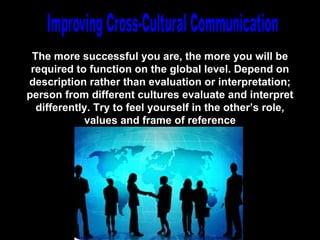
The more successful you are, the more you will be
 required to function on the global level. Depend on
description rather than evaluation or interpretation;
person from different cultures evaluate and interpret
  differently. Try to feel yourself in the other’s role,
            values and frame of reference


                         Chapter 13
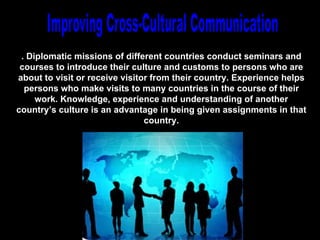
. Diplomatic missions of different countries conduct seminars and
 courses to introduce their culture and customs to persons who are
about to visit or receive visitor from their country. Experience helps
  persons who make visits to many countries in the course of their
     work. Knowledge, experience and understanding of another
country’s culture is an advantage in being given assignments in that
                                country.


                               Chapter 13

Techniques to overcome communication barriers

  • 1.
    Techniques to Overcome Communication Barriers Chapter 13
  • 2.
  • 3.
    The communication media,the channels, communication environment and policy, and regular dissemination of information and motivational messages are the elements of communication. Chapter 13
  • 4.
    The media ofinternal communication are within the control of the administration. Notice board and bulletin board are effective when they are placed at easily visible locations, up-to-date, well organized and neatly laid out, short concise, and in simple language Chapter 13
  • 5.
  • 6.
  • 7.
    Office procedures haveto be laid down to ensure that messages and information reach concerned persons at the proper time. Meetings of task teams, departments, and all staff are needed to ensure that information and motivational messages move and reach their intended audience. Absence of human touch and contact can create emotional barriers between people and groups. Chapter 13
  • 8.
    The channel ofinformation, that is “who received what information through whom” is an important aspect of communication Chapter 13
  • 9.
    Information and messagesmust go through proper channels and in time. Communication can be passed downward in a meeting so that everyone receives it at the same time in the same environment Chapter 13
  • 10.
    Suggestions schemes aremeant to overcome the status block and loss of information that occur in upward movement of communication. Open door policy helps in developing status block. The system of internal communication has to be checked constantly to make sure that there are no undue delays in conveying information Chapter 13
  • 11.
    The administration needsa considered and well implemented policy about keeping its members informed. Information given in planned and systematic manner overcomes the problem of grapevine rumors Chapter 13
  • 12.
    The competence andstate of health of the members of the organization affect communication among them. Training and welfare centres are among the efforts that organizations make for maintaining a healthy atmosphere. Arranging for training of all staff in the skills of speaking, writing, reading and listening is an aspect of the administration’s policy about communication efficiency. Many organizations provide medical aid, gymnasiums and recreation for the staff in an effort to keep down stress levels Chapter 13
  • 13.
    Individuals have tobecome aware that their communication skills need improvement and that their skills can be improved mainly by their own conscious effort. Emotions play an important role in communication. Awareness and effort to avoid them can help a good deal. Most people make efforts to see other’s point of view and to become sensitive to the thoughts and feelings of others. Training and careful practice in writing and can enhance the ability to create and send effective messages. Semantic and language barriers can be overcome by using words having clear meaning by and also by using visual aid whenever possible. The most important skill needed is listening which requires careful and consistent effort. Chapter 13
  • 14.
    Training for goodlistening is largely personal responsibility and can be done by personal effort. Your listening reflects your basic attitude to people rather than just skills. Respect for people, deep inside, willing to share their ideas and views and being accepting, non-critical, non-judgmental and non-moralizing about what the other person is saying give other person the freedom to speak without fear Chapter 13
  • 15.
  • 16.
    Arrange for feedbackby giving adequate time and opportunity by inviting question from the receiver, asking questions to find out what has been understood, making the listeners summaries what they have understood Chapter 13
  • 17.
    An open communicationclimate has to be created in order to gain feedback from sub ordinates. Listening skill is a very important requirement for getting feedback. Be alert to see non-verbal feedback which is often given unconsciously and indicates emotional reaction Chapter 13
  • 18.
    Skill in givingfeedback can make the appraisal interview less stressful for both the appraiser and the appraisee. Correcting and training subordinates is a part of a manager’s task; ability to give feedback is a valuable skill for managers. Chapter 13
  • 19.
    The guidelines toexpress your response are: give feedback immediately or soon after the event; give feedback in a positive manner; be specific, not general or vague; be descriptive, not evaluative; give feedback on what the other person said and did; give feedback only on those aspects which the person can con troll and correct; restrict feedback to one or two important points at a time; be sure of your own motive in giving feedback. Chapter 13
  • 20.
    You need toable to receive and accept feedback without feeling threatened. Seek and receive feedback with a genuine desire to improve; be non- defensive; guard against over-reacting; seek clarification and ask for specific instances; think over the received feedback. It is useful for everyone to develop feedback skills; it improves inter- personal relationships and improves communication in the organization. Chapter 13
  • 21.
    You need toable to receive and accept feedback without feeling threatened. Seek and receive feedback with a genuine desire to improve; be non- defensive; guard against over-reacting; seek clarification and ask for specific instances; think over the received feedback. It is useful for everyone to develop feedback skills; it improves inter-personal relationships and improves communication in the organization. Chapter 13
  • 22.
    The more successfulyou are, the more you will be required to function on the global level. Depend on description rather than evaluation or interpretation; person from different cultures evaluate and interpret differently. Try to feel yourself in the other’s role, values and frame of reference Chapter 13
  • 23.
    . Diplomatic missionsof different countries conduct seminars and courses to introduce their culture and customs to persons who are about to visit or receive visitor from their country. Experience helps persons who make visits to many countries in the course of their work. Knowledge, experience and understanding of another country’s culture is an advantage in being given assignments in that country. Chapter 13