PRINCIPLES OF DEVELOPMENT
Presented By:
Sadia Zangejo
B.Ed 1.5
Roll # 64
Assigned by: Dr. Amjad Ali Arain
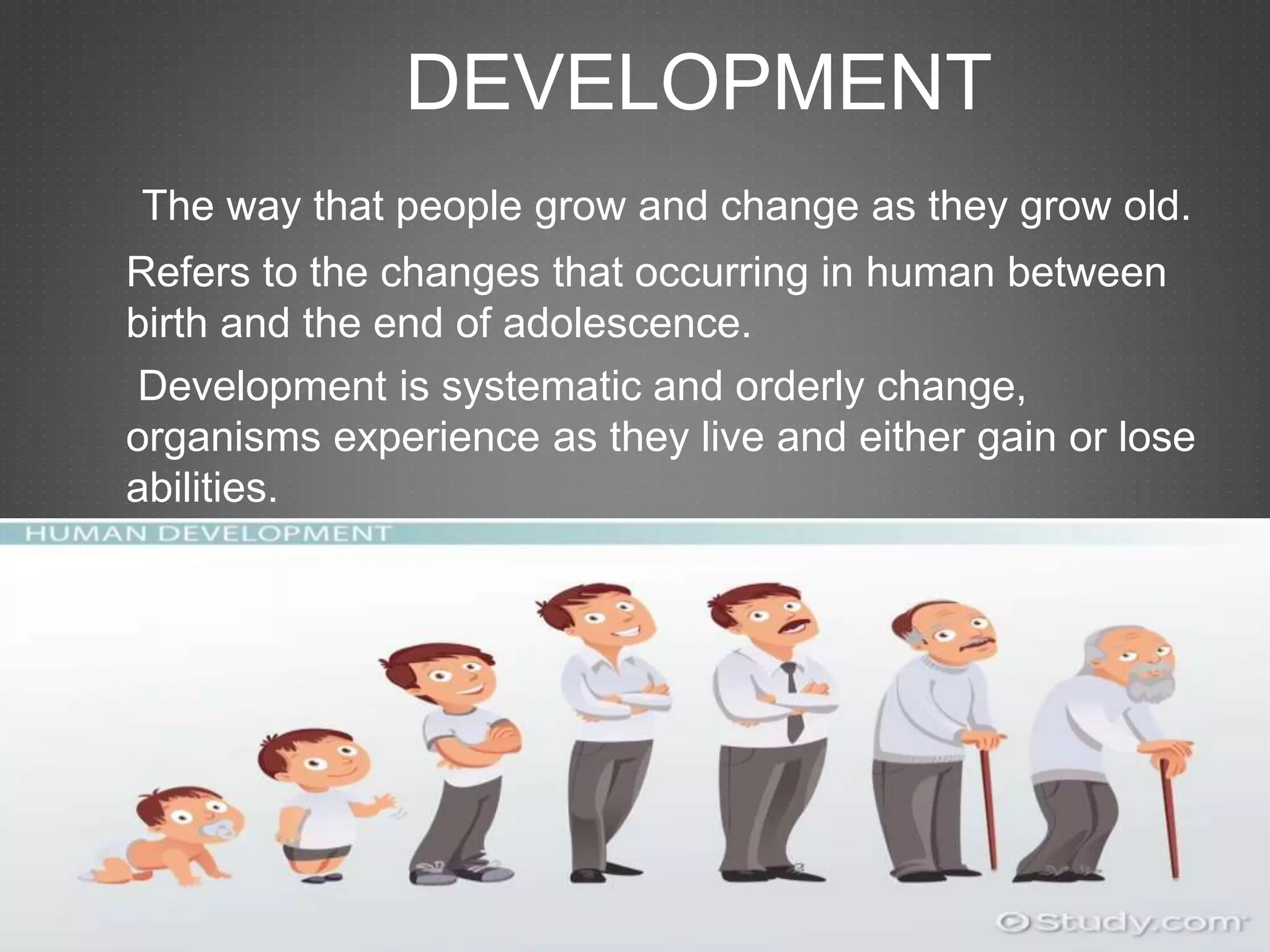
DEVELOPMENT
The way that people grow and change as they grow old.
Refers to the changes that occurring in human between
birth and the end of adolescence.
Development is systematic and orderly change,
organisms experience as they live and either gain or lose
abilities.
PRINCIPLES OF DEVELOPMENT
Development proceeds from general to
specific.
Development proceeds at an individual
rate.
Development is relatively orderly.
Development is a lifelong process.
Development is interrelated.
GENERAL TO SPECIFIC
Development proceeds from general to
specific. In all areas of development, general
activities always precedes specific activity.
 For example : Children at first are able hold
the big things by using both arms, In the next
part able to hold things in a single hand, then
only able to pick small objects like peas,
cereals etc.
INDIVIDUAL RATE
The tempo of development is not even.
Individuals differ in the rate of and
development.
Development does not occur at an even
pace.
ORDERLY SEQUENCE
Developments occurs in a
sequence of steps.
Predictable steps consistently follow
one after another.
LIFELONG
It does not end in adulthood
No developmental stage dominates
development.
Development starts from conception till
death.
INTERRELATED
This states that three types of
development that takes place in the
individual that are : social, mental
and emotional.
These three are interrelated ; one
doesn’t exist without other.
Submitted To
Dr. Amjad Ali Arain
Faculty Of Education
University Of Sindh
Principles of development

Principles of development

  • 1.
    PRINCIPLES OF DEVELOPMENT PresentedBy: Sadia Zangejo B.Ed 1.5 Roll # 64 Assigned by: Dr. Amjad Ali Arain
  • 2.
    DEVELOPMENT The way thatpeople grow and change as they grow old. Refers to the changes that occurring in human between birth and the end of adolescence. Development is systematic and orderly change, organisms experience as they live and either gain or lose abilities.
  • 3.
    PRINCIPLES OF DEVELOPMENT Developmentproceeds from general to specific. Development proceeds at an individual rate. Development is relatively orderly. Development is a lifelong process. Development is interrelated.
  • 4.
    GENERAL TO SPECIFIC Developmentproceeds from general to specific. In all areas of development, general activities always precedes specific activity.  For example : Children at first are able hold the big things by using both arms, In the next part able to hold things in a single hand, then only able to pick small objects like peas, cereals etc.
  • 5.
    INDIVIDUAL RATE The tempoof development is not even. Individuals differ in the rate of and development. Development does not occur at an even pace.
  • 6.
    ORDERLY SEQUENCE Developments occursin a sequence of steps. Predictable steps consistently follow one after another.
  • 7.
    LIFELONG It does notend in adulthood No developmental stage dominates development. Development starts from conception till death.
  • 8.
    INTERRELATED This states thatthree types of development that takes place in the individual that are : social, mental and emotional. These three are interrelated ; one doesn’t exist without other.
  • 9.
    Submitted To Dr. AmjadAli Arain Faculty Of Education University Of Sindh