

Primary
Trauma Survey
Aries Glenn B. Galao, BSN, RN
AIRWAY MANAGEMENT AND
CERVICAL SPINE
IMMOBILIZATION
• Open airway using the jaw-thrust
  method.

• Assess airway for compromise
  and/or obstruction

• Suction nasal/oral pharynx to clear
  blood, secretions, or debris
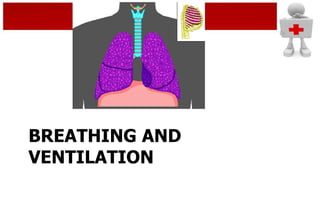
BREATHING AND
VENTILATION
• Assess respirations for:
  – Rate, depth, quality, effort

• Inspect and palpate chest
• Auscultate lung fields for diminished
  or absent breath sounds if
  ventilation is abnormal
• Manually ventilate with BVM if
  breathing is absent or inadequate
CIRCULATION AND
HEMORRHAGE CONTROL
• Assess pulse for:
  – Presence, quality, regularity

• Begin chest compression if no pulse
  can be detected
• Assess:
  – Skin color, temperature, moisture,
    capillary refill

• Control hemorrhage with direct
  pressure
DISABILITY
• Determine and establish a baseline
  GCS (Glasgow Coma Scale) Score
  – May use AVPU


• Assess pupils
  – PERRLA (Pupils Equal and Round,
    Reactive to Light and Accomodation)
EXPOSE/ENVIRONMENT
• Remove clothing

• Assess entire patient for injury and
  hemorrhage

• Maintain body temperature by
  keeping the patient covered
• Log roll to inspect and palpate
  posterior surfaces

• Immobilize entire body
  – Use a c-spine collar and long board
SPECIAL CONSIDERATIONS
IV Fluids and Blood
• LR is the fluid of choice in trauma
  patients
• CAUTION: LR contains calcium which
  causes donor blood to clot in the IV
  tubing
• If a blood transfusion is likely, then
  NS is the fluid of choice
Pregnancy
• Cervical spine immobilization

  – Pregnant women (>24wk) should be
    immobilized in the left lateral position
    if possible to avoid compression of the
    vena cava, which causes supine
    hypotension
MECHANISMS OF INJURY
Motor Vehicle Accidents (MVA)
 • Direction of impact
 • Speed at impact
 • Condition of vehicle
 • Use of seatbelts or airbags
 • Ejection from vehicle
 • Was any other passenger from the same vehicle
   killed
 • Delayed transport due to extrication from vehicle
 • Chest or abdominal bruising from steering wheel
   or seatbelt
• Falls
  – From what height
  – Onto what type of surface

• Penetrating Trauma
  – Weapon
  – Site and depth of injury
  – Underlying organs
  – Weapon-patient distance
  – Caliber and velocity of bullet
• Burns
  – Degree of burns
  – % total body surface area (TBSA)
  – Associated trauma
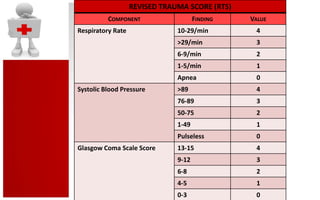
REVISED TRAUMA SCORE (RTS)
          COMPONENT                   FINDING   VALUE
Respiratory Rate               10-29/min         4
                               >29/min           3
                               6-9/min           2
                               1-5/min           1
                               Apnea             0
Systolic Blood Pressure        >89               4
                               76-89             3
                               50-75             2
                               1-49              1
                               Pulseless         0
Glasgow Coma Scale Score       13-15             4
                               9-12              3
                               6-8               2
                               4-5               1
                               0-3               0
Thank You!

Primary trauma survey

  • 1.
  • 2.
    AIRWAY MANAGEMENT AND CERVICALSPINE IMMOBILIZATION
  • 3.
    • Open airwayusing the jaw-thrust method. • Assess airway for compromise and/or obstruction • Suction nasal/oral pharynx to clear blood, secretions, or debris
  • 4.
  • 5.
    • Assess respirationsfor: – Rate, depth, quality, effort • Inspect and palpate chest • Auscultate lung fields for diminished or absent breath sounds if ventilation is abnormal • Manually ventilate with BVM if breathing is absent or inadequate
  • 6.
  • 7.
    • Assess pulsefor: – Presence, quality, regularity • Begin chest compression if no pulse can be detected • Assess: – Skin color, temperature, moisture, capillary refill • Control hemorrhage with direct pressure
  • 8.
  • 9.
    • Determine andestablish a baseline GCS (Glasgow Coma Scale) Score – May use AVPU • Assess pupils – PERRLA (Pupils Equal and Round, Reactive to Light and Accomodation)
  • 10.
  • 11.
    • Remove clothing •Assess entire patient for injury and hemorrhage • Maintain body temperature by keeping the patient covered
  • 12.
    • Log rollto inspect and palpate posterior surfaces • Immobilize entire body – Use a c-spine collar and long board
  • 13.
  • 14.
    IV Fluids andBlood • LR is the fluid of choice in trauma patients • CAUTION: LR contains calcium which causes donor blood to clot in the IV tubing • If a blood transfusion is likely, then NS is the fluid of choice
  • 15.
    Pregnancy • Cervical spineimmobilization – Pregnant women (>24wk) should be immobilized in the left lateral position if possible to avoid compression of the vena cava, which causes supine hypotension
  • 16.
  • 17.
    Motor Vehicle Accidents(MVA) • Direction of impact • Speed at impact • Condition of vehicle • Use of seatbelts or airbags • Ejection from vehicle • Was any other passenger from the same vehicle killed • Delayed transport due to extrication from vehicle • Chest or abdominal bruising from steering wheel or seatbelt
  • 18.
    • Falls – From what height – Onto what type of surface • Penetrating Trauma – Weapon – Site and depth of injury – Underlying organs – Weapon-patient distance – Caliber and velocity of bullet
  • 19.
    • Burns – Degree of burns – % total body surface area (TBSA) – Associated trauma
  • 20.
    REVISED TRAUMA SCORE(RTS) COMPONENT FINDING VALUE Respiratory Rate 10-29/min 4 >29/min 3 6-9/min 2 1-5/min 1 Apnea 0 Systolic Blood Pressure >89 4 76-89 3 50-75 2 1-49 1 Pulseless 0 Glasgow Coma Scale Score 13-15 4 9-12 3 6-8 2 4-5 1 0-3 0
  • 21.