Downloaded 24 times
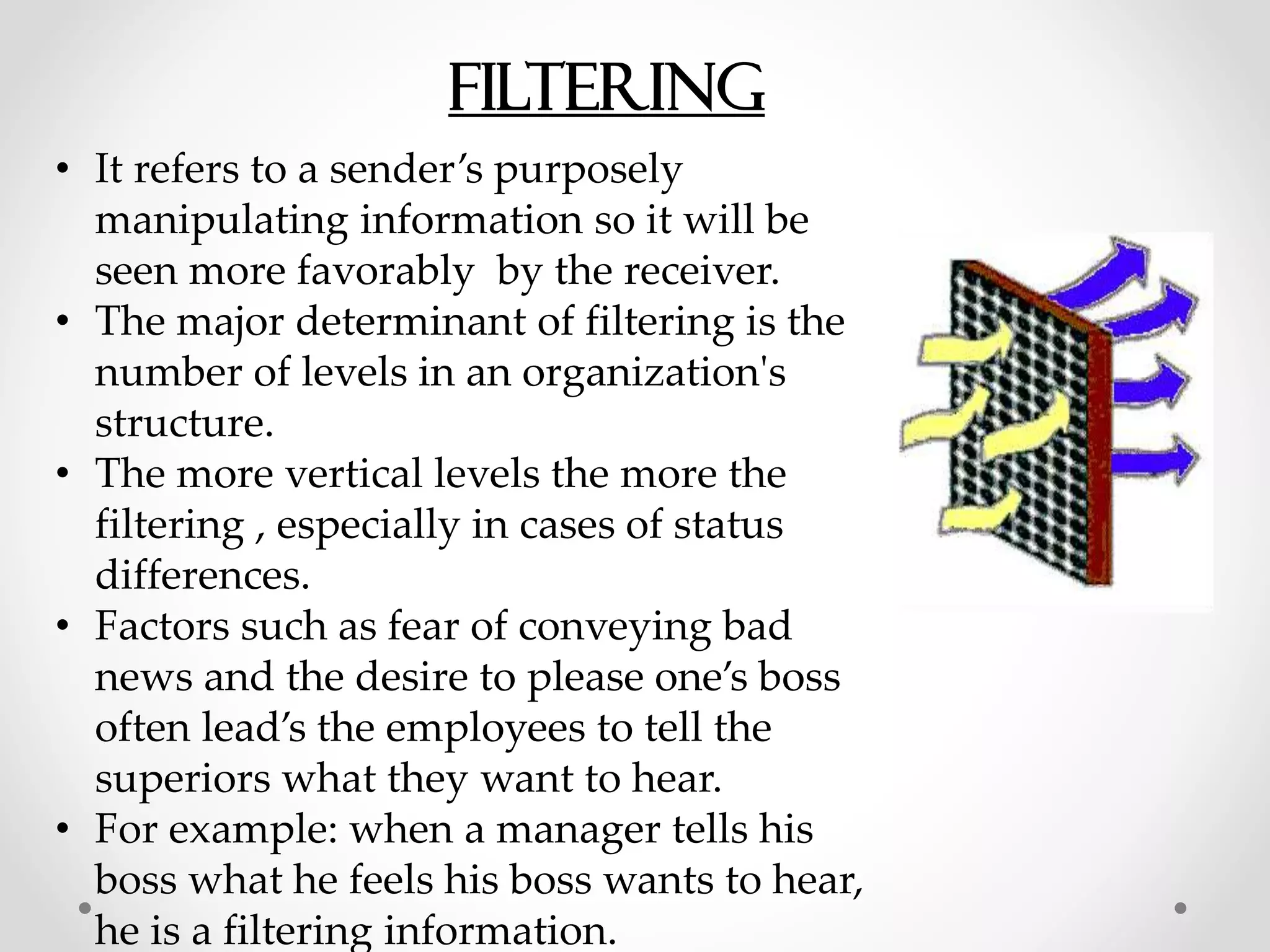
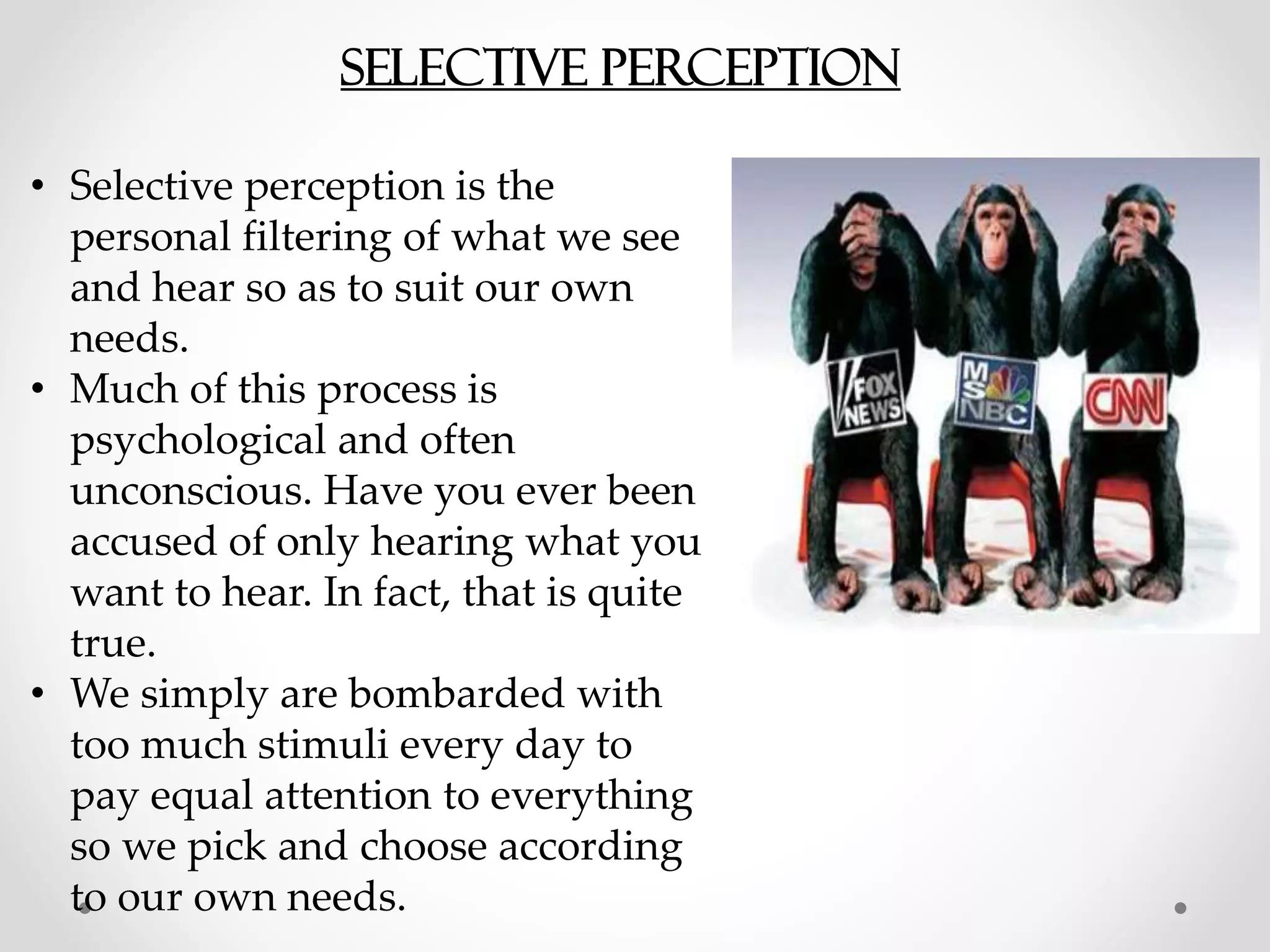
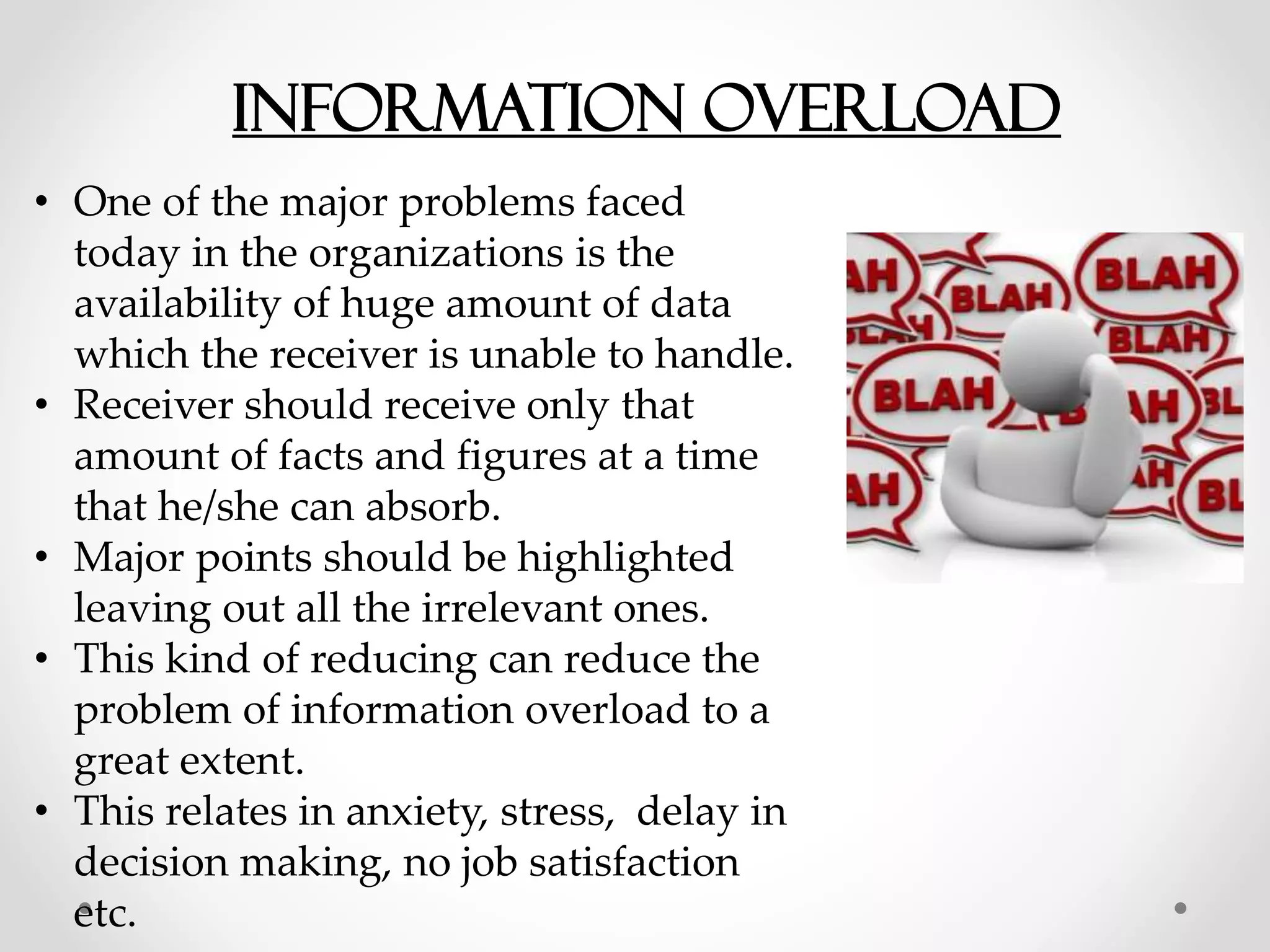
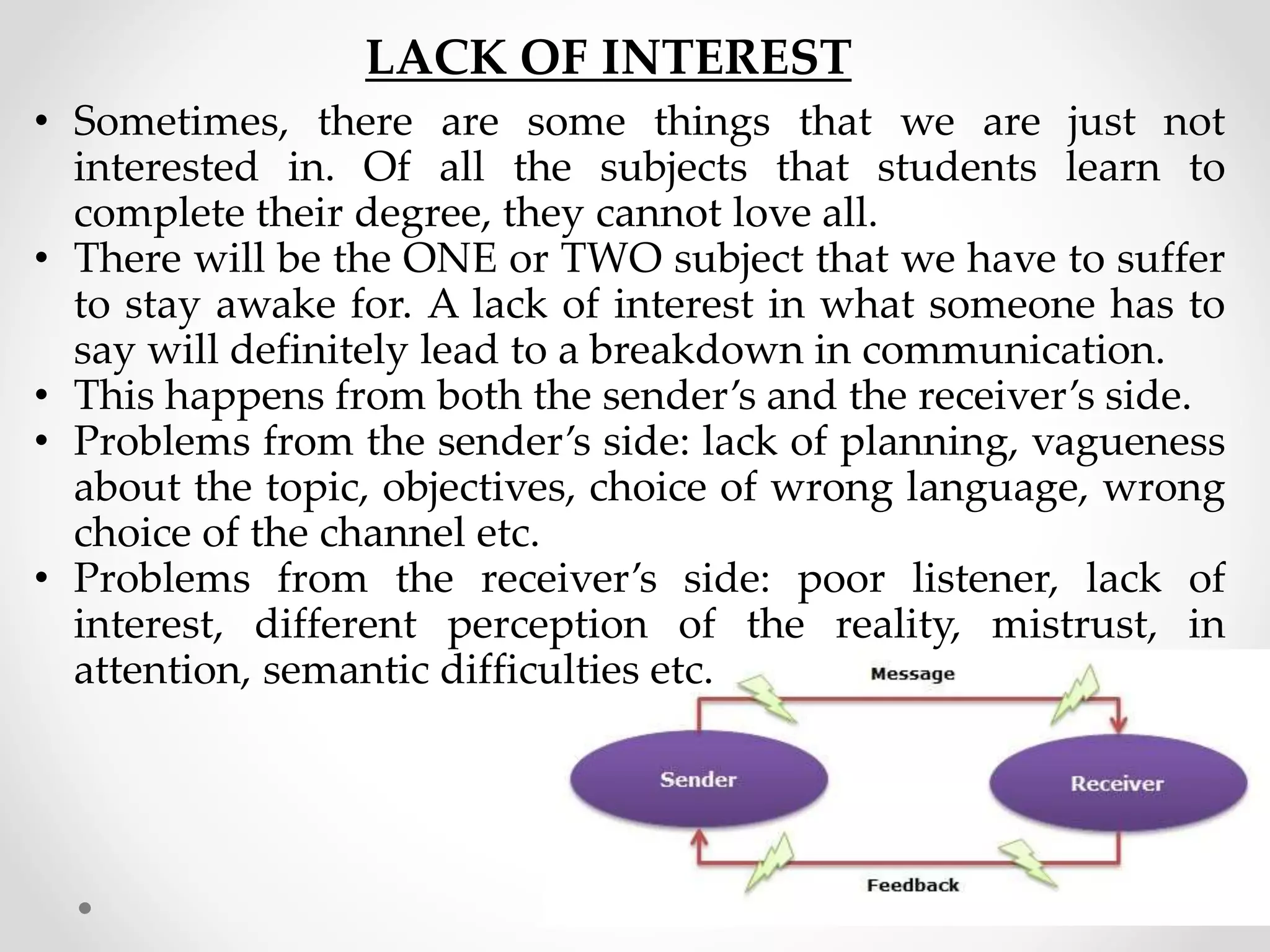


The document discusses several barriers to effective communication, including filtering of information, selective perception, information overload, emotions, language differences, communication apprehension, gender differences, and lack of interest. Filtering refers to manipulating information to be seen favorably by the receiver and is influenced by organizational structure. Selective perception involves personal filtering of what we see and hear to suit our own needs. Information overload occurs when receivers are unable to handle large amounts of data. Emotions and language differences can also impact how messages are interpreted. Communication apprehension causes anxiety in oral or written interactions. Gender differences influence communication styles and reasons for communicating. Lack of interest from senders or receivers can break down communication.


