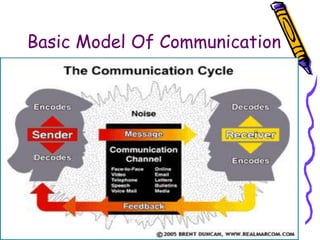
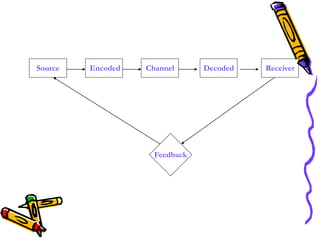
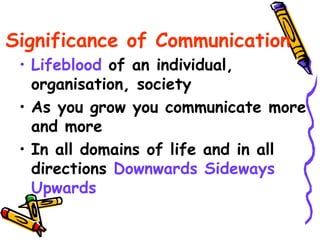
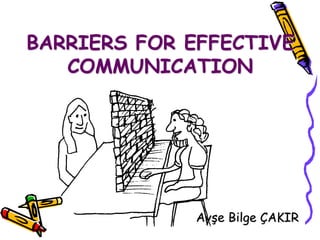
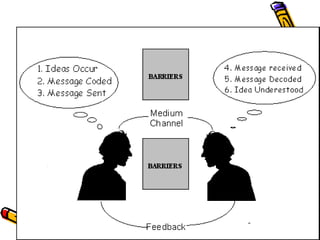
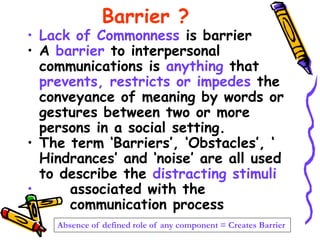
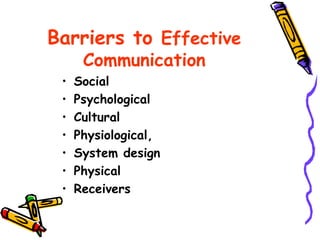
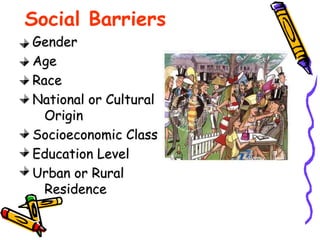
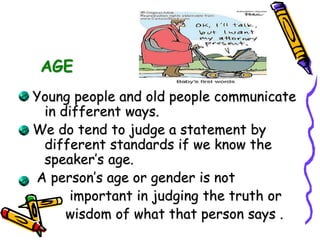
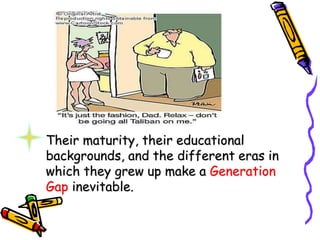
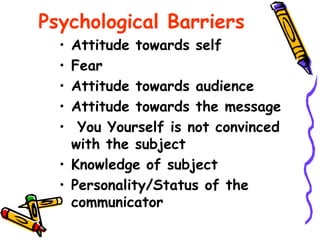
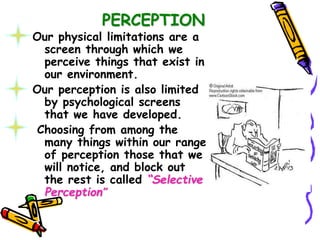
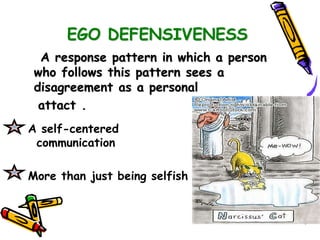
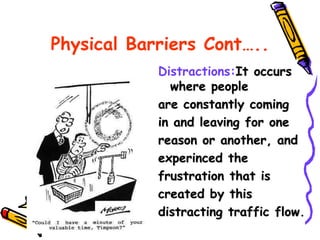
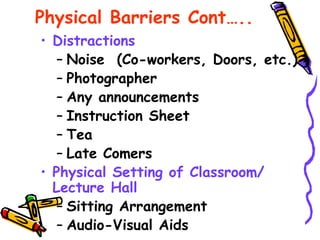
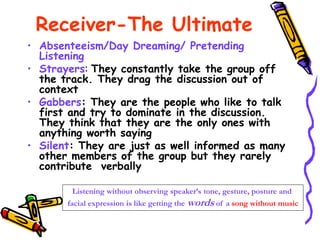
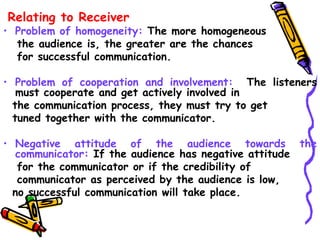
Communication barriers can be social, psychological, cultural, physiological, related to the system design, physical, or related to the receiver. Social barriers include factors like gender, age, race, socioeconomic class, and education level. Psychological barriers involve attitudes, perceptions, emotions, motivation, and ego. Cultural barriers stem from differences in language, norms, values, and beliefs. Physiological barriers are related to health, abilities, and comfort. System design and physical barriers involve environmental factors, distractions, and channel issues. Barriers related to the receiver include absenteeism, domination of discussion, silence, and negative attitudes. Overcoming communication barriers requires understanding their various sources and adapting communication strategies accordingly.