

Organisational structure refers to
the levels of management and division
of responsibilities within an
organisation.
 In

simpler terms organisation structure
is the break down of the managers and
the different departments within an
organisation.

 It

shows who manages who and how the
organisation is split up to perform
different tasks.
 As

a business expands it means that the
business will more than likely take on
more staff. With the addition of new
staff more managers may be needed or
managers will be responsible for new
staff.

 This

will change the structure
A

job description outlines the
responsibilities and duties to be carried
out by someone employed to do a
specific job.
 Delegation

means giving a subordinate
the authority to perform particular
tasks.

 It

is very important to remember that
it is the authority to perform a task
which is being delegated-not the final
responsibility.
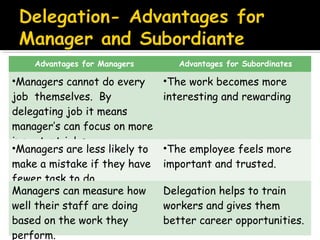
Advantages for Managers

•Managers cannot do every
job themselves. By
delegating job it means
manager’s can focus on more
important jobs.
•Managers are less likely to
make a mistake if they have
fewer task to do.
Managers can measure how
well their staff are doing
based on the work they
perform.

Advantages for Subordinates

•The work becomes more
interesting and rewarding

•The employee feels more
important and trusted.
Delegation helps to train
workers and gives them
better career opportunities.
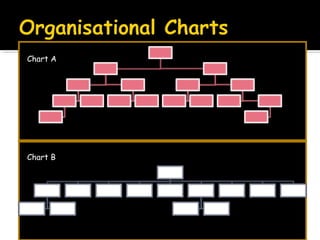
Chart A

Chart B
 Chain of command is the structure in an

organisation, which allows instructions
to be passed down .

 In other words the number of levels of

management an organisation has and how
many levels an instruction or a message
must go through.
 The span of control is the number of

subordinates working directly under a
manager.
 So if a manager was responsible for

three workers what would their span
of control be?
A

organisation with a long chain of command
and low span of control, generally has a tall
organisational structure.

 This

makes passing on an instruction or
message to a member of staff further down
the chain of command more difficult.

 However

with a low span of control it makes it
easier for managers to manage their staff.
 Flat

organisational structure have a low chain
of command but a high span of control in their
organisations.

 Communication

is quicker and accurate.
Because of the higher span of control,
managers are more likely to delegate.

 Managers

have less control of workers so
mistakes are more likely.
 Line

Managers:- Have direct authority
over subordinates in their departments.
They are able to make decisions in their
departmental areas.

 Staff

Managers:- Are specialist
advisors who provide support to the line
managers and to the board of directors.
The production department is
responsible for the
manufacturing of products.
They may also be responsible
for the designing of products.
This finance department is
responsible for setting
budgets, and producing
financial accounts such as
profit and loss accounts and
balance sheets.
The

Purchasing department is
responsible for the ordering
of new stock or materials
needed for the business to
produce their goods to sell.
The marketing department is
responsible for carrying out
research on what products are
needed what products are doing
well. They are also responsible
for advertising.
This department is
responsible for the
recruitment of staff,
ensuring the correct laws
are being followed and
providing staff training.
This department is responsible
for selling the goods and
services available. In most
modern organisation this is
the largest department.
A

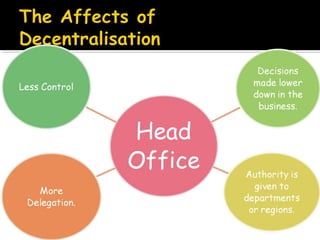
Decentralised management structure means
that decision are NOT taken at the centre or
by the highest level of management. Instead
it is delegated to a lower level of management.

A

Centralised management system means that
most decisions are taken at the centre of the
organisation or by higher levels or
management
 Decisions

are taken by managers who are
closer to the action. Therefore people close
to the customers or product and know what is
most like to be successful.
 As decentralisation is a form of delegation,
the managers are going to feel more trusted
and satisfied.
 Decisions are made quicker as information
doesn’t have to passed on to higher managers
or the board of directors first.
 Functional:-

Specialist departments
identified earlier are responsible for
decision making.
 Federal: By product
 Regional: By area or country
 Project Team: By different tasks needed
to be completed. E.g.. Designing of a plane
goes to different departments.

Organisation structures

  • 2.
     Organisational structure refersto the levels of management and division of responsibilities within an organisation.
  • 3.
     In simpler termsorganisation structure is the break down of the managers and the different departments within an organisation.  It shows who manages who and how the organisation is split up to perform different tasks.
  • 4.
     As a businessexpands it means that the business will more than likely take on more staff. With the addition of new staff more managers may be needed or managers will be responsible for new staff.  This will change the structure
  • 5.
    A job description outlinesthe responsibilities and duties to be carried out by someone employed to do a specific job.
  • 6.
     Delegation means givinga subordinate the authority to perform particular tasks.  It is very important to remember that it is the authority to perform a task which is being delegated-not the final responsibility.
  • 7.
    Advantages for Managers •Managerscannot do every job themselves. By delegating job it means manager’s can focus on more important jobs. •Managers are less likely to make a mistake if they have fewer task to do. Managers can measure how well their staff are doing based on the work they perform. Advantages for Subordinates •The work becomes more interesting and rewarding •The employee feels more important and trusted. Delegation helps to train workers and gives them better career opportunities.
  • 8.
  • 9.
     Chain ofcommand is the structure in an organisation, which allows instructions to be passed down .  In other words the number of levels of management an organisation has and how many levels an instruction or a message must go through.
  • 10.
     The spanof control is the number of subordinates working directly under a manager.  So if a manager was responsible for three workers what would their span of control be?
  • 11.
    A organisation with along chain of command and low span of control, generally has a tall organisational structure.  This makes passing on an instruction or message to a member of staff further down the chain of command more difficult.  However with a low span of control it makes it easier for managers to manage their staff.
  • 12.
     Flat organisational structurehave a low chain of command but a high span of control in their organisations.  Communication is quicker and accurate. Because of the higher span of control, managers are more likely to delegate.  Managers have less control of workers so mistakes are more likely.
  • 13.
     Line Managers:- Havedirect authority over subordinates in their departments. They are able to make decisions in their departmental areas.  Staff Managers:- Are specialist advisors who provide support to the line managers and to the board of directors.
  • 15.
    The production departmentis responsible for the manufacturing of products. They may also be responsible for the designing of products.
  • 16.
    This finance departmentis responsible for setting budgets, and producing financial accounts such as profit and loss accounts and balance sheets.
  • 17.
    The Purchasing department is responsiblefor the ordering of new stock or materials needed for the business to produce their goods to sell.
  • 18.
    The marketing departmentis responsible for carrying out research on what products are needed what products are doing well. They are also responsible for advertising.
  • 19.
    This department is responsiblefor the recruitment of staff, ensuring the correct laws are being followed and providing staff training.
  • 20.
    This department isresponsible for selling the goods and services available. In most modern organisation this is the largest department.
  • 21.
    A Decentralised management structuremeans that decision are NOT taken at the centre or by the highest level of management. Instead it is delegated to a lower level of management. A Centralised management system means that most decisions are taken at the centre of the organisation or by higher levels or management
  • 22.
     Decisions are takenby managers who are closer to the action. Therefore people close to the customers or product and know what is most like to be successful.  As decentralisation is a form of delegation, the managers are going to feel more trusted and satisfied.  Decisions are made quicker as information doesn’t have to passed on to higher managers or the board of directors first.
  • 24.
     Functional:- Specialist departments identifiedearlier are responsible for decision making.  Federal: By product  Regional: By area or country  Project Team: By different tasks needed to be completed. E.g.. Designing of a plane goes to different departments.