
Challenges posed by Fossil Fuels
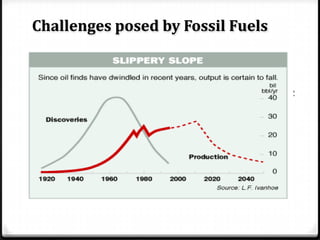
Environmental Degradation
  ‱ Exploiting fossils produces GHG’s causing global warming and
    human sickness.
  ‱ Transportation accounts for roughly 15% of energy related CO2
    emissions globally & hence is a big contributor to climate
    change.
 Decreasing oil reserves and increasing oil prices
 ‱ Oil is not forever.
 ‱ Demand is increasing everywhere.
 ‱ Oil prices are continuously rising and most of the developing
   economies are facing inflation.
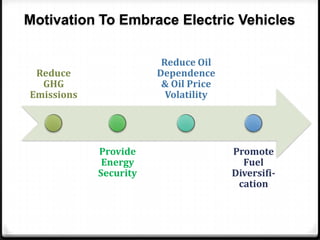
Motivation To Embrace Electric Vehicles

                        Reduce Oil
 Reduce                Dependence
  GHG                   & Oil Price
Emissions                Volatility


            Provide                   Promote
             Energy                     Fuel
            Security                  Diversifi-
                                       cation
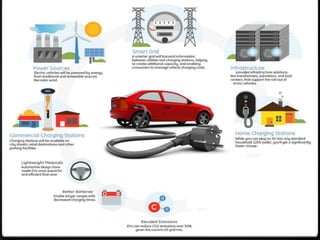
Requirements of Electrification
    of the Urban Transport System
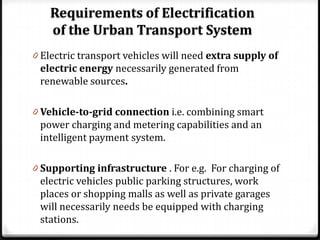
0 Electric transport vehicles will need extra supply of
 electric energy necessarily generated from
 renewable sources.

0 Vehicle-to-grid connection i.e. combining smart
 power charging and metering capabilities and an
 intelligent payment system.

0 Supporting infrastructure . For e.g. For charging of
 electric vehicles public parking structures, work
 places or shopping malls as well as private garages
 will necessarily needs be equipped with charging
 stations.
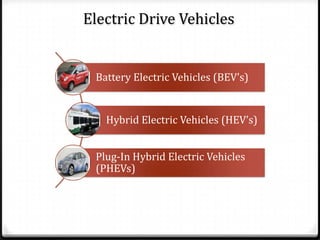
Electric Drive Vehicles


 Battery Electric Vehicles (BEV’s)


   Hybrid Electric Vehicles (HEV’s)


 Plug-In Hybrid Electric Vehicles
 (PHEVs)
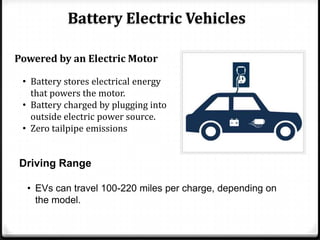
Battery Electric Vehicles

Powered by an Electric Motor

 ‱ Battery stores electrical energy
   that powers the motor.
 ‱ Battery charged by plugging into
   outside electric power source.
 ‱ Zero tailpipe emissions


Driving Range

  ‱ EVs can travel 100-220 miles per charge, depending on
    the model.
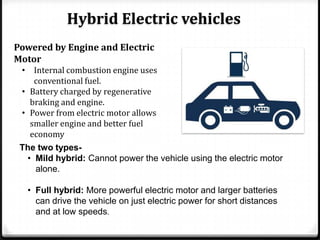
Hybrid Electric vehicles
Powered by Engine and Electric
Motor
 ‱ Internal combustion engine uses
     conventional fuel.
 ‱ Battery charged by regenerative
    braking and engine.
 ‱ Power from electric motor allows
    smaller engine and better fuel
    economy
 The two types-
   ‱ Mild hybrid: Cannot power the vehicle using the electric motor
     alone.

   ‱ Full hybrid: More powerful electric motor and larger batteries
     can drive the vehicle on just electric power for short distances
     and at low speeds.
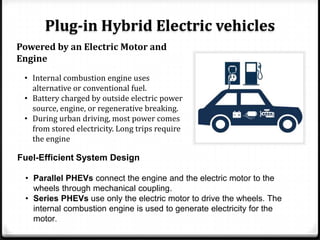
Plug-in Hybrid Electric vehicles
Powered by an Electric Motor and
Engine
 ‱ Internal combustion engine uses
   alternative or conventional fuel.
 ‱ Battery charged by outside electric power
   source, engine, or regenerative breaking.
 ‱ During urban driving, most power comes
   from stored electricity. Long trips require
   the engine

Fuel-Efficient System Design

 ‱ Parallel PHEVs connect the engine and the electric motor to the
   wheels through mechanical coupling.
 ‱ Series PHEVs use only the electric motor to drive the wheels. The
   internal combustion engine is used to generate electricity for the
   motor.
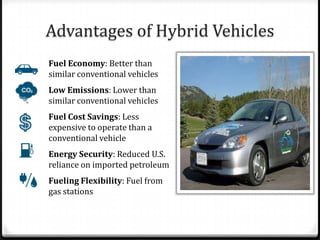
Advantages of Hybrid Vehicles
Fuel Economy: Better than
similar conventional vehicles
Low Emissions: Lower than
similar conventional vehicles
Fuel Cost Savings: Less
expensive to operate than a
conventional vehicle
Energy Security: Reduced U.S.
reliance on imported petroleum
Fueling Flexibility: Fuel from
gas stations
Challenges to Transport Electrification
 0 Renewable Enegry generation is much more
  decentralised and fluctuating than today’s fossil power
  generation.

 0 In EV’s, high cost of storage systems .


 0 In EV’s limited driving range, extended charging times &
  limited capacity.

   Though solutions to these challenges may be found
      through intense research at the level of the
        subsystems for energy storage and grid
                management in future.
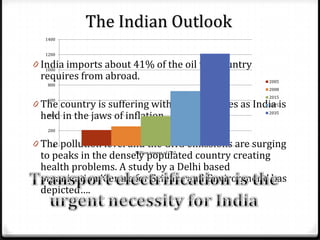
The Indian Outlook
  1400


  1200

0 India imports about 41% of the oil the country
   1000
 requires from abroad.                                 2005
   800
                                                       2008
                                                       2015
0 The country is suffering with high oil prices as India is
   600
                                                      2025

 held in the jaws of inflation.
  400
                                                       2035


   200


0 The pollution level and the GHG emissions are surging
    0

 to peaks in the densely populated country creating
                      Million tonnes of CO2


 health problems. A study by a Delhi based
 organization ‘Centre for Science and Environment’ has
 depicted
.
Electrified transport in India
0 Basic charging infrastructure requires electricity
  distribution grid that is already installed in India and only
  the public charging stations need to be rolled out.

0 Electrified public transport like Metro trains, etc. are
  already installed in metro cities and needs an expansion to
  all urban and semi-urban areas.

0 It is inevitable for maintaining the competitiveness of the
  Indian automotive industry in a rapidly changing global
  economy.
Conclusion
0 The move towards the electrification of transport will
 enable the future security of energy, a radical
 reduction of GHG emissions & local air pollution.

0 Smart systems for energy management needs to be
 developed to match up to the infrastructural needs of
 Electrified Transport.

0 Intense research efforts needs to be taken to
 overcome the challenges to transport electrification.
Wish you a Clean & Green Future


  Thank You

Transport Electrification

  • 2.
    Challenges posed byFossil Fuels Environmental Degradation ‱ Exploiting fossils produces GHG’s causing global warming and human sickness. ‱ Transportation accounts for roughly 15% of energy related CO2 emissions globally & hence is a big contributor to climate change.  Decreasing oil reserves and increasing oil prices ‱ Oil is not forever. ‱ Demand is increasing everywhere. ‱ Oil prices are continuously rising and most of the developing economies are facing inflation.
  • 3.
    Motivation To EmbraceElectric Vehicles Reduce Oil Reduce Dependence GHG & Oil Price Emissions Volatility Provide Promote Energy Fuel Security Diversifi- cation
  • 4.
    Requirements of Electrification of the Urban Transport System 0 Electric transport vehicles will need extra supply of electric energy necessarily generated from renewable sources. 0 Vehicle-to-grid connection i.e. combining smart power charging and metering capabilities and an intelligent payment system. 0 Supporting infrastructure . For e.g. For charging of electric vehicles public parking structures, work places or shopping malls as well as private garages will necessarily needs be equipped with charging stations.
  • 6.
    Electric Drive Vehicles Battery Electric Vehicles (BEV’s) Hybrid Electric Vehicles (HEV’s) Plug-In Hybrid Electric Vehicles (PHEVs)
  • 7.
    Battery Electric Vehicles Poweredby an Electric Motor ‱ Battery stores electrical energy that powers the motor. ‱ Battery charged by plugging into outside electric power source. ‱ Zero tailpipe emissions Driving Range ‱ EVs can travel 100-220 miles per charge, depending on the model.
  • 8.
    Hybrid Electric vehicles Poweredby Engine and Electric Motor ‱ Internal combustion engine uses conventional fuel. ‱ Battery charged by regenerative braking and engine. ‱ Power from electric motor allows smaller engine and better fuel economy The two types- ‱ Mild hybrid: Cannot power the vehicle using the electric motor alone. ‱ Full hybrid: More powerful electric motor and larger batteries can drive the vehicle on just electric power for short distances and at low speeds.
  • 9.
    Plug-in Hybrid Electricvehicles Powered by an Electric Motor and Engine ‱ Internal combustion engine uses alternative or conventional fuel. ‱ Battery charged by outside electric power source, engine, or regenerative breaking. ‱ During urban driving, most power comes from stored electricity. Long trips require the engine Fuel-Efficient System Design ‱ Parallel PHEVs connect the engine and the electric motor to the wheels through mechanical coupling. ‱ Series PHEVs use only the electric motor to drive the wheels. The internal combustion engine is used to generate electricity for the motor.
  • 10.
    Advantages of HybridVehicles Fuel Economy: Better than similar conventional vehicles Low Emissions: Lower than similar conventional vehicles Fuel Cost Savings: Less expensive to operate than a conventional vehicle Energy Security: Reduced U.S. reliance on imported petroleum Fueling Flexibility: Fuel from gas stations
  • 11.
    Challenges to TransportElectrification 0 Renewable Enegry generation is much more decentralised and fluctuating than today’s fossil power generation. 0 In EV’s, high cost of storage systems . 0 In EV’s limited driving range, extended charging times & limited capacity. Though solutions to these challenges may be found through intense research at the level of the subsystems for energy storage and grid management in future.
  • 12.
    The Indian Outlook 1400 1200 0 India imports about 41% of the oil the country 1000 requires from abroad. 2005 800 2008 2015 0 The country is suffering with high oil prices as India is 600 2025 held in the jaws of inflation. 400 2035 200 0 The pollution level and the GHG emissions are surging 0 to peaks in the densely populated country creating Million tonnes of CO2 health problems. A study by a Delhi based organization ‘Centre for Science and Environment’ has depicted
.
  • 13.
    Electrified transport inIndia 0 Basic charging infrastructure requires electricity distribution grid that is already installed in India and only the public charging stations need to be rolled out. 0 Electrified public transport like Metro trains, etc. are already installed in metro cities and needs an expansion to all urban and semi-urban areas. 0 It is inevitable for maintaining the competitiveness of the Indian automotive industry in a rapidly changing global economy.
  • 14.
    Conclusion 0 The movetowards the electrification of transport will enable the future security of energy, a radical reduction of GHG emissions & local air pollution. 0 Smart systems for energy management needs to be developed to match up to the infrastructural needs of Electrified Transport. 0 Intense research efforts needs to be taken to overcome the challenges to transport electrification.
  • 15.
    Wish you aClean & Green Future Thank You