BY: M.SHIVA KUMAR
 Introduction 
 Types of hybrid electric vehicle 
 Types hybrid technologies 
 Fuel consumption 
 Noise 
 In the next 5 year’s 
 Advantages of HEV’S 
 Disadvantages of HEV’S 
 Conclusion
 A hybrid vehicle is one that uses two 
different methods to propel the vehicle. 
 A hybrid electric vehicle, abbreviated 
HEV uses both an internal combustion 
engine and an electric motor to propel 
the vehicle. 
 Most hybrid vehicles use a highvoltage 
battery pack and a combination electric 
motor and generator to help or assist a 
gasoline engine.
HYBRID VEHICLE 
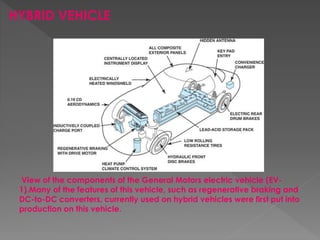
View of the components of the General Motors electric vehicle (EV- 
1).Many of the features of this vehicle, such as regenerative braking and 
DC-to-DC converters, currently used on hybrid vehicles were first put into 
production on this vehicle.
HYBRID VEHICLE 
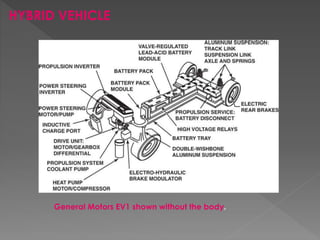
General Motors EV1 shown without the body.
 There are three types of HEV,s 
1. Series 
2. Parallel 
3. Series-parallel
CLASSIFICATIONS OF HYBRID-ELECTRIC VEHICLES 
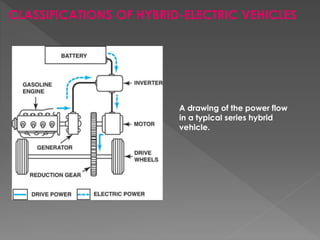
A drawing of the power flow 
in a typical series hybrid 
vehicle.
CLASSIFICATIONS OF HYBRID-ELECTRIC VEHICLES 
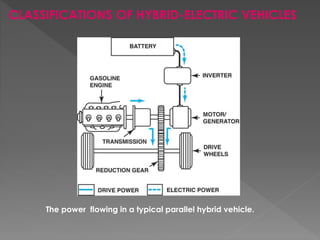
The power flowing in a typical parallel hybrid vehicle.
CLASSIFICATIONS OF HYBRID-ELECTRIC VEHICLES 
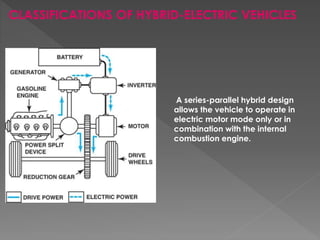
A series-parallel hybrid design 
allows the vehicle to operate in 
electric motor mode only or in 
combination with the internal 
combustion engine.
 Different vehicle manufacturers use 
various hybrid technologies. 
› Mild Hybrid 
› Medium Hybrid 
› Full Hybrid
1. Hybrids use two different power sources to propel the 
vehicle. 
2. A mild hybrid with a lower voltage system (36–50 volts) 
is capable of increasing fuel economy and reducing 
exhaust emissions but is not capable of using the 
electric motor alone to propel the vehicle. 
3. A medium hybrid uses a higher voltage than a mild 
hybrid (140–150 volts) and offers increased fuel 
economy over a mild hybrid design but is not capable 
of operating using the electric motor alone. 
4. A full or strong hybrid uses a high-voltage system (250– 
650 volts) and is capable of operating using the 
electric motor(s) alone and achieves the highest fuel 
economy improvement of all types of hybrids.
 Current HEVs reduce petroleum consumption 
under certain circumstances, compared to 
otherwise similar conventional vehicles, 
primarily by using three mechanisms: 
 Reducing wasted energy during idle/low 
output, generally by turning the ICE off 
 Recapturing waste energy (i.e. regenerative 
braking) 
 Reducing the size and power of the ICE, and 
hence inefficiencies from under-utilization, by 
using the added power from the electric motor 
to compensate for the loss in peak power 
output from the smaller ICE.
 Reduced noise emissions resulting from substantial 
use of the electric motor at idling and low speeds, 
leading to roadway noisereduction. 
 in comparison to conventional gasoline or diesel 
powered engine vehicles, resulting in beneficial noise 
health effects (although road noise from tires and 
wind, the loudest noises at highway speeds from the 
interior of most vehicles, are not affected by the 
hybrid design alone). 
 Reduced noise may not be beneficial for all road 
users, as blind people or the visually impaired 
consider the noise of combustion engines a helpful 
aid while crossing streets and feel quiet hybrids could 
pose an unexpected hazard.
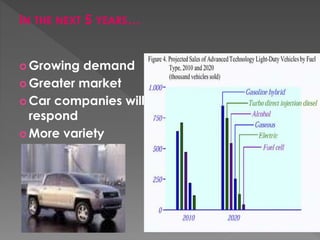
IN THE NEXT 5 YEARS… 
 Growing demand 
 Greater market 
 Car companies will 
respond 
 More variety
 The current hybrid cars, emit less pollutants than the 
market average. For example, Honda Insight has 67% 
less of annual greenhouse gas emission. Furthermore, 
car manufactures are exploring way to reduce total 
emission in future hybrid cars. 
 Hybrid cars use much less gasoline than standard 
vehicles, preserving oil reserves for other uses such as 
heating oil and polymer synthesis. 
 In a effort to cut off gasoline consumption in car, 
research is underway to explore for alternative fuels, 
such as fuel cells and corn-derived fuels.
 More car batteries will need to be made, creating a 
larger problem for disposal of such batteries. 
 HEVs do not totally eliminate burning of fossil fuels, 
they just delay the rate at which we burn them. 
 The price range for HEVs is $17,400 -> $26,000. The 
current price range does not target an average 
household. 
 The manufactures have gone through considerable 
pains to reduce the weight of the vehicle so that it 
burns less gasoline while achieving a reasonable 
acceleration. This has raised questions as to how safe 
the car is when it is involved in an accident.
CONCLUSION 
 Air pollution is a 
serious concern 
 Fallbacks to Fuel 
Cell economy 
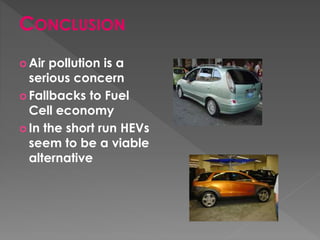
 In the short run HEVs 
seem to be a viable 
alternative
Hybrid electric vechicle

Hybrid electric vechicle

  • 1.
  • 2.
     Introduction Types of hybrid electric vehicle  Types hybrid technologies  Fuel consumption  Noise  In the next 5 year’s  Advantages of HEV’S  Disadvantages of HEV’S  Conclusion
  • 3.
     A hybridvehicle is one that uses two different methods to propel the vehicle.  A hybrid electric vehicle, abbreviated HEV uses both an internal combustion engine and an electric motor to propel the vehicle.  Most hybrid vehicles use a highvoltage battery pack and a combination electric motor and generator to help or assist a gasoline engine.
  • 4.
    HYBRID VEHICLE Viewof the components of the General Motors electric vehicle (EV- 1).Many of the features of this vehicle, such as regenerative braking and DC-to-DC converters, currently used on hybrid vehicles were first put into production on this vehicle.
  • 5.
    HYBRID VEHICLE GeneralMotors EV1 shown without the body.
  • 6.
     There arethree types of HEV,s 1. Series 2. Parallel 3. Series-parallel
  • 7.
    CLASSIFICATIONS OF HYBRID-ELECTRICVEHICLES A drawing of the power flow in a typical series hybrid vehicle.
  • 8.
    CLASSIFICATIONS OF HYBRID-ELECTRICVEHICLES The power flowing in a typical parallel hybrid vehicle.
  • 9.
    CLASSIFICATIONS OF HYBRID-ELECTRICVEHICLES A series-parallel hybrid design allows the vehicle to operate in electric motor mode only or in combination with the internal combustion engine.
  • 10.
     Different vehiclemanufacturers use various hybrid technologies. › Mild Hybrid › Medium Hybrid › Full Hybrid
  • 11.
    1. Hybrids usetwo different power sources to propel the vehicle. 2. A mild hybrid with a lower voltage system (36–50 volts) is capable of increasing fuel economy and reducing exhaust emissions but is not capable of using the electric motor alone to propel the vehicle. 3. A medium hybrid uses a higher voltage than a mild hybrid (140–150 volts) and offers increased fuel economy over a mild hybrid design but is not capable of operating using the electric motor alone. 4. A full or strong hybrid uses a high-voltage system (250– 650 volts) and is capable of operating using the electric motor(s) alone and achieves the highest fuel economy improvement of all types of hybrids.
  • 12.
     Current HEVsreduce petroleum consumption under certain circumstances, compared to otherwise similar conventional vehicles, primarily by using three mechanisms:  Reducing wasted energy during idle/low output, generally by turning the ICE off  Recapturing waste energy (i.e. regenerative braking)  Reducing the size and power of the ICE, and hence inefficiencies from under-utilization, by using the added power from the electric motor to compensate for the loss in peak power output from the smaller ICE.
  • 13.
     Reduced noiseemissions resulting from substantial use of the electric motor at idling and low speeds, leading to roadway noisereduction.  in comparison to conventional gasoline or diesel powered engine vehicles, resulting in beneficial noise health effects (although road noise from tires and wind, the loudest noises at highway speeds from the interior of most vehicles, are not affected by the hybrid design alone).  Reduced noise may not be beneficial for all road users, as blind people or the visually impaired consider the noise of combustion engines a helpful aid while crossing streets and feel quiet hybrids could pose an unexpected hazard.
  • 14.
    IN THE NEXT5 YEARS…  Growing demand  Greater market  Car companies will respond  More variety
  • 15.
     The currenthybrid cars, emit less pollutants than the market average. For example, Honda Insight has 67% less of annual greenhouse gas emission. Furthermore, car manufactures are exploring way to reduce total emission in future hybrid cars.  Hybrid cars use much less gasoline than standard vehicles, preserving oil reserves for other uses such as heating oil and polymer synthesis.  In a effort to cut off gasoline consumption in car, research is underway to explore for alternative fuels, such as fuel cells and corn-derived fuels.
  • 16.
     More carbatteries will need to be made, creating a larger problem for disposal of such batteries.  HEVs do not totally eliminate burning of fossil fuels, they just delay the rate at which we burn them.  The price range for HEVs is $17,400 -> $26,000. The current price range does not target an average household.  The manufactures have gone through considerable pains to reduce the weight of the vehicle so that it burns less gasoline while achieving a reasonable acceleration. This has raised questions as to how safe the car is when it is involved in an accident.
  • 17.
    CONCLUSION  Airpollution is a serious concern  Fallbacks to Fuel Cell economy  In the short run HEVs seem to be a viable alternative