
Wireless Power
Presented By :-
Muhammad Umair Iqbal
Miss Zahida Brohi
Sir Hassan Zaidi
Instructor
Outlines
Wireless power?
History Of Wireless Power.
How Wireless Power Works.
Ways of electricity transmission.
Need Of Wireless Power/Witricity.
Applications.
Advantages & Disadvantages.
Is Witricity Secure ?
Conclusion.
Wireless Power
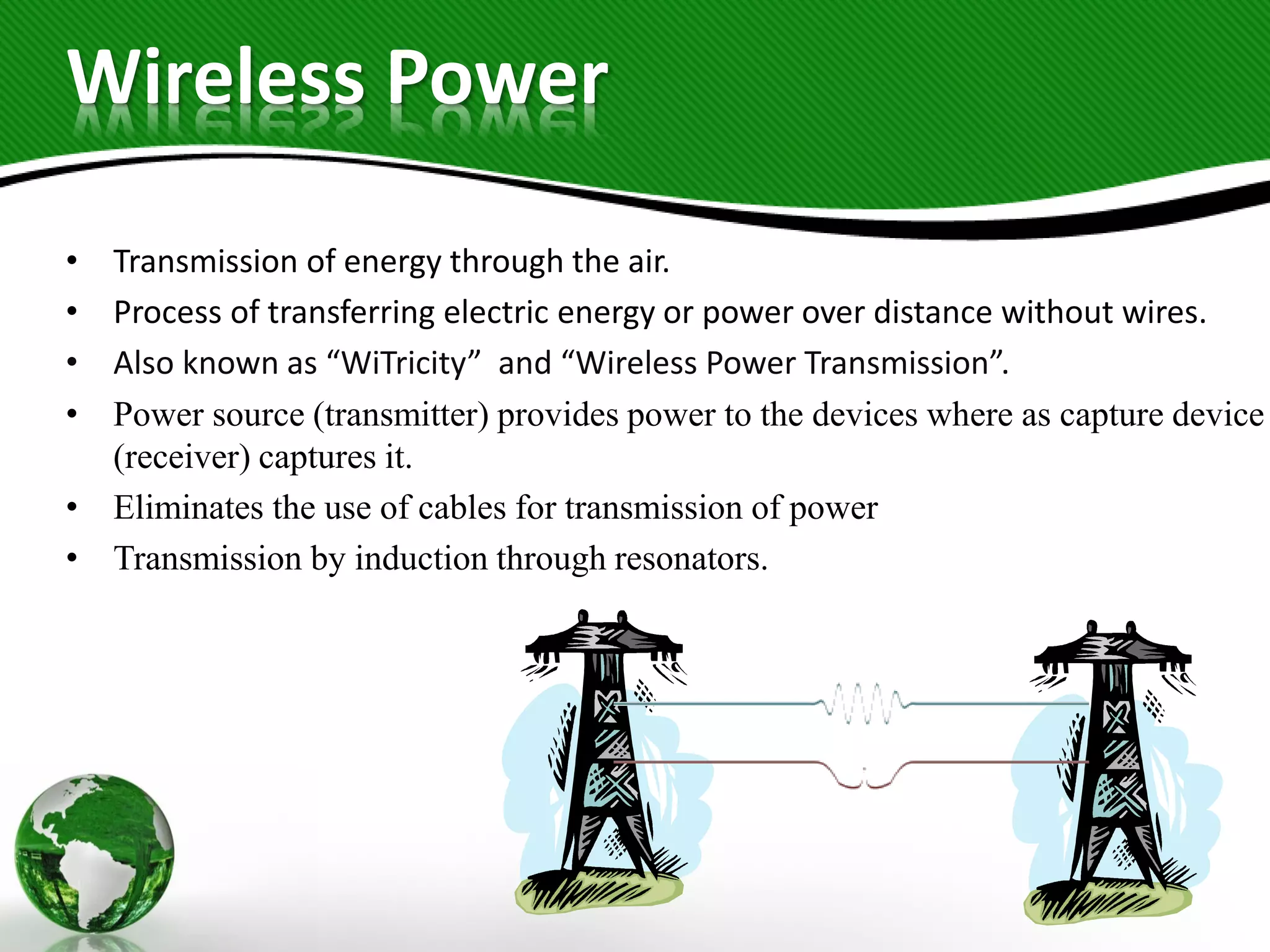
• Transmission of energy through the air.
• Process of transferring electric energy or power over distance without wires.
• Also known as “WiTricity” and “Wireless Power Transmission”.
• Power source (transmitter) provides power to the devices where as capture device
(receiver) captures it.
• Eliminates the use of cables for transmission of power
• Transmission by induction through resonators.
History Of Wireless Power
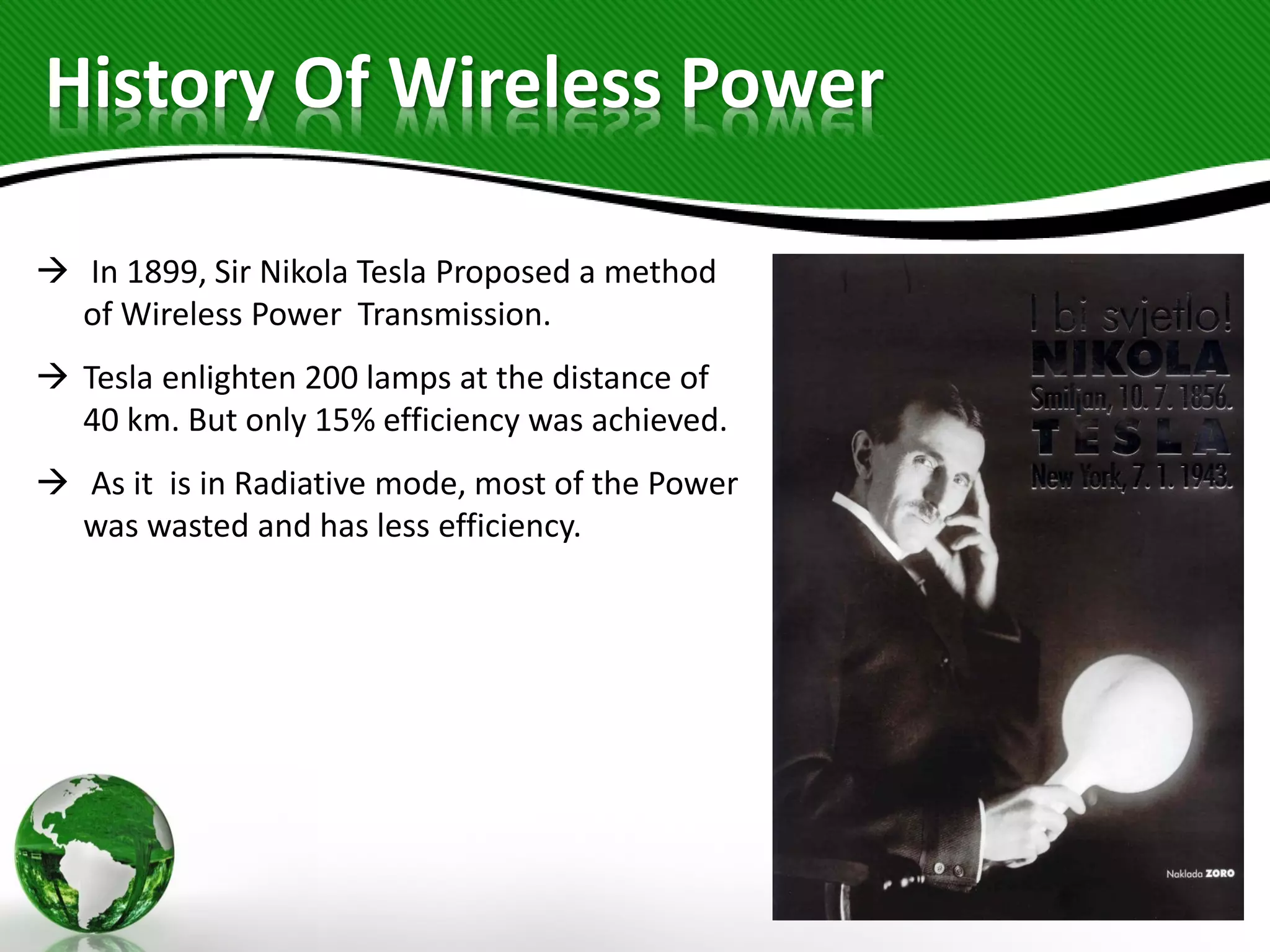
 In 1899, Sir Nikola Tesla Proposed a method
of Wireless Power Transmission.
 Tesla enlighten 200 lamps at the distance of
40 km. But only 15% efficiency was achieved.
 As it is in Radiative mode, most of the Power
was wasted and has less efficiency.
The Forgotten Invention is reborn in
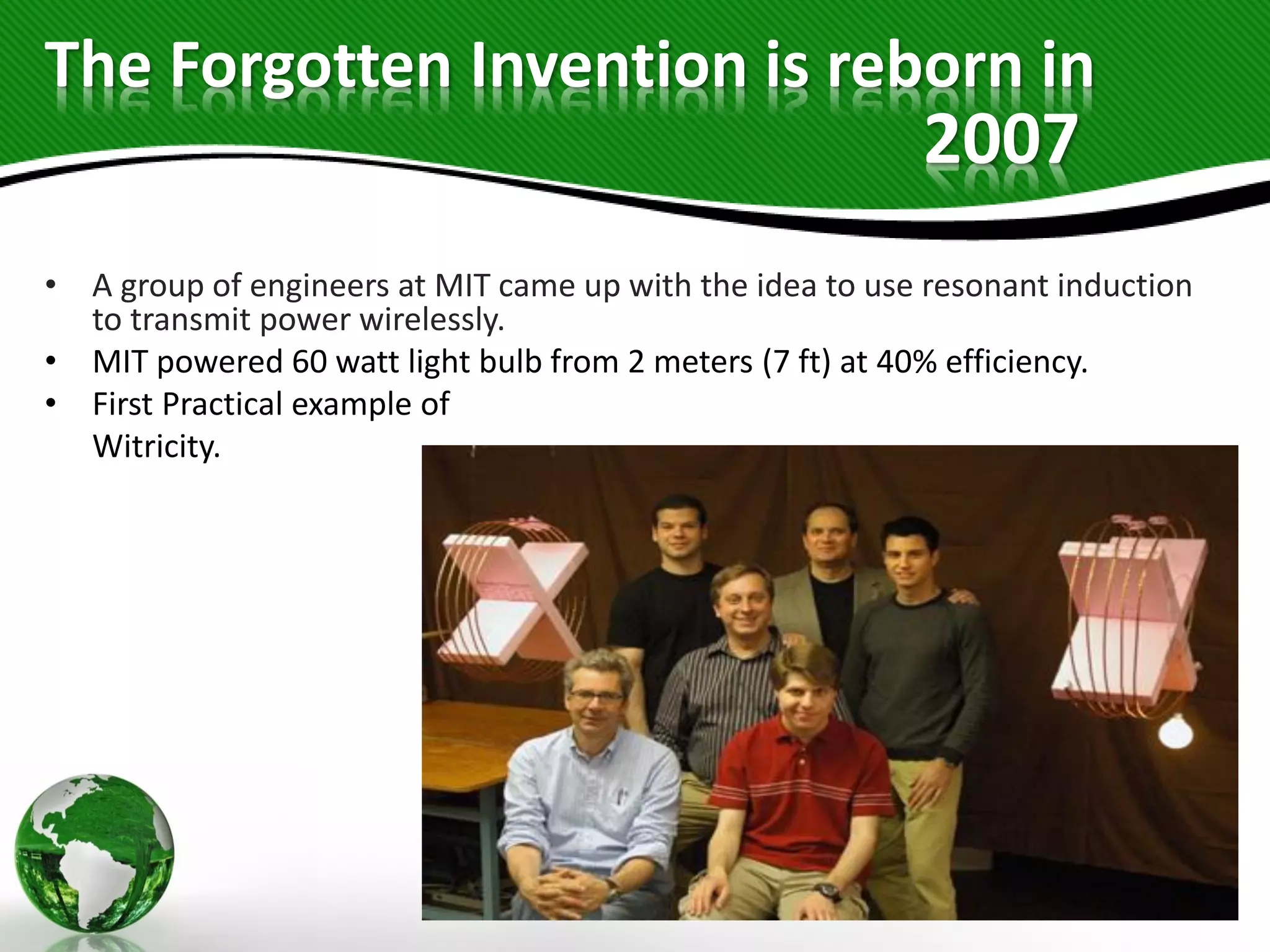
• A group of engineers at MIT came up with the idea to use resonant induction
to transmit power wirelessly.
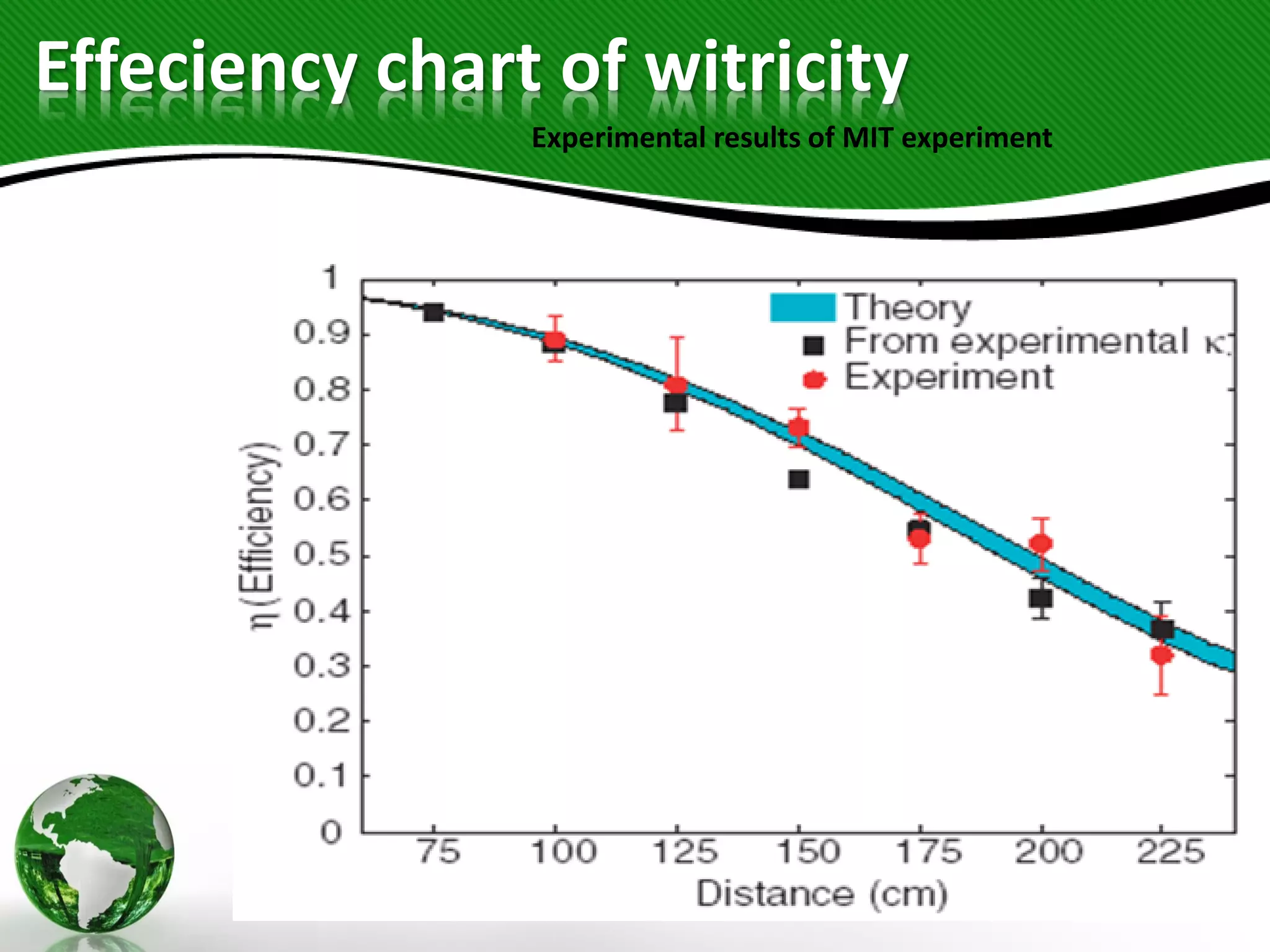
• MIT powered 60 watt light bulb from 2 meters (7 ft) at 40% efficiency.
• First Practical example of
Witricity.
2007
Effeciency chart of witricity
Experimental results of MIT experiment
How Wireless Power Works ?
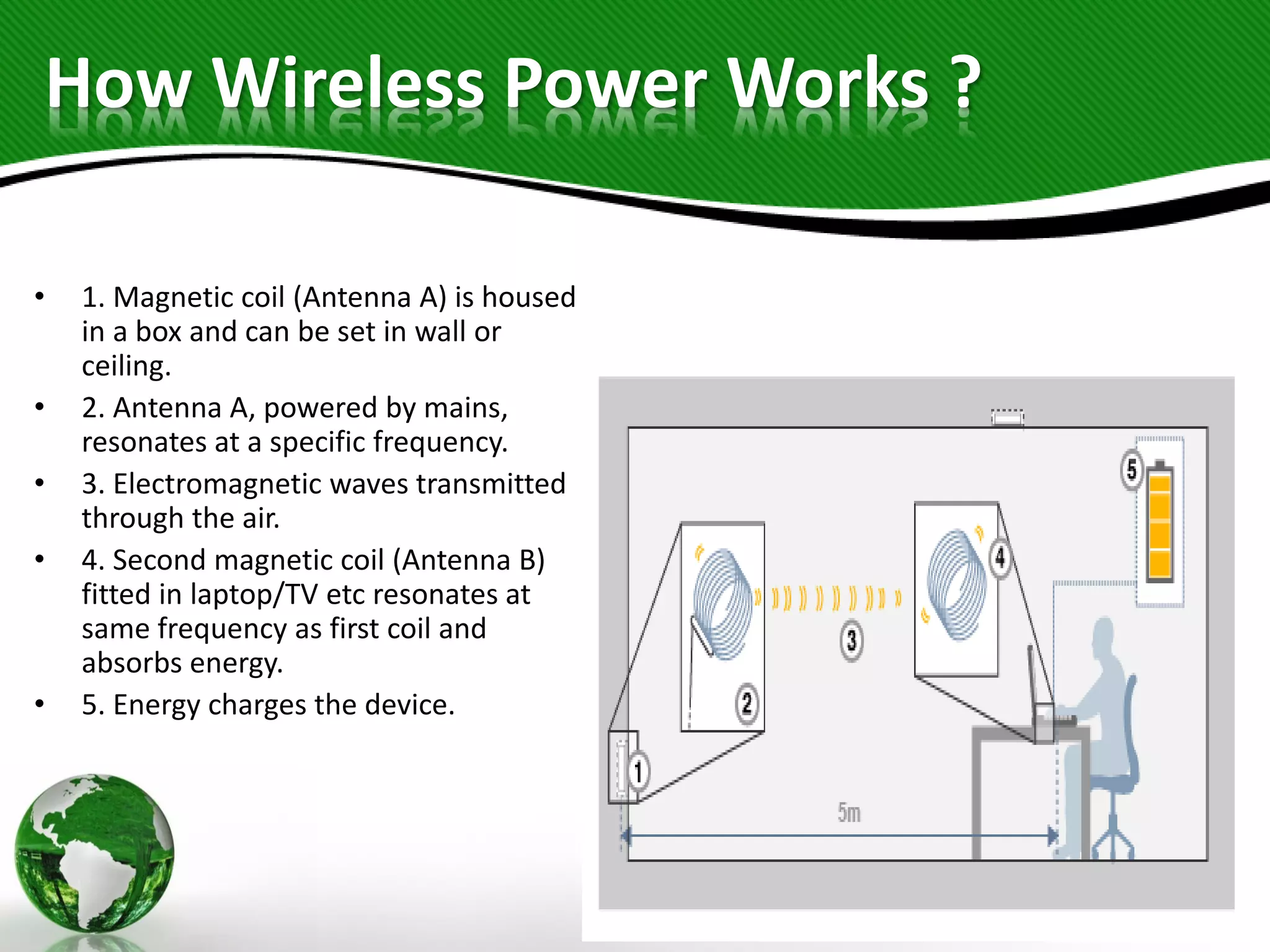
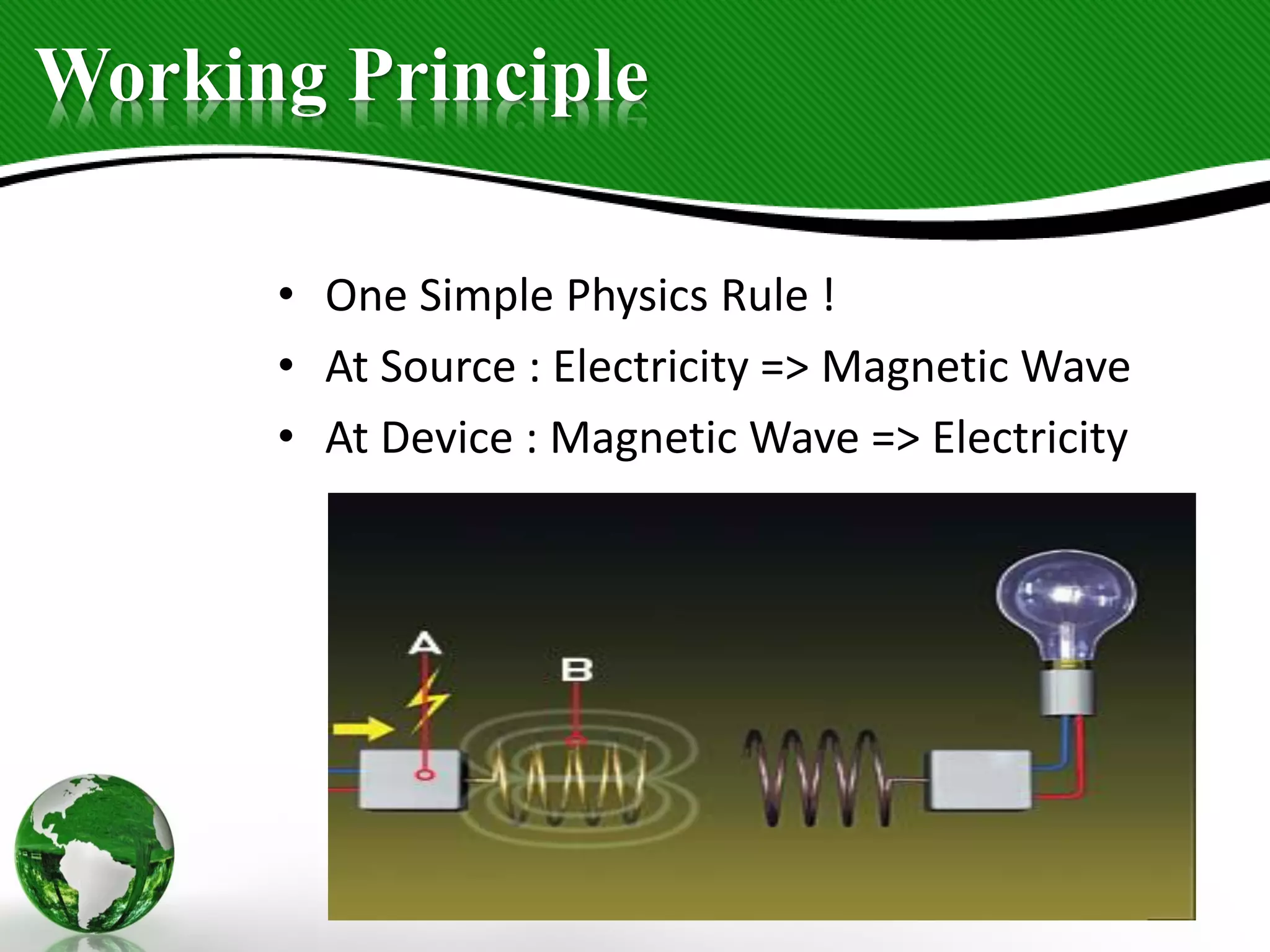
• 1. Magnetic coil (Antenna A) is housed
in a box and can be set in wall or
ceiling.
• 2. Antenna A, powered by mains,
resonates at a specific frequency.
• 3. Electromagnetic waves transmitted
through the air.
• 4. Second magnetic coil (Antenna B)
fitted in laptop/TV etc resonates at
same frequency as first coil and
absorbs energy.
• 5. Energy charges the device.
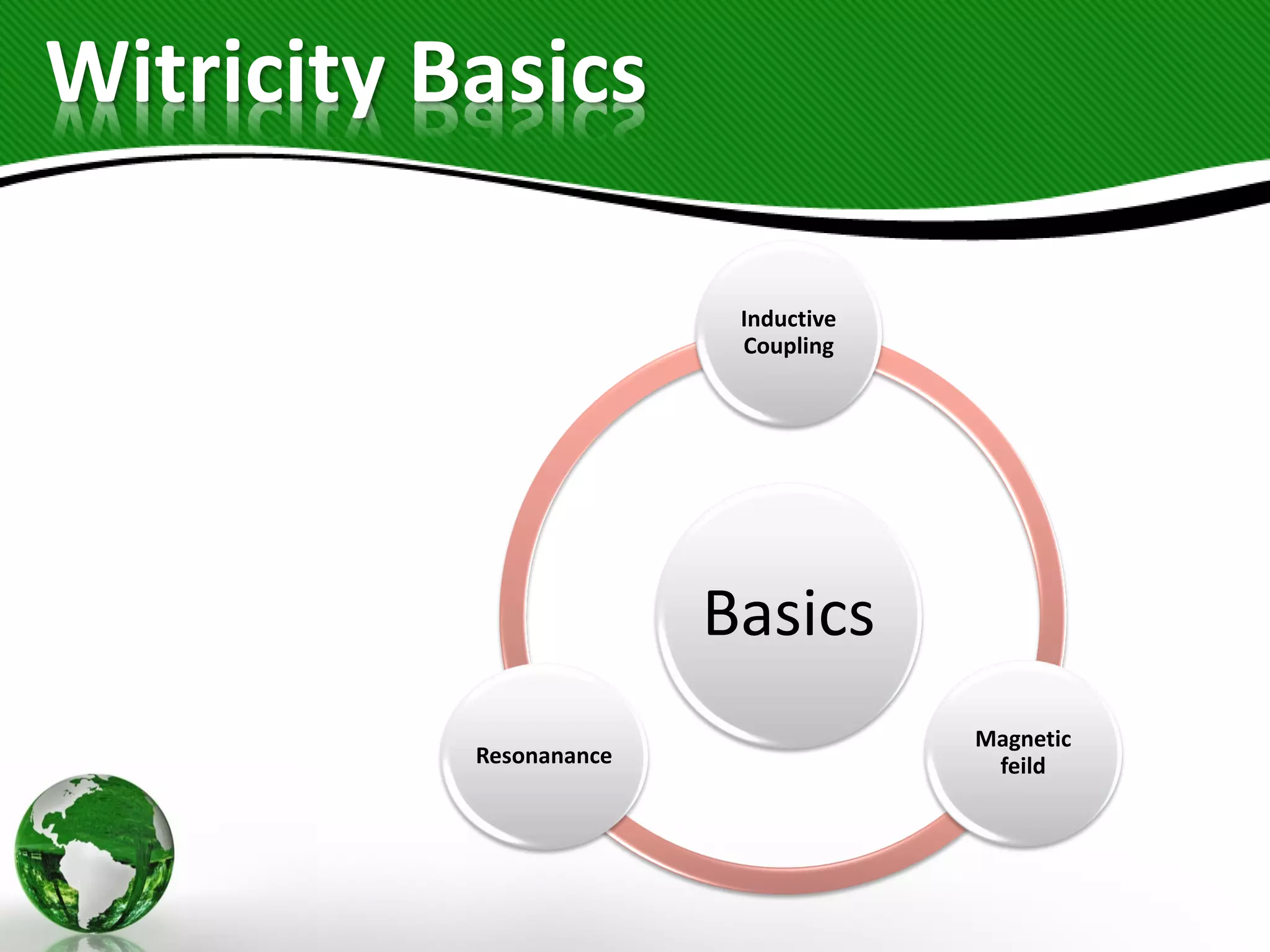
Witricity Basics
Basics
Inductive
Coupling
Magnetic
feildResonanance
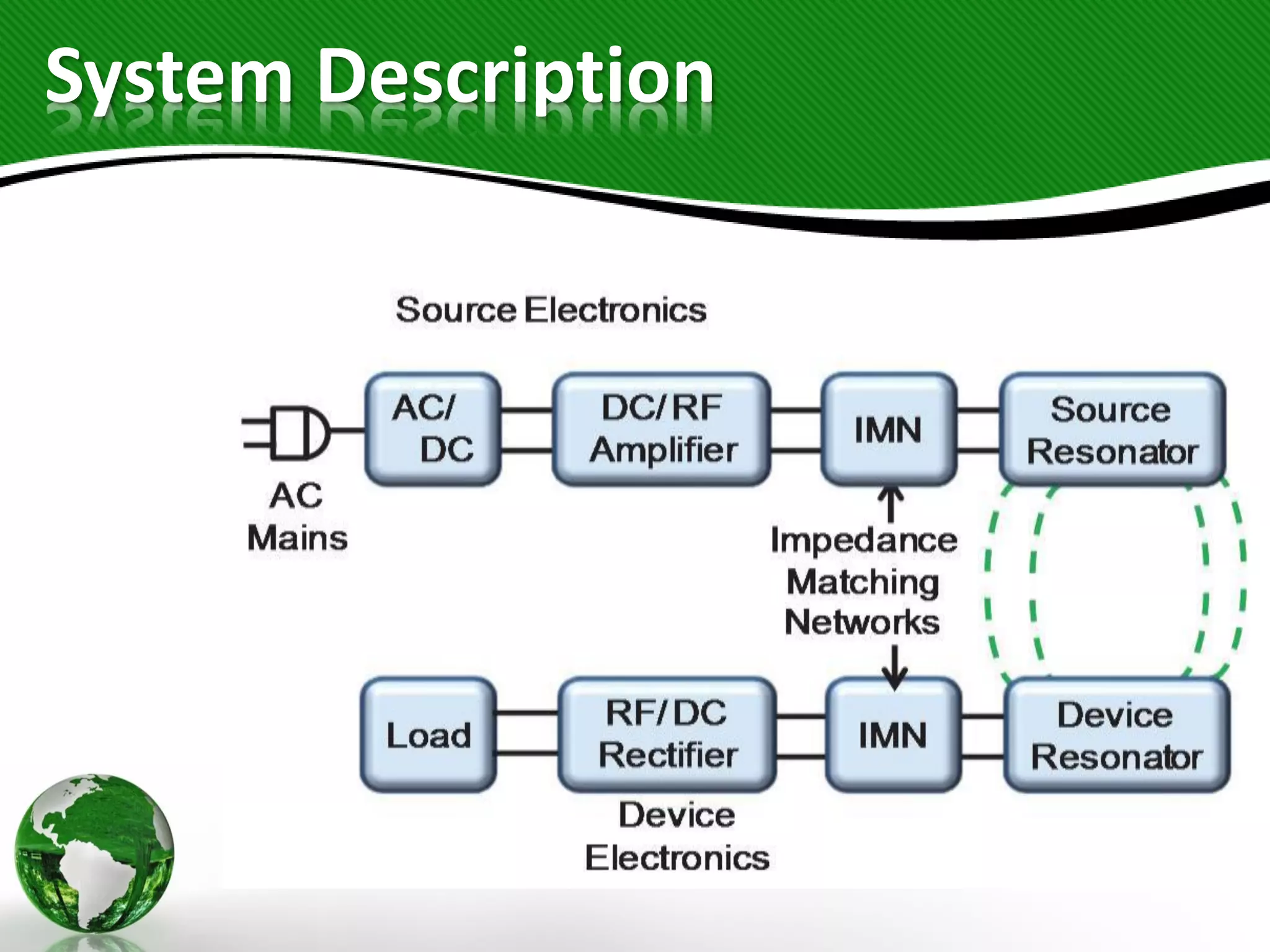
System Description
Working Principle
• One Simple Physics Rule !
• At Source : Electricity => Magnetic Wave
• At Device : Magnetic Wave => Electricity
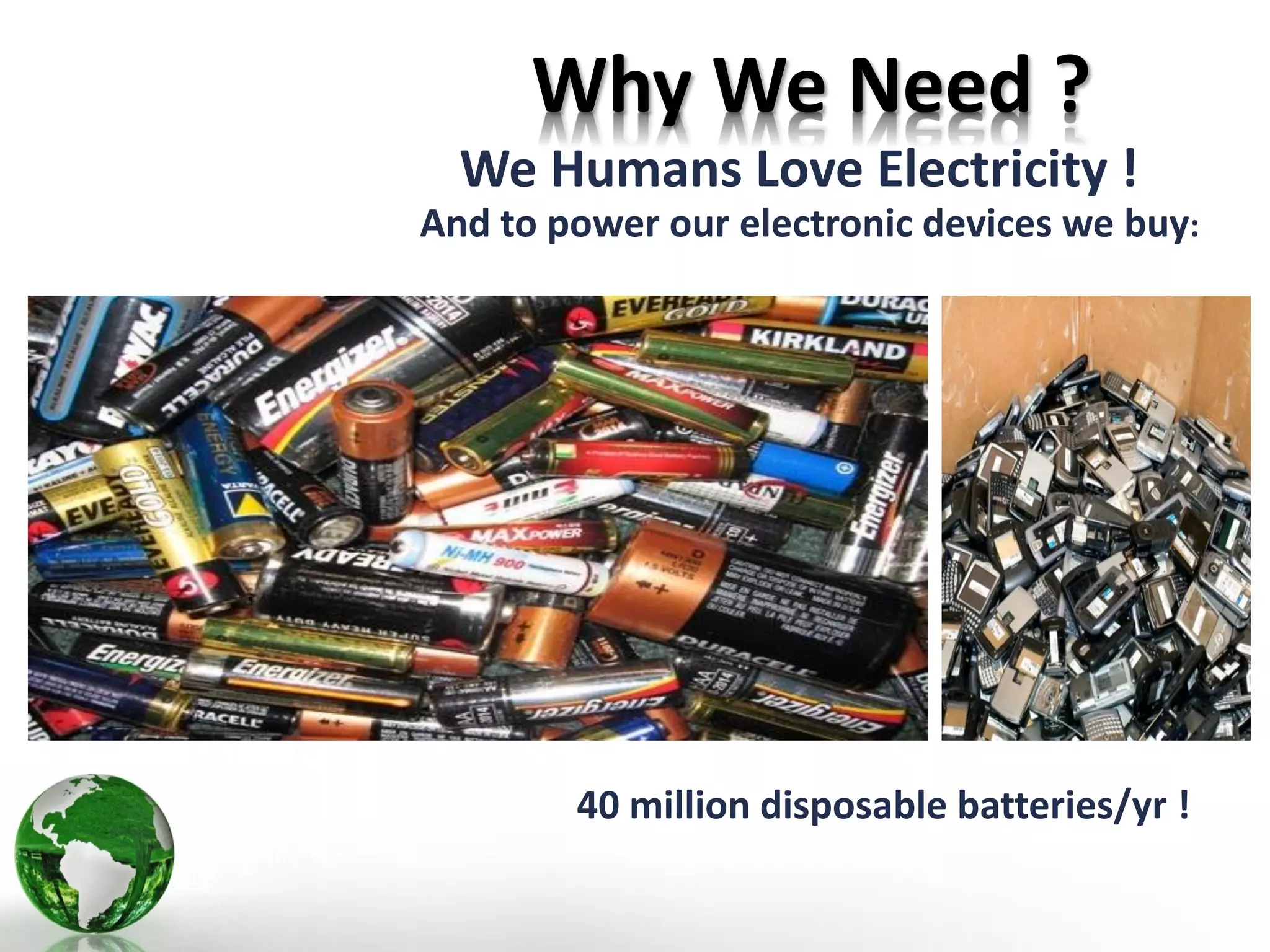
Why We Need ?
And to power our electronic devices we buy:
40 million disposable batteries/yr !
We Humans Love Electricity !
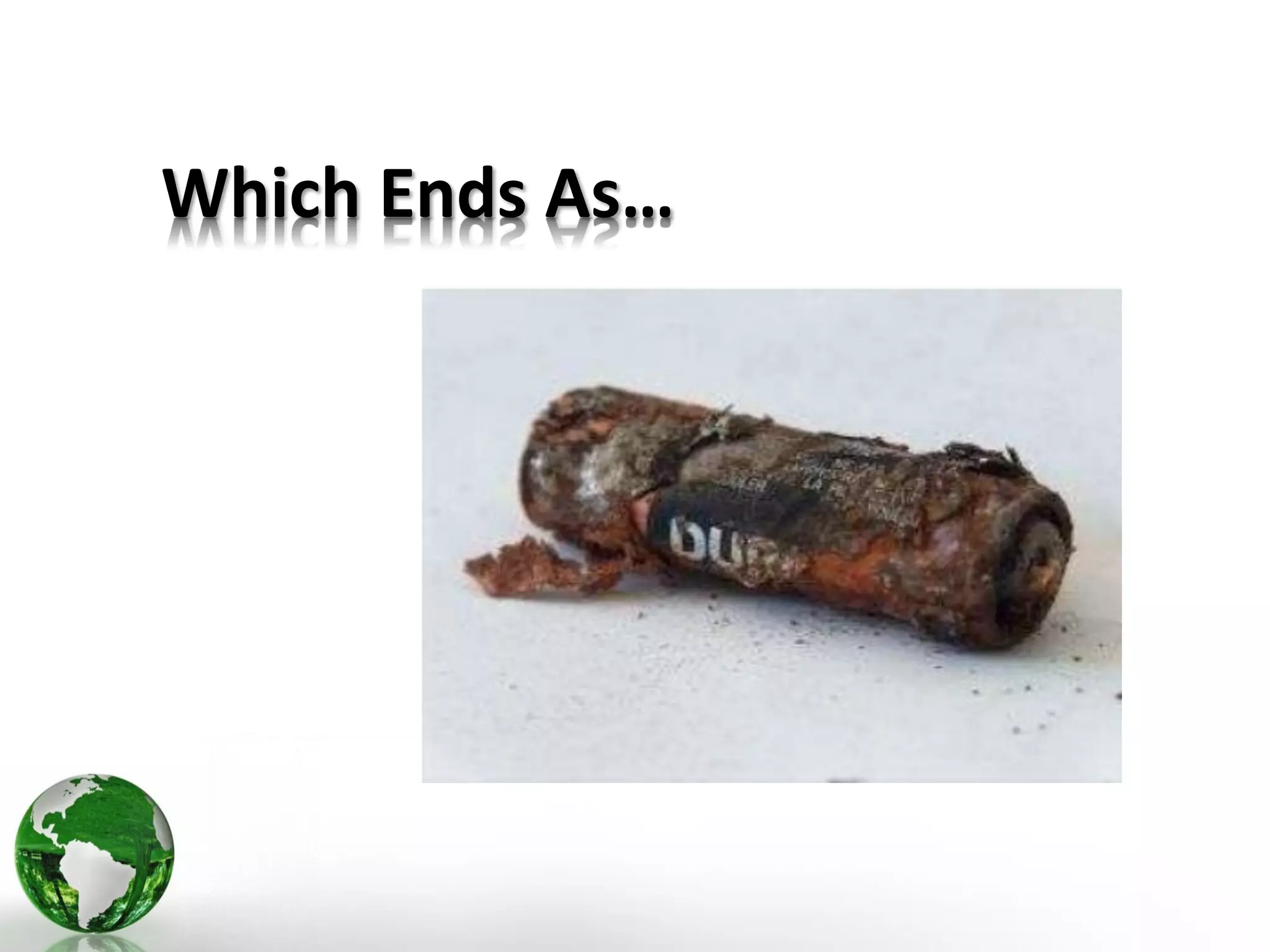
Which Ends As…
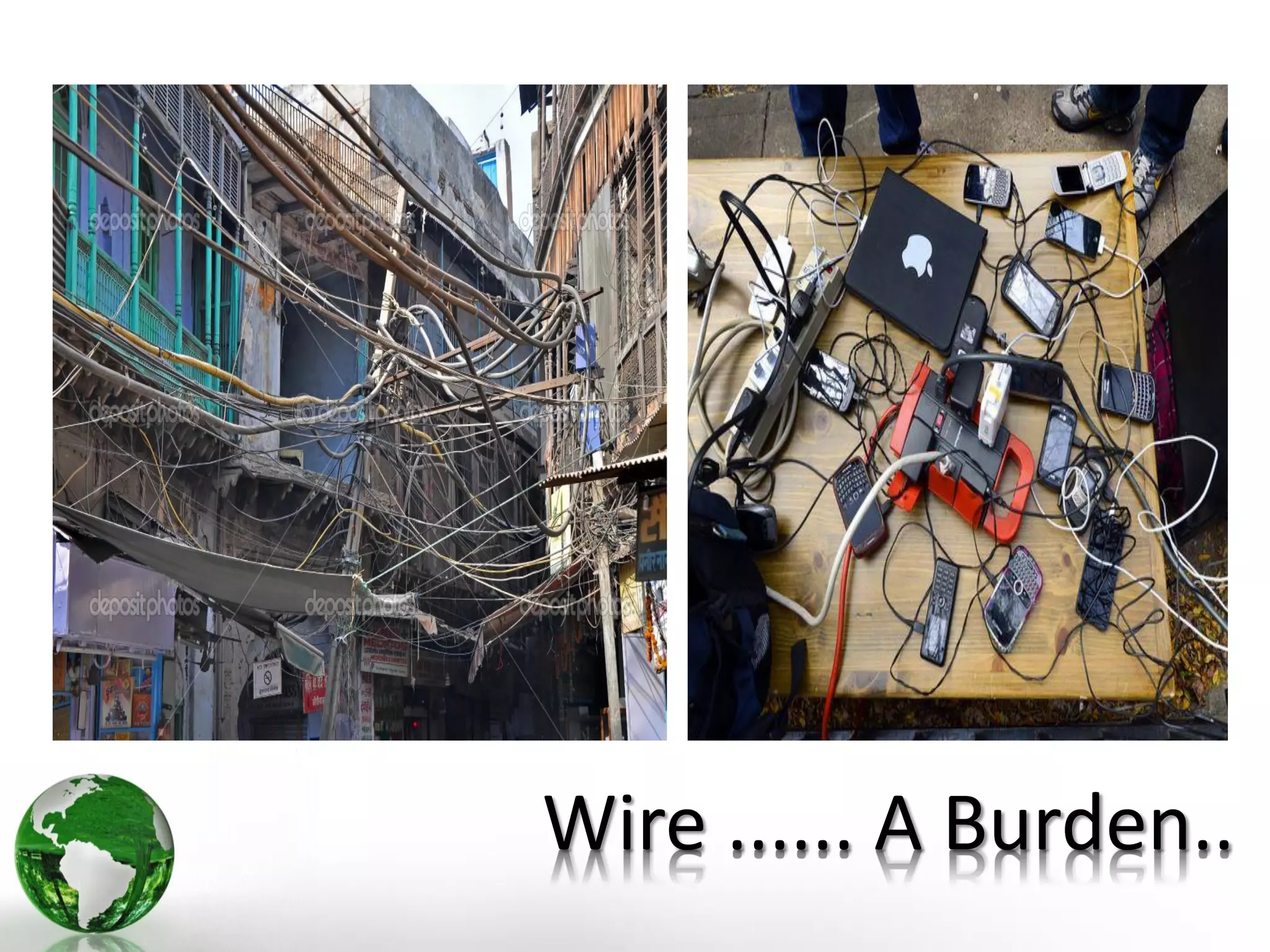
Wire ...... A Burden..
Which Somtimes Ends Us……………….
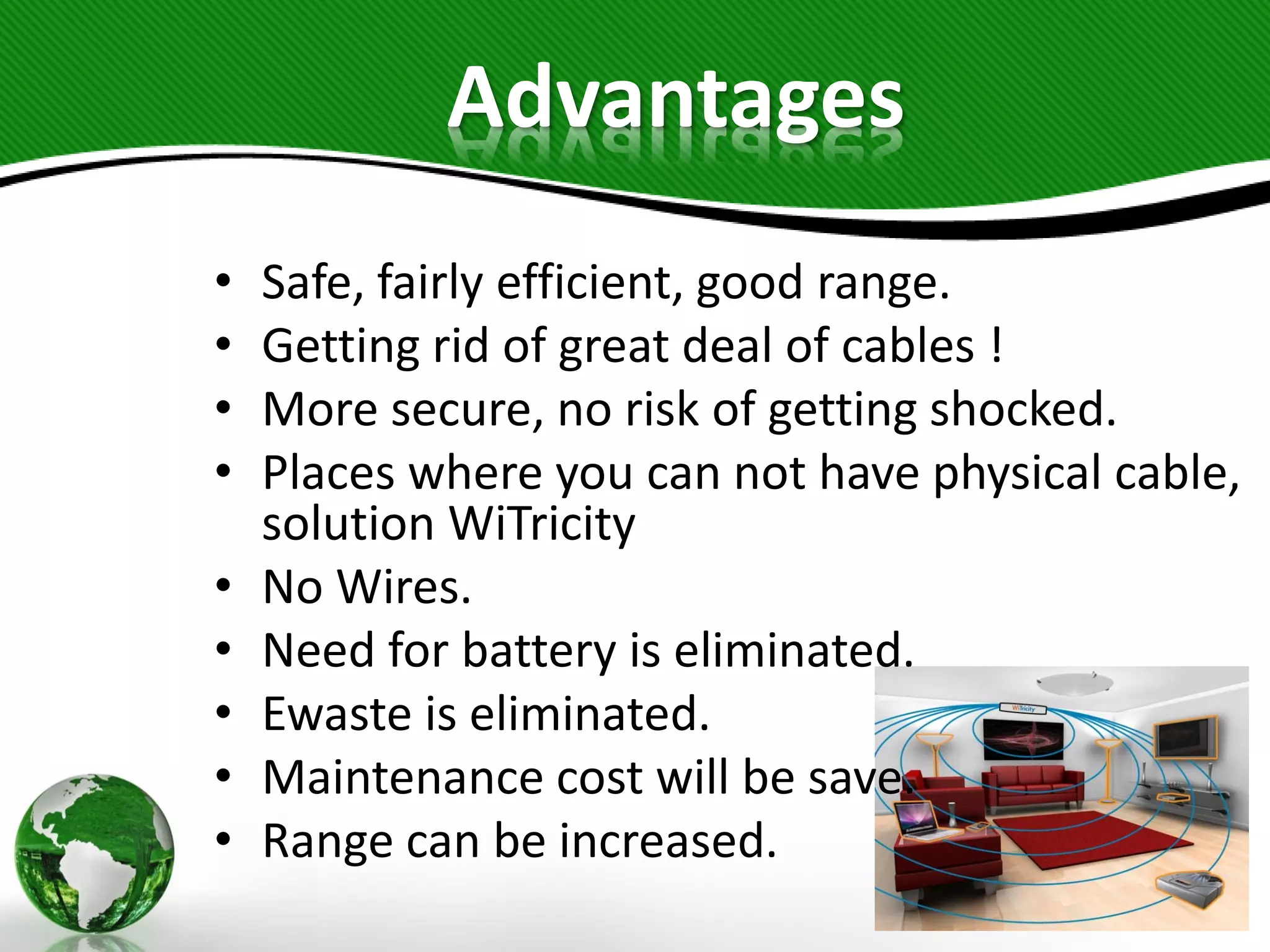
Advantages
• Safe, fairly efficient, good range.
• Getting rid of great deal of cables !
• More secure, no risk of getting shocked.
• Places where you can not have physical cable,
solution WiTricity
• No Wires.
• Need for battery is eliminated.
• Ewaste is eliminated.
• Maintenance cost will be save.
• Range can be increased.
o Wireless power transmission can be possible
only in few meters.
o Efficiency is only about 40%.
o Need for standardization and adaptation. So a
little overheating occurs because of different
voltages.
o Refitting old equipment or purchasing new
equipment could become a very expensive
endeavor.
o Possibility of “energy theft”.
Disadvantages
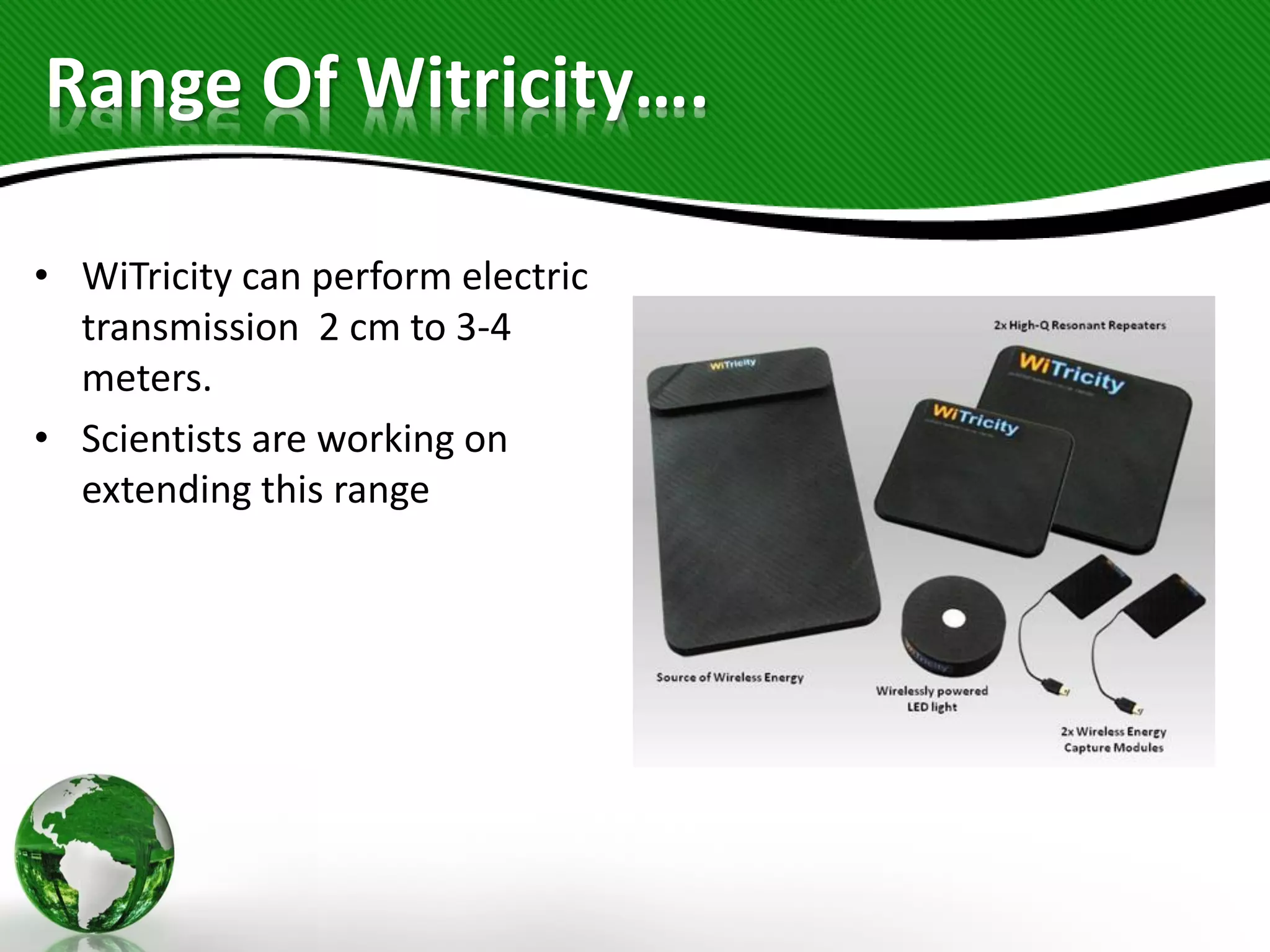
Range Of Witricity….
• WiTricity can perform electric
transmission 2 cm to 3-4
meters.
• Scientists are working on
extending this range
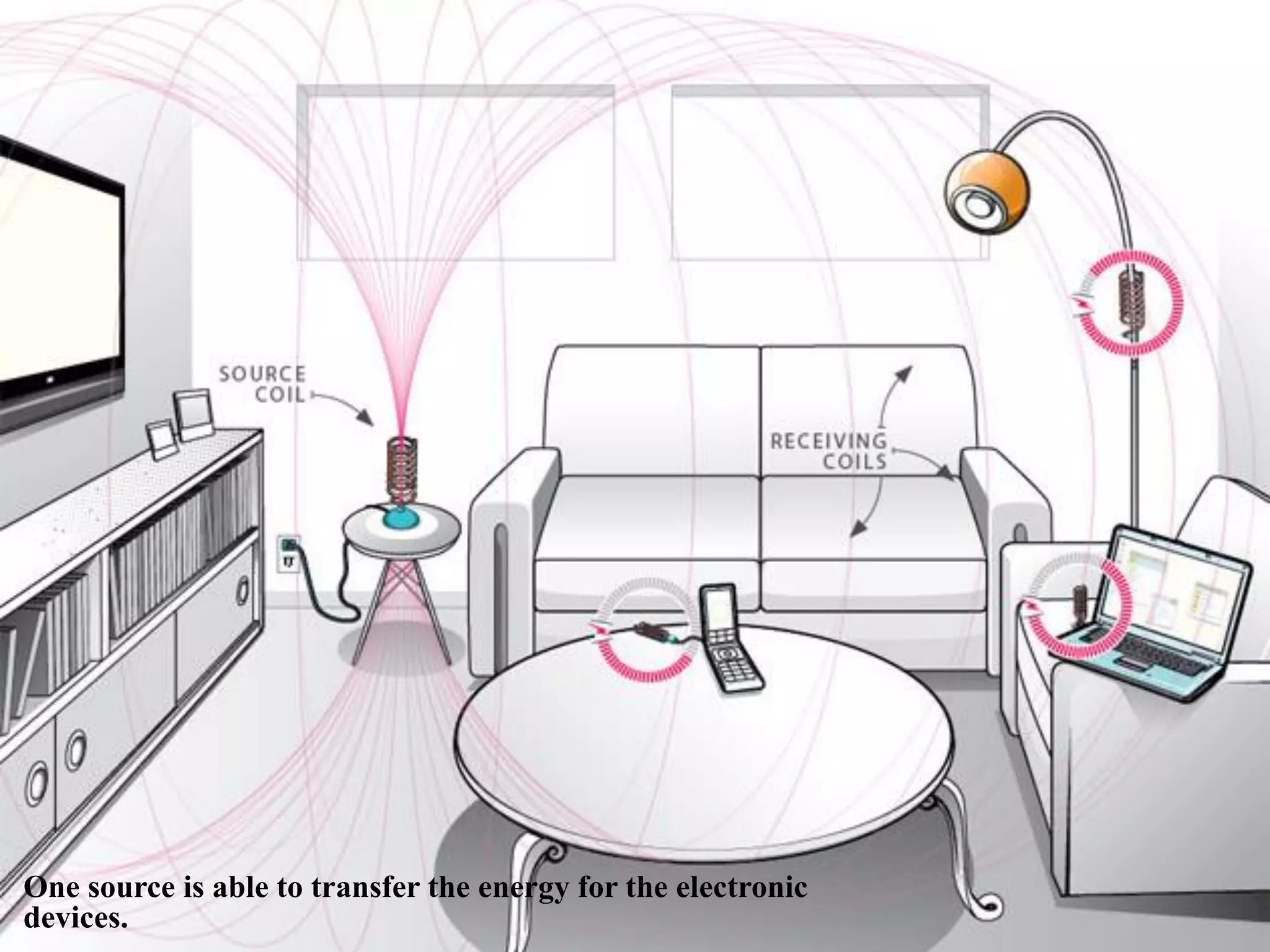
One source is able to transfer the energy for the electronic
devices.
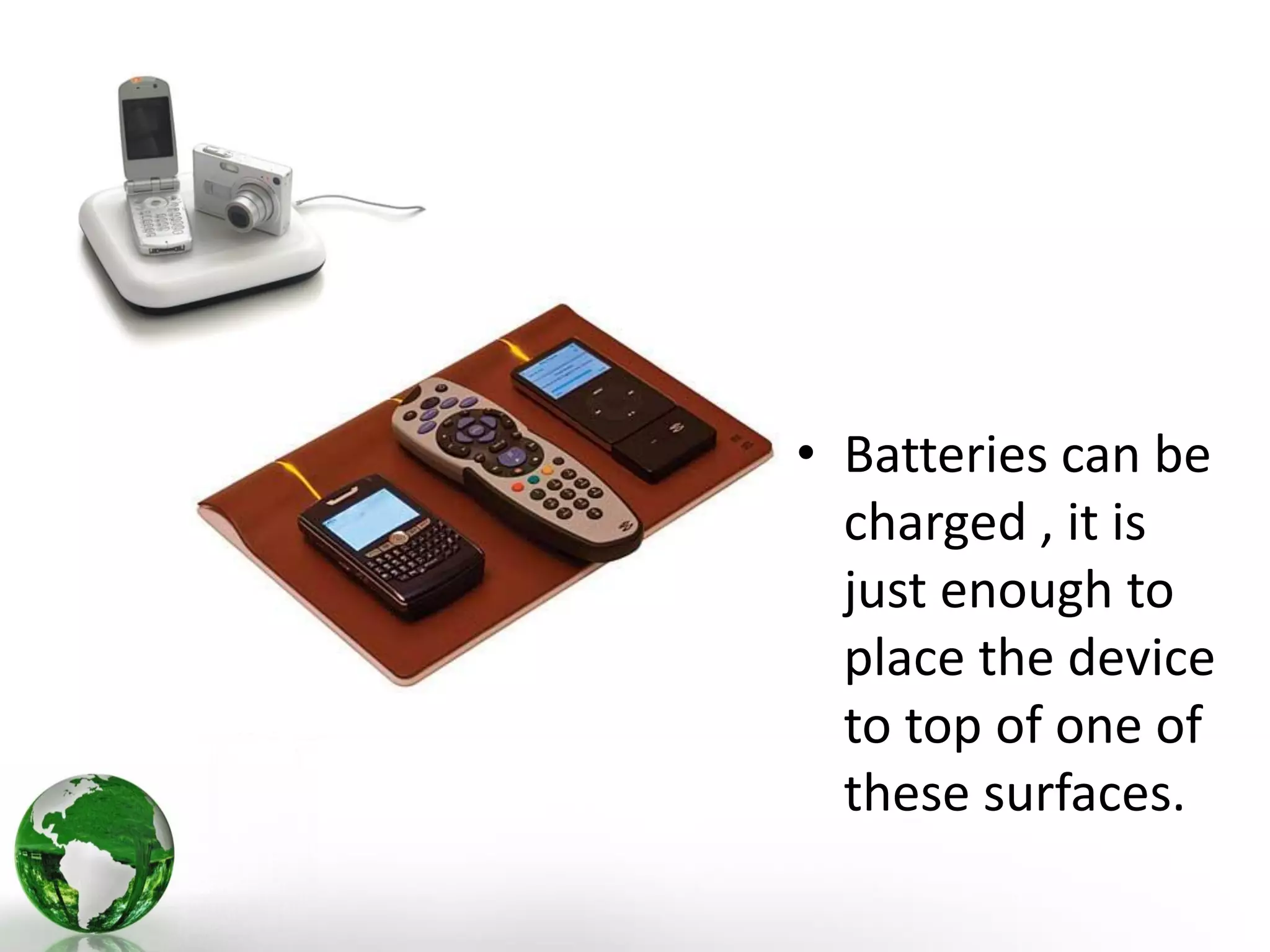
• Batteries can be
charged , it is
just enough to
place the device
to top of one of
these surfaces.
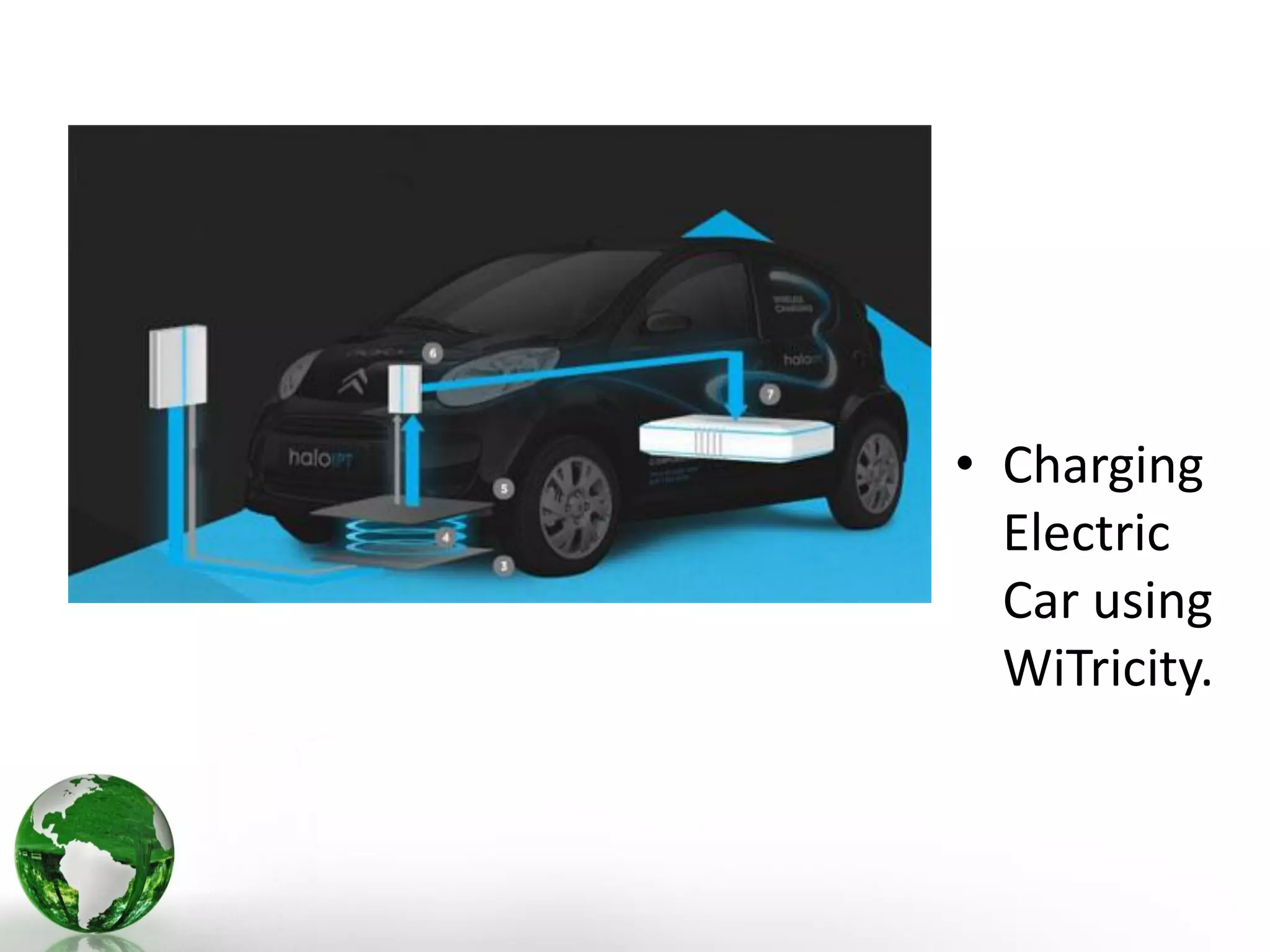
• Charging
Electric
Car using
WiTricity.
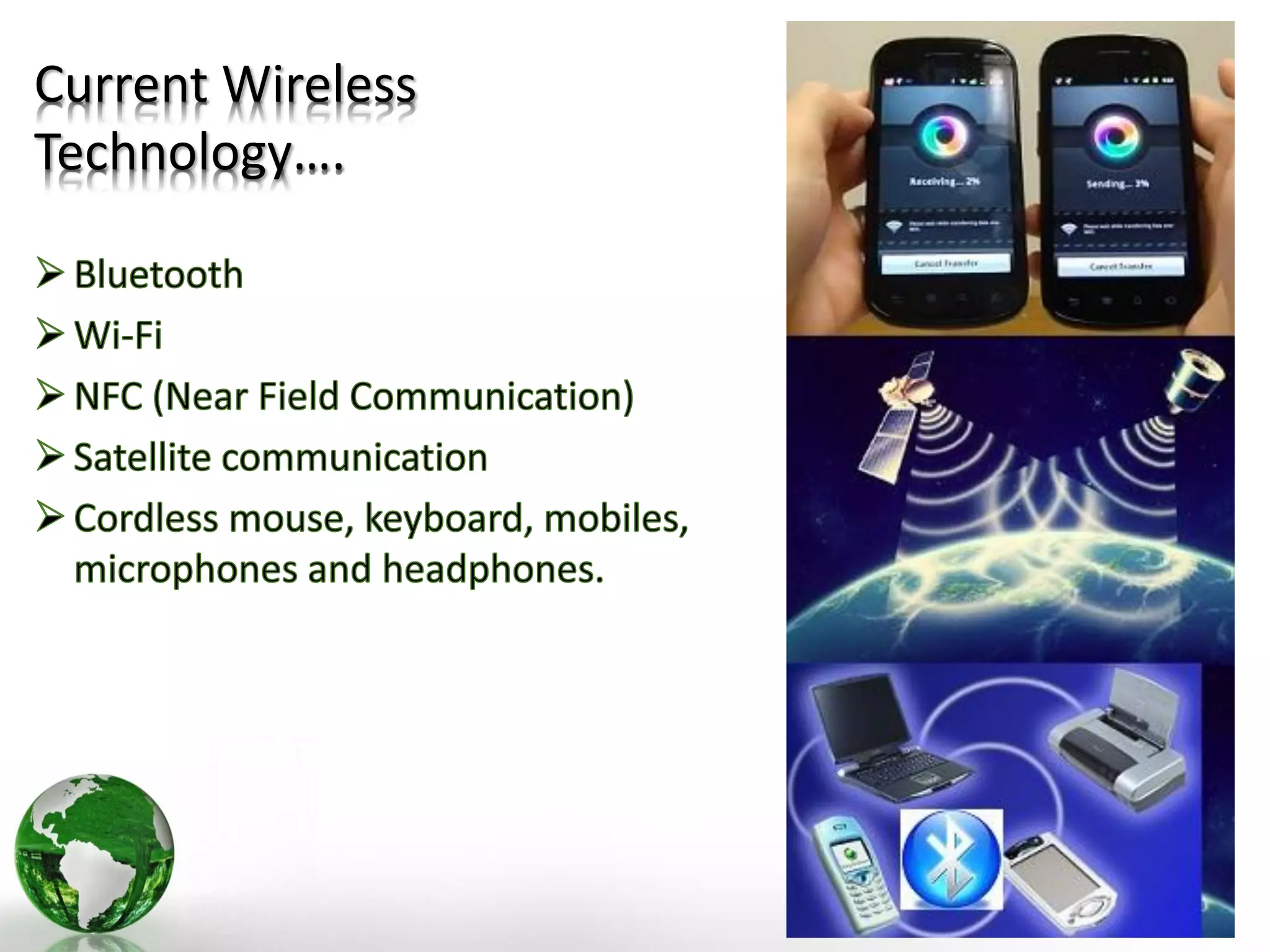
Current Wireless
Technology….
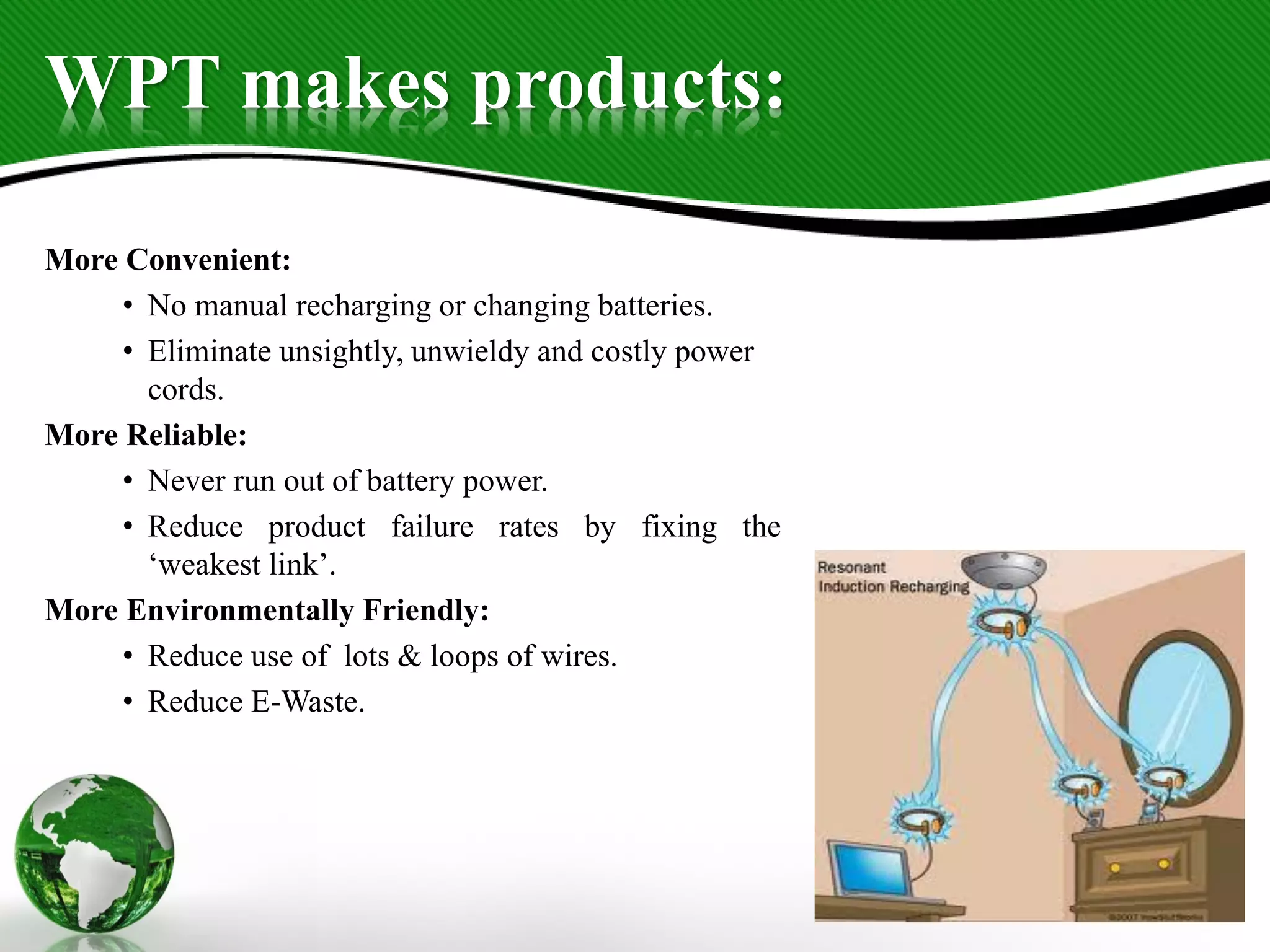
WPT makes products:
More Convenient:
• No manual recharging or changing batteries.
• Eliminate unsightly, unwieldy and costly power
cords.
More Reliable:
• Never run out of battery power.
• Reduce product failure rates by fixing the
‘weakest link’.
More Environmentally Friendly:
• Reduce use of lots & loops of wires.
• Reduce E-Waste.
How Safe is Witricity?
Human beings or other objects placed between
the transmitter and receiver do not hinder the
transmission of power.
Magnetic fields tend to interact very weakly
with the biological tissues of the body, and so
are not prone to cause any damage to any living
beings.
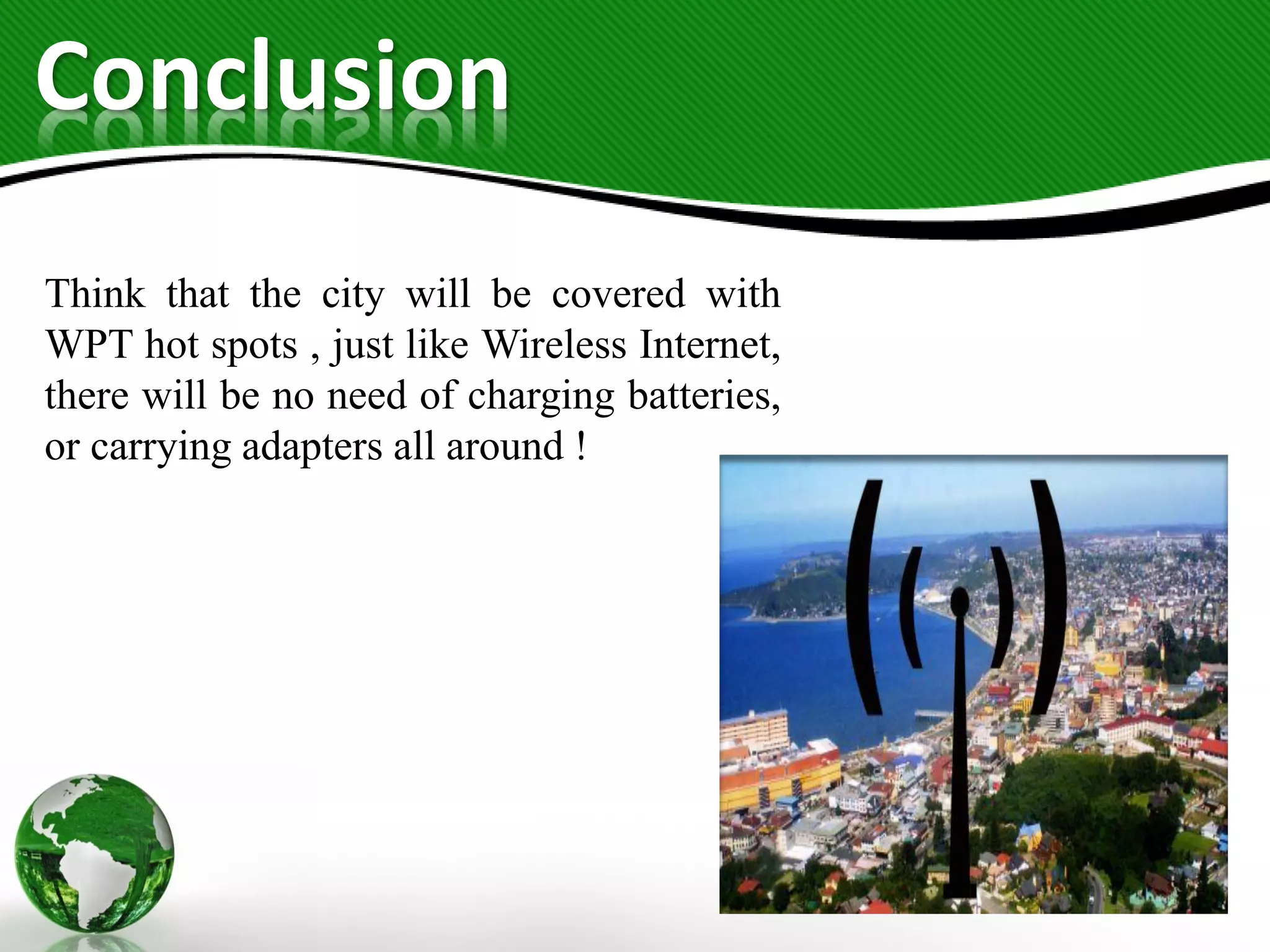
Conclusion
Think that the city will be covered with
WPT hot spots , just like Wireless Internet,
there will be no need of charging batteries,
or carrying adapters all around !
Thank You…

Wireless power / Wireless Electricity

  • 1.
    Wireless Power Presented By:- Muhammad Umair Iqbal Miss Zahida Brohi Sir Hassan Zaidi Instructor
  • 2.
    Outlines Wireless power? History OfWireless Power. How Wireless Power Works. Ways of electricity transmission. Need Of Wireless Power/Witricity. Applications. Advantages & Disadvantages. Is Witricity Secure ? Conclusion.
  • 3.
    Wireless Power • Transmissionof energy through the air. • Process of transferring electric energy or power over distance without wires. • Also known as “WiTricity” and “Wireless Power Transmission”. • Power source (transmitter) provides power to the devices where as capture device (receiver) captures it. • Eliminates the use of cables for transmission of power • Transmission by induction through resonators.
  • 4.
    History Of WirelessPower  In 1899, Sir Nikola Tesla Proposed a method of Wireless Power Transmission.  Tesla enlighten 200 lamps at the distance of 40 km. But only 15% efficiency was achieved.  As it is in Radiative mode, most of the Power was wasted and has less efficiency.
  • 5.
    The Forgotten Inventionis reborn in • A group of engineers at MIT came up with the idea to use resonant induction to transmit power wirelessly. • MIT powered 60 watt light bulb from 2 meters (7 ft) at 40% efficiency. • First Practical example of Witricity. 2007
  • 6.
    Effeciency chart ofwitricity Experimental results of MIT experiment
  • 7.
    How Wireless PowerWorks ? • 1. Magnetic coil (Antenna A) is housed in a box and can be set in wall or ceiling. • 2. Antenna A, powered by mains, resonates at a specific frequency. • 3. Electromagnetic waves transmitted through the air. • 4. Second magnetic coil (Antenna B) fitted in laptop/TV etc resonates at same frequency as first coil and absorbs energy. • 5. Energy charges the device.
  • 8.
  • 9.
  • 10.
    Working Principle • OneSimple Physics Rule ! • At Source : Electricity => Magnetic Wave • At Device : Magnetic Wave => Electricity
  • 11.
    Why We Need? And to power our electronic devices we buy: 40 million disposable batteries/yr ! We Humans Love Electricity !
  • 12.
  • 13.
    Wire ...... ABurden..
  • 14.
    Which Somtimes EndsUs……………….
  • 15.
    Advantages • Safe, fairlyefficient, good range. • Getting rid of great deal of cables ! • More secure, no risk of getting shocked. • Places where you can not have physical cable, solution WiTricity • No Wires. • Need for battery is eliminated. • Ewaste is eliminated. • Maintenance cost will be save. • Range can be increased.
  • 16.
    o Wireless powertransmission can be possible only in few meters. o Efficiency is only about 40%. o Need for standardization and adaptation. So a little overheating occurs because of different voltages. o Refitting old equipment or purchasing new equipment could become a very expensive endeavor. o Possibility of “energy theft”. Disadvantages
  • 17.
    Range Of Witricity…. •WiTricity can perform electric transmission 2 cm to 3-4 meters. • Scientists are working on extending this range
  • 18.
    One source isable to transfer the energy for the electronic devices.
  • 19.
    • Batteries canbe charged , it is just enough to place the device to top of one of these surfaces.
  • 20.
  • 21.
  • 22.
    WPT makes products: MoreConvenient: • No manual recharging or changing batteries. • Eliminate unsightly, unwieldy and costly power cords. More Reliable: • Never run out of battery power. • Reduce product failure rates by fixing the ‘weakest link’. More Environmentally Friendly: • Reduce use of lots & loops of wires. • Reduce E-Waste.
  • 23.
    How Safe isWitricity? Human beings or other objects placed between the transmitter and receiver do not hinder the transmission of power. Magnetic fields tend to interact very weakly with the biological tissues of the body, and so are not prone to cause any damage to any living beings.
  • 24.
    Conclusion Think that thecity will be covered with WPT hot spots , just like Wireless Internet, there will be no need of charging batteries, or carrying adapters all around !
  • 25.