HYBRID ELECTRIC VEHICLE
introductionA hybrid electric vehicle (HEV) augments an electric vehicle (EV) with a second source of power referred to as the alternative power unit (APU).
A hybrid can achieve the cruising range and performance advantages of conventional vehicles with the low-noise, low-exhaust emissions, and energy independence benefits of electric vehicles
Accordingly, the hybrid concept, where the alternative power unit is used as a second source of energy, is gaining acceptance and is overcoming some of the problems of pure electric vehicles.2
what is hybrid electric vehicleAny vehicle that combines 2 or more sources of power is said to be hybrid. For example, a moped(a motorized pedal bike),diesel-electric hybrid locomotives
Relies not only on batteries but also on an internal combustion engine which drives a generator to provide electricity and may also drive a wheel.
Alternative power unit to supply the power required by the vehicle, to recharge the batteries, and to power accessories like the air conditioner and heater. 3
Hybrid structureTwo types of hybrid vehicle configurations
Parallel Hybrids
Series Hybrids 4
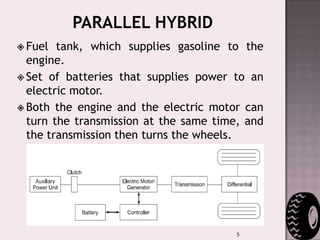
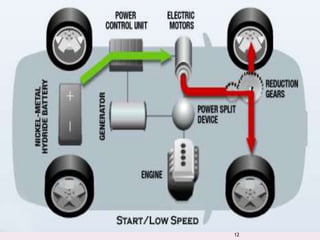
parallel hybridFuel tank, which supplies gasoline to the engine.
Set of batteries that supplies power to an electric motor.
Both the engine and the electric motor can turn the transmission at the same time, and the transmission then turns the wheels. 5
Parallel(contd.)When the APU is off, the parallel hybrid runs like an electric vehicle
When the APU is on, the controller divides energy between the drive train (propulsion) and the batteries (energy storage).
Under acceleration, more power is allocated to the drive train than to the batteries. During periods of idle or low speeds, more power goes to the batteries than the drive train.
The batteries also provide additional power to the drive train when the APU is not producing enough and also to power auxiliary systems such as the air conditioner and heater. 6
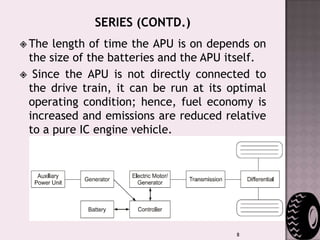
Series hybridSimilar to an electric vehicle with an on-board generator
The vehicle runs on battery power like a pure electric vehicle until the batteries reach a predetermined discharged level.
At that point the APU turns on and begins recharging the battery.
The APU operates until the batteries are charged to a predetermined level.
APU never directly powers the vehicle7
Series (contd.)The length of time the APU is on depends on the size of the batteries and the APU itself.
Since the APU is not directly connected to the drive train, it can be run at its optimal operating condition; hence, fuel economy is increased and emissions are reduced relative to a pure IC engine vehicle. 8

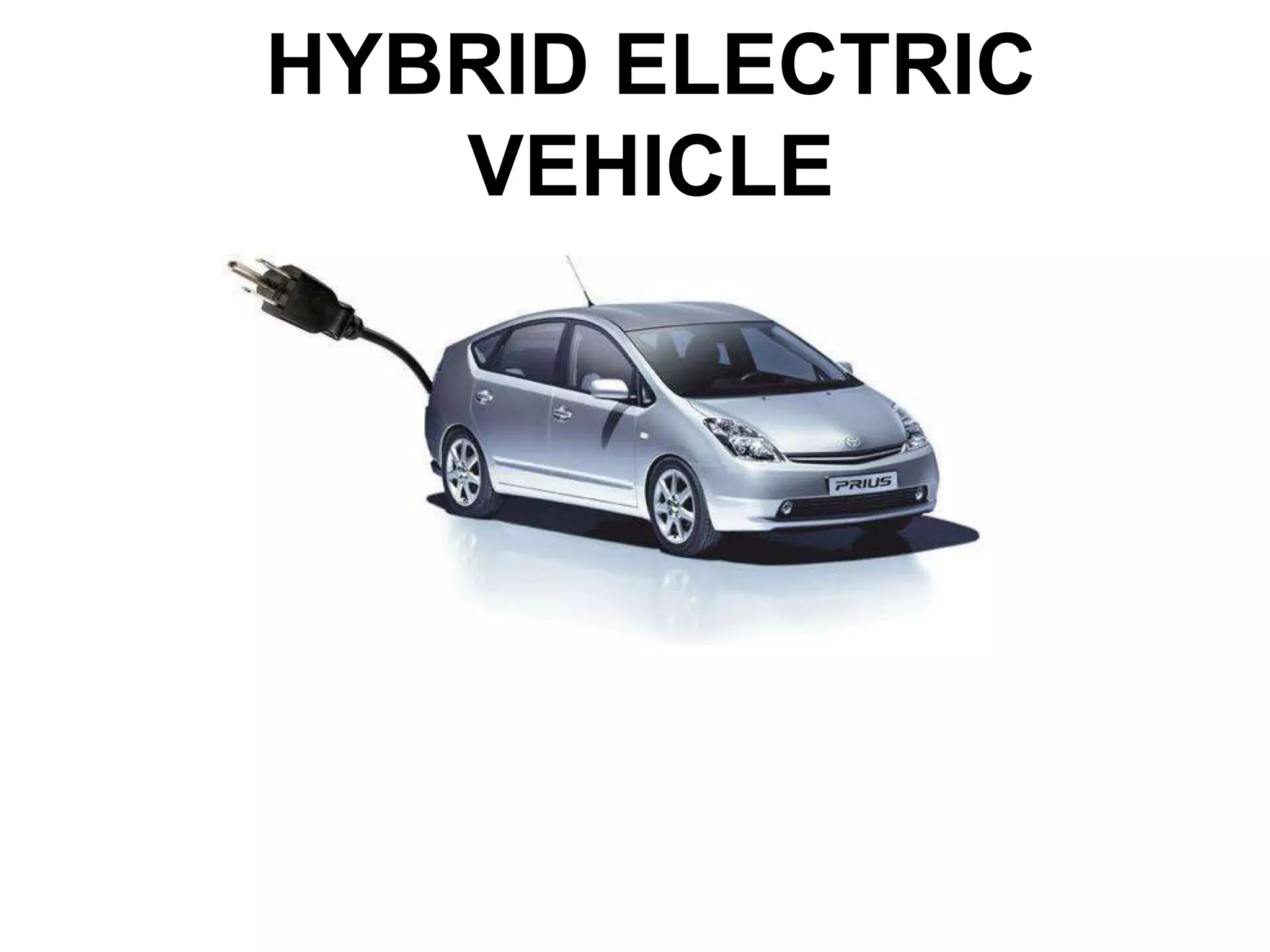
Hybrid Electric Vehicle

  • 1.
  • 2.
    introductionA hybrid electricvehicle (HEV) augments an electric vehicle (EV) with a second source of power referred to as the alternative power unit (APU).
  • 3.
    A hybrid canachieve the cruising range and performance advantages of conventional vehicles with the low-noise, low-exhaust emissions, and energy independence benefits of electric vehicles
  • 4.
    Accordingly, the hybridconcept, where the alternative power unit is used as a second source of energy, is gaining acceptance and is overcoming some of the problems of pure electric vehicles.2
  • 5.
    what is hybridelectric vehicleAny vehicle that combines 2 or more sources of power is said to be hybrid. For example, a moped(a motorized pedal bike),diesel-electric hybrid locomotives
  • 6.
    Relies not onlyon batteries but also on an internal combustion engine which drives a generator to provide electricity and may also drive a wheel.
  • 7.
    Alternative power unitto supply the power required by the vehicle, to recharge the batteries, and to power accessories like the air conditioner and heater. 3
  • 8.
    Hybrid structureTwo typesof hybrid vehicle configurations
  • 9.
  • 10.
  • 11.
    parallel hybridFuel tank,which supplies gasoline to the engine.
  • 12.
    Set of batteriesthat supplies power to an electric motor.
  • 13.
    Both the engineand the electric motor can turn the transmission at the same time, and the transmission then turns the wheels. 5
  • 14.
    Parallel(contd.)When the APUis off, the parallel hybrid runs like an electric vehicle
  • 15.
    When the APUis on, the controller divides energy between the drive train (propulsion) and the batteries (energy storage).
  • 16.
    Under acceleration, morepower is allocated to the drive train than to the batteries. During periods of idle or low speeds, more power goes to the batteries than the drive train.
  • 17.
    The batteries alsoprovide additional power to the drive train when the APU is not producing enough and also to power auxiliary systems such as the air conditioner and heater. 6
  • 18.
    Series hybridSimilar toan electric vehicle with an on-board generator
  • 19.
    The vehicle runson battery power like a pure electric vehicle until the batteries reach a predetermined discharged level.
  • 20.
    At that pointthe APU turns on and begins recharging the battery.
  • 21.
    The APU operatesuntil the batteries are charged to a predetermined level.
  • 22.
    APU never directlypowers the vehicle7
  • 23.
    Series (contd.)The lengthof time the APU is on depends on the size of the batteries and the APU itself.
  • 24.
    Since the APUis not directly connected to the drive train, it can be run at its optimal operating condition; hence, fuel economy is increased and emissions are reduced relative to a pure IC engine vehicle. 8