content
 Introduction
 working
 Pollution
 Advantages
 Disadvantages
 Challenges
 Conclusion
INTRODUCTION
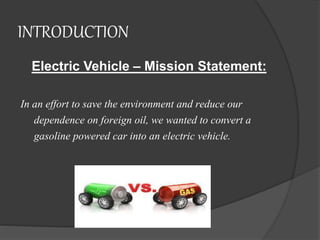
Electric Vehicle – Mission Statement:
In an effort to save the environment and reduce our
dependence on foreign oil, we wanted to convert a
gasoline powered car into an electric vehicle.
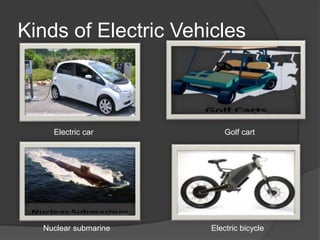
Kinds of Electric Vehicles
Electric car Golf cart
Nuclear submarine Electric bicycle
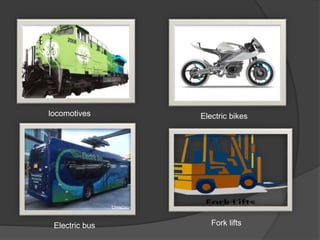
locomotives
Fork lifts
Electric bikes
Electric bus
The Importance of Electric
Vehicles:
 Gasoline is a scarce, natural resource.
 Electricity is cheaper than gasoline. Electricity can come
from renewable resources such as solar and wind power.
 Electric cars pollute less than gas-powered cars.
 Electric cars are much more reliable and require less
maintenance than gas-powered cars.
 By using domestically-generated electricity rather than
relying on foreign oil, our India can become more
independent.
The Problems With Gasoline Powered
Vehicles:
 Gasoline Is A Scarce Resource:
 Heavy Reliance On Imports:
 Creates Smog & Ozone in Big Cities:
 Creates Greenhouse Gases:
Short History of electric
vehicles
 Gasoline vehicles cheaper and faster
from 1920 until today
 Renewed interest in 1980s after oil
crises
 Today‘s batteries allow longer ranges
 Invention of first electric vehicle 1834
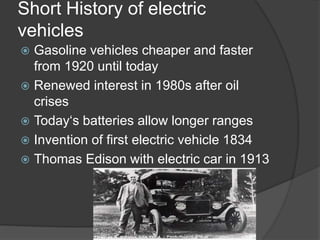
 Thomas Edison with electric car in 1913
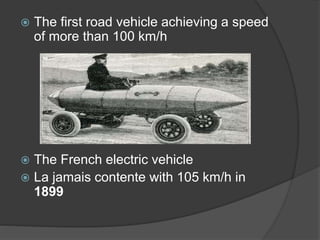
 The first road vehicle achieving a speed
of more than 100 km/h
 The French electric vehicle
 La jamais contente with 105 km/h in
1899
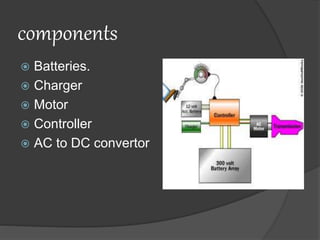
components
 Batteries.
 Charger
 Motor
 Controller
 AC to DC convertor
How do Electric Cars work?
 Stores its energy in batteries
 Accelerator controls number of volts
delivered to motor
 Controller takes power from battery
and delivers it to the motor
 Batteries: Lead-acid, nickel-cadmium,
zinc-chlorine, nickel metal hydride,
and sodium-sulfur
 Recharging
 Battery charger transfers electricity
provided by electric utility into the vehicle
battery to recharge it
 Full charge takes 3-8 hours
 Can go about 100 miles before
recharging
 Solectria Sunrise can go 238 miles on
one charge
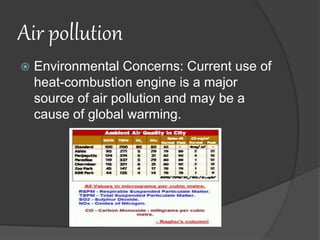
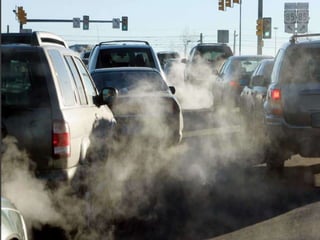
Air pollution
 Environmental Concerns: Current use of
heat-combustion engine is a major
source of air pollution and may be a
cause of global warming.
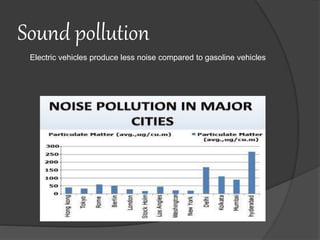
Sound pollution
Electric vehicles produce less noise compared to gasoline vehicles
advantages
 More efficient, lower fuel costs, lower
emissions
 Simpler transmission, fewer moving parts
 Fuel Choice
 Oil/energy independence
 Charging EVs represents a small amount
of total power demand
 Some batteries have been seen to outlast
the vehicle life
 Fossil fuels are converted at a power plant,
pollution is more easily controlled
 Reduction in global warming pollution
 Cost
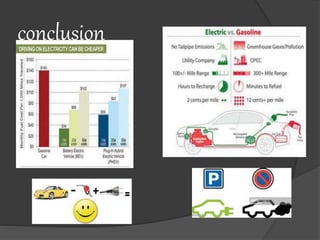
 Electricity: 2-6 cents/mile
 Gas: ~8 cents/mile
 Electricity is widely available
 Considered zero-emission
 Less maintenance vehicles
 Meet all federal safety requirements
disadvantages
 Batteries need to be charged.
 Car can not be used when batteries are
being charging.
 Some Car can only go 40 Miles between
charges.
 Battery disposal needs to be carefully
managed.
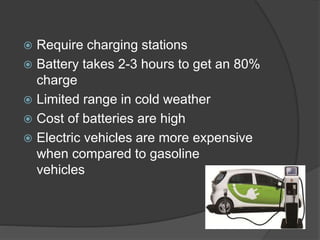
 Require charging stations
 Battery takes 2-3 hours to get an 80%
charge
 Limited range in cold weather
 Cost of batteries are high
 Electric vehicles are more expensive
when compared to gasoline
vehicles
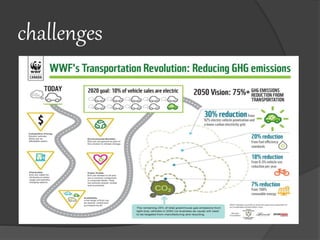
challenges
conclusion
BYE…. BYE…..

Electric vehicles

  • 2.
    content  Introduction  working Pollution  Advantages  Disadvantages  Challenges  Conclusion
  • 3.
    INTRODUCTION Electric Vehicle –Mission Statement: In an effort to save the environment and reduce our dependence on foreign oil, we wanted to convert a gasoline powered car into an electric vehicle.
  • 4.
    Kinds of ElectricVehicles Electric car Golf cart Nuclear submarine Electric bicycle
  • 5.
  • 6.
    The Importance ofElectric Vehicles:  Gasoline is a scarce, natural resource.  Electricity is cheaper than gasoline. Electricity can come from renewable resources such as solar and wind power.  Electric cars pollute less than gas-powered cars.  Electric cars are much more reliable and require less maintenance than gas-powered cars.  By using domestically-generated electricity rather than relying on foreign oil, our India can become more independent.
  • 7.
    The Problems WithGasoline Powered Vehicles:  Gasoline Is A Scarce Resource:  Heavy Reliance On Imports:  Creates Smog & Ozone in Big Cities:  Creates Greenhouse Gases:
  • 8.
    Short History ofelectric vehicles  Gasoline vehicles cheaper and faster from 1920 until today  Renewed interest in 1980s after oil crises  Today‘s batteries allow longer ranges  Invention of first electric vehicle 1834  Thomas Edison with electric car in 1913
  • 9.
     The firstroad vehicle achieving a speed of more than 100 km/h  The French electric vehicle  La jamais contente with 105 km/h in 1899
  • 10.
    components  Batteries.  Charger Motor  Controller  AC to DC convertor
  • 11.
    How do ElectricCars work?  Stores its energy in batteries  Accelerator controls number of volts delivered to motor  Controller takes power from battery and delivers it to the motor  Batteries: Lead-acid, nickel-cadmium, zinc-chlorine, nickel metal hydride, and sodium-sulfur
  • 12.
     Recharging  Batterycharger transfers electricity provided by electric utility into the vehicle battery to recharge it  Full charge takes 3-8 hours  Can go about 100 miles before recharging  Solectria Sunrise can go 238 miles on one charge
  • 13.
    Air pollution  EnvironmentalConcerns: Current use of heat-combustion engine is a major source of air pollution and may be a cause of global warming.
  • 15.
    Sound pollution Electric vehiclesproduce less noise compared to gasoline vehicles
  • 17.
    advantages  More efficient,lower fuel costs, lower emissions  Simpler transmission, fewer moving parts  Fuel Choice  Oil/energy independence  Charging EVs represents a small amount of total power demand  Some batteries have been seen to outlast the vehicle life
  • 18.
     Fossil fuelsare converted at a power plant, pollution is more easily controlled  Reduction in global warming pollution  Cost  Electricity: 2-6 cents/mile  Gas: ~8 cents/mile  Electricity is widely available  Considered zero-emission  Less maintenance vehicles  Meet all federal safety requirements
  • 19.
    disadvantages  Batteries needto be charged.  Car can not be used when batteries are being charging.  Some Car can only go 40 Miles between charges.  Battery disposal needs to be carefully managed.
  • 20.
     Require chargingstations  Battery takes 2-3 hours to get an 80% charge  Limited range in cold weather  Cost of batteries are high  Electric vehicles are more expensive when compared to gasoline vehicles
  • 21.
  • 22.
  • 23.