HYBRID ELECTRIC
VEHICLE
Presented by
J. Harish
HYBRID VEHICLES
 A hybrid electric vehicle (HEV) is a type of hybrid

vehicle and electric vehicle which combines a
conventional internal combustion engine (ICE)
propulsion system with an electric propulsion system
WHY HEV ?
 Regenerative braking actually makes city driving more






economical than on the highway.
Fuel efficiency is greatly increased (twice).
Emissions are greatly decreased.
Dependency on fossils fuels can be decreased.
Can be run on alternative fuels as well.
Global-Warming: Still An Issue.
 Hybrids are not zero-emission vehicles.
 Will cut down emissions of global-warming pollutants

by a third to a half.
 Later models may cut these emissions down by even
more.
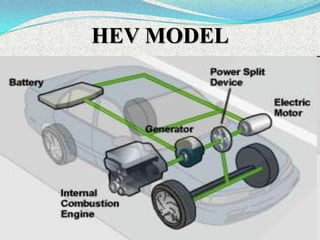
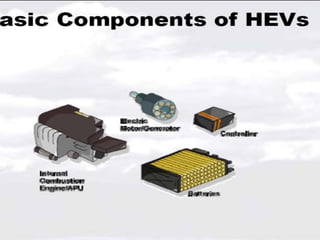
HEV MODEL
How HEVs Work
MMP HEV’s prolong charge on batteries capturing KE

via Regenerative Braking.
HEV’s use ICE to generate Electricity by spinning

Electric Generator either to Recharge or to feed power
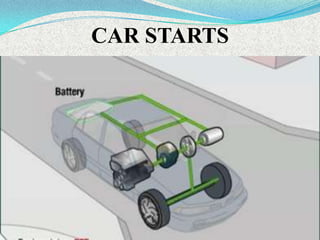
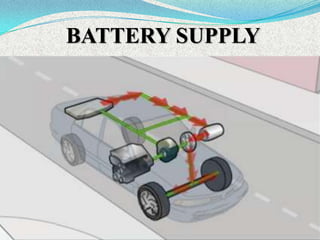
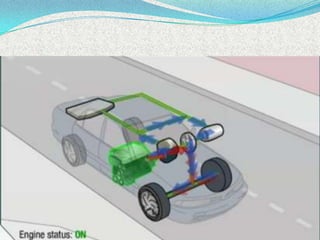
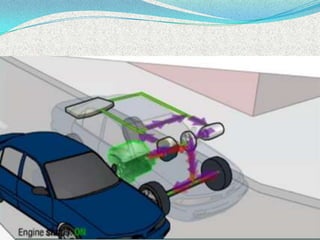
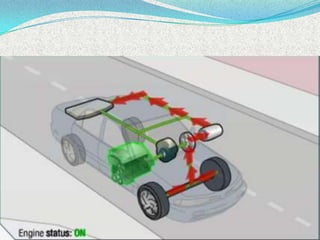
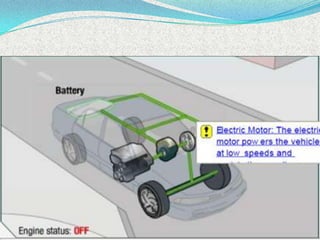
HOW HYBRIDS
ELECTRICAL VEHICLE
(HEV) WORK?
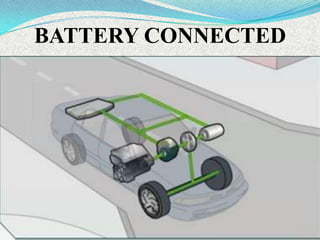
BATTERY CONNECTED
CAR STARTS
BATTERY SUPPLY
About HEVs
HEVs offer the efficiency of electric-powered vehicles

without having to recharge by using conventional engines
and fuels.
Efficiencies are gained from motor down-sizing and
regenerative braking.
Inherent flexibility allows use for numerous applications
CLASSIFICATIONS
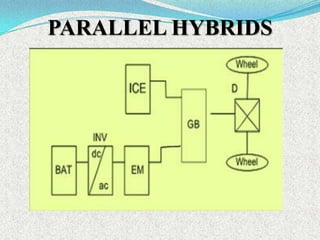
 Parallel Hybrids
 Series Hybrids

 Power-split Hybrids
PARALLEL HYBRIDS
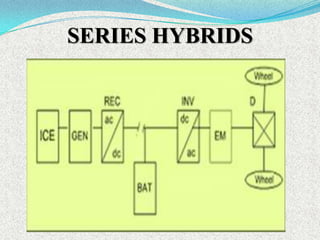
SERIES HYBRIDS
POWER SPLIT HYBRIDS
 It combines both Series and Parallel Hybrids
 Series hybrids tend to be more efficient at lower speeds

and parallel tend to be more efficient at high speeds

Hence It is more efficient
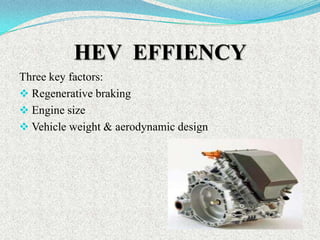
HEV EFFIENCY
Three key factors:
 Regenerative braking
 Engine size
 Vehicle weight & aerodynamic design
Efficiency Contd….
Engine size = may be smaller than in a conventional

vehicle


Engine is sized to accommodate average
– not peak load

Vehicle weight/aerodynamic design:
 Built using special lightweight materials
 Uses advanced aerodynamics to reduce drag

load
Advanced Technologies
Regenerative Braking
Electric Motor Drive/Assist

Automatic Start/ Shut Off
HEVs in Transportation
Increasing gasoline prices are making HEVs very

attractive to consumers.
HEVs are already available today(In , and their use will
become more widespread as production picks up
ADVANTAGES
 Reduced fuel consumption
 Excellent gas mileagr
 HEV is able to operate nearly twice as efficiently as traditional

internal combustion vehicles
 Lighter batteries than electric vehicles
 Regenerative braking system stores electrical energy in Batteries
 Uses less fuel to recharge batteries
CONCLUSION
So, the HEVs have more efficiency, Low Fuel Economy,

High Reliability and Less Air Pollution.
Optimum Utilisation of these Vehicles will yield in

good Results, especially Reduction of pollution.
Queries

Hybrid electrical vehicle

  • 1.
  • 2.
    HYBRID VEHICLES  Ahybrid electric vehicle (HEV) is a type of hybrid vehicle and electric vehicle which combines a conventional internal combustion engine (ICE) propulsion system with an electric propulsion system
  • 3.
    WHY HEV ? Regenerative braking actually makes city driving more     economical than on the highway. Fuel efficiency is greatly increased (twice). Emissions are greatly decreased. Dependency on fossils fuels can be decreased. Can be run on alternative fuels as well.
  • 4.
    Global-Warming: Still AnIssue.  Hybrids are not zero-emission vehicles.  Will cut down emissions of global-warming pollutants by a third to a half.  Later models may cut these emissions down by even more.
  • 5.
  • 7.
    How HEVs Work MMPHEV’s prolong charge on batteries capturing KE via Regenerative Braking. HEV’s use ICE to generate Electricity by spinning Electric Generator either to Recharge or to feed power
  • 8.
  • 9.
  • 10.
  • 11.
  • 16.
    About HEVs HEVs offerthe efficiency of electric-powered vehicles without having to recharge by using conventional engines and fuels. Efficiencies are gained from motor down-sizing and regenerative braking. Inherent flexibility allows use for numerous applications
  • 17.
    CLASSIFICATIONS  Parallel Hybrids Series Hybrids  Power-split Hybrids
  • 18.
  • 19.
  • 20.
    POWER SPLIT HYBRIDS It combines both Series and Parallel Hybrids  Series hybrids tend to be more efficient at lower speeds and parallel tend to be more efficient at high speeds Hence It is more efficient
  • 21.
    HEV EFFIENCY Three keyfactors:  Regenerative braking  Engine size  Vehicle weight & aerodynamic design
  • 22.
    Efficiency Contd…. Engine size= may be smaller than in a conventional vehicle  Engine is sized to accommodate average – not peak load Vehicle weight/aerodynamic design:  Built using special lightweight materials  Uses advanced aerodynamics to reduce drag load
  • 23.
    Advanced Technologies Regenerative Braking ElectricMotor Drive/Assist Automatic Start/ Shut Off
  • 24.
    HEVs in Transportation Increasinggasoline prices are making HEVs very attractive to consumers. HEVs are already available today(In , and their use will become more widespread as production picks up
  • 25.
    ADVANTAGES  Reduced fuelconsumption  Excellent gas mileagr  HEV is able to operate nearly twice as efficiently as traditional internal combustion vehicles  Lighter batteries than electric vehicles  Regenerative braking system stores electrical energy in Batteries  Uses less fuel to recharge batteries
  • 26.
    CONCLUSION So, the HEVshave more efficiency, Low Fuel Economy, High Reliability and Less Air Pollution. Optimum Utilisation of these Vehicles will yield in good Results, especially Reduction of pollution.
  • 27.