
Giving Scientific and Educational Presentations in English . A WorkshopDr Ray WallaceSchool of Science & TechnologyNottingham Trent UniversityUNITED KINGDOM
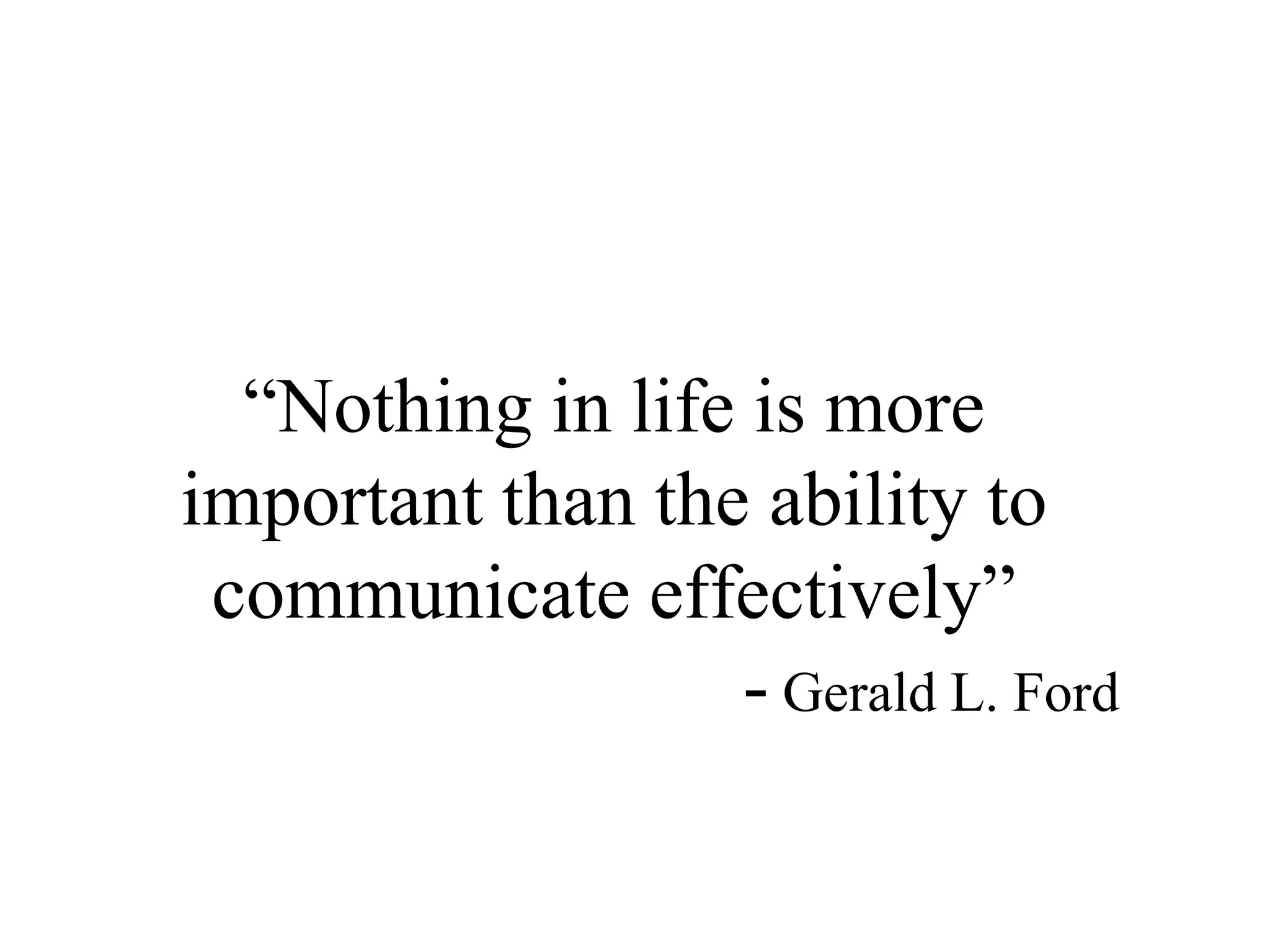
“Nothing in life is more important than the ability to communicate effectively”						- Gerald L. Ford
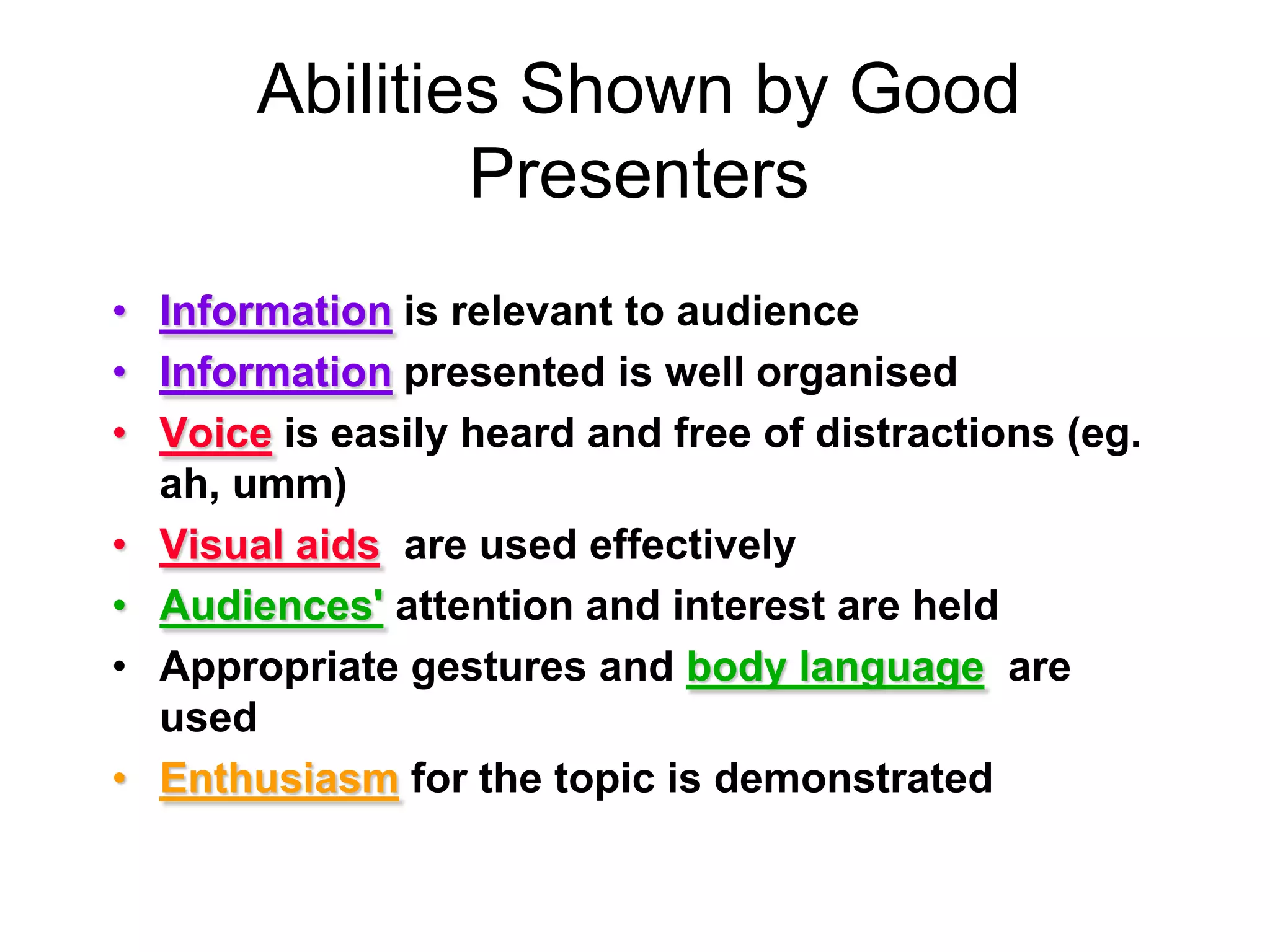
Abilities Shown by Good PresentersInformation is relevant to audienceInformationpresented is well organisedVoiceis easily heard and free of distractions (eg. ah, umm)Visual aidsare used effectivelyAudiences'attention and interest are heldAppropriate gestures and body languageare usedEnthusiasmfor the topic is demonstrated
Preparation“Fail to prepare, prepare to fail”							-Anonymous
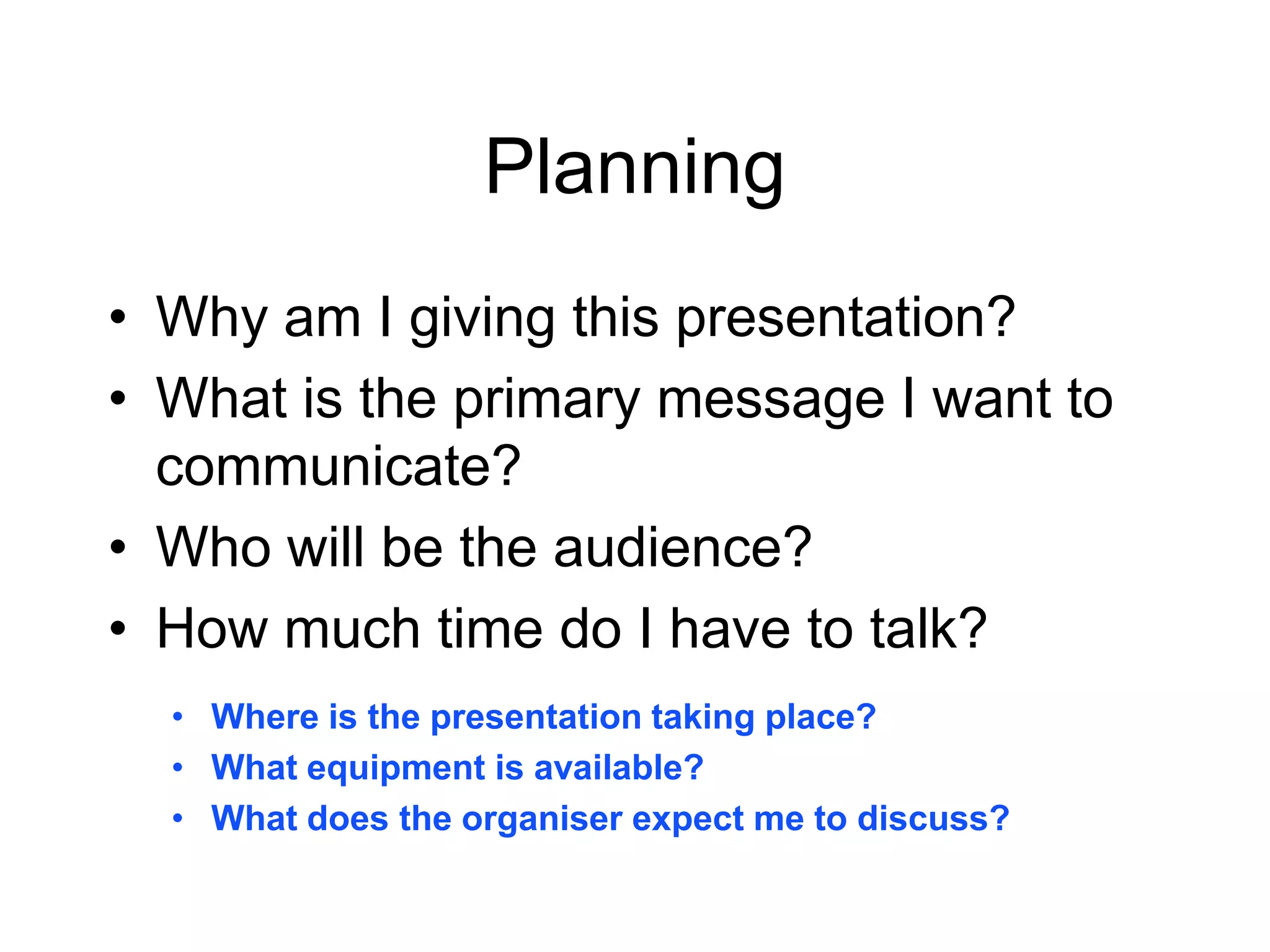
PlanningWhy am I giving this presentation?What is the primary message I want to communicate?Who will be the audience?How much time do I have to talk?Where is the presentation taking place?
What equipment is available?
What does the organiser expect me to discuss?Organisation“If you don’t know where you’re going you could wind up someplace else”							-Yogi Berra (American baseball player -one of the most quoted figures in the sports world)
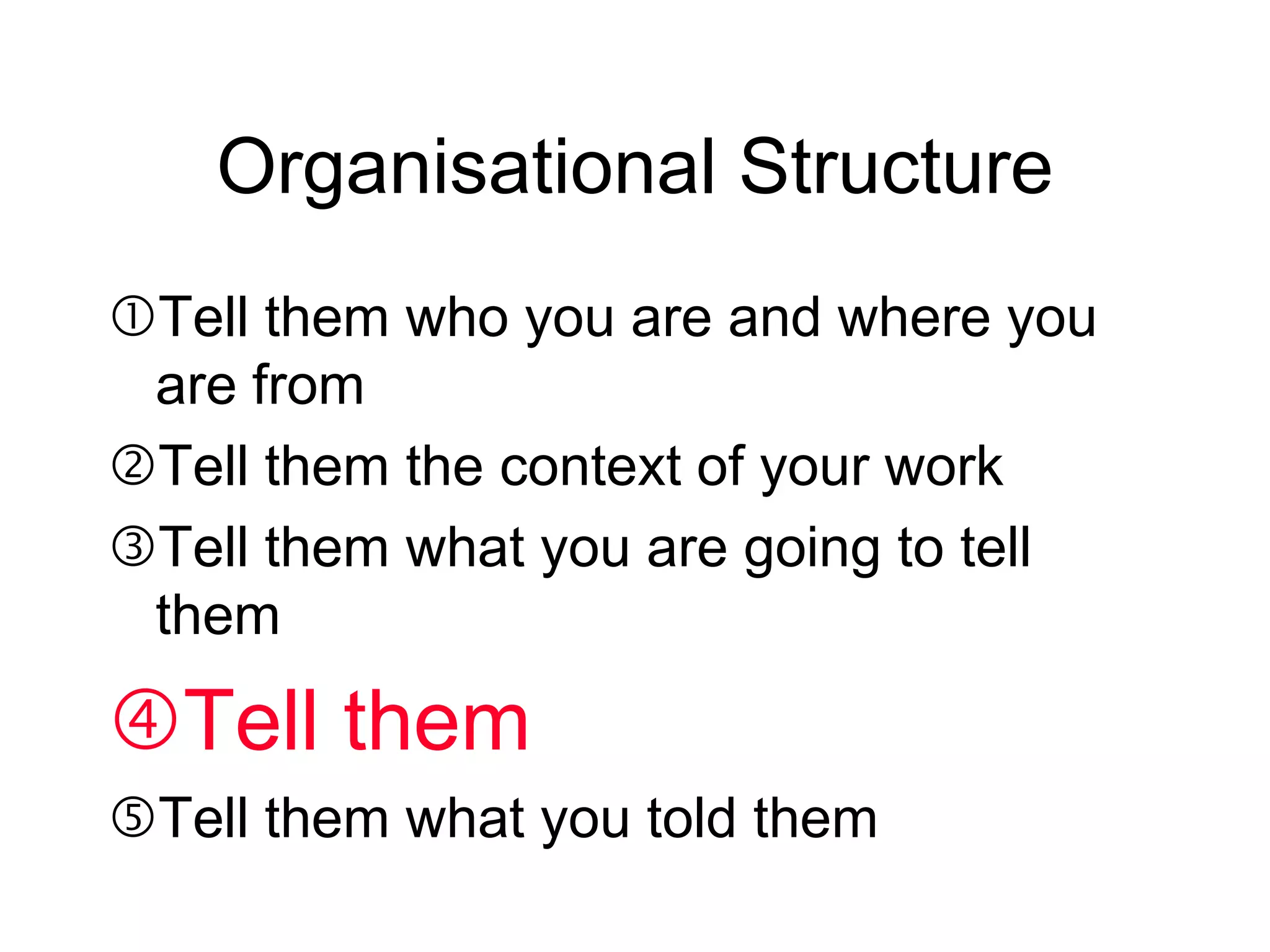
Organisational StructureTell them who you are and where you are from
Tell them the context of your work
Tell them what you are going to tell them
Tell them
Tell them what you told themYour AudienceWho and where - people often do not know the different societal, educational etc arrangements in different countries
Context - eg training - which people does your work apply to, practitioners, managers, policy makers, what is their level of understanding?
What are you going to talk about?  Is it research, application of methodology, new technology, policies, awareness training?  MAKE IT CLEAR! Your AudienceTELL THEM THE STORY!
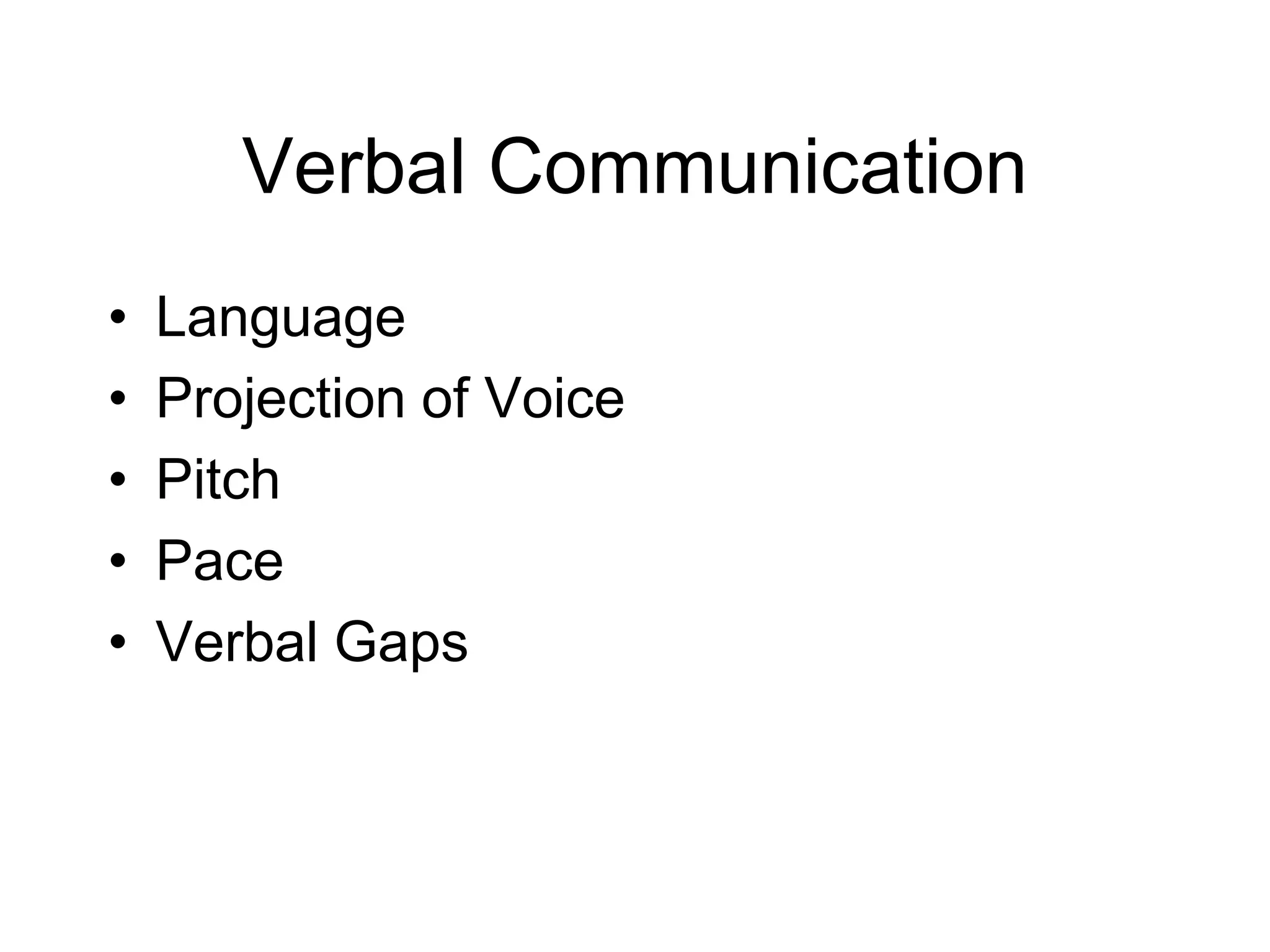
Summarise what you have said by highlighting key points -only the sharpest of people take in and MEMORISE what has been said just once, repeating reinforces the major ideas and themes which you are trying to put acrossVerbal CommunicationLanguageProjection of VoicePitchPaceVerbal Gaps
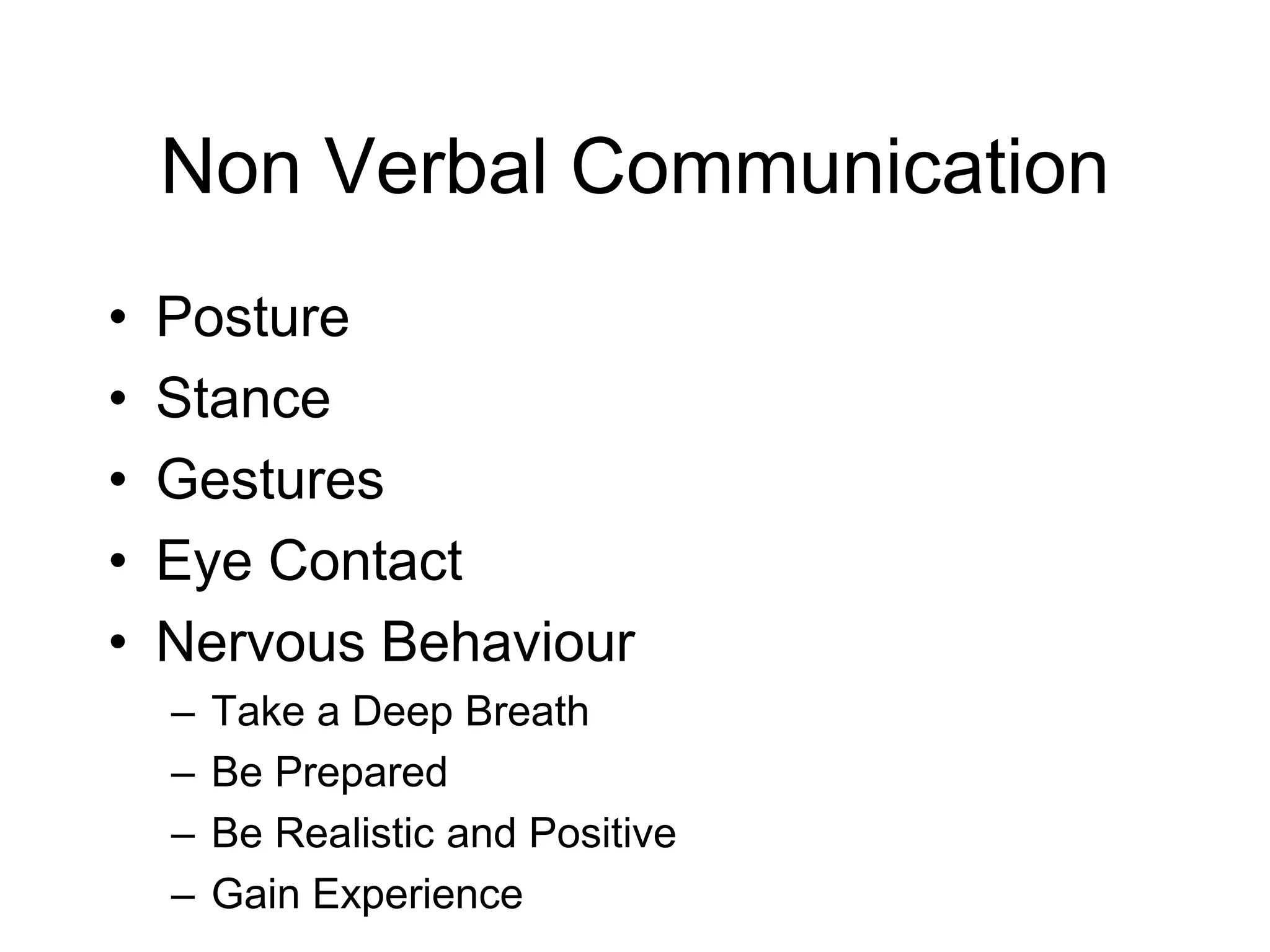
Non Verbal CommunicationPostureStanceGesturesEye ContactNervous BehaviourTake a Deep BreathBe PreparedBe Realistic and PositiveGain Experience
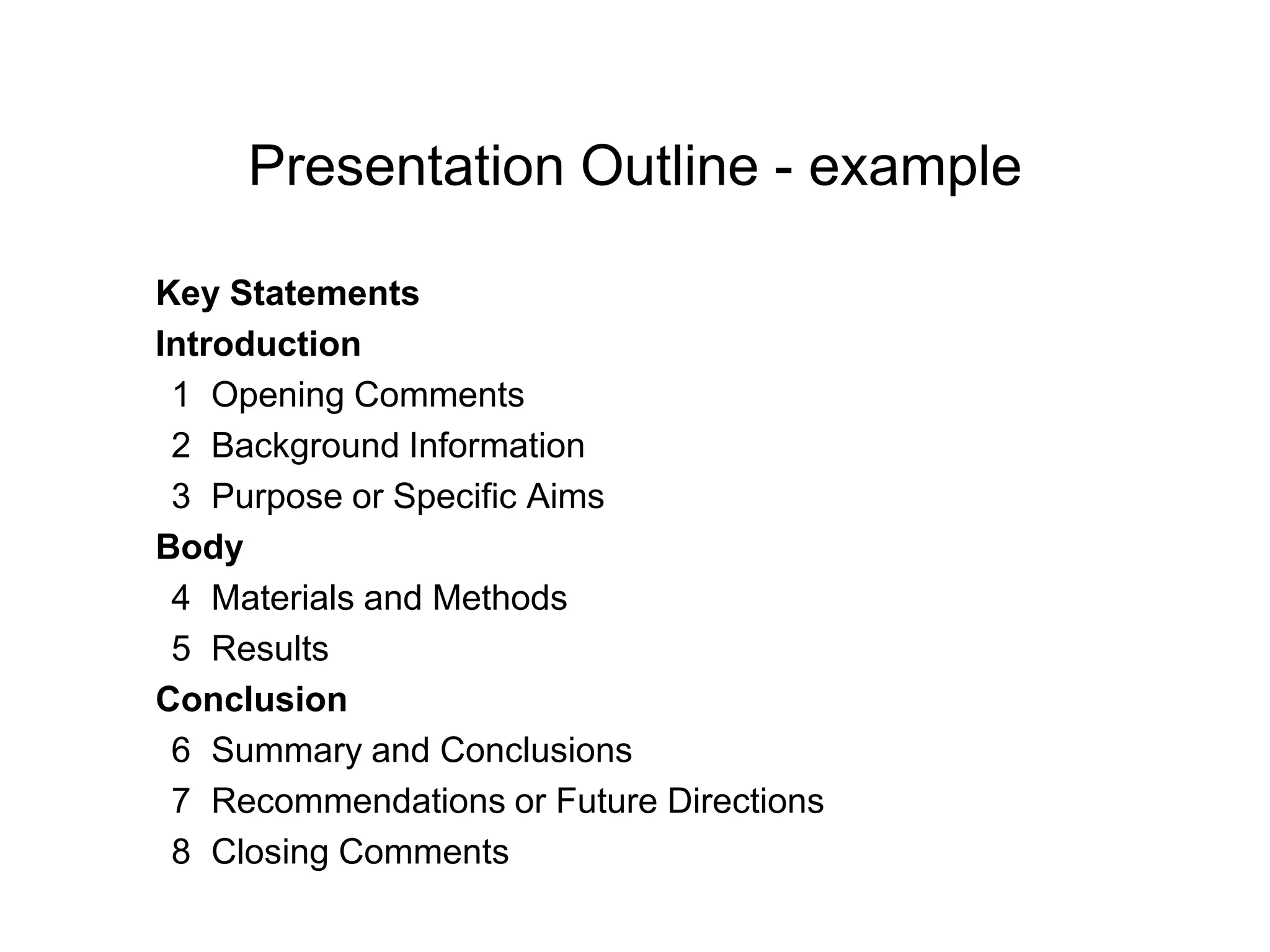
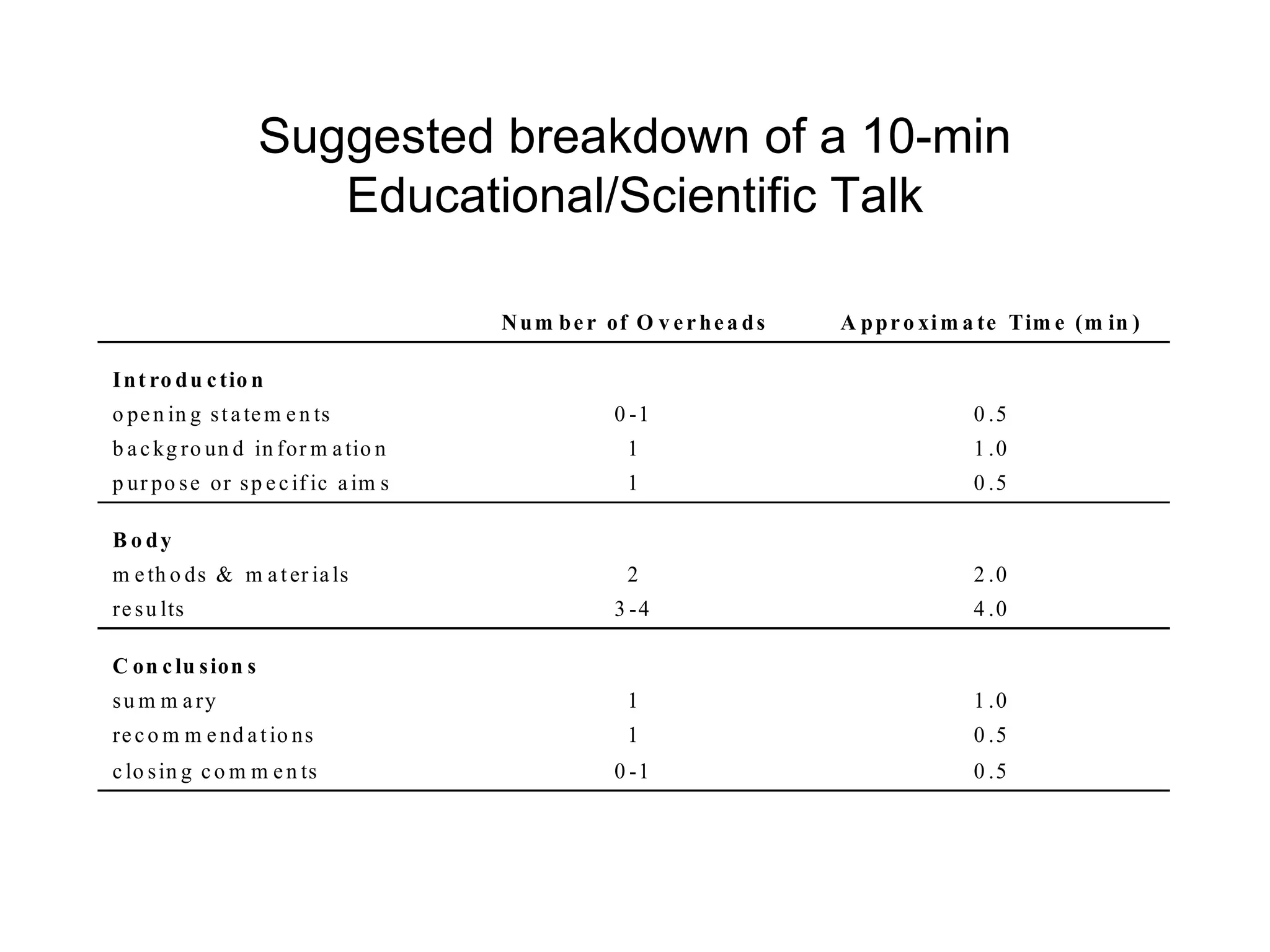
Presentation Outline - exampleKey Statements
Introduction
Opening Comments
Background Information

Presentation Skills Workshop