Presentation

Present by:Mr.N.P.Sawadadkar

Guided by:Dr. A.A.Gawai
Presentation
Presentation is a face to face communication in which
there is generally one individual facing a group .
It is an audio or visual way of communication with an aim to
deliver a massage to the audience.
Types of Presentation
Informal Presentation.
Formal Presentation.
Informal Presentation.
With Family and Friends.
Reflects every day activity and routine.
Reflects strong opinion ,need,feeling.
Formal Presentation.
For the professional lives.
Move up the ladder of professional responsibility.
For the business plans or to give information to public.
Presentation Skills
Ideas, concepts or issues talked about or spoken to a
group or audience
Public speaking is one of the most feared things
Skills required to give a good presentation can be
developed by
Practice ,
Practice and
More practice.
Skills can be grouped into the three areas that
listener take into account ,either consciously or
subconsciously.
What you say,
How you look,
And how you sound.


Preparation/ Planning is the first step on the ladder
to success



Aspects in the development of a good presentation
Subject Centered (Material)
Audience Centered (Audience)
Self Centered (Self)




Content of presentation.

The topic
The topic should be clear.
The topic is one of purpose.
The topic should gives information.
Audience focus
The presentation involves the factors according to








What is the audience interested in?
What does the audience want ?
What does the audience already know and needs
to know ?
What are their needs, expectations from this
presentation ?
How will the audience benefit from this
presentation ?
Facts
Opinions
Broad ideas etc
Helper
Who is your audience?
What do you want to present (content)?
Why do you want to present (purpose)?
Where will you be presenting (place)?
How do you want to present (words to be used
or not, slides to be used)
Format for a model.
1. Introduce the topic.
2. State the key issues.
Issues 1 :- sub point and example.(factors)
Issues 2 :- Responses and objective.
Issues 3 :- Benefits , numbers, examples.
3. Conclude.
Summarize by restating issues.
Key points.
Introduction








“First impression is the last impression” so
impress the audience by:Identifying the topic.
Get attention of audience by
- shock, humour, question, story, facts &figures
- well rehearsed yet natural
Motivate audience to listen
- listen to their needs
Establish importance of the topic to audience.
Ending
Give summary
Highlight main point
Give conclusion
End with memorable thing
Thanks the audience and compliment them.
Posture
Posture :- a particular position of body.

Posture Do’s
 Stand up straight
Posture Don’ts
Lean on the podium
Move back and forth
Stand with arms folded across chest
Arms behind back
Bury hands in pockets
Gesture
Movement of hands while presentation or expressing idea
or meaning
Avoid overusing of hands with routine diverting
movements.
It include twisting ring and folding them across the chest.
Keep your hands in front of you with open palm.
Peoples who gesture while communicating are
said to be more honest than who avoid.
Facial Expressions



Eyes are the windows to the soul
Face is the front of the house
 Smile on face
 Act out what you’re saying.

Shake your head
 Raise your eyebrows
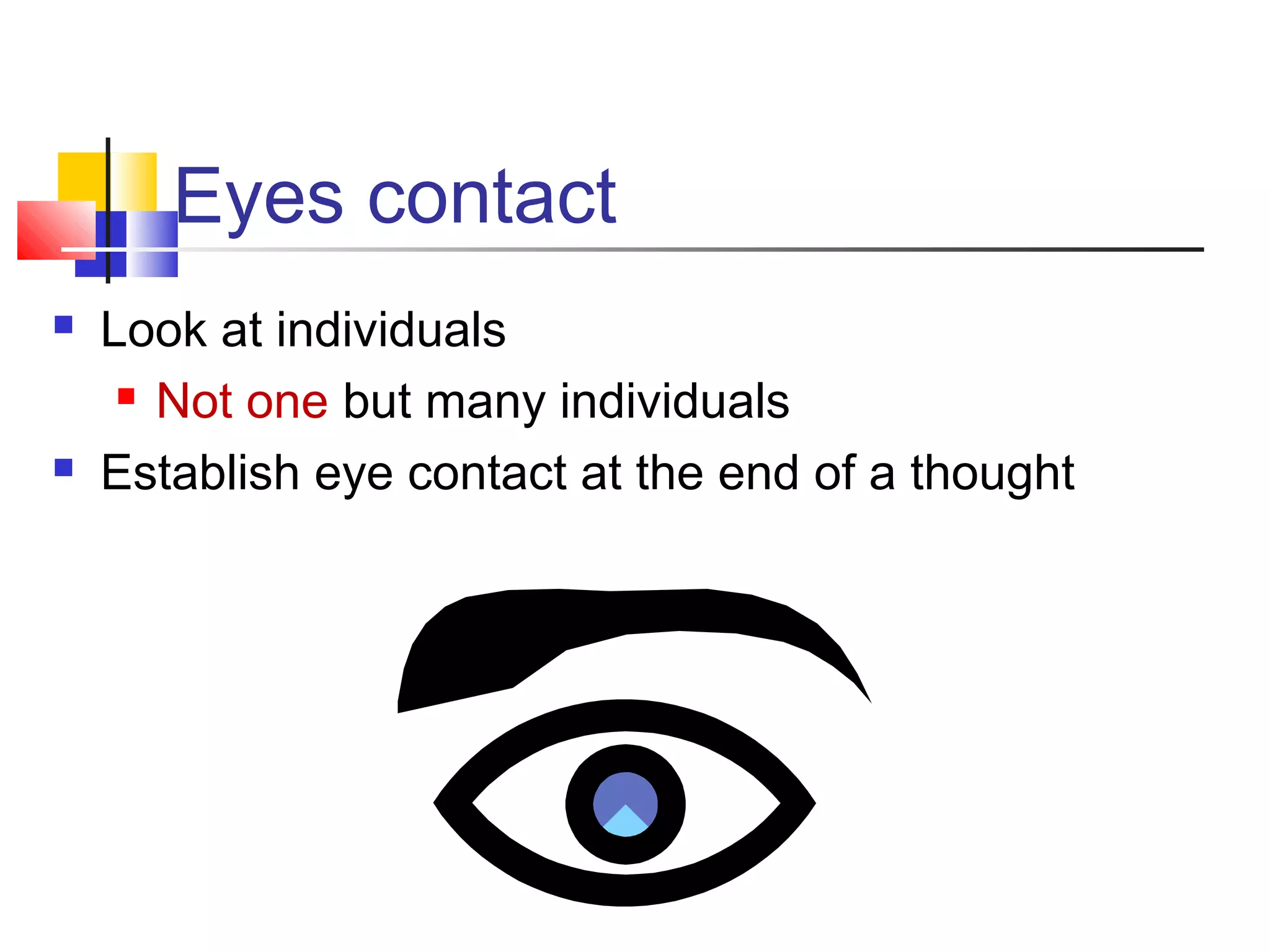
Eyes contact




Look at individuals
 Not one but many individuals
Establish eye contact at the end of a thought
Eye Contact– Don’t:
Look out the window, at ceiling, at wall, at floor
Look at one spot
Forget to look at the back row
Let notes get in the way of eye contact
Look over the heads of the audience
Stage Fright
(feeling of unpleasant fear)
 Everyone has it to some degree
 Can be used constructively
 Key issue is not elimination of fear
Instead channel the energy it generates for an
effective presentation
References
The textbook by “Indian society of technical education
and association of Canadian community colleges “
page no.1-19
Thank you

Nilesh

  • 1.
  • 2.
    Presentation Presentation is aface to face communication in which there is generally one individual facing a group . It is an audio or visual way of communication with an aim to deliver a massage to the audience.
  • 3.
    Types of Presentation InformalPresentation. Formal Presentation.
  • 4.
    Informal Presentation. With Familyand Friends. Reflects every day activity and routine. Reflects strong opinion ,need,feeling.
  • 5.
    Formal Presentation. For theprofessional lives. Move up the ladder of professional responsibility. For the business plans or to give information to public.
  • 6.
    Presentation Skills Ideas, conceptsor issues talked about or spoken to a group or audience Public speaking is one of the most feared things Skills required to give a good presentation can be developed by Practice , Practice and More practice.
  • 7.
    Skills can begrouped into the three areas that listener take into account ,either consciously or subconsciously. What you say, How you look, And how you sound.
  • 8.
     Preparation/ Planning isthe first step on the ladder to success  Aspects in the development of a good presentation Subject Centered (Material) Audience Centered (Audience) Self Centered (Self)   
  • 9.
    Content of presentation. Thetopic The topic should be clear. The topic is one of purpose. The topic should gives information.
  • 10.
    Audience focus The presentationinvolves the factors according to      What is the audience interested in? What does the audience want ? What does the audience already know and needs to know ? What are their needs, expectations from this presentation ? How will the audience benefit from this presentation ?
  • 11.
  • 12.
    Helper Who is youraudience? What do you want to present (content)? Why do you want to present (purpose)? Where will you be presenting (place)? How do you want to present (words to be used or not, slides to be used)
  • 13.
    Format for amodel. 1. Introduce the topic. 2. State the key issues. Issues 1 :- sub point and example.(factors) Issues 2 :- Responses and objective. Issues 3 :- Benefits , numbers, examples. 3. Conclude. Summarize by restating issues. Key points.
  • 14.
    Introduction     “First impression isthe last impression” so impress the audience by:Identifying the topic. Get attention of audience by - shock, humour, question, story, facts &figures - well rehearsed yet natural Motivate audience to listen - listen to their needs Establish importance of the topic to audience.
  • 15.
    Ending Give summary Highlight mainpoint Give conclusion End with memorable thing Thanks the audience and compliment them.
  • 16.
    Posture Posture :- aparticular position of body. Posture Do’s  Stand up straight
  • 17.
    Posture Don’ts Lean onthe podium Move back and forth Stand with arms folded across chest Arms behind back Bury hands in pockets
  • 18.
    Gesture Movement of handswhile presentation or expressing idea or meaning Avoid overusing of hands with routine diverting movements. It include twisting ring and folding them across the chest. Keep your hands in front of you with open palm. Peoples who gesture while communicating are said to be more honest than who avoid.
  • 19.
    Facial Expressions   Eyes arethe windows to the soul Face is the front of the house  Smile on face  Act out what you’re saying.  Shake your head  Raise your eyebrows
  • 20.
    Eyes contact   Look atindividuals  Not one but many individuals Establish eye contact at the end of a thought
  • 21.
    Eye Contact– Don’t: Lookout the window, at ceiling, at wall, at floor Look at one spot Forget to look at the back row Let notes get in the way of eye contact Look over the heads of the audience
  • 22.
    Stage Fright (feeling ofunpleasant fear)  Everyone has it to some degree  Can be used constructively  Key issue is not elimination of fear Instead channel the energy it generates for an effective presentation
  • 23.
    References The textbook by“Indian society of technical education and association of Canadian community colleges “ page no.1-19
  • 24.