Ideas, concepts or issues talked about or spoken to a
group or audience
Public speaking is one of the most feared things
“I could make such a fool of myself”
Skills required to give a good presentation can be
developed
Preparation is the Key
 Preparation/ Planning is the first step on the ladder to
success
 Aspects in the development of a good presentation
 Subject Centered (Material)
 Audience Centered (Audience)
 Self Centered (Self)
 “I want (who) to (what) (where, when and how)
 because (why)”
 Preparation: Audience Analysis
 What is the audience interested in
 What does the audience want
 What does the audience already know and needs
to know
 What are their needs, expectations from this
presentation
 How will the audience benefit from this
presentation
 Structure the content in line with the
audience’s needs
 What do you want to tell the audience?
 What is your objective?
 Prepare keeping in mind the time allotted
 Anticipate the questions and prepare
 Collect material from a variety of sources
 Arrange points logically and sequentially
 Prepare handouts as well
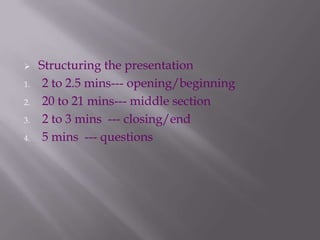
 Structuring the presentation
1. 2 to 2.5 mins--- opening/beginning
2. 20 to 21 mins--- middle section
3. 2 to 3 mins --- closing/end
4. 5 mins --- questions
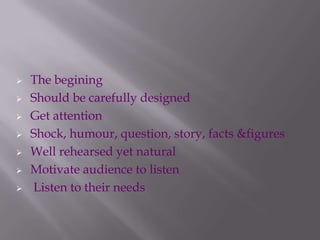
 The begining
 Should be carefully designed
 Get attention
 Shock, humour, question, story, facts &figures
 Well rehearsed yet natural
 Motivate audience to listen
 Listen to their needs
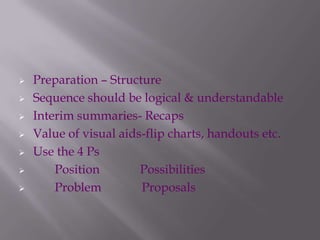
 Preparation – Structure
 Sequence should be logical & understandable
 Interim summaries- Recaps
 Value of visual aids-flip charts, handouts etc.
 Use the 4 Ps
 Position Possibilities
 Problem Proposals
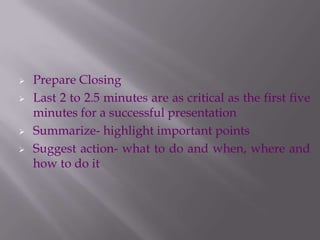
 Prepare Closing
 Last 2 to 2.5 minutes are as critical as the first five
minutes for a successful presentation
 Summarize- highlight important points
 Suggest action- what to do and when, where and
how to do it
 Stage Fright
 Everyone has it to some degree
 Can be used constructively
 Key issue is not elimination of fear
 Instead channel the energy it generates for an
effective presentation
 Be active - move
 Be purposeful - controlled gestures
 Variations – vocal (pitch, volume, rate)
 Be natural
 Be direct – don’t just talk in front of the audience
talk to them
Effective Delivery
Verbal Communication- barriers
 Speaking too fast
 Using jargon
 Tone and content
 Complicated or ambiguous language
 Not questioning
 Physical State of the audience
Sensitivity to the audience
 “see” the audience
 Take non-verbal feedback
 -congruent and incongruent body language
 Modify to meet audience needs
 Don’t just make it as a presentation
 Do not get confused
 You are not supposed to know everything
 Anticipate and keep answers ready
 Sometime questions themselves give you a lead to
highlight your point of view
 While using a over head projector face the
audience while talking
 Point with a pen
 clear visibilityAppropriate lighting
 Watch the colours
 Ensure
 10 lines, 10 words per line
Visual Aids
So to conclude :
Always prepare
Channelize you fear
Interact with your audience
Presentation skills 111

Presentation skills 111

  • 2.
    Ideas, concepts orissues talked about or spoken to a group or audience Public speaking is one of the most feared things “I could make such a fool of myself” Skills required to give a good presentation can be developed Preparation is the Key
  • 3.
     Preparation/ Planningis the first step on the ladder to success  Aspects in the development of a good presentation  Subject Centered (Material)  Audience Centered (Audience)  Self Centered (Self)  “I want (who) to (what) (where, when and how)  because (why)”
  • 4.
     Preparation: AudienceAnalysis  What is the audience interested in  What does the audience want  What does the audience already know and needs to know  What are their needs, expectations from this presentation  How will the audience benefit from this presentation
  • 5.
     Structure thecontent in line with the audience’s needs  What do you want to tell the audience?  What is your objective?  Prepare keeping in mind the time allotted  Anticipate the questions and prepare  Collect material from a variety of sources  Arrange points logically and sequentially  Prepare handouts as well
  • 6.
     Structuring thepresentation 1. 2 to 2.5 mins--- opening/beginning 2. 20 to 21 mins--- middle section 3. 2 to 3 mins --- closing/end 4. 5 mins --- questions
  • 7.
     The begining Should be carefully designed  Get attention  Shock, humour, question, story, facts &figures  Well rehearsed yet natural  Motivate audience to listen  Listen to their needs
  • 8.
     Preparation –Structure  Sequence should be logical & understandable  Interim summaries- Recaps  Value of visual aids-flip charts, handouts etc.  Use the 4 Ps  Position Possibilities  Problem Proposals
  • 9.
     Prepare Closing Last 2 to 2.5 minutes are as critical as the first five minutes for a successful presentation  Summarize- highlight important points  Suggest action- what to do and when, where and how to do it
  • 10.
     Stage Fright Everyone has it to some degree  Can be used constructively  Key issue is not elimination of fear  Instead channel the energy it generates for an effective presentation
  • 11.
     Be active- move  Be purposeful - controlled gestures  Variations – vocal (pitch, volume, rate)  Be natural  Be direct – don’t just talk in front of the audience talk to them Effective Delivery
  • 12.
    Verbal Communication- barriers Speaking too fast  Using jargon  Tone and content  Complicated or ambiguous language  Not questioning  Physical State of the audience
  • 13.
    Sensitivity to theaudience  “see” the audience  Take non-verbal feedback  -congruent and incongruent body language  Modify to meet audience needs  Don’t just make it as a presentation
  • 14.
     Do notget confused  You are not supposed to know everything  Anticipate and keep answers ready  Sometime questions themselves give you a lead to highlight your point of view
  • 15.
     While usinga over head projector face the audience while talking  Point with a pen  clear visibilityAppropriate lighting  Watch the colours  Ensure  10 lines, 10 words per line Visual Aids
  • 16.
    So to conclude: Always prepare Channelize you fear Interact with your audience