PRESENTATION ON MARKET RESEARCH AND
METHODS OF PRICING AND ITS PROCESS
PRESENTED BY
N.N.V. Krishna kanth
I MBA
ALIET
Objective of ppt is to learn the
following :
• Definition and meaning of market research
• Importance of Marketing Information System
• Marketing research process
• Methods of pricing and its process
• Definition:
According to Philip Kotler, ‘Marketing research is a
systematic problem analysis, model building and fact
finding for the purpose of important, decision
making and controlling the marketing of goods and
services.
• Meaning:
Research means a systematic and objective
investigation of a subject or a problem in order to
discover relevant information or principles. When
applied to solving marketing problems, it is known as
marketing research.
6.5
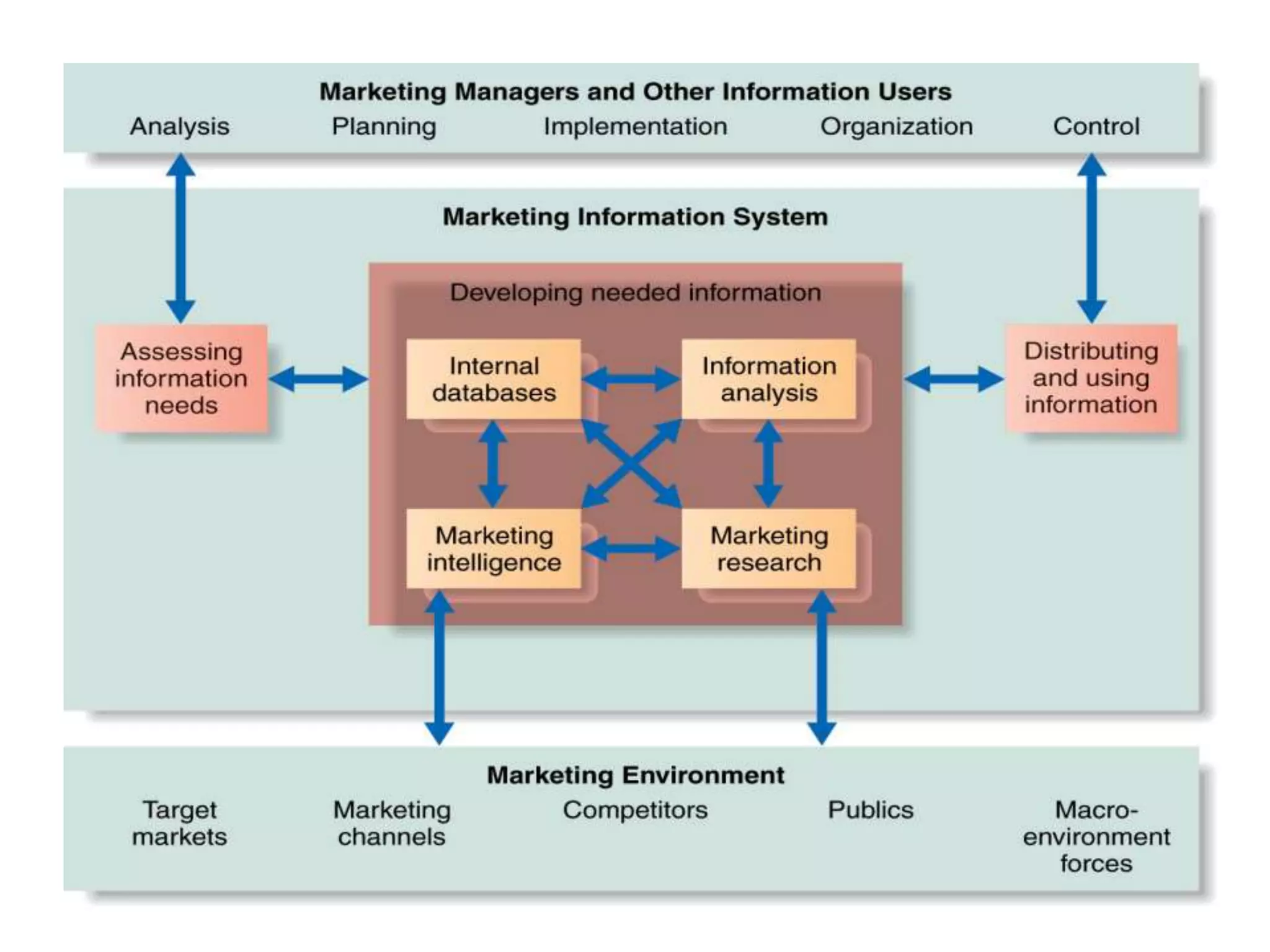
The Marketing Information System
• Assessing information needs:
– Objective is to make better marketing decisions
– Must consider needs of all users
– Balance information wants with needs and
feasibility (and costs) of offering it
• Developing information:
– Internal data
– Marketing intelligence
– Marketing research
Developing Information
• Internal data:
– Information collected, stored within the
organization
– Internal databases
– Source from different departments
• Marketing intelligence:
– Systematic collection and
analysis
– Publicly available
information
– About competitors and
market developments
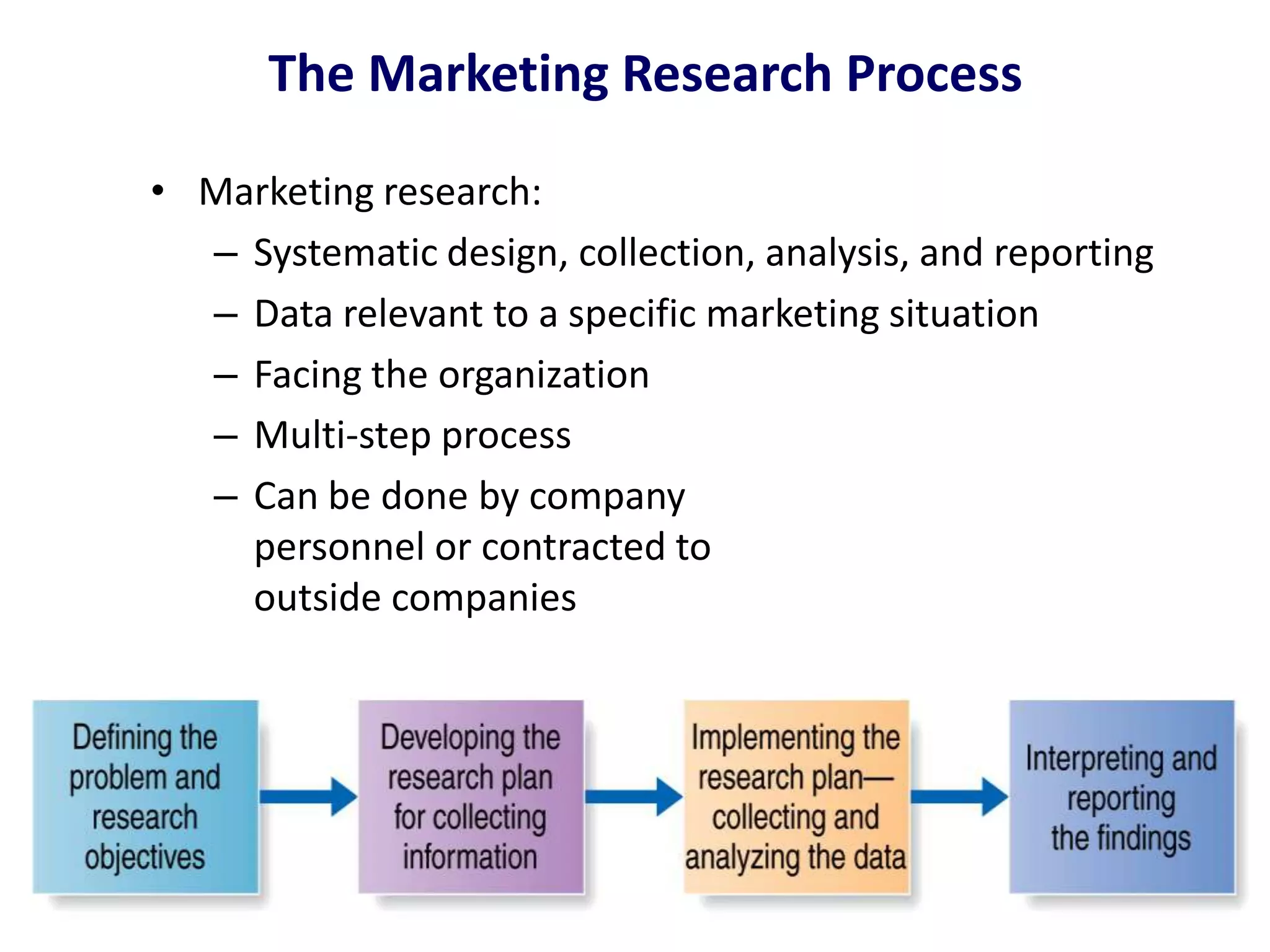
The Marketing Research Process
• Marketing research:
– Systematic design, collection, analysis, and reporting
– Data relevant to a specific marketing situation
– Facing the organization
– Multi-step process
– Can be done by company
personnel or contracted to
outside companies
• Defining the problem and research objectives:
– Exploratory research
– Descriptive research
– Causal research
• Developing the research
plan:
– Secondary data
– Primary data
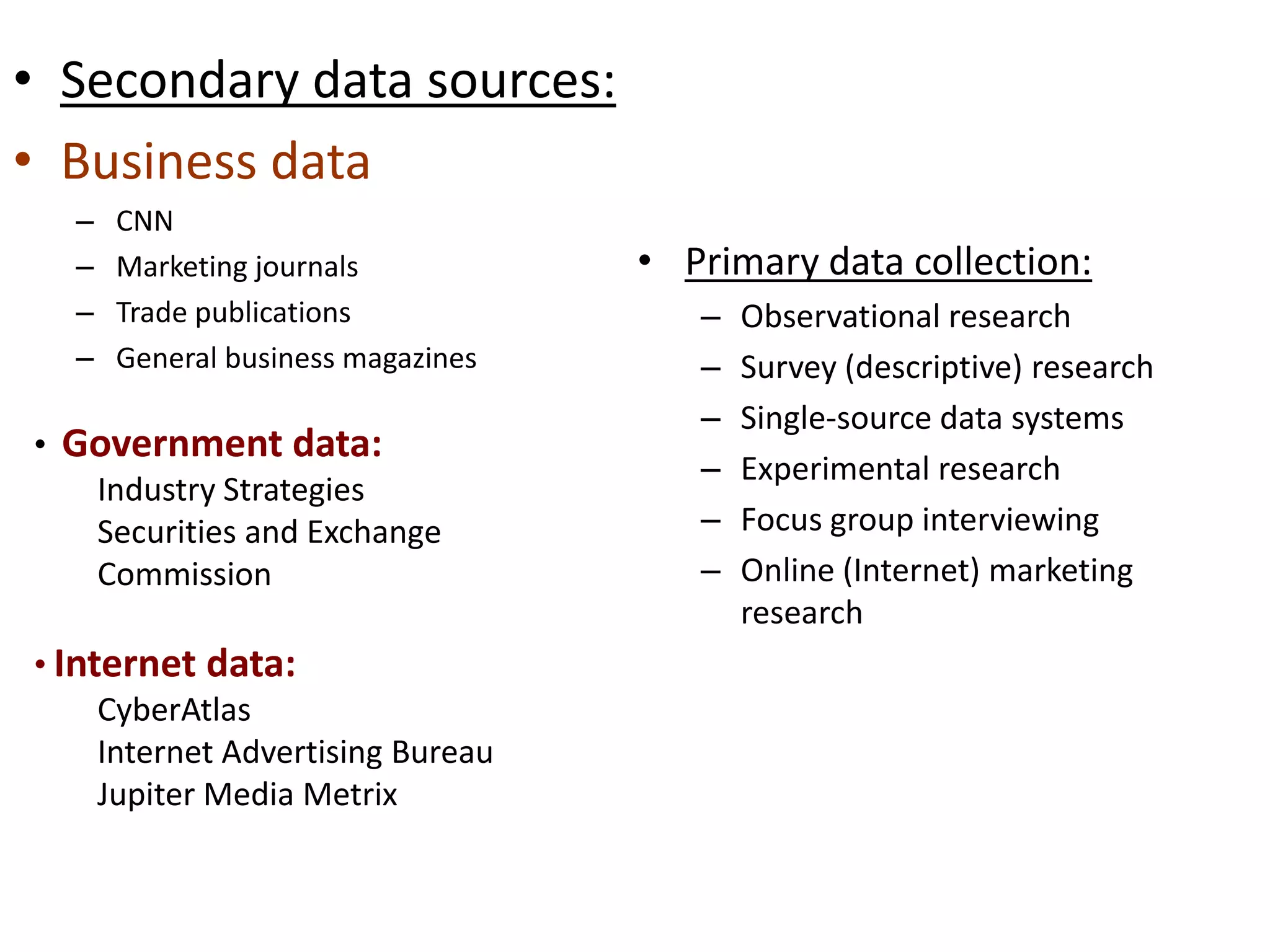
• Secondary data sources:
• Business data
– CNN
– Marketing journals
– Trade publications
– General business magazines
• Primary data collection:
– Observational research
– Survey (descriptive) research
– Single-source data systems
– Experimental research
– Focus group interviewing
– Online (Internet) marketing
research
• Government data:
Industry Strategies
Securities and Exchange
Commission
• Internet data:
CyberAtlas
Internet Advertising Bureau
Jupiter Media Metrix
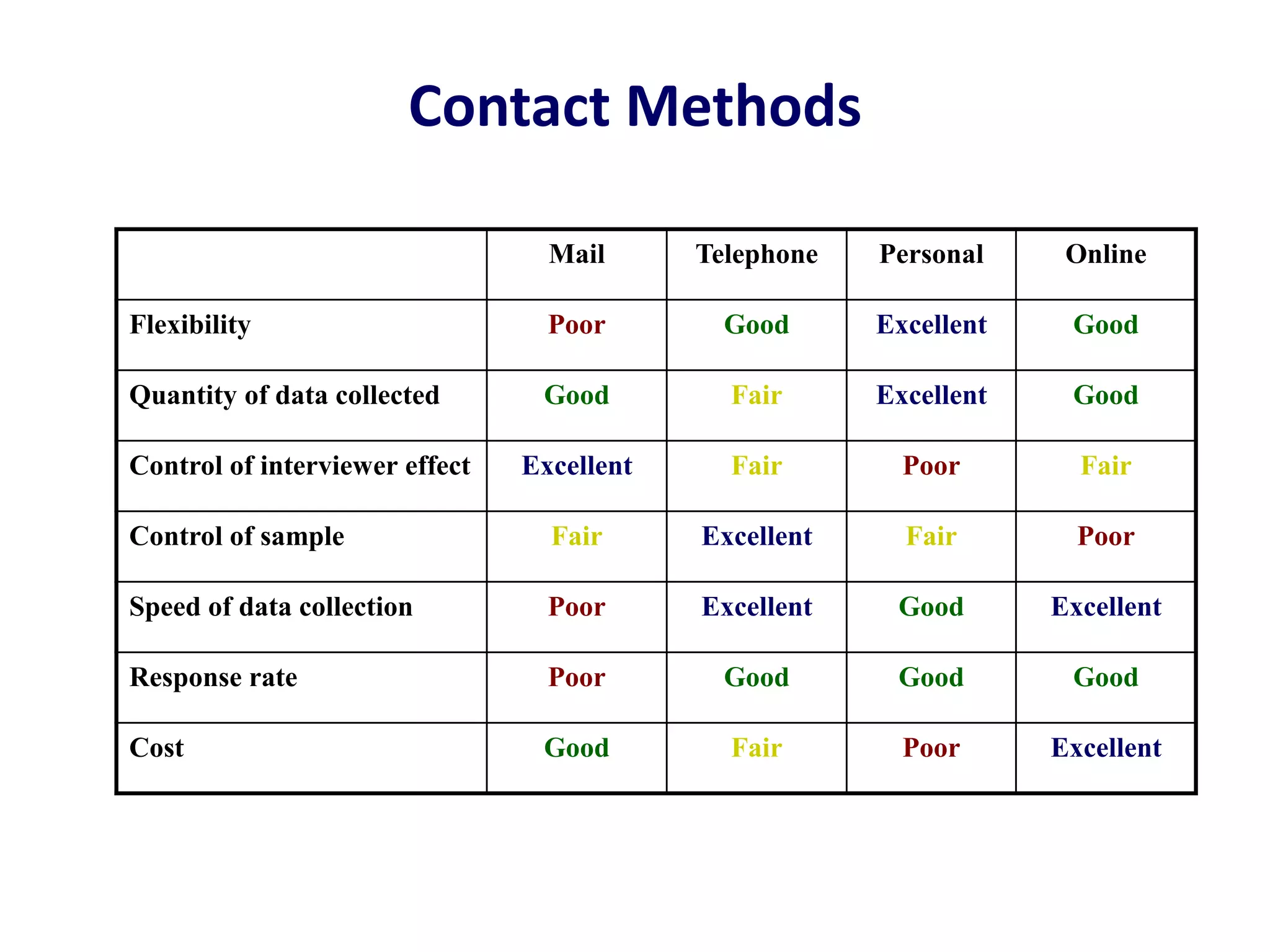
Contact Methods
Mail Telephone Personal Online
Flexibility Poor Good Excellent Good
Quantity of data collected Good Fair Excellent Good
Control of interviewer effect Excellent Fair Poor Fair
Control of sample Fair Excellent Fair Poor
Speed of data collection Poor Excellent Good Excellent
Response rate Poor Good Good Good
Cost Good Fair Poor Excellent
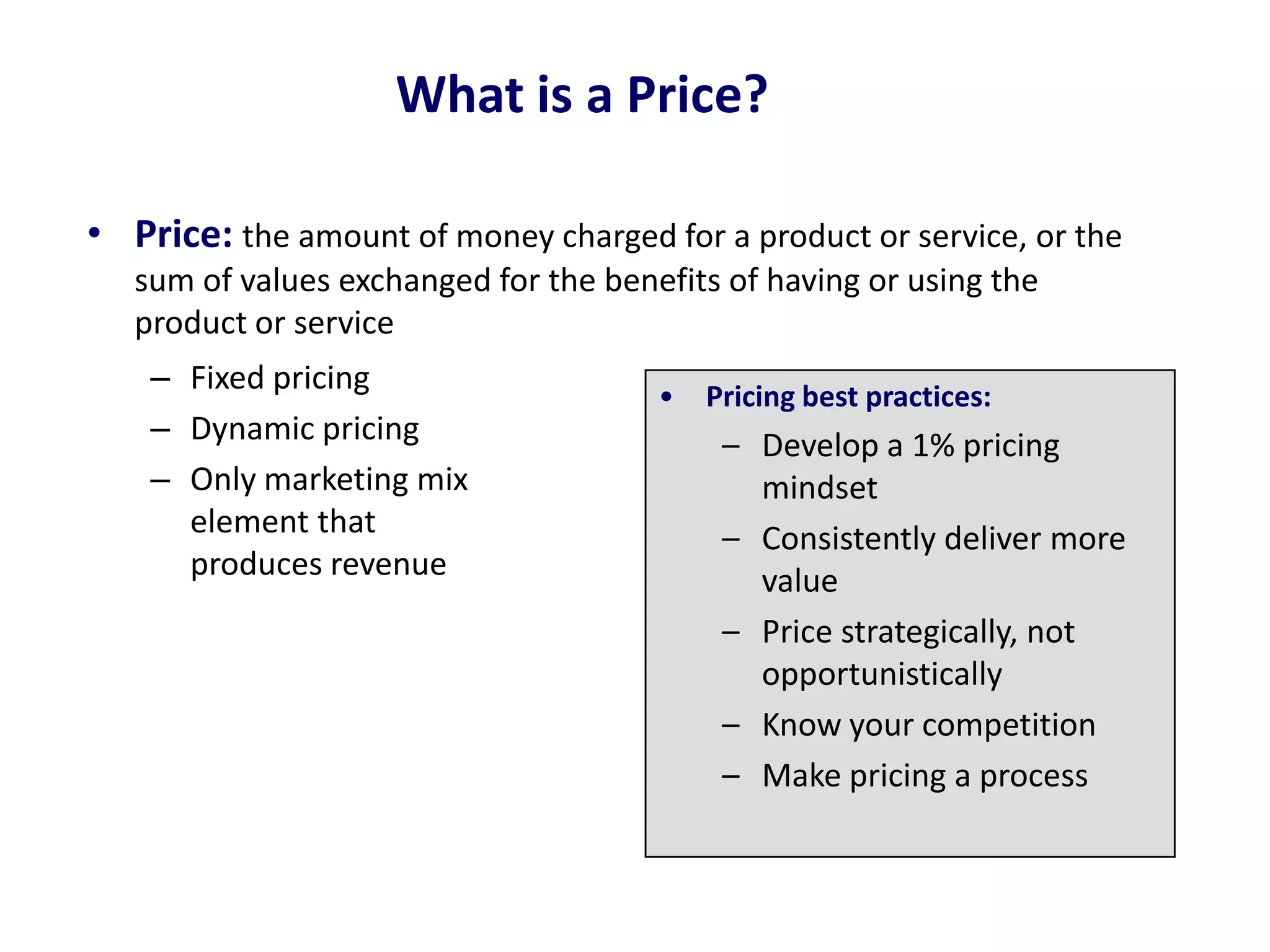
What is a Price?
• Price: the amount of money charged for a product or service, or the
sum of values exchanged for the benefits of having or using the
product or service
– Fixed pricing
– Dynamic pricing
– Only marketing mix
element that
produces revenue
• Pricing best practices:
– Develop a 1% pricing
mindset
– Consistently deliver more
value
– Price strategically, not
opportunistically
– Know your competition
– Make pricing a process
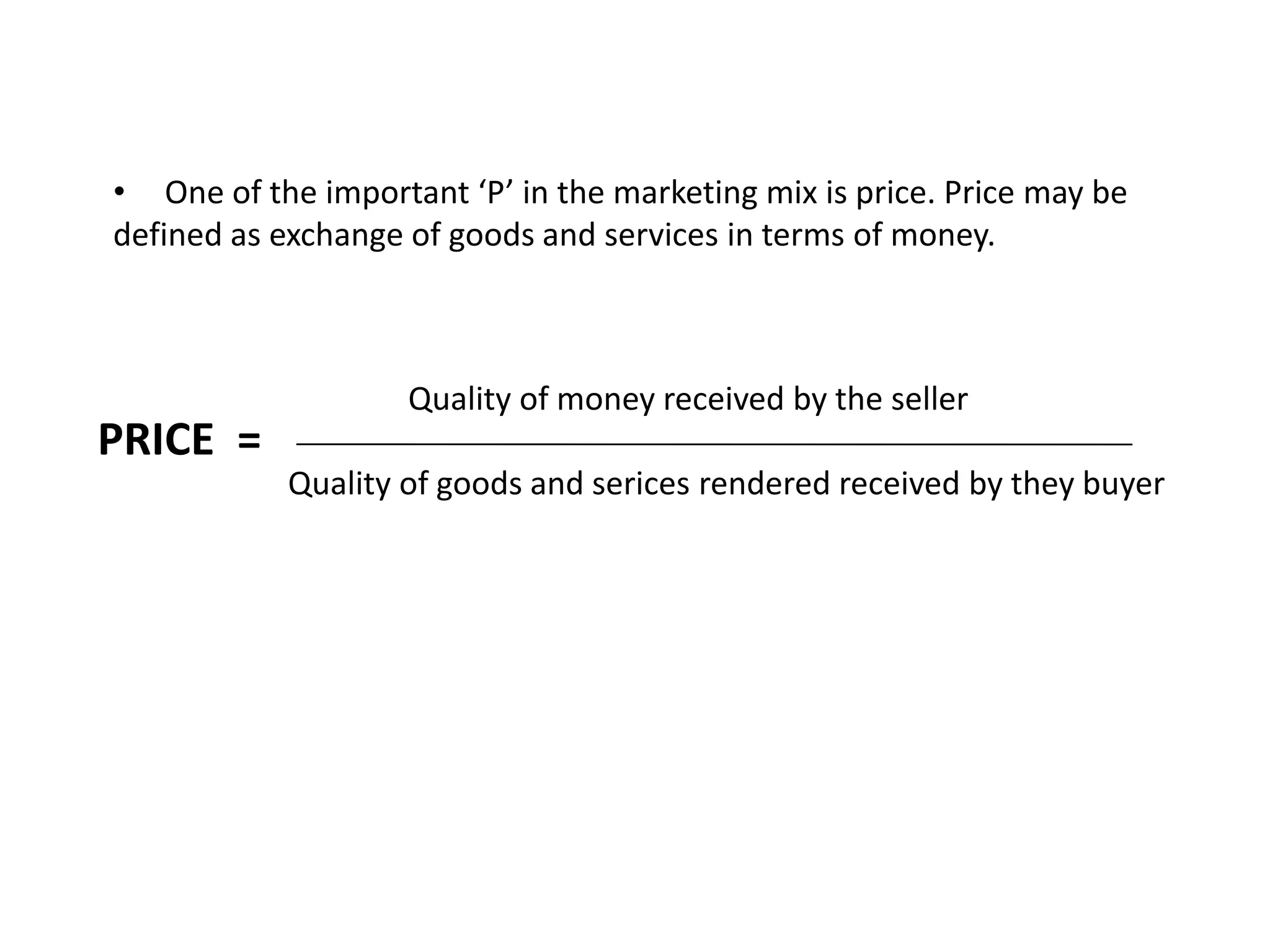
PRICE =
• One of the important ‘P’ in the marketing mix is price. Price may be
defined as exchange of goods and services in terms of money.
Quality of money received by the seller
Quality of goods and serices rendered received by they buyer
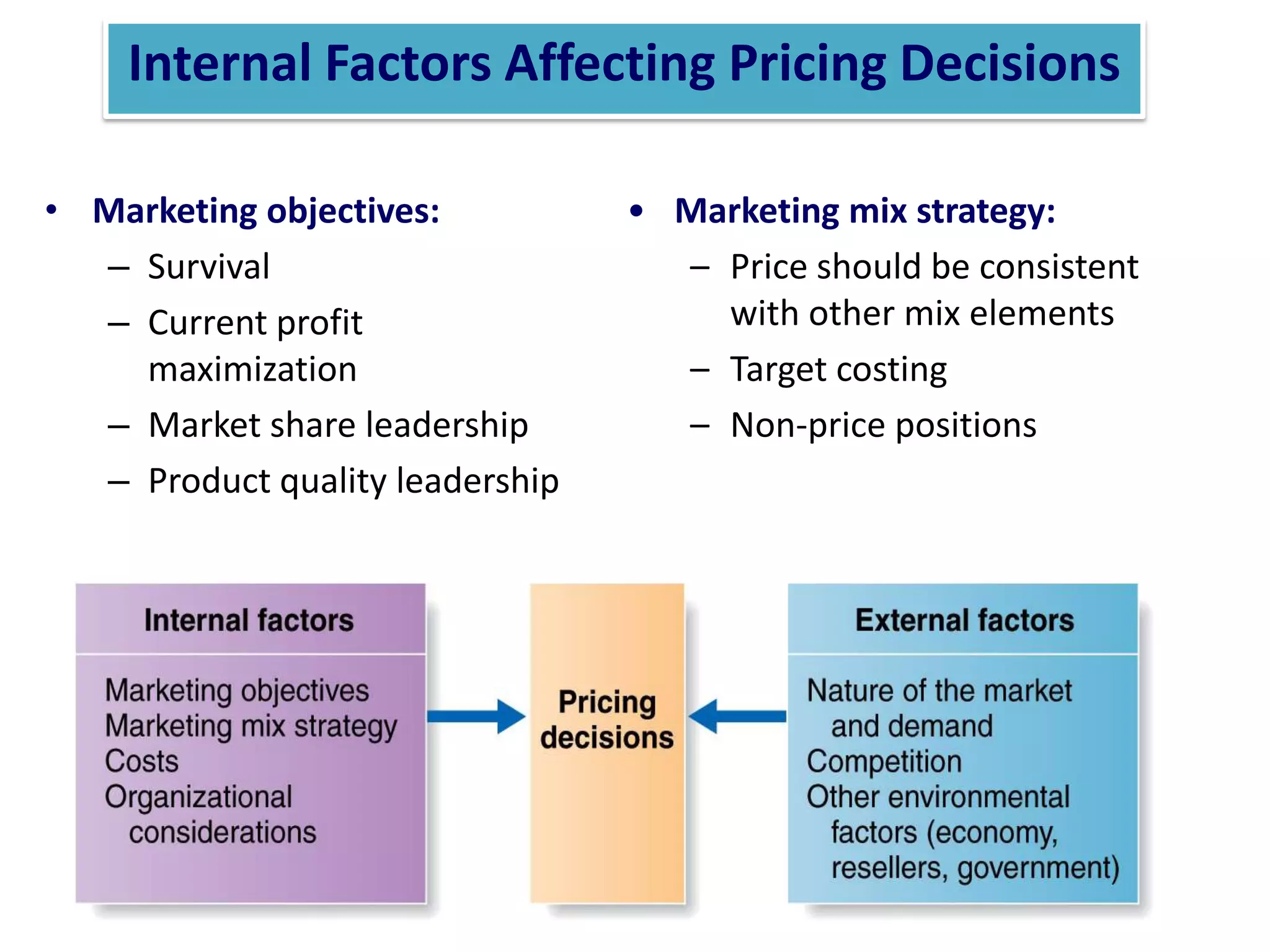
Internal Factors Affecting Pricing Decisions
• Marketing objectives:
– Survival
– Current profit
maximization
– Market share leadership
– Product quality leadership
• Marketing mix strategy:
– Price should be consistent
with other mix elements
– Target costing
– Non-price positions
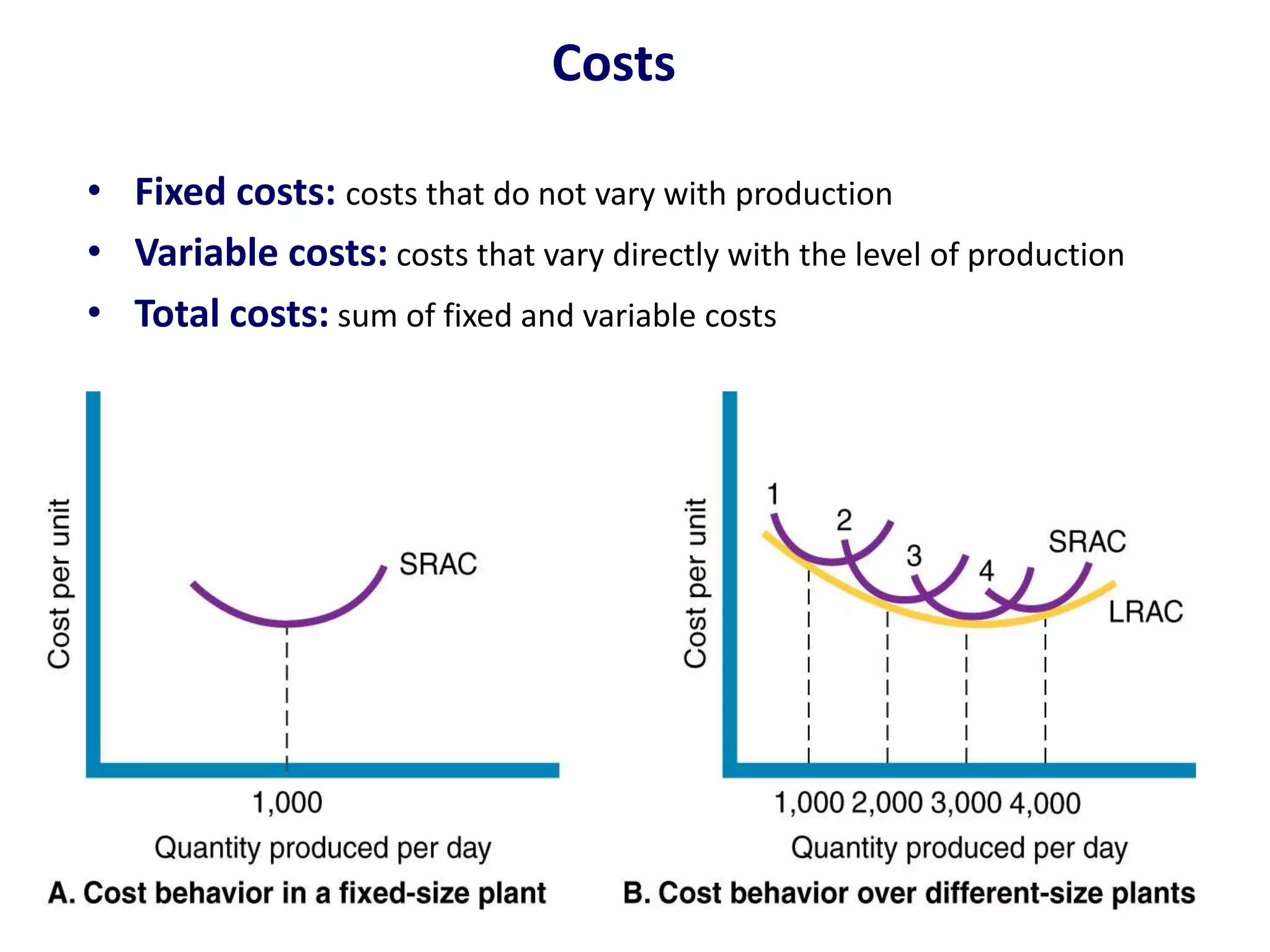
Costs
• Fixed costs: costs that do not vary with production
• Variable costs: costs that vary directly with the level of production
• Total costs: sum of fixed and variable costs
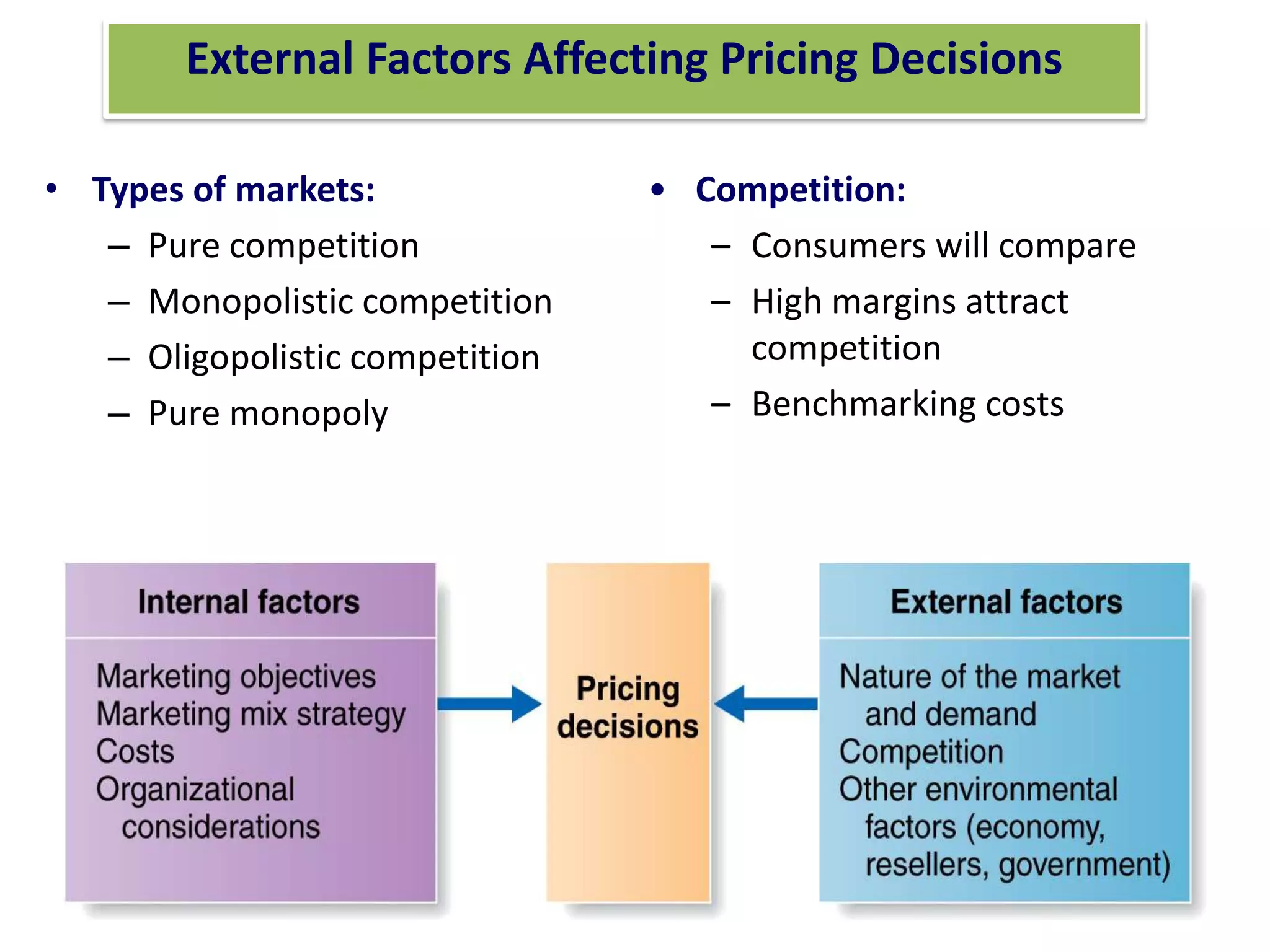
External Factors Affecting Pricing Decisions
• Types of markets:
– Pure competition
– Monopolistic competition
– Oligopolistic competition
– Pure monopoly
• Competition:
– Consumers will compare
– High margins attract
competition
– Benchmarking costs
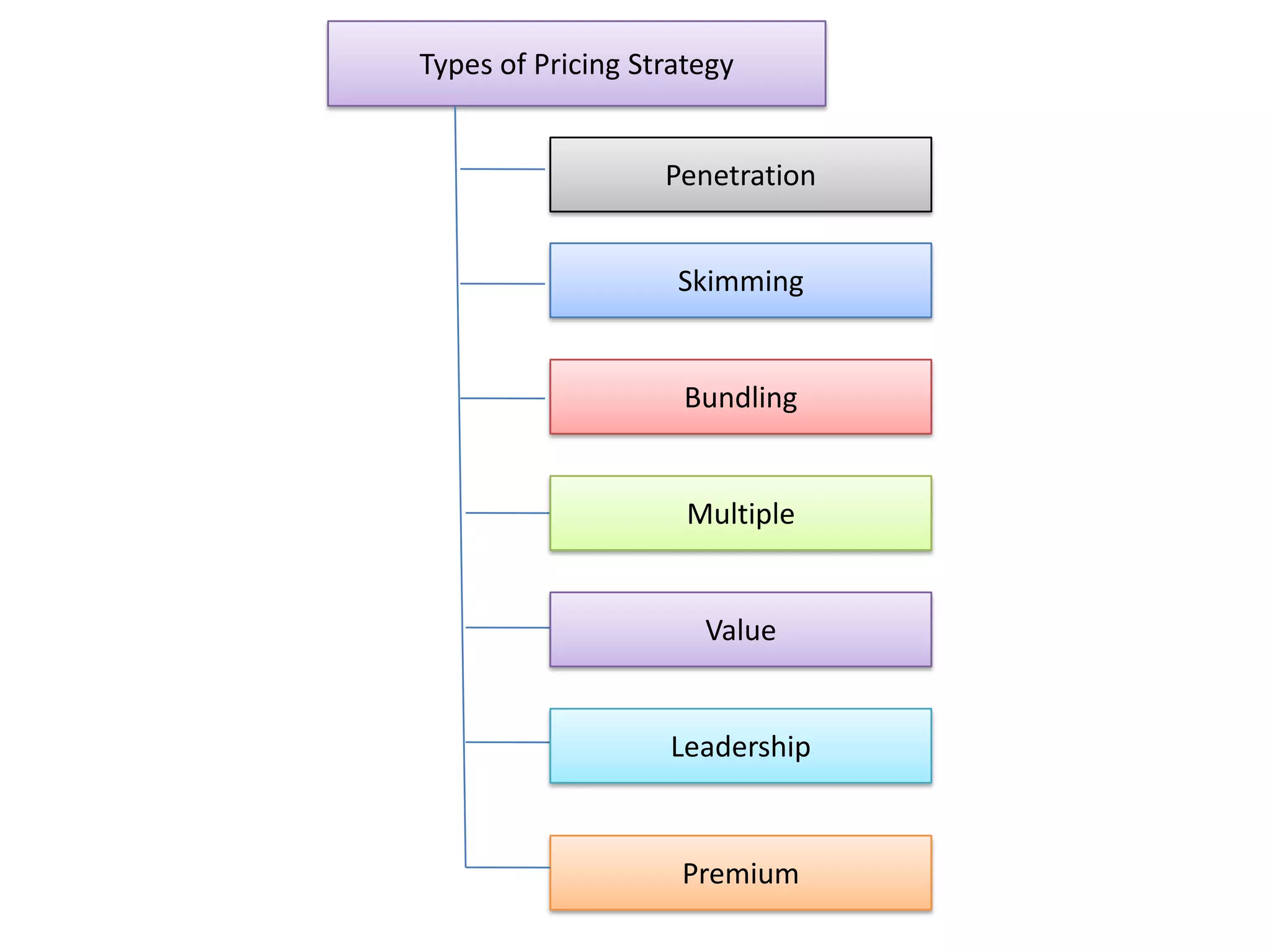
Types of Pricing Strategy
Penetration
Skimming
Bundling
Value
Multiple
Premium
Leadership
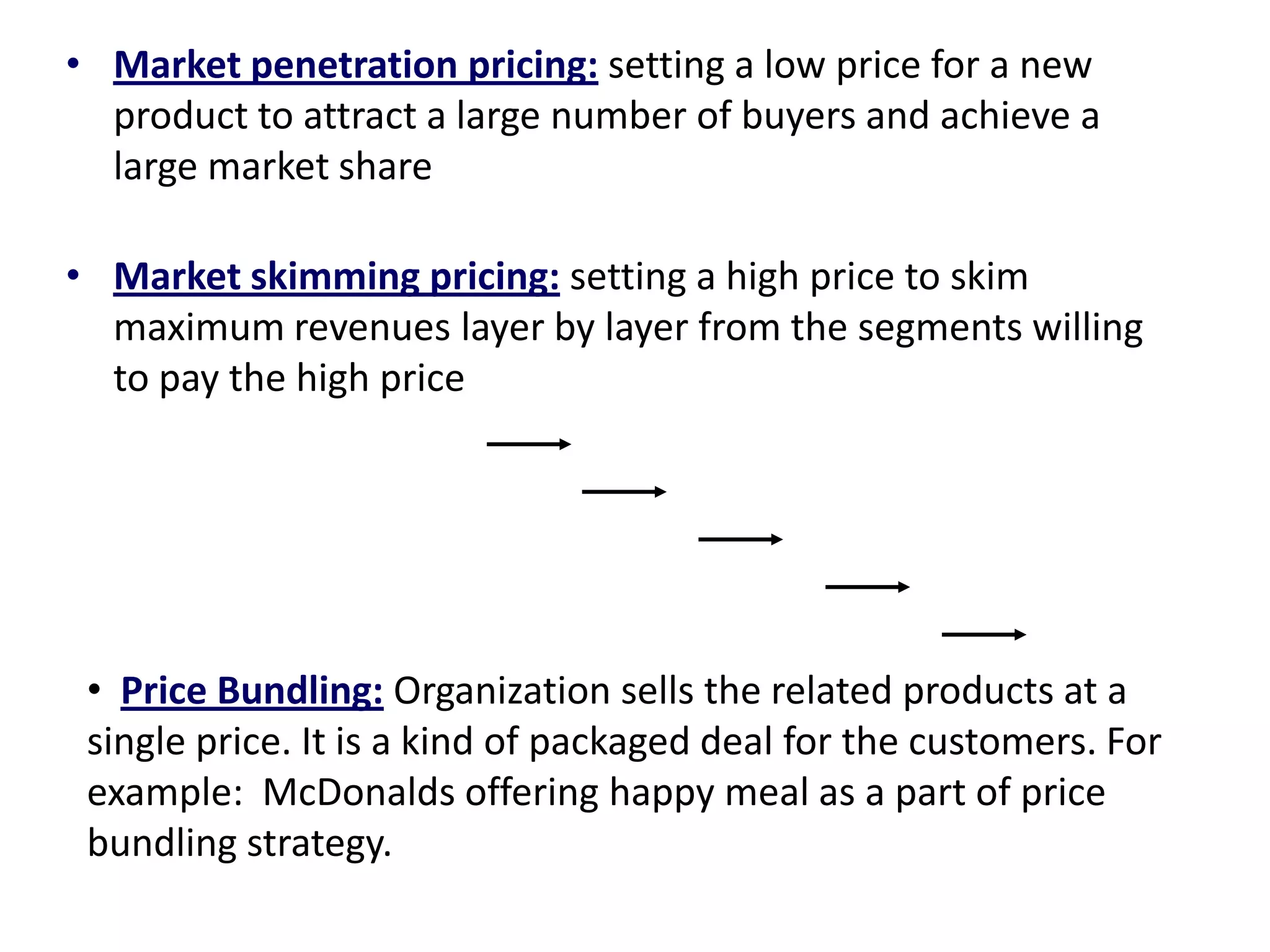
• Market penetration pricing: setting a low price for a new
product to attract a large number of buyers and achieve a
large market share
• Market skimming pricing: setting a high price to skim
maximum revenues layer by layer from the segments willing
to pay the high price
• Price Bundling: Organization sells the related products at a
single price. It is a kind of packaged deal for the customers. For
example: McDonalds offering happy meal as a part of price
bundling strategy.
• Multiple pricing: Discounts are provided by the organization to those
individuals who buy a larger quantity. For example, if a person buys one
piece of shirt, he might get it at 500/- but on buying 3 pieces of shirt, he
might get it at 1250/-, there by getting a discount of 250/-.
• Value pricing: A customer perceives a product as a group of utilities
that can provide him total satisfaction. Therefore, the prices should be
fixed according to the customer’s perception. In most of the cases,
lower prices are established.
• Leadership pricing: This is a style of pricing in which one organization
becomes dominant in the matter either because of its operations or by
generating customer loyalty. It becomes the leader and sets up the price
and the other follows it. This is mainly undertaken in a situation of
oligopoly.
• Premium pricing: This is a pricing strategy under which different
prices are charged for different versions of the same product. For
example, the same model of a car has different versions like LXI, VDI,
etc., and different prices are charged for all of them.
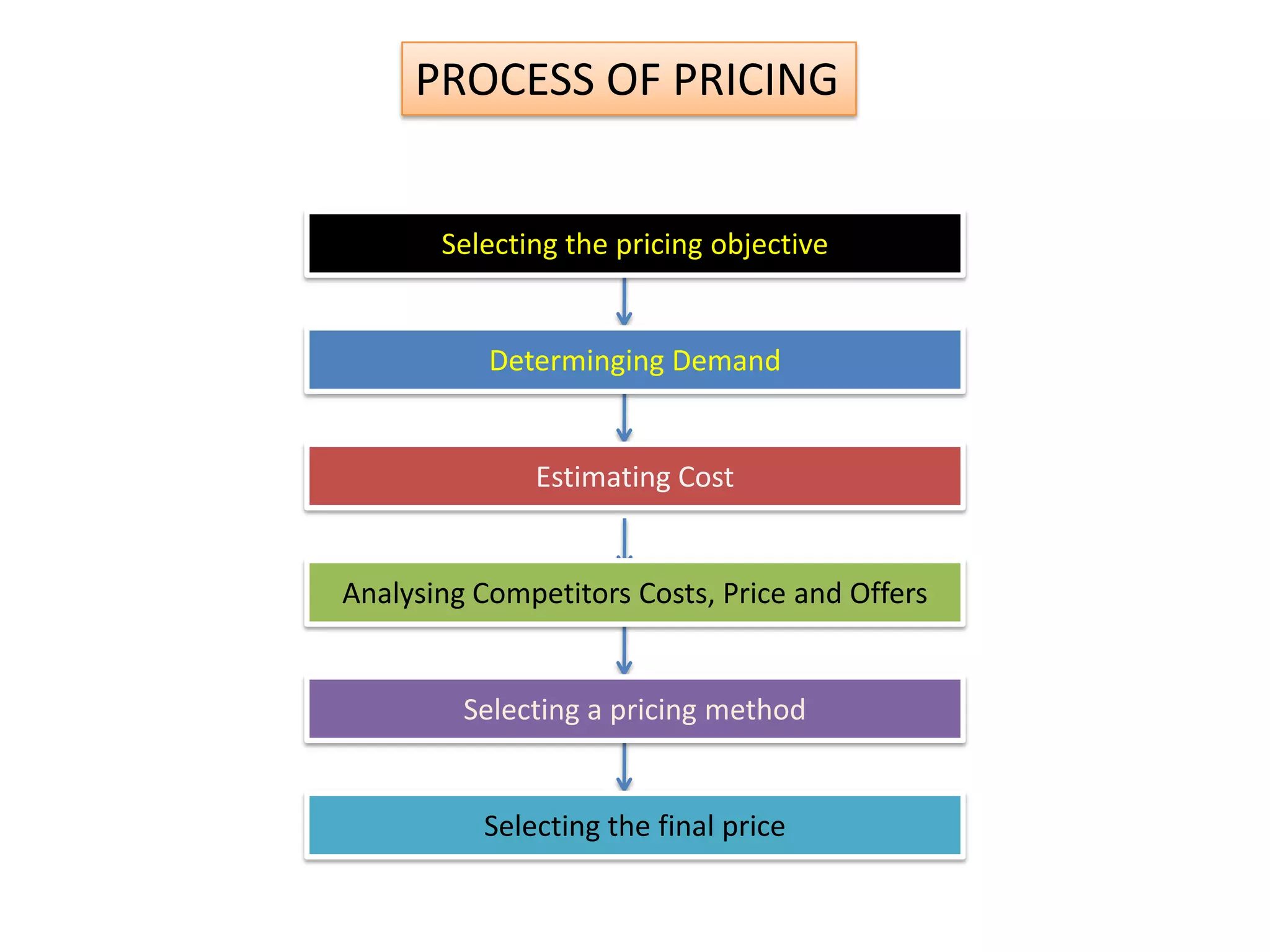
Selecting the pricing objective
Determinging Demand
Estimating Cost
Analysing Competitors Costs, Price and Offers
Selecting a pricing method
Selecting the final price
PROCESS OF PRICING

Presentation on market research and methods of pricing

  • 1.
    PRESENTATION ON MARKETRESEARCH AND METHODS OF PRICING AND ITS PROCESS PRESENTED BY N.N.V. Krishna kanth I MBA ALIET
  • 2.
    Objective of pptis to learn the following : • Definition and meaning of market research • Importance of Marketing Information System • Marketing research process • Methods of pricing and its process
  • 3.
    • Definition: According toPhilip Kotler, ‘Marketing research is a systematic problem analysis, model building and fact finding for the purpose of important, decision making and controlling the marketing of goods and services. • Meaning: Research means a systematic and objective investigation of a subject or a problem in order to discover relevant information or principles. When applied to solving marketing problems, it is known as marketing research.
  • 5.
    6.5 The Marketing InformationSystem • Assessing information needs: – Objective is to make better marketing decisions – Must consider needs of all users – Balance information wants with needs and feasibility (and costs) of offering it • Developing information: – Internal data – Marketing intelligence – Marketing research
  • 6.
    Developing Information • Internaldata: – Information collected, stored within the organization – Internal databases – Source from different departments • Marketing intelligence: – Systematic collection and analysis – Publicly available information – About competitors and market developments
  • 7.
    The Marketing ResearchProcess • Marketing research: – Systematic design, collection, analysis, and reporting – Data relevant to a specific marketing situation – Facing the organization – Multi-step process – Can be done by company personnel or contracted to outside companies
  • 8.
    • Defining theproblem and research objectives: – Exploratory research – Descriptive research – Causal research • Developing the research plan: – Secondary data – Primary data
  • 9.
    • Secondary datasources: • Business data – CNN – Marketing journals – Trade publications – General business magazines • Primary data collection: – Observational research – Survey (descriptive) research – Single-source data systems – Experimental research – Focus group interviewing – Online (Internet) marketing research • Government data: Industry Strategies Securities and Exchange Commission • Internet data: CyberAtlas Internet Advertising Bureau Jupiter Media Metrix
  • 10.
    Contact Methods Mail TelephonePersonal Online Flexibility Poor Good Excellent Good Quantity of data collected Good Fair Excellent Good Control of interviewer effect Excellent Fair Poor Fair Control of sample Fair Excellent Fair Poor Speed of data collection Poor Excellent Good Excellent Response rate Poor Good Good Good Cost Good Fair Poor Excellent
  • 11.
    What is aPrice? • Price: the amount of money charged for a product or service, or the sum of values exchanged for the benefits of having or using the product or service – Fixed pricing – Dynamic pricing – Only marketing mix element that produces revenue • Pricing best practices: – Develop a 1% pricing mindset – Consistently deliver more value – Price strategically, not opportunistically – Know your competition – Make pricing a process
  • 12.
    PRICE = • Oneof the important ‘P’ in the marketing mix is price. Price may be defined as exchange of goods and services in terms of money. Quality of money received by the seller Quality of goods and serices rendered received by they buyer
  • 13.
    Internal Factors AffectingPricing Decisions • Marketing objectives: – Survival – Current profit maximization – Market share leadership – Product quality leadership • Marketing mix strategy: – Price should be consistent with other mix elements – Target costing – Non-price positions
  • 14.
    Costs • Fixed costs:costs that do not vary with production • Variable costs: costs that vary directly with the level of production • Total costs: sum of fixed and variable costs
  • 15.
    External Factors AffectingPricing Decisions • Types of markets: – Pure competition – Monopolistic competition – Oligopolistic competition – Pure monopoly • Competition: – Consumers will compare – High margins attract competition – Benchmarking costs
  • 16.
    Types of PricingStrategy Penetration Skimming Bundling Value Multiple Premium Leadership
  • 17.
    • Market penetrationpricing: setting a low price for a new product to attract a large number of buyers and achieve a large market share • Market skimming pricing: setting a high price to skim maximum revenues layer by layer from the segments willing to pay the high price • Price Bundling: Organization sells the related products at a single price. It is a kind of packaged deal for the customers. For example: McDonalds offering happy meal as a part of price bundling strategy.
  • 18.
    • Multiple pricing:Discounts are provided by the organization to those individuals who buy a larger quantity. For example, if a person buys one piece of shirt, he might get it at 500/- but on buying 3 pieces of shirt, he might get it at 1250/-, there by getting a discount of 250/-. • Value pricing: A customer perceives a product as a group of utilities that can provide him total satisfaction. Therefore, the prices should be fixed according to the customer’s perception. In most of the cases, lower prices are established. • Leadership pricing: This is a style of pricing in which one organization becomes dominant in the matter either because of its operations or by generating customer loyalty. It becomes the leader and sets up the price and the other follows it. This is mainly undertaken in a situation of oligopoly. • Premium pricing: This is a pricing strategy under which different prices are charged for different versions of the same product. For example, the same model of a car has different versions like LXI, VDI, etc., and different prices are charged for all of them.
  • 19.
    Selecting the pricingobjective Determinging Demand Estimating Cost Analysing Competitors Costs, Price and Offers Selecting a pricing method Selecting the final price PROCESS OF PRICING