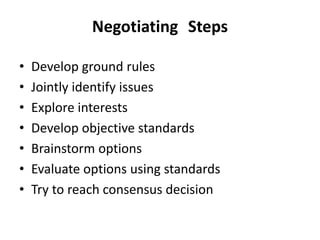
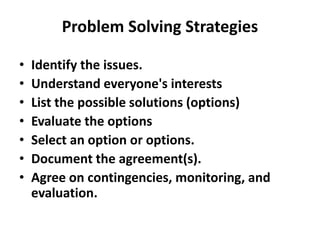
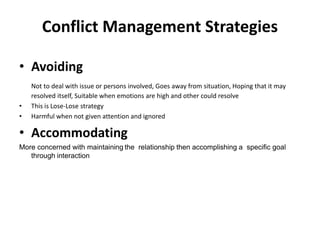
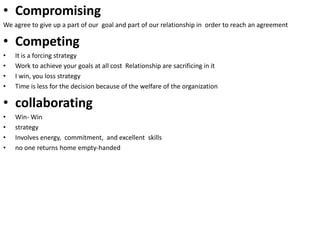
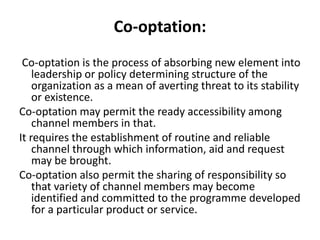
Channel conflict can arise when one channel member's actions prevent another from achieving its goals. It is caused by incompatible goals between members, unclear roles and rights, and differences in perception. Conflict is not always undesirable as it can help improve performance. While vertical and horizontal conflicts can occur between levels or members of the same channel, managing conflict involves adopting superordinate goals, exchanging employees, and using negotiation, problem solving, and dispute resolution strategies. Co-optation of members can also help avert threats to the channel's stability. Effective leadership is important to coordinate goals and efforts between channel institutions.