ORGANISATIONAL DEVELOPMENT
TECHNIQUES & APPLICATIONS

PRESENTED BY : B.SWAROOPA RANI
1ST MBA
12HP1E0031
ALIET
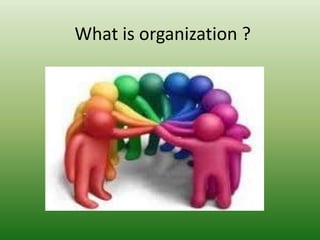
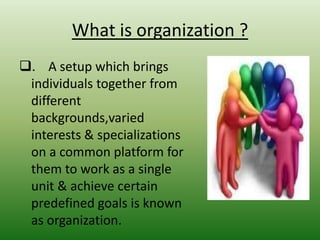
What is organization ?
. A setup which brings
individuals together from
different
backgrounds,varied
interests & specializations
on a common platform for
them to work as a single
unit & achieve certain
predefined goals is known
as organization.
Organizational Development
 A planned, organization wide,continuous
process designed to improve
communication,problem solving & learning
through the application of behavioral science
knowledge..
 Organizational Development refers to
the various ways & procedures to
increase the productivity &
effectiveness of an organization.
Organizational Development includes
various techniques which help the
employees as well as organization adjust
to changing circumstances in a better
way.
Organizational Development Techniques
It includes :
1.Diagonostic Activities
2.Team Building
3.Survey FeedBack
4.Education
5.Techno Structural Activities
6.Coaching & Counseling
Diagnostic Activities
1. An organization development diagnosis
analyses the current condition of an
organization.
2. To carry out this diagnosis,managers use
questionnaires,opinion or attitude
surveys,interviews & meetings to assess various
characteristics of the organization.
3. The results of this diagnosis may generate
profiles of the organization activities,which can
then be used to identify problem areas in need
of correction.
Team Building
 Team Building activities are intended to enhance the
effectiveness & satisfaction of individuals who work in
groups or teams to promote overall group effectiveness
Given the wide spread use of teams today,these activities
have taken on increased importance.
 An Organizational Development consultant might
interview team members to determine how they feel
about the group; then an off side meeting could be held
to discuss the issues that surfaced & iron out any
problem areas or member concerns
 Many companies use team Building as one method for
changing the working relationships between workers &
supervisors from confrontational to cooperative.
Survey FeedBack
i.

In Survey feedback each employee responds to a
questionnaire intended to measure perceptions &
attitudes(for ex.satisfaction & supervisory style)
ii. Everyone involved,including the supervisor,receives
the result of the survey.
iii. The aim of this approach is usually to change the
behaviour of supervisors by showing them how their
subordinates view them.
iv. After the feedback has been provided,workshops
may be conducted to evaluate results & suggest
constructive changes.
Education
 Educational activities focus on class room
training.
 Although such activities can be used for
technical or skill replaced purposes,an
organisational development educational activity
typically focuses on sensitivity skills that is,it
teaches people to be more considerate &
understanding of the people they work with.
 Participants often go through a series of role
playing excercises to learn better how others in
the organization feel.
Techno structural activities
 It is concerned with the inter relationship of design &
technology of the organization.
 A structural change can increase in decentralization
job design change such as increase in the use of
automation & a technological change involving a
modification in work flow.
Coaching & Counseling
 Coaching & Counseling provides non evaluative
feed back to individuals
 The purpose is to help people develop a better
sense of how others see them & learn behaviors
that will assist others in achieving their work
related goals .
 The focus is not on how the individual is
performing today; instead it is on how the person
can perform better in the future.
When is the organization ready for
the development ?
1st step : Dissatisfied with the current
scenario:
The employees are not happy with the
current scenario & feel the need for a
change in the processes of the
organization.
2nd step : Suggesting changes :
In this employees discuss among
themselves the various options which
would help the organization do better
in the near future.
3rd step : Applying the processes :
Various policies & procedures are
applied to help the organization
respond to external as well as
internal changes more effectively.
Applications of Organizational
Development
•
The purpose of OD is to address perennial evolving
needs of successful organizations.
•
The objective of OD is to improve the organization's
capacity to handle its internal & external functioning &
relationships.This includes improved inter personal & group
processes,more effective communication,enhanced ability to
cope with organisational problems of all kinds,more effective
decision processes,more appropriate leadership
style,improved skill in dealing with destructive conflict &
higher levels of trust & cooperation among organisational
members.
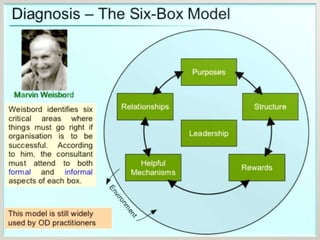
Weisbord presents a six box
model for
understanding,thereby
changing & improving,the
organization:
1.Purposes : Are employees clear
about the organizations mission,
purpose & goals? Do they support
the organizations purpose?
2.Structure : How is the
organizations work divided ? Is
there an adequate fit between the
purpose & the internal structure ?
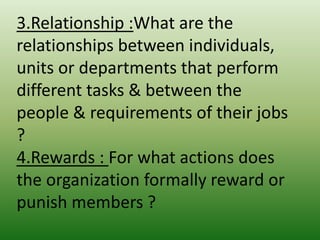
3.Relationship :What are the
relationships between individuals,
units or departments that perform
different tasks & between the
people & requirements of their jobs
?
4.Rewards : For what actions does
the organization formally reward or
punish members ?
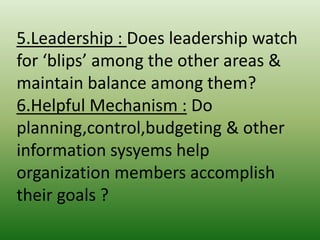
5.Leadership : Does leadership watch
for ‘blips’ among the other areas &
maintain balance among them?
6.Helpful Mechanism : Do
planning,control,budgeting & other
information sysyems help
organization members accomplish
their goals ?
Organisational development techniques & applications

Organisational development techniques & applications

  • 1.
    ORGANISATIONAL DEVELOPMENT TECHNIQUES &APPLICATIONS PRESENTED BY : B.SWAROOPA RANI 1ST MBA 12HP1E0031 ALIET
  • 2.
  • 3.
    What is organization? . A setup which brings individuals together from different backgrounds,varied interests & specializations on a common platform for them to work as a single unit & achieve certain predefined goals is known as organization.
  • 5.
    Organizational Development  Aplanned, organization wide,continuous process designed to improve communication,problem solving & learning through the application of behavioral science knowledge..
  • 6.
     Organizational Developmentrefers to the various ways & procedures to increase the productivity & effectiveness of an organization. Organizational Development includes various techniques which help the employees as well as organization adjust to changing circumstances in a better way.
  • 7.
    Organizational Development Techniques Itincludes : 1.Diagonostic Activities 2.Team Building 3.Survey FeedBack 4.Education 5.Techno Structural Activities 6.Coaching & Counseling
  • 8.
    Diagnostic Activities 1. Anorganization development diagnosis analyses the current condition of an organization. 2. To carry out this diagnosis,managers use questionnaires,opinion or attitude surveys,interviews & meetings to assess various characteristics of the organization. 3. The results of this diagnosis may generate profiles of the organization activities,which can then be used to identify problem areas in need of correction.
  • 9.
    Team Building  TeamBuilding activities are intended to enhance the effectiveness & satisfaction of individuals who work in groups or teams to promote overall group effectiveness Given the wide spread use of teams today,these activities have taken on increased importance.  An Organizational Development consultant might interview team members to determine how they feel about the group; then an off side meeting could be held to discuss the issues that surfaced & iron out any problem areas or member concerns  Many companies use team Building as one method for changing the working relationships between workers & supervisors from confrontational to cooperative.
  • 10.
    Survey FeedBack i. In Surveyfeedback each employee responds to a questionnaire intended to measure perceptions & attitudes(for ex.satisfaction & supervisory style) ii. Everyone involved,including the supervisor,receives the result of the survey. iii. The aim of this approach is usually to change the behaviour of supervisors by showing them how their subordinates view them. iv. After the feedback has been provided,workshops may be conducted to evaluate results & suggest constructive changes.
  • 11.
    Education  Educational activitiesfocus on class room training.  Although such activities can be used for technical or skill replaced purposes,an organisational development educational activity typically focuses on sensitivity skills that is,it teaches people to be more considerate & understanding of the people they work with.  Participants often go through a series of role playing excercises to learn better how others in the organization feel.
  • 12.
    Techno structural activities It is concerned with the inter relationship of design & technology of the organization.  A structural change can increase in decentralization job design change such as increase in the use of automation & a technological change involving a modification in work flow.
  • 13.
    Coaching & Counseling Coaching & Counseling provides non evaluative feed back to individuals  The purpose is to help people develop a better sense of how others see them & learn behaviors that will assist others in achieving their work related goals .  The focus is not on how the individual is performing today; instead it is on how the person can perform better in the future.
  • 14.
    When is theorganization ready for the development ? 1st step : Dissatisfied with the current scenario: The employees are not happy with the current scenario & feel the need for a change in the processes of the organization.
  • 15.
    2nd step :Suggesting changes : In this employees discuss among themselves the various options which would help the organization do better in the near future. 3rd step : Applying the processes : Various policies & procedures are applied to help the organization respond to external as well as internal changes more effectively.
  • 16.
    Applications of Organizational Development • Thepurpose of OD is to address perennial evolving needs of successful organizations. • The objective of OD is to improve the organization's capacity to handle its internal & external functioning & relationships.This includes improved inter personal & group processes,more effective communication,enhanced ability to cope with organisational problems of all kinds,more effective decision processes,more appropriate leadership style,improved skill in dealing with destructive conflict & higher levels of trust & cooperation among organisational members.
  • 18.
    Weisbord presents asix box model for understanding,thereby changing & improving,the organization:
  • 19.
    1.Purposes : Areemployees clear about the organizations mission, purpose & goals? Do they support the organizations purpose? 2.Structure : How is the organizations work divided ? Is there an adequate fit between the purpose & the internal structure ?
  • 20.
    3.Relationship :What arethe relationships between individuals, units or departments that perform different tasks & between the people & requirements of their jobs ? 4.Rewards : For what actions does the organization formally reward or punish members ?
  • 21.
    5.Leadership : Doesleadership watch for ‘blips’ among the other areas & maintain balance among them? 6.Helpful Mechanism : Do planning,control,budgeting & other information sysyems help organization members accomplish their goals ?