Downloaded 253 times
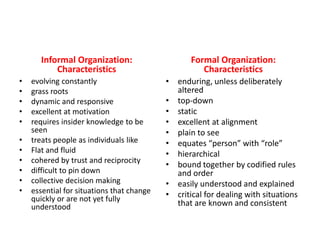
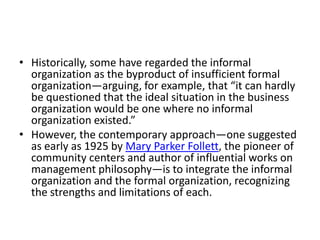
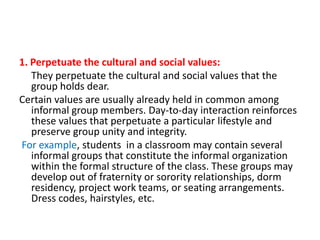

The informal organization refers to the social structures and relationships that develop among people in an organization outside of official procedures and hierarchies. It consists of norms, personal connections, social networks, and communities of shared interests that influence how work gets done and people interact. If nurtured effectively, the informal organization can complement the formal organization by accelerating responses to unexpected events, fostering innovation, and enabling collaboration across boundaries. However, it also presents challenges like resistance to change, role conflicts, and pressure for conformity. Managing the interplay between the formal and informal aspects of an organization is important for effectiveness.


