MARKETING MANAGEMENT 
14th edition 
8 
Identifying Market 
Segments and 
Targets
Effective Targeting Requires… 
• Identify and profile distinct groups of buyers 
who differ in their needs and preferences. 
• Select one or more market segments to 
enter. 
• Establish and communicate the distinctive 
benefits of the market offering.
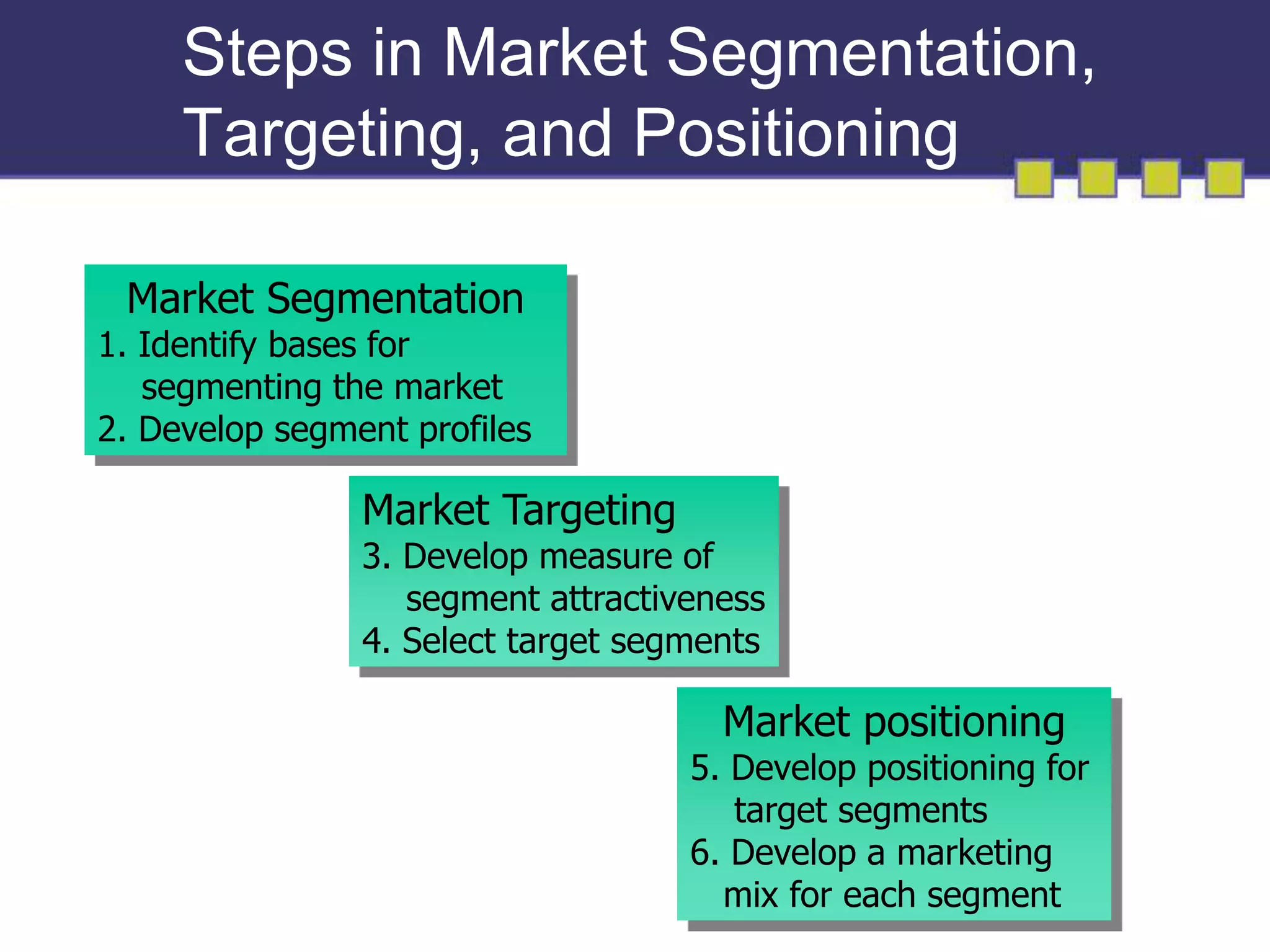
Steps in Market Segmentation, 
Targeting, and Positioning 
Market Segmentation 
1. Identify bases for 
segmenting the market 
2. Develop segment profiles 
Market Targeting 
3. Develop measure of 
segment attractiveness 
4. Select target segments 
Market positioning 
5. Develop positioning for 
target segments 
6. Develop a marketing 
mix for each segment
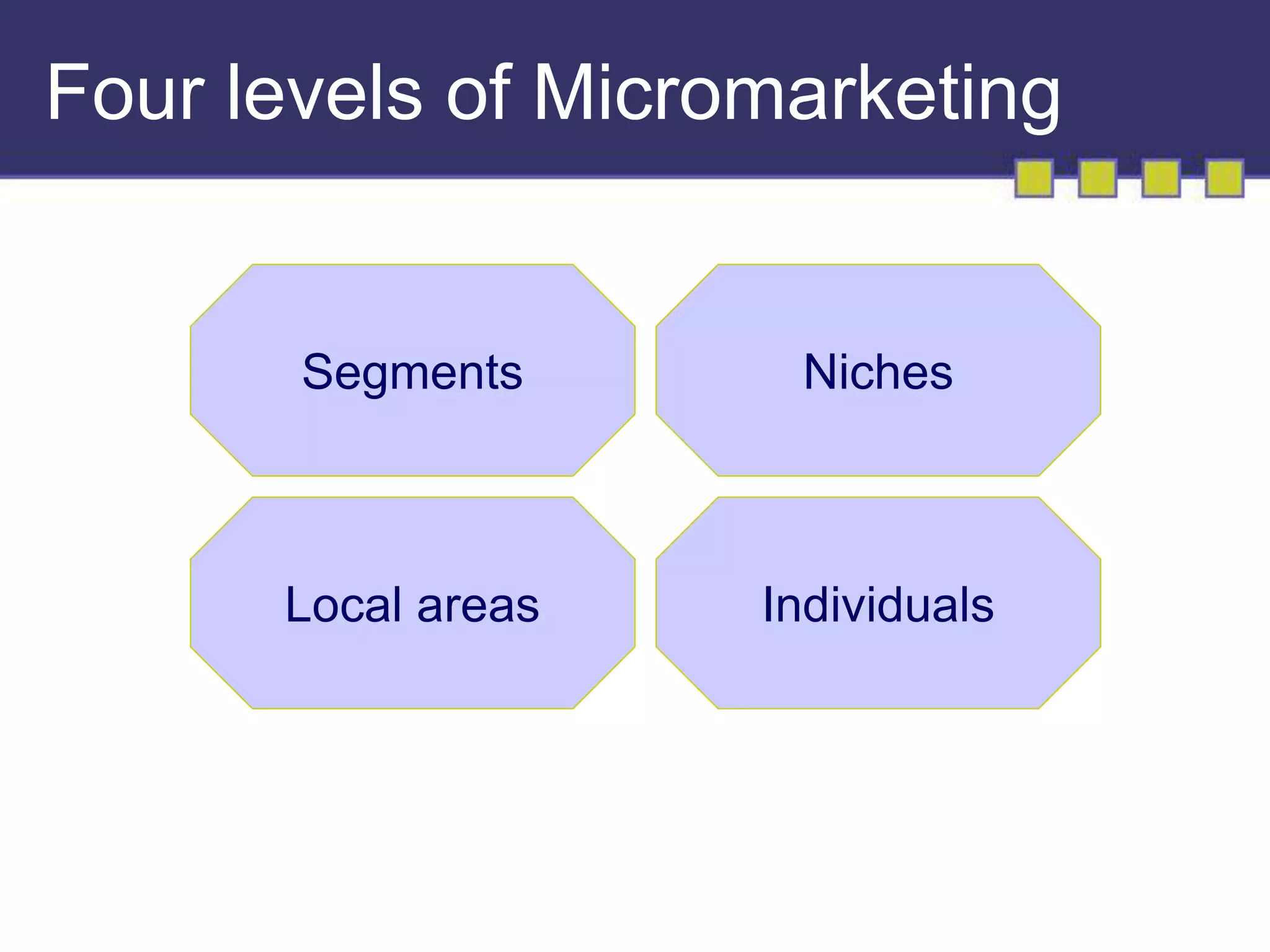
Four levels of Micromarketing 
Segments 
Niches 
Local areas Individuals
Segment Marketing 
Targeting a group of customers 
who share a similar set of 
needs and wants.
CHP: 8&10-6 
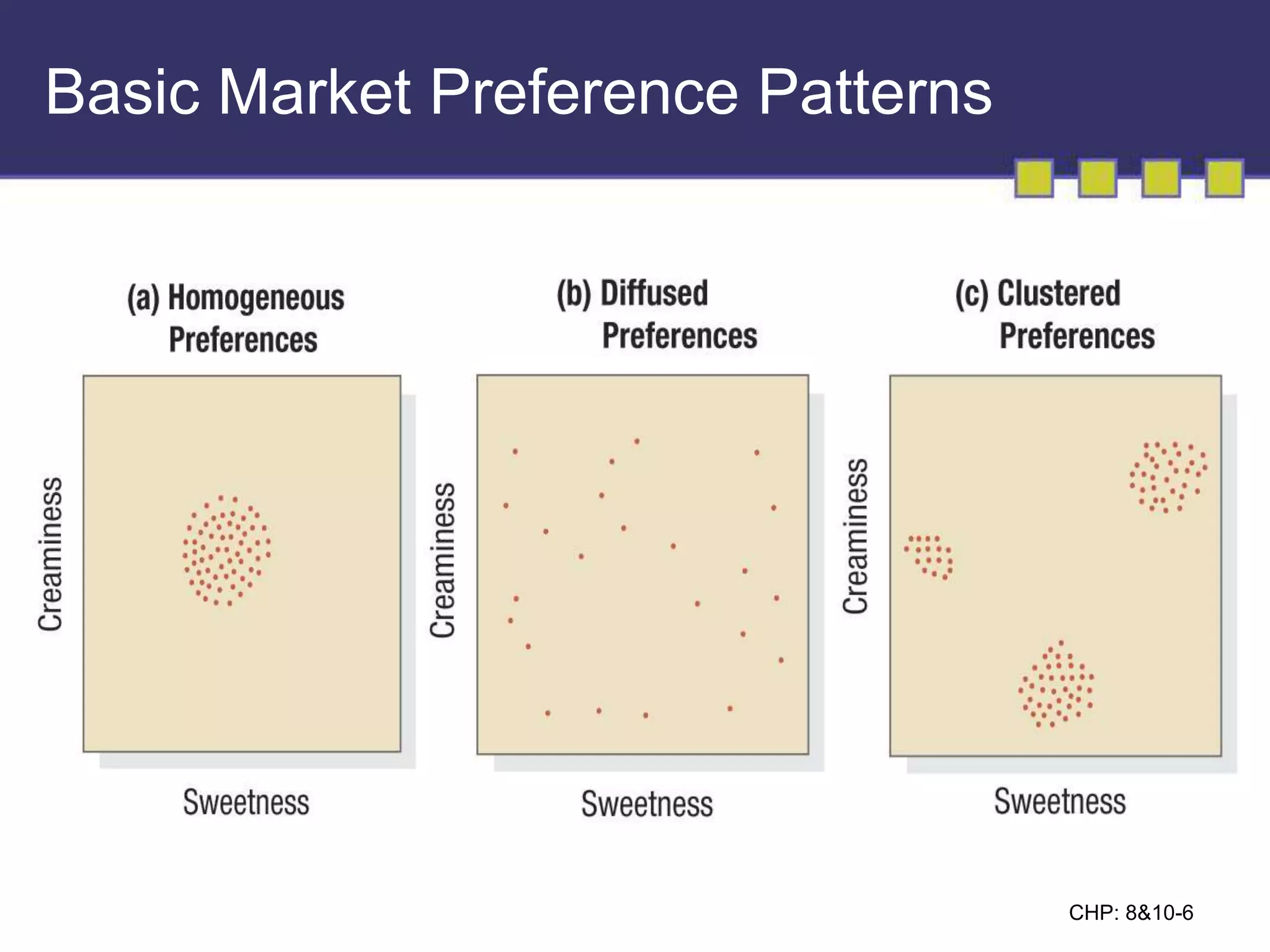
Basic Market Preference Patterns
Customerization 
Combines operationally driven 
mass customization with customized 
marketing in a way that empowers 
consumers to design the 
product and service offering 
of their choice.
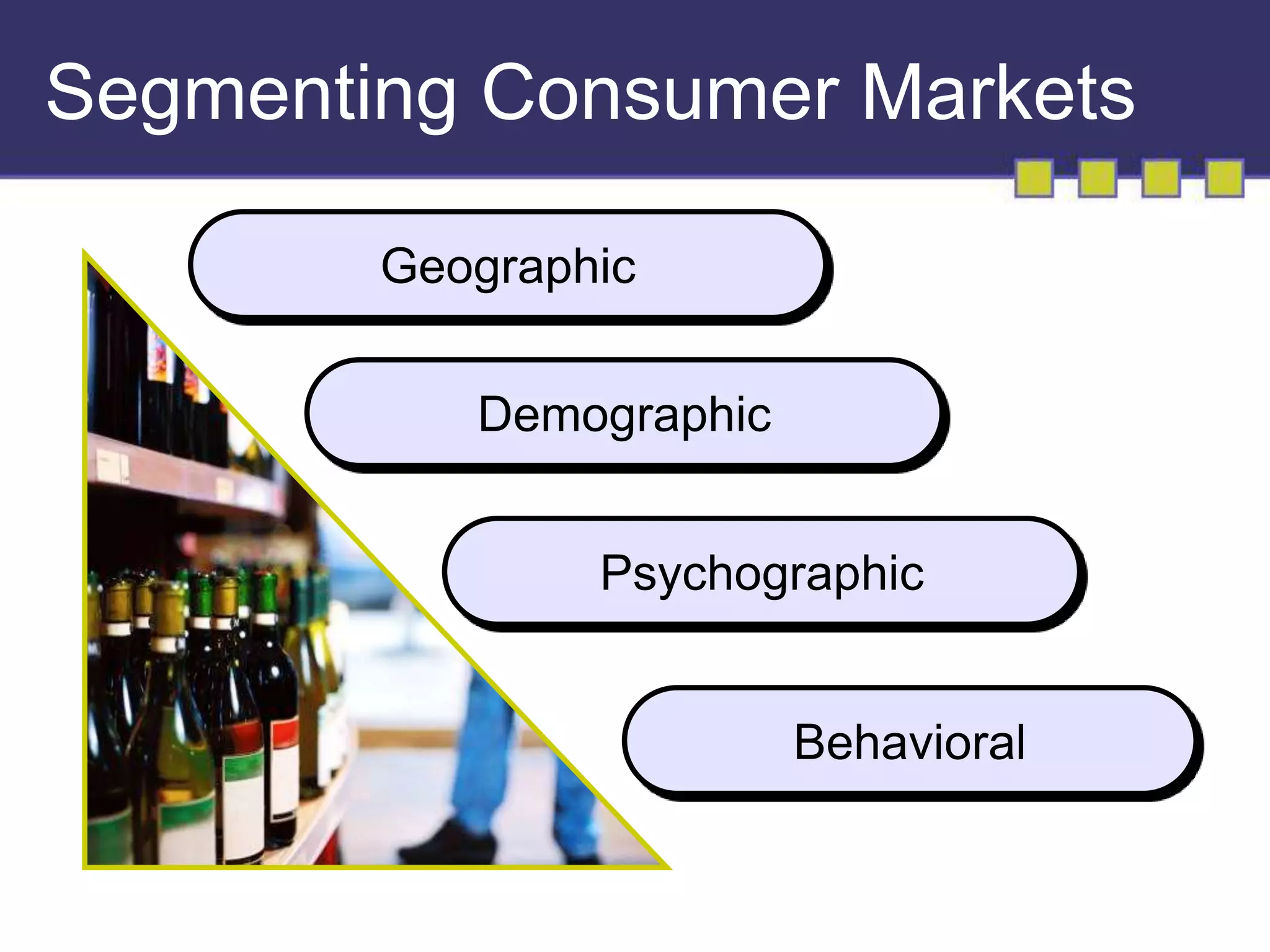
Segmenting Consumer Markets 
Geographic 
Demographic 
Psychographic 
Behavioral
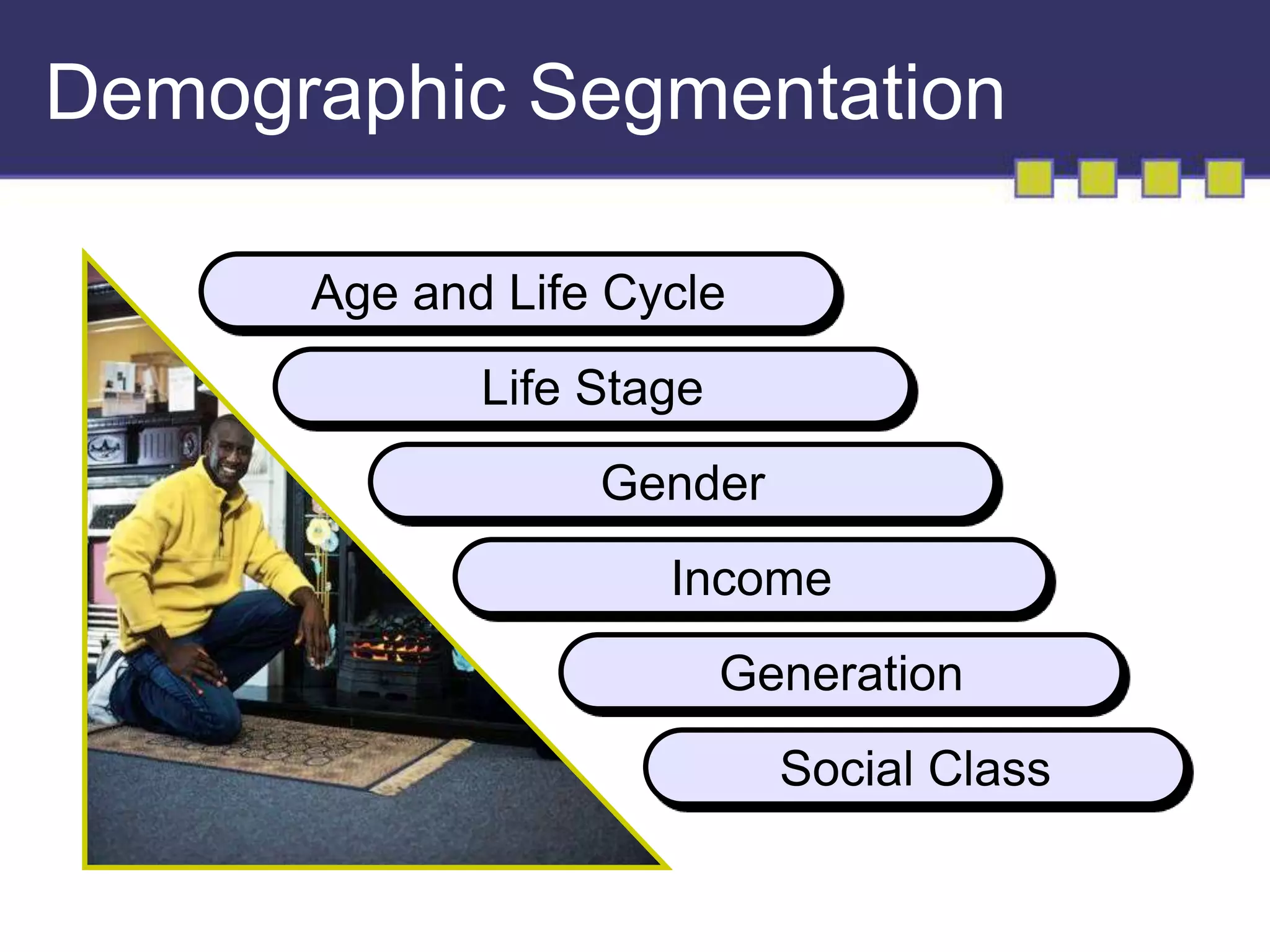
Demographic Segmentation 
Age and Life Cycle 
Life Stage 
Gender 
Income 
Generation 
Social Class
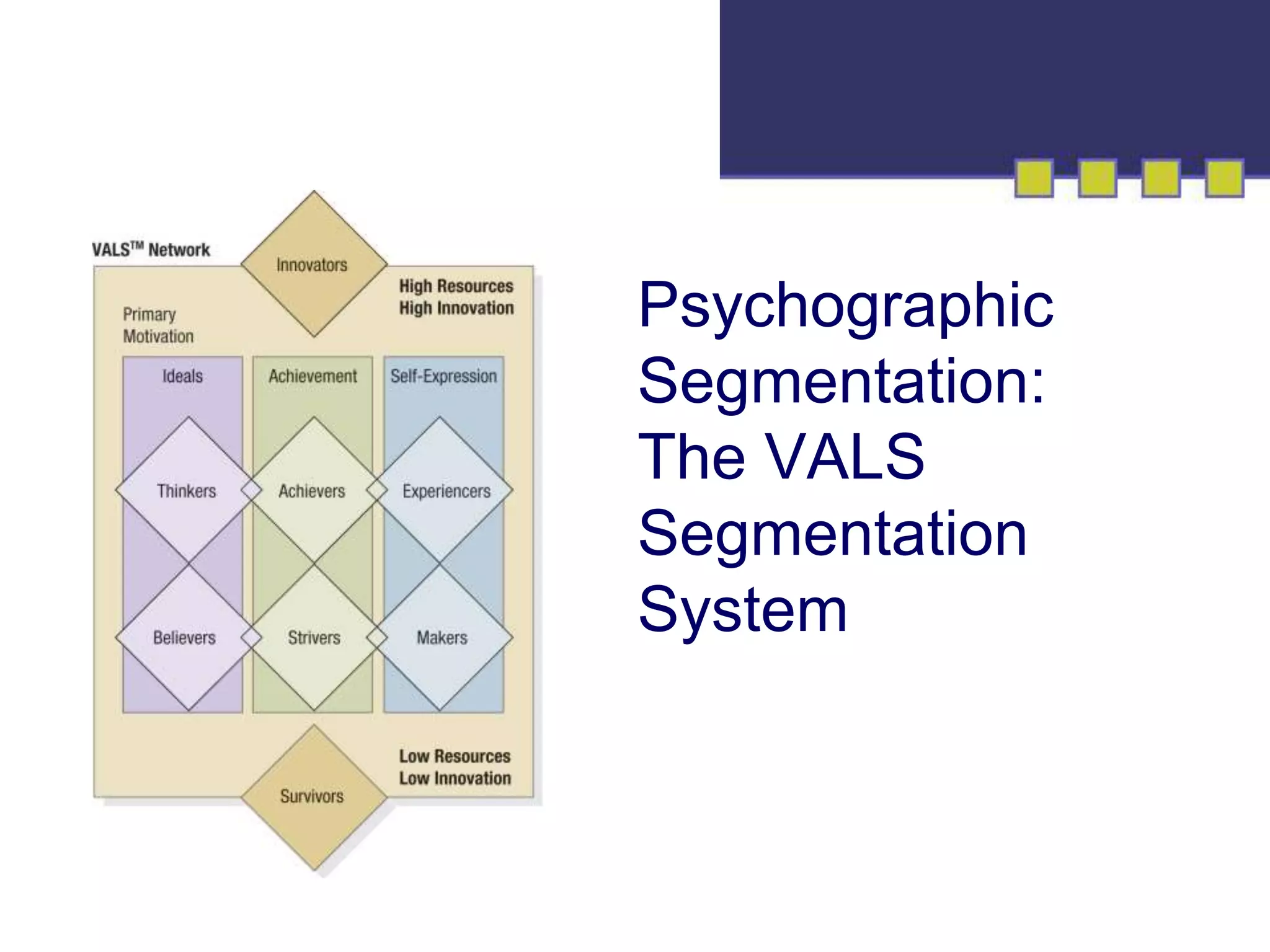
Psychographic 
Segmentation: 
The VALS 
Segmentation 
System
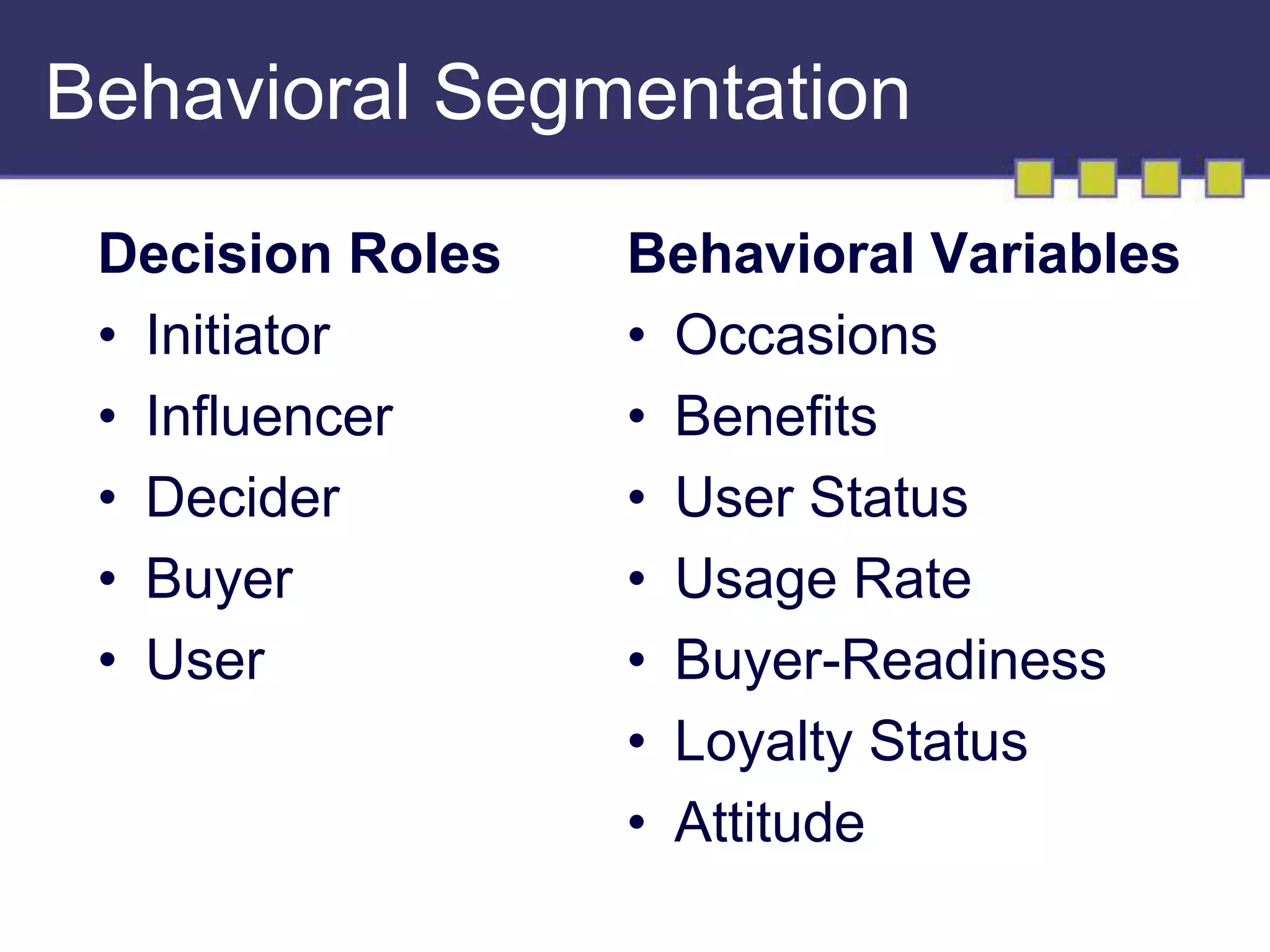
Behavioral Segmentation 
Decision Roles 
• Initiator 
• Influencer 
• Decider 
• Buyer 
• User 
Behavioral Variables 
• Occasions 
• Benefits 
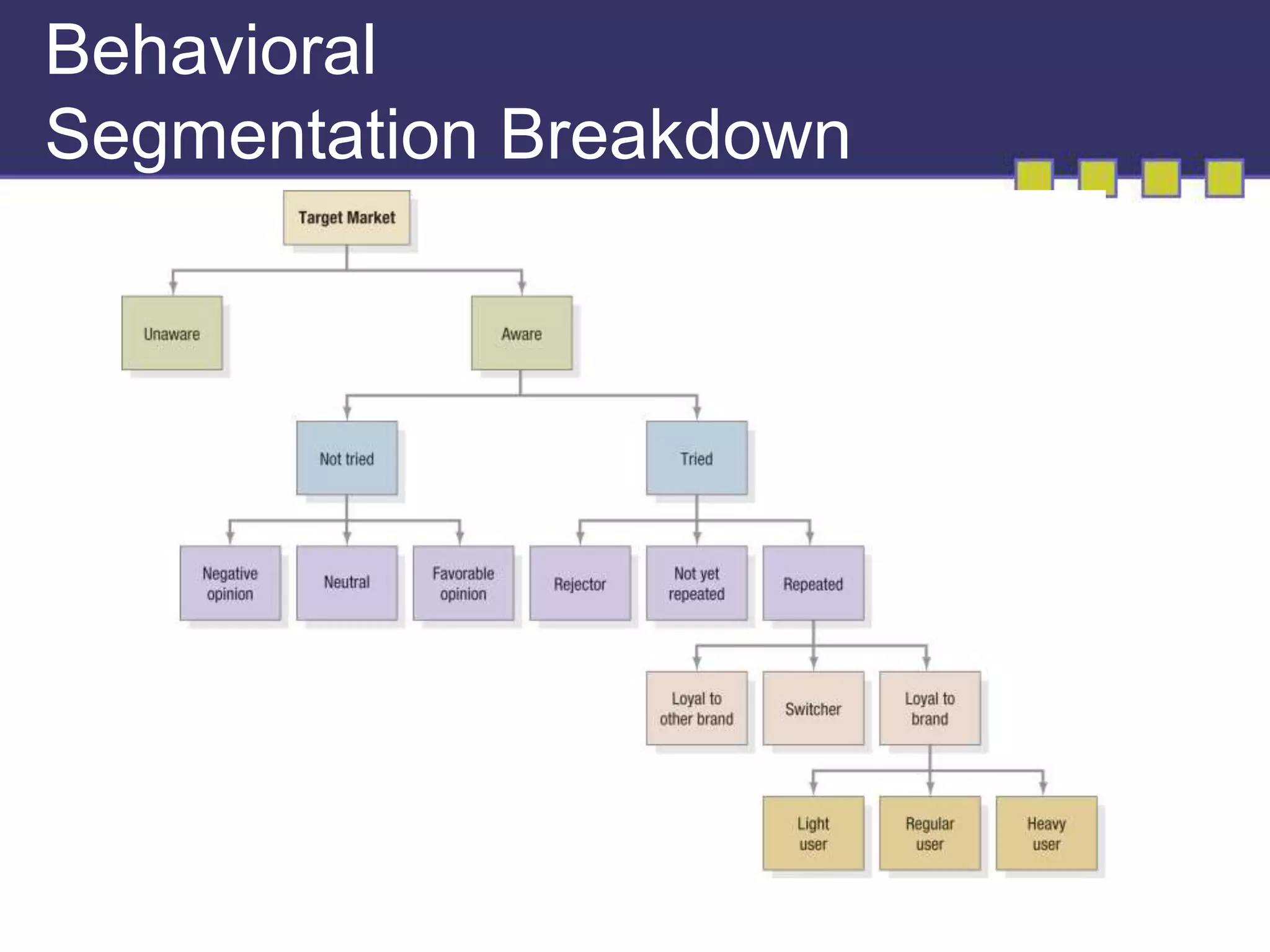
• User Status 
• Usage Rate 
• Buyer-Readiness 
• Loyalty Status 
• Attitude
Behavioral 
Segmentation Breakdown
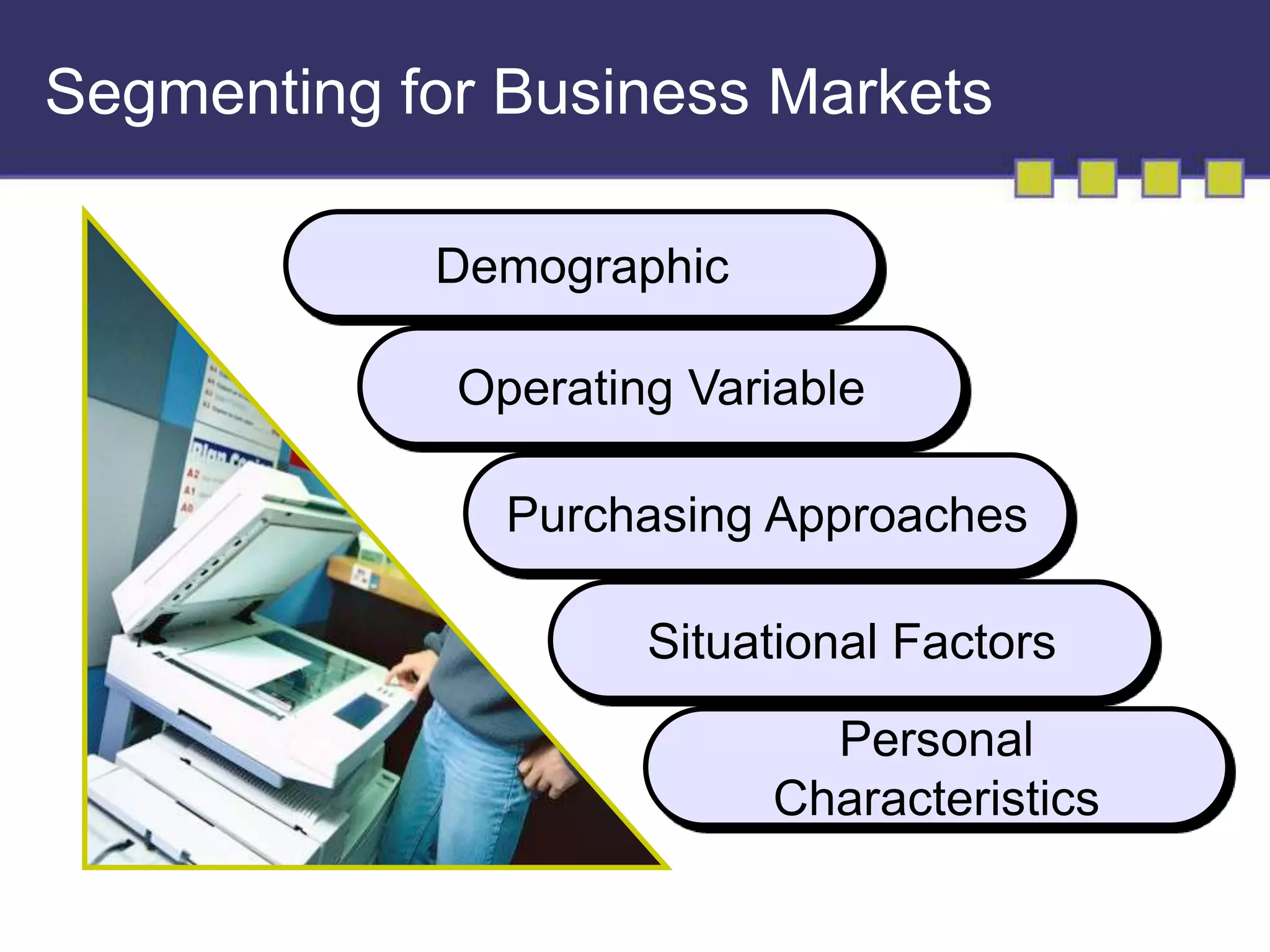
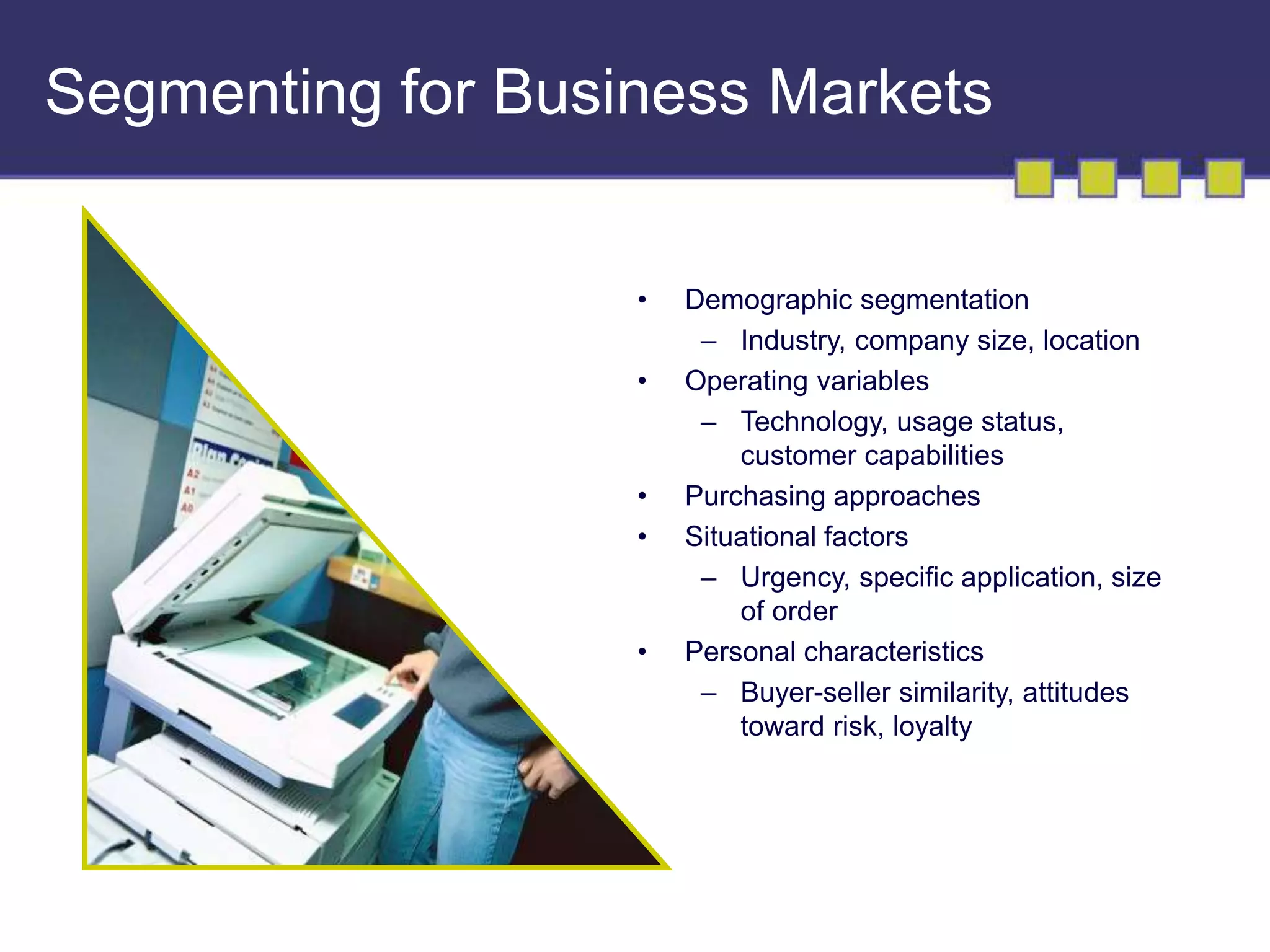
Segmenting for Business Markets 
Demographic 
Operating Variable 
Purchasing Approaches 
Situational Factors 
Personal 
Characteristics
Segmenting for Business Markets 
• Demographic segmentation 
– Industry, company size, location 
• Operating variables 
– Technology, usage status, 
customer capabilities 
• Purchasing approaches 
• Situational factors 
– Urgency, specific application, size 
of order 
• Personal characteristics 
– Buyer-seller similarity, attitudes 
toward risk, loyalty
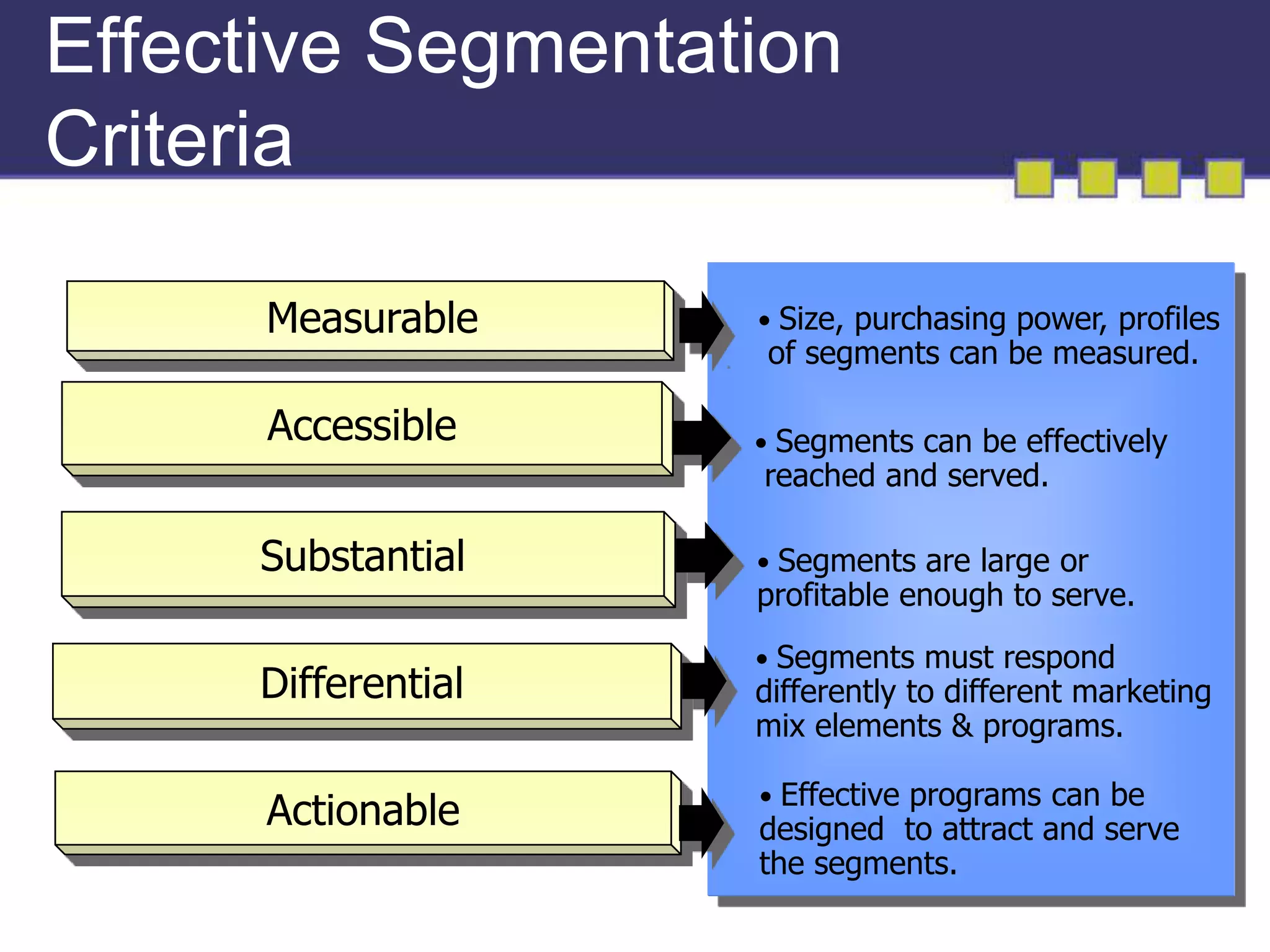
Effective Segmentation 
Criteria 
• Size, purchasing power, profiles 
of segments can be measured. 
• Segments can be effectively 
reached and served. 
• Segments are large or 
profitable enough to serve. 
Measurable 
Accessible 
Substantial 
Differential 
Actionable 
• Segments must respond 
differently to different marketing 
mix elements & programs. 
• Effective programs can be 
designed to attract and serve 
the segments.
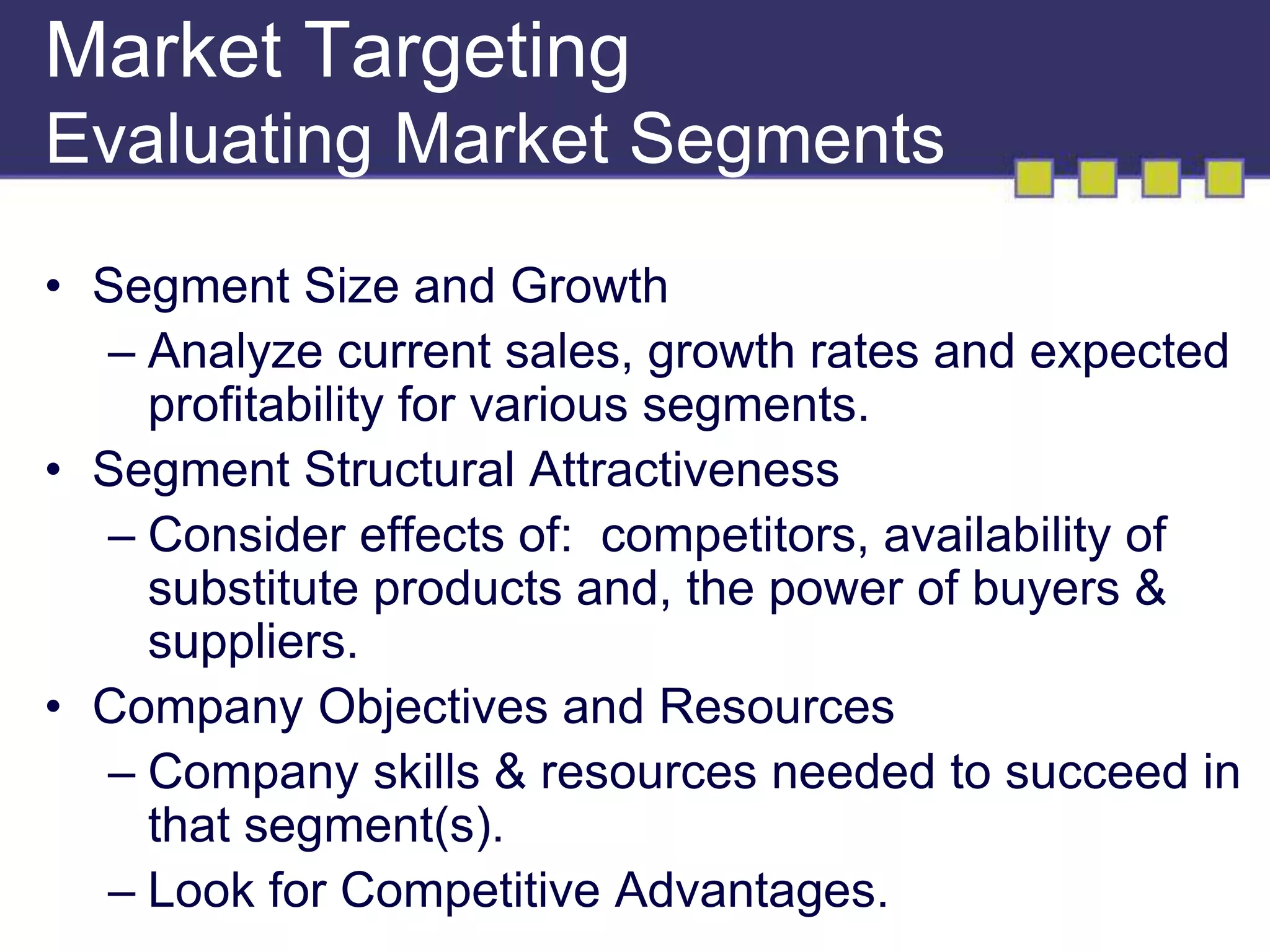
Market Targeting 
Evaluating Market Segments 
• Segment Size and Growth 
– Analyze current sales, growth rates and expected 
profitability for various segments. 
• Segment Structural Attractiveness 
– Consider effects of: competitors, availability of 
substitute products and, the power of buyers & 
suppliers. 
• Company Objectives and Resources 
– Company skills & resources needed to succeed in 
that segment(s). 
– Look for Competitive Advantages.
CHP: 8&10-17 
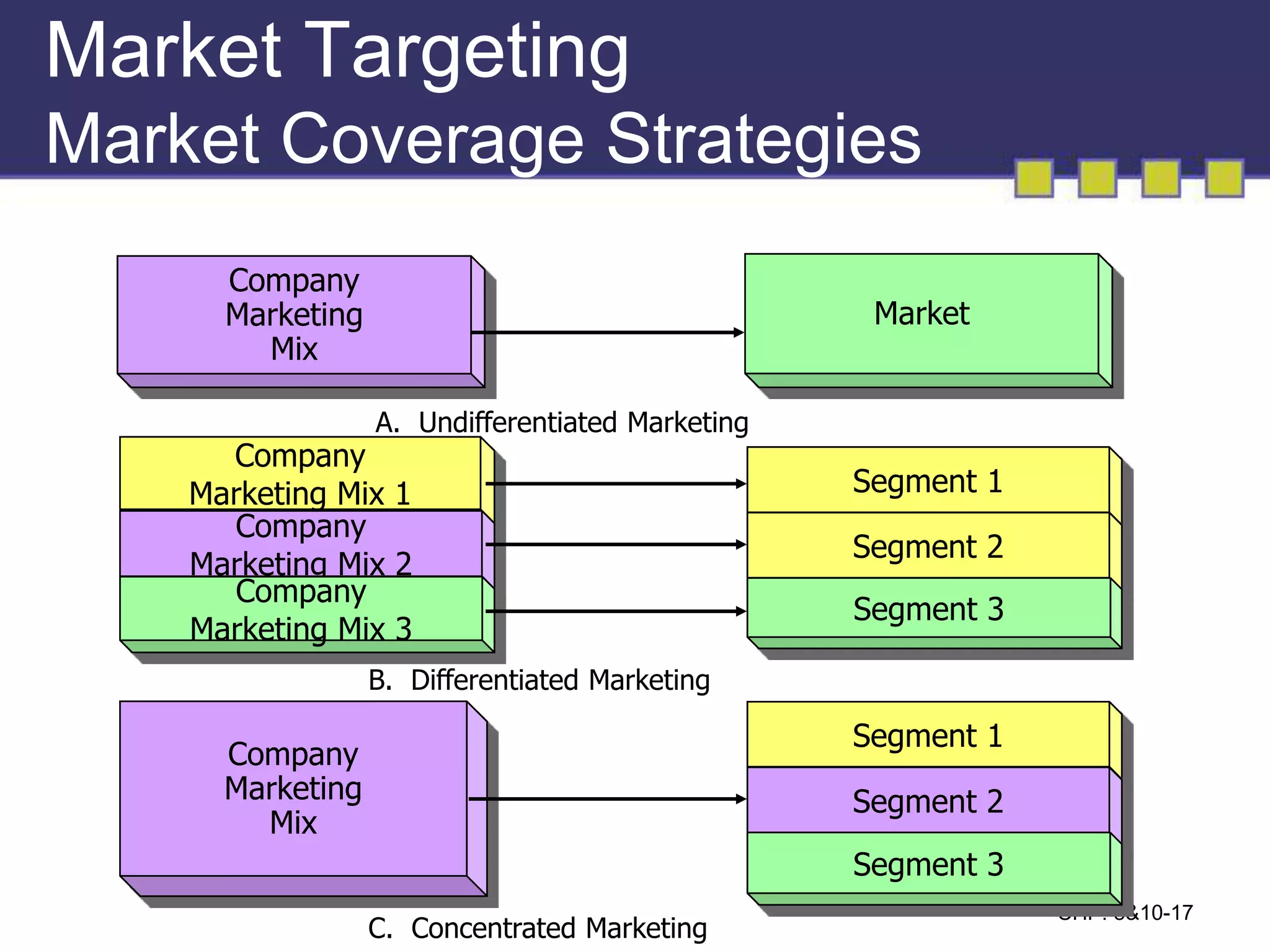
Market Targeting 
Market Coverage Strategies 
Segment 1 
Segment 2 
Segment 3 
Segment 1 
Segment 2 
Segment 3 
Company 
Marketing 
Mix 
Company 
Marketing Mix 1 
Company 
Marketing Mix 2 
Company 
Marketing Mix 3 
Company 
Marketing 
Mix 
Market 
A. Undifferentiated Marketing 
B. Differentiated Marketing 
C. Concentrated Marketing
CHP: 8&10-18 
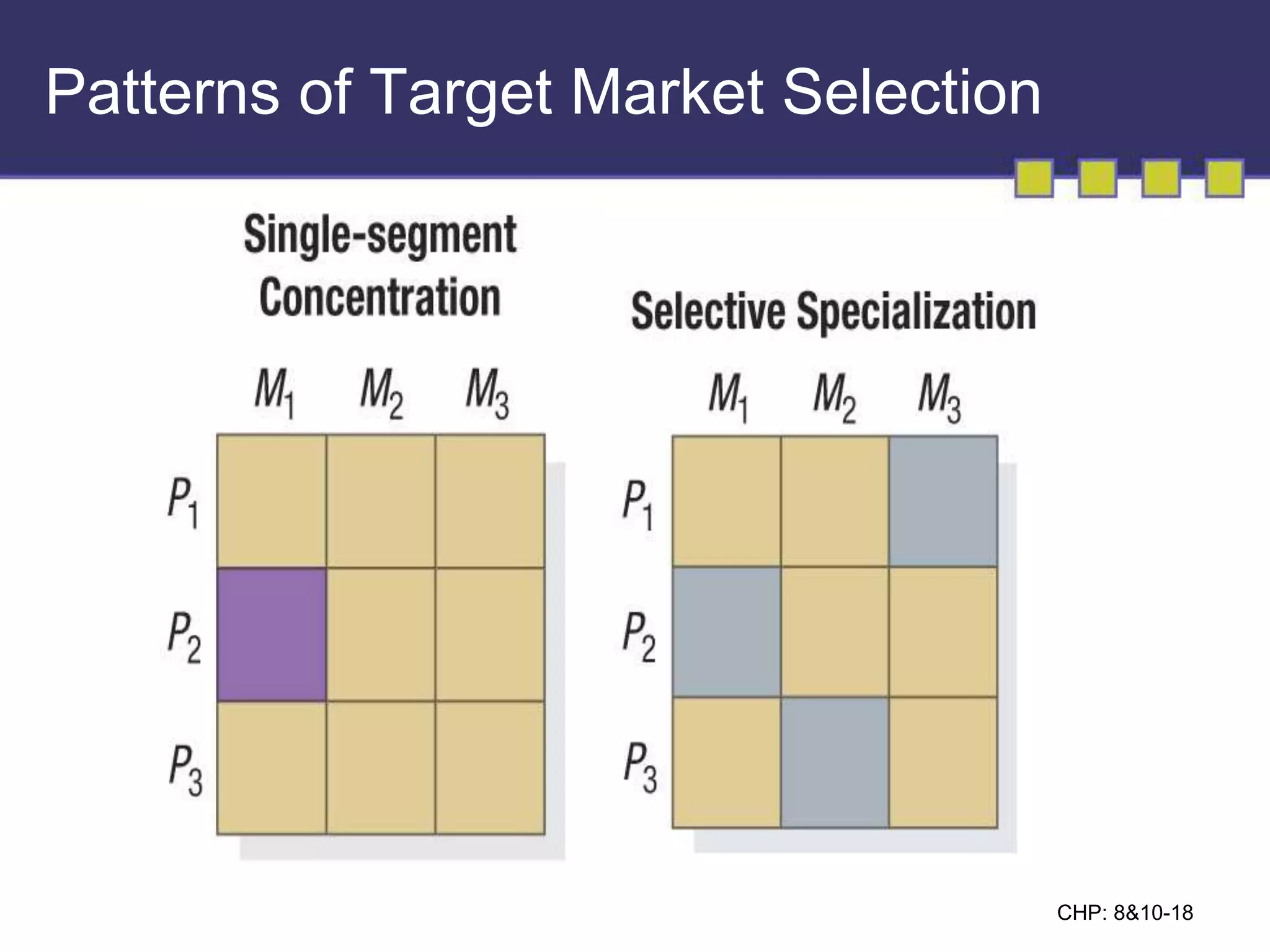
Patterns of Target Market Selection
CHP: 8&10-19 
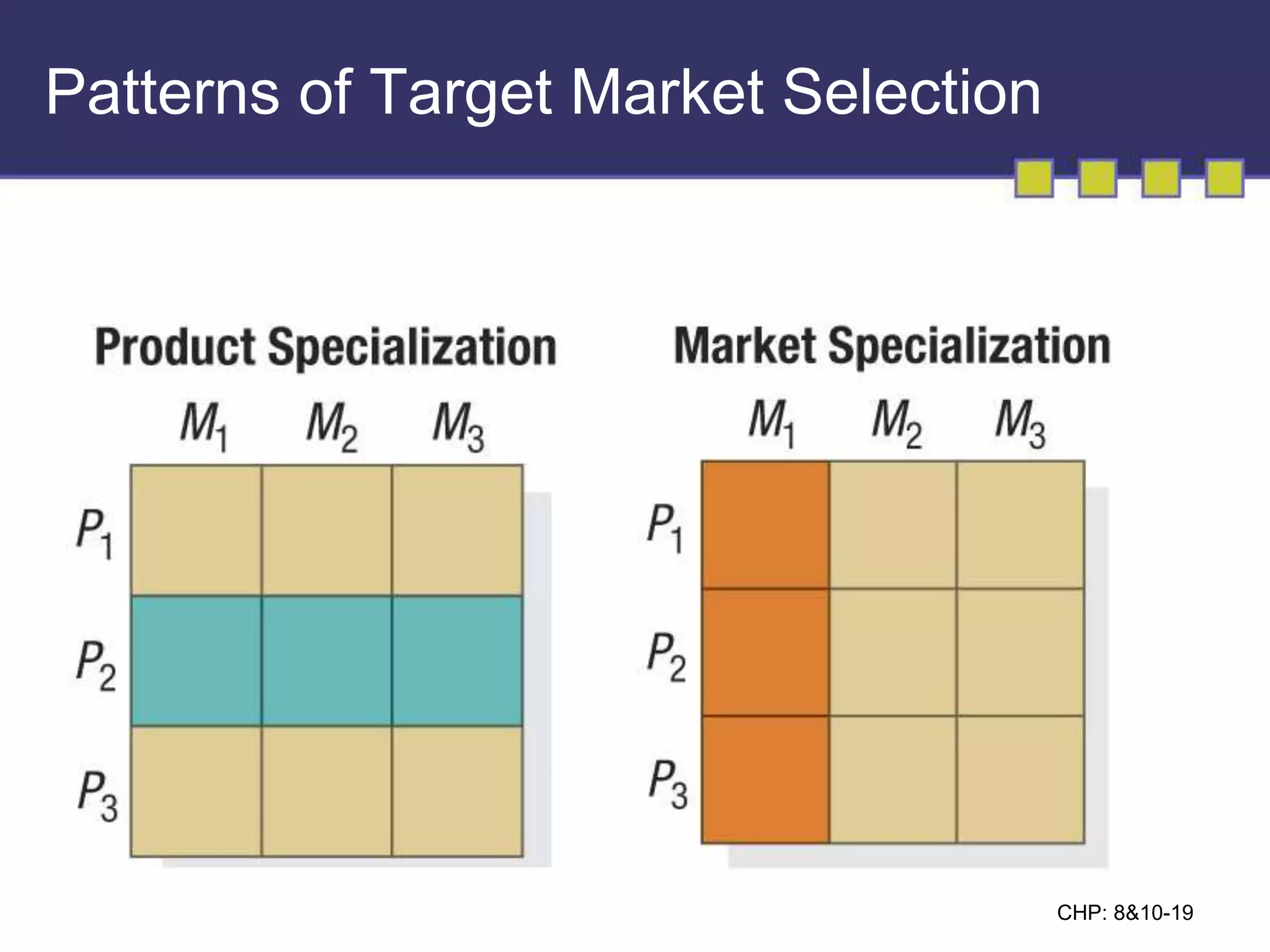
Patterns of Target Market Selection
CHP: 8&10-20 
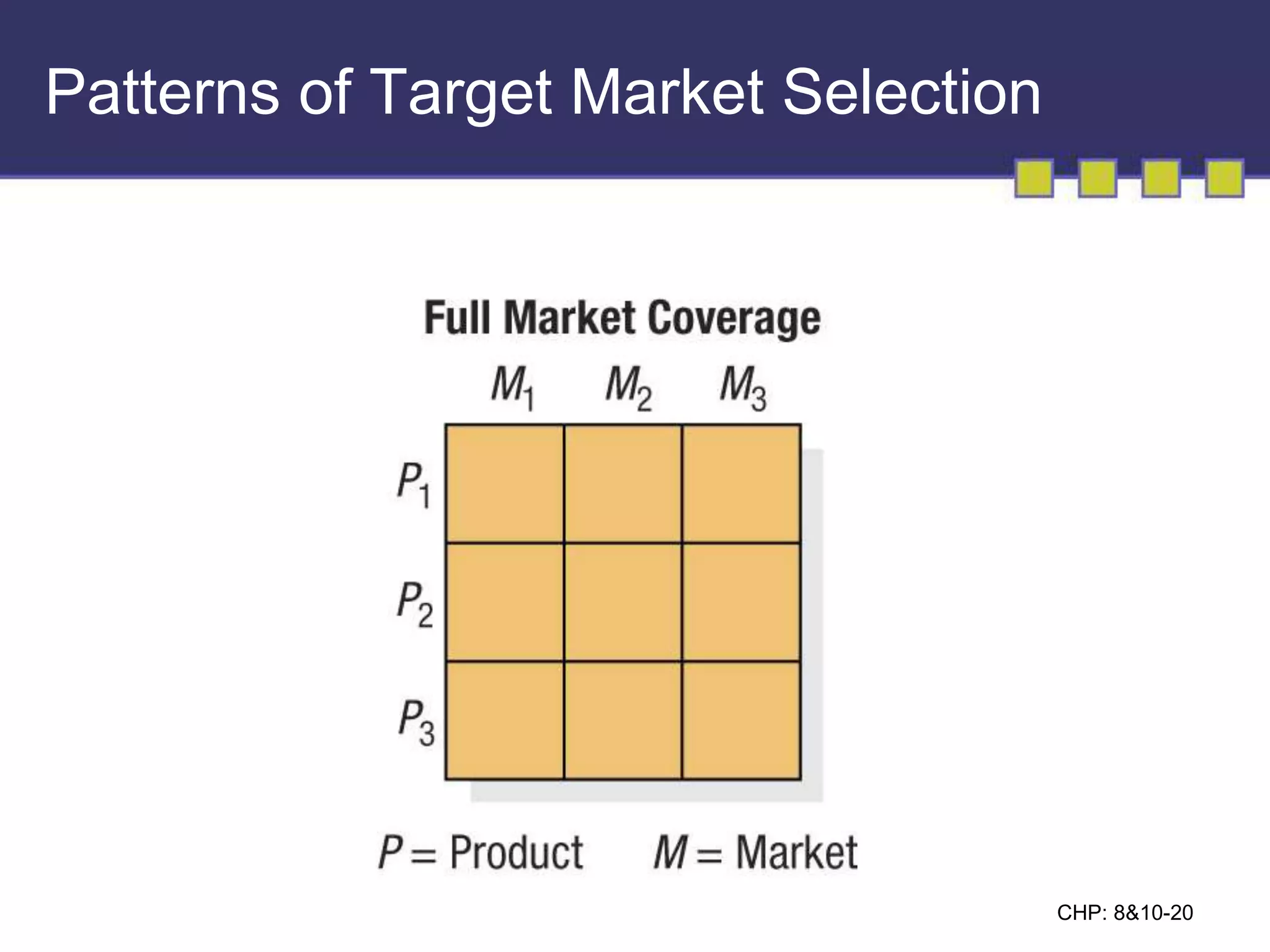
Patterns of Target Market Selection

Identifying market segments and targets

  • 1.
    MARKETING MANAGEMENT 14thedition 8 Identifying Market Segments and Targets
  • 2.
    Effective Targeting Requires… • Identify and profile distinct groups of buyers who differ in their needs and preferences. • Select one or more market segments to enter. • Establish and communicate the distinctive benefits of the market offering.
  • 3.
    Steps in MarketSegmentation, Targeting, and Positioning Market Segmentation 1. Identify bases for segmenting the market 2. Develop segment profiles Market Targeting 3. Develop measure of segment attractiveness 4. Select target segments Market positioning 5. Develop positioning for target segments 6. Develop a marketing mix for each segment
  • 4.
    Four levels ofMicromarketing Segments Niches Local areas Individuals
  • 5.
    Segment Marketing Targetinga group of customers who share a similar set of needs and wants.
  • 6.
    CHP: 8&10-6 BasicMarket Preference Patterns
  • 7.
    Customerization Combines operationallydriven mass customization with customized marketing in a way that empowers consumers to design the product and service offering of their choice.
  • 8.
    Segmenting Consumer Markets Geographic Demographic Psychographic Behavioral
  • 9.
    Demographic Segmentation Ageand Life Cycle Life Stage Gender Income Generation Social Class
  • 10.
    Psychographic Segmentation: TheVALS Segmentation System
  • 11.
    Behavioral Segmentation DecisionRoles • Initiator • Influencer • Decider • Buyer • User Behavioral Variables • Occasions • Benefits • User Status • Usage Rate • Buyer-Readiness • Loyalty Status • Attitude
  • 12.
  • 13.
    Segmenting for BusinessMarkets Demographic Operating Variable Purchasing Approaches Situational Factors Personal Characteristics
  • 14.
    Segmenting for BusinessMarkets • Demographic segmentation – Industry, company size, location • Operating variables – Technology, usage status, customer capabilities • Purchasing approaches • Situational factors – Urgency, specific application, size of order • Personal characteristics – Buyer-seller similarity, attitudes toward risk, loyalty
  • 15.
    Effective Segmentation Criteria • Size, purchasing power, profiles of segments can be measured. • Segments can be effectively reached and served. • Segments are large or profitable enough to serve. Measurable Accessible Substantial Differential Actionable • Segments must respond differently to different marketing mix elements & programs. • Effective programs can be designed to attract and serve the segments.
  • 16.
    Market Targeting EvaluatingMarket Segments • Segment Size and Growth – Analyze current sales, growth rates and expected profitability for various segments. • Segment Structural Attractiveness – Consider effects of: competitors, availability of substitute products and, the power of buyers & suppliers. • Company Objectives and Resources – Company skills & resources needed to succeed in that segment(s). – Look for Competitive Advantages.
  • 17.
    CHP: 8&10-17 MarketTargeting Market Coverage Strategies Segment 1 Segment 2 Segment 3 Segment 1 Segment 2 Segment 3 Company Marketing Mix Company Marketing Mix 1 Company Marketing Mix 2 Company Marketing Mix 3 Company Marketing Mix Market A. Undifferentiated Marketing B. Differentiated Marketing C. Concentrated Marketing
  • 18.
    CHP: 8&10-18 Patternsof Target Market Selection
  • 19.
    CHP: 8&10-19 Patternsof Target Market Selection
  • 20.
    CHP: 8&10-20 Patternsof Target Market Selection