Radha Kumari
Roll No : 64
Sub Code :CC-03
Supervise By
Anuradha Mam
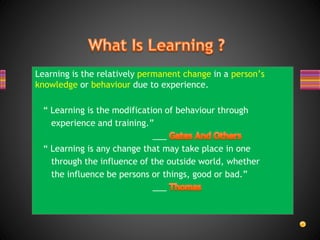
Learning is the relatively permanent change in a person’s
knowledge or behaviour due to experience.
“ Learning is the modification of behaviour through
experience and training.”
___
“ Learning is any change that may take place in one
through the influence of the outside world, whether
the influence be persons or things, good or bad.”
___
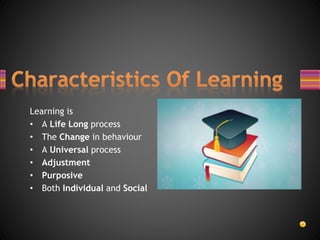
Learning is
• A Life Long process
• The Change in behaviour
• A Universal process
• Adjustment
• Purposive
• Both Individual and Social
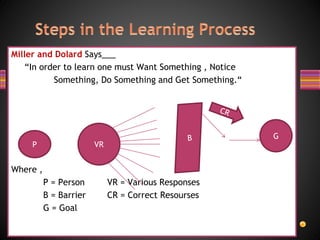
Miller and Dolard Says___
“In order to learn one must Want Something , Notice
Something, Do Something and Get Something.“
Where ,
P = Person VR = Various Responses
B = Barrier CR = Correct Resourses
G = Goal
P VR
G
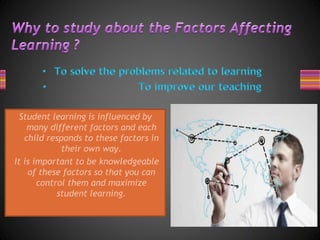
Student learning is influenced by
many different factors and each
child responds to these factors in
their own way.
It is important to be knowledgeable
of these factors so that you can
control them and maximize
student learning.
Learning Related factors
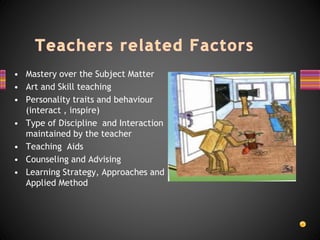
Teacher Related Factors
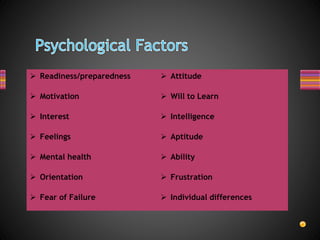
Psychological factors
Physiological/Biological factors
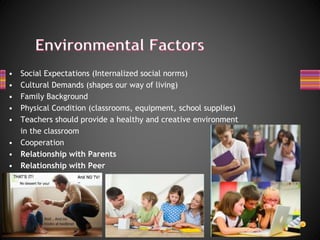
Environmental Factors
 Readiness/preparedness  Attitude
 Motivation  Will to Learn
 Interest  Intelligence
 Feelings  Aptitude
 Mental health  Ability
 Orientation  Frustration
 Fear of Failure  Individual differences
• Maturity
• Age
• Needs
• Physical Health
• Proper Nutrition
• Tiredness
• Self – Concept
• Proper sleep
• Social Expectations (Internalized social norms)
• Cultural Demands (shapes our way of living)
• Family Background
• Physical Condition (classrooms, equipment, school supplies)
• Teachers should provide a healthy and creative environment
in the classroom
• Cooperation
• Relationship with Parents
• Relationship with Peer
• Mastery over the Subject Matter
• Art and Skill teaching
• Personality traits and behaviour
(interact , inspire)
• Type of Discipline and Interaction
maintained by the teacher
• Teaching Aids
• Counseling and Advising
• Learning Strategy, Approaches and
Applied Method
1. Intellectual Factor
• Intellectual means Individual Mental
Level.
• Success in school is generally closely
related to level of the intellect.
• Sometimes pupils do not learn because of
special intellectual disabilities.
2. Learning Factor
• Factors owing to lack of mastery of what
has been taught, faulty methods of work
or study and narrowness of experimental
background may affect the learning
process of any pupil.
Learning related Factors
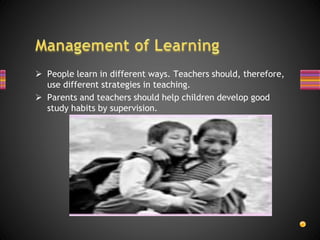
 People learn in different ways. Teachers should, therefore,
use different strategies in teaching.
 Parents and teachers should help children develop good
study habits by supervision.
Presentation on Factors Affecting Learning.pptx

Presentation on Factors Affecting Learning.pptx

  • 1.
    Radha Kumari Roll No: 64 Sub Code :CC-03 Supervise By Anuradha Mam
  • 2.
    Learning is therelatively permanent change in a person’s knowledge or behaviour due to experience. “ Learning is the modification of behaviour through experience and training.” ___ “ Learning is any change that may take place in one through the influence of the outside world, whether the influence be persons or things, good or bad.” ___
  • 3.
    Learning is • ALife Long process • The Change in behaviour • A Universal process • Adjustment • Purposive • Both Individual and Social
  • 4.
    Miller and DolardSays___ “In order to learn one must Want Something , Notice Something, Do Something and Get Something.“ Where , P = Person VR = Various Responses B = Barrier CR = Correct Resourses G = Goal P VR G
  • 5.
    Student learning isinfluenced by many different factors and each child responds to these factors in their own way. It is important to be knowledgeable of these factors so that you can control them and maximize student learning.
  • 6.
    Learning Related factors TeacherRelated Factors Psychological factors Physiological/Biological factors Environmental Factors
  • 7.
     Readiness/preparedness Attitude  Motivation  Will to Learn  Interest  Intelligence  Feelings  Aptitude  Mental health  Ability  Orientation  Frustration  Fear of Failure  Individual differences
  • 8.
    • Maturity • Age •Needs • Physical Health • Proper Nutrition • Tiredness • Self – Concept • Proper sleep
  • 9.
    • Social Expectations(Internalized social norms) • Cultural Demands (shapes our way of living) • Family Background • Physical Condition (classrooms, equipment, school supplies) • Teachers should provide a healthy and creative environment in the classroom • Cooperation • Relationship with Parents • Relationship with Peer
  • 10.
    • Mastery overthe Subject Matter • Art and Skill teaching • Personality traits and behaviour (interact , inspire) • Type of Discipline and Interaction maintained by the teacher • Teaching Aids • Counseling and Advising • Learning Strategy, Approaches and Applied Method
  • 11.
    1. Intellectual Factor •Intellectual means Individual Mental Level. • Success in school is generally closely related to level of the intellect. • Sometimes pupils do not learn because of special intellectual disabilities. 2. Learning Factor • Factors owing to lack of mastery of what has been taught, faulty methods of work or study and narrowness of experimental background may affect the learning process of any pupil. Learning related Factors
  • 12.
     People learnin different ways. Teachers should, therefore, use different strategies in teaching.  Parents and teachers should help children develop good study habits by supervision.